A silicone softener is chosen for what it does at the fiber surface. By reducing friction and changing the way adjacent fibers move against one another, the right silicone finish can make a woven, knitted or nonwoven material feel smoother, more supple and easier to drape. The chemistry behind that effect can be tuned further for wash durability, hydrophilicity, whiteness, sewability or compatibility with a specific finishing process.
Eata Silicon supplies silicone raw-material families used to build and optimize softening systems, from amino-functional silicone fluids and water-dispersible concentrates to hydrophilic silicone copolymers, functional emulsions and PDMS-based softening materials. Instead of treating every "silicone softener" as interchangeable, we help buyers compare functionality, delivery form, ionic character, viscosity, dispersion behavior and the performance target on the actual substrate.
Why Silicone Chemistry Changes the Hand of a Fabric
The siloxane backbone is naturally mobile and low-friction, which is why silicone chemistry is widely used to create a slick, smooth hand in textile finishing. Functional groups then decide how that silicone interacts with fibers and with the rest of the finishing bath. Amino groups can increase affinity for many textile surfaces; polyether or other hydrophilic segments can help preserve water transport; reactive or specially modified structures can be selected where durability, lower yellowing or process stability is more important than maximum slickness.
This is also why the same softener can behave differently on cotton, polyester, polyamide or a blended fabric. Fiber chemistry, pretreatment, dyeing route, bath pH, salt level, resin chemistry, mechanical shear and drying conditions all influence the final result. A practical product choice starts with the finished-fabric requirement and works backward to the silicone structure.
 Figure 1. Clear silicone softener fluid represents an active raw-material concentrate before emulsion or finishing-bath formulation.
Silicone Softener Raw-Material Families
| Raw-material family |
Typical chemistry |
Why formulators evaluate it |
| Amino-functional silicone fluids |
amino silicone oil; amino-modified PDMS; aminofunctional silicone fluid |
Strong softness and smoothness; useful fiber affinity; can be supplied as an active fluid for downstream emulsification. |
| Diamino / aminoethylaminopropyl silicone |
diamino silicone; aminoethylaminopropyl-modified silicone |
Higher or differently positioned amine functionality for tailored adsorption, hand and reactive behavior. |
| Low-yellowing amino silicone |
low-amino silicone; special amino-modified silicone; low-yellowing textile softener |
Considered when whiteness or shade stability must be balanced with a soft, smooth hand. |
| Amino silicone emulsions & microemulsions |
amino silicone emulsion; silicone microemulsion softener; water-dispersible amino silicone |
Waterborne delivery for dilution into finishing baths; available in different ionic and concentration formats. |
| Hydrophilic silicone copolymers |
hydrophilic silicone softener; silicone polyether softener; block silicone softener |
Targets softness while retaining or increasing wetting and moisture-transport behavior. |
| Epoxy-modified silicone emulsions |
epoxy silicone emulsion; epoxy-functional textile softener |
A functional route used for softness and smoothness with a different yellowing/reactivity profile from conventional amino systems. |
| PDMS / silanol silicone softening materials |
dimethyl silicone emulsion; PDMS textile softener; silanol-terminated PDMS softener |
Useful where lubrication, smoothness and a more neutral silicone backbone are desired; reactive silanol grades can provide durable effects in selected systems. |
| Self-dispersing / shear-stable silicone fluids |
self-dispersing amino silicone; jet-stable silicone softener |
Designed for easier dilution or demanding mechanical shear, particularly where bath stability is critical. |
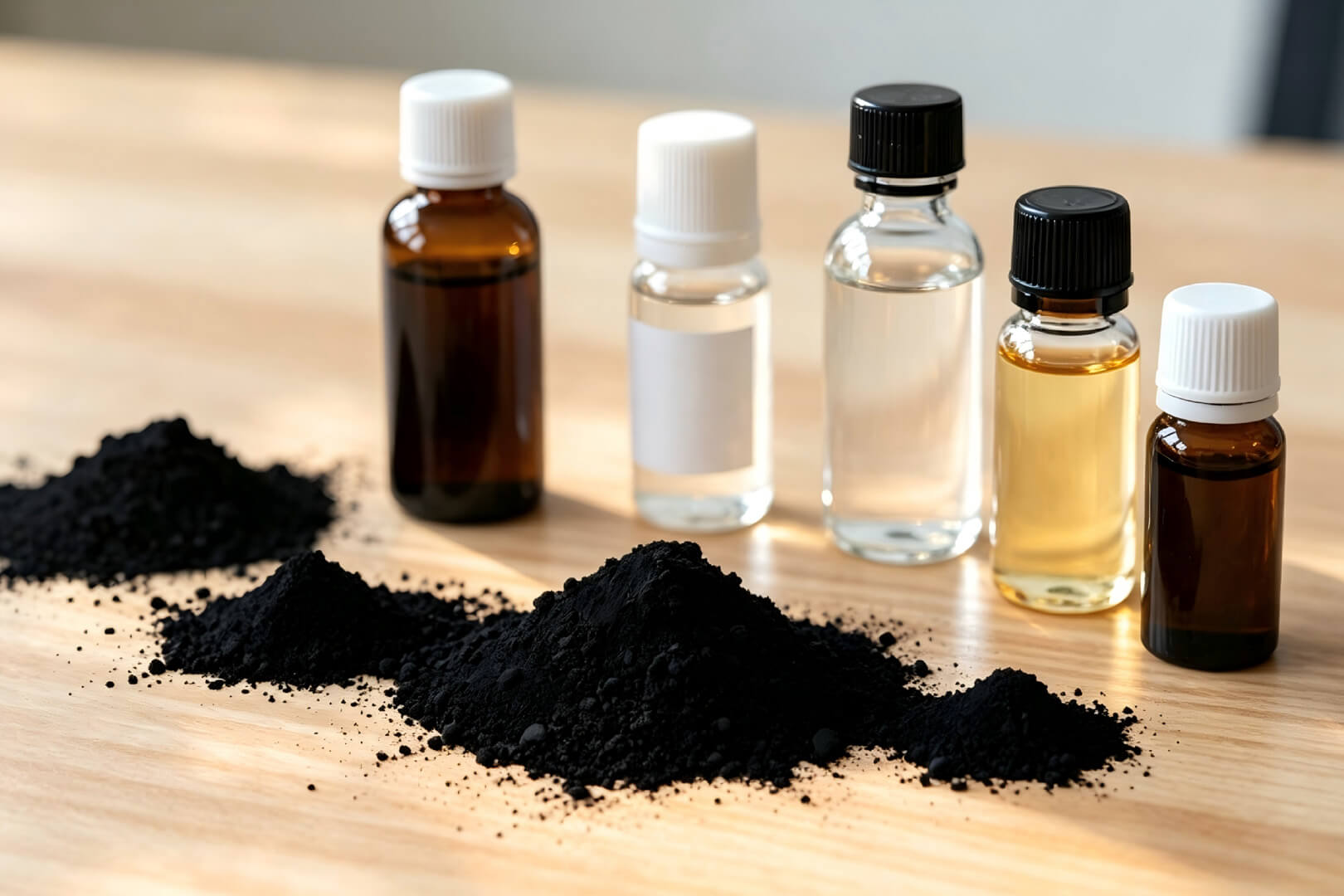
 Figure 2. Unlabelled formulation vessels illustrate specification-led evaluation of silicone softener raw materials and waterborne concentrates.
Matching Chemistry to the Finish You Want
Amino-Functional Silicone: When Softness and Slickness Lead
Amino-functional silicones remain one of the best-known routes to textile softening. Commercial material families include pendant amino-modified PDMS, terminal amino-functional structures, amino-containing block copolymers and curable amino silicone fluids. Their attraction is straightforward: the siloxane segment contributes lubricity and softness, while the amine functionality can strengthen interaction with the fiber surface.
The selection point is not simply "more amine is better." Amino level, molecular architecture, viscosity and the emulsion system all matter. Major silicone suppliers offer lower-amino and special-amino grades specifically to reduce yellowing while keeping a smooth hand. Where white or pale fabric is important, yellowing resistance should therefore be part of the qualification test rather than assumed from the generic label.
Hydrophilic Silicone Softeners: Soft Hand Without Blocking Moisture Transport
Traditional silicone finishes can increase hydrophobicity, which may be undesirable for towels, active textiles, moisture-management fabrics and other materials that need rapid wetting. Hydrophilic silicone softeners address that trade-off by incorporating water-compatible segments or by using silicone copolymer architectures that orient differently at the fiber surface. Commercial examples include hydrophilic silicone macroemulsions, water-soluble organomodified fluids and linear silicone block copolymers.
 Figure 3. Fabric construction, fiber blend and surface texture all change how a silicone softener is perceived in hand and drape testing.
When hydrophilicity matters, specify how it will be judged: initial drop absorption, wicking, rewetting after wash, or another internal method. "Hydrophilic" is a performance target, not a single chemistry, and the best choice depends on the fiber and the finishing bath.
Emulsion, Microemulsion or Active Fluid?
Silicone softeners are sold both as active silicone fluids and as waterborne products. An active fluid gives the formulator more control over emulsifier choice and concentration. A ready-made emulsion or microemulsion can simplify dilution and bath preparation, but compatibility must still be checked against dyes, resins, catalysts, salts, optical brighteners and other finishing auxiliaries.
Commercial products demonstrate that cationic, nonionic and mixed surfactant systems all exist. That ionic character is not a minor label: it can decide whether a softener stays stable or produces deposits when combined with another auxiliary. For jet dyeing and other high-shear processes, shear stability, foaming tendency and dilution behavior deserve the same attention as softness.
 Figure 4. Water-based silicone emulsions provide a practical delivery form when a finishing process requires controlled dilution and dispersion.
Where Silicone Softeners Are Used
Silicone textile finishing is used across a broad set of substrates and processes. The finish should always be screened on the actual construction because a knit, a dense woven fabric and a nonwoven web can respond very differently to the same bath.
- Cotton and other cellulosic fabrics — soft hand, smoother drape, improved surface feel and selected wrinkle-recovery finishing programs.
- Polyester and synthetic fibers — surface lubrication, softness and, with appropriate hydrophilic chemistry, improved wetting behavior.
- Cotton/polyester and other blends — balancing fiber-to-fiber differences while keeping the finish uniform across the fabric.
- Woven and knitted goods — from a natural, supple hand to a more silky or slick effect depending on the grade.
- Nonwovens and technical textile structures — softening and lubrication where waterborne application and process stability are important.
- Yarn, thread and fiber processing — reduced friction, smoother handling and improved sewability or raising behavior in suitable systems.
- Tissue and selected industrial fiber finishing — PDMS emulsions and functional silicone microemulsions are also used as softening/lubricating ingredients in specialized fiber-based products.
Application Route Matters as Much as Chemistry
Padding, exhaustion, jet processing and spraying place different demands on a softener. Padding emphasizes bath uniformity and wet pick-up control. Exhaustion depends more heavily on affinity and bath conditions. Jet machines add mechanical shear. Spraying requires a stable, consistently atomized formulation. A product that looks excellent in a static beaker can still fail on the line if the emulsion is incompatible or shear-sensitive.
For development work, evaluate the silicone in the same sequence used by production: dilution water, order of addition, pH adjustment, other auxiliaries, mechanical agitation, application, drying and any curing step. This reveals incompatibilities earlier and makes the finished-hand comparison more meaningful.
 Figure 5. A well-matched silicone finish is judged on the textile itself: smoothness, flexibility, drape and the hand profile required by the end use.
A Practical Specification for Silicone Softener Sourcing
- Substrate — cotton, polyester, polyamide, rayon, wool, blend, woven, knit, nonwoven, yarn, tissue or another fiber structure.
- Desired hand — silky, slick, supple, natural, bulky, fluffy, dry-soft or another reference feel.
- Silicone family — amino-functional, low-yellowing amino, hydrophilic copolymer, epoxy-modified, PDMS/silanol, emulsion or active fluid.
- Physical form — neat fluid, self-dispersing concentrate, macroemulsion, microemulsion or other waterborne format.
- Key analytical variables — active/solids content, viscosity, pH, ionic character, appearance, amine or other functional-group level where relevant.
- Finishing process — padding, exhaustion, jet dyeing, spraying, coating or laboratory application.
- Bath environment — target pH, salts, dyes, resins, catalysts, optical brighteners and other auxiliaries that will be present.
- Performance acceptance — hydrophilicity, yellowing/whiteness, wash durability, friction, sewability, shade change, hand panel or other defined test.
- Benchmark — current grade, formulation, sample or performance profile to match or improve.
Why Buyers Use Eata Silicon for Silicone Softener Raw Materials
Softener selection is easier when the discussion starts with the fabric and the finishing line instead of a generic product label. Eata Silicon can compare silicone families around the performance window you actually need, including softness profile, hydrophilicity, yellowing resistance, ionic character, active content, viscosity, process stability and downstream compatibility.
For projects that do not fit a standard material, customization can be reviewed around silicone backbone, amino or other functional modification, molecular/viscosity direction, solids or active level, water-dispersible form, emulsifier/ionic system, hydrophilic balance, appearance and project-specific analytical limits. Feasibility is assessed against the complete formulation brief and intended process.
Bring us the finish you are trying to create.
Describe the substrate, target hand, hydrophilicity or yellowing requirement, process route and the bath conditions. Eata Silicon can then evaluate a standard raw-material direction, a close functional alternative or a customized silicone softener specification.
Questions Formulators Often Ask
Is an amino silicone always the best softener?
No. Amino silicones are widely used because they can deliver strong softness and smoothness, but the right choice depends on whiteness, hydrophilicity, fiber type and bath compatibility. A hydrophilic copolymer, low-amino grade, epoxy-modified emulsion or PDMS-based route may be more appropriate for a different target.
Can a silicone softener be hydrophilic?
Yes. Commercial hydrophilic silicone products use organomodified or copolymer structures that combine silicone softness with water-compatible behavior. Qualification should still be based on the actual fabric and the customer's wetting or wicking test.
Why do two amino silicone softeners show different yellowing?
Amino level, amino structure, molecular architecture, emulsion formulation and thermal history can all influence the visible result. Lower-amino and specially designed low-yellowing products are commercially available, so whiteness should be specified and tested rather than inferred from the product name.
What should be checked before replacing an existing softener?
Compare more than hand feel. Check dilution behavior, bath compatibility, pH, ionic character, active content, yellowing, hydrophilicity, shade change, stability under production shear, drying/curing response and the durability expected after finishing. A replacement is successful only when both the line and the fabric perform as required.
For Research or Industrial Raw Materials, Not For Personal Medical Use!