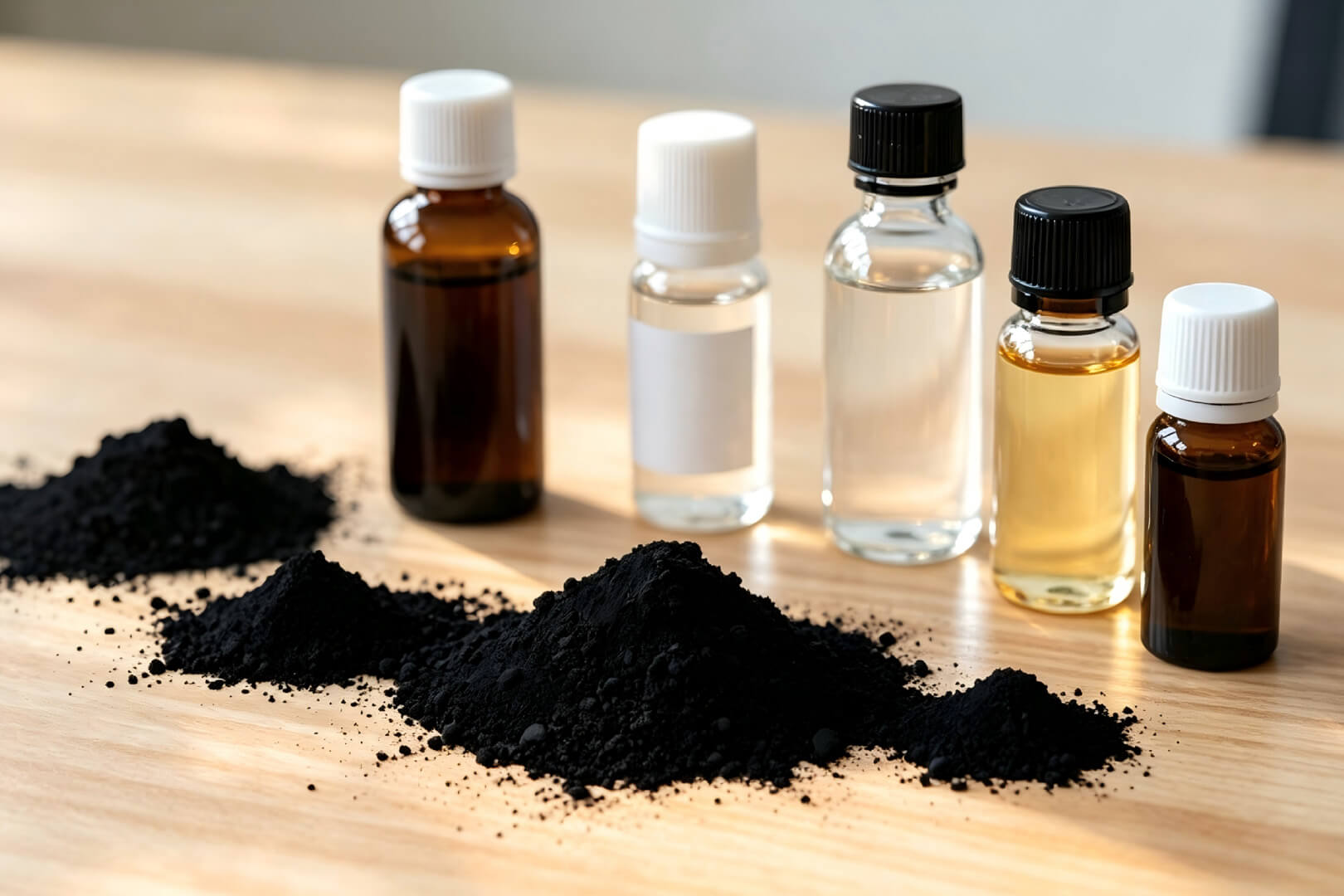
Silicon rarely works alone. Bond it to oxygen and you get quartz glass that expands almost not at all at 1,400 °C; bond it to carbon and you get an abrasive harder than any metal; bond it to nitrogen and you get bearing balls 58% lighter than steel that spin 50% faster. The inorganic silicon family — oxides, carbides, nitrides, silicides, silicates, and the composites built from them — quietly carries the load in furnaces, bearings, refineries, jet engines, and power electronics all over the world.
Eata Silicon supplies all seven families covered on this page: silicon dioxide, silicon carbide, silicon nitride, silicon oxynitride, metal silicides, silicates, and inorganic silicon-based composites, in forms from powders and grit to finished ceramic components.
Browse Our Products
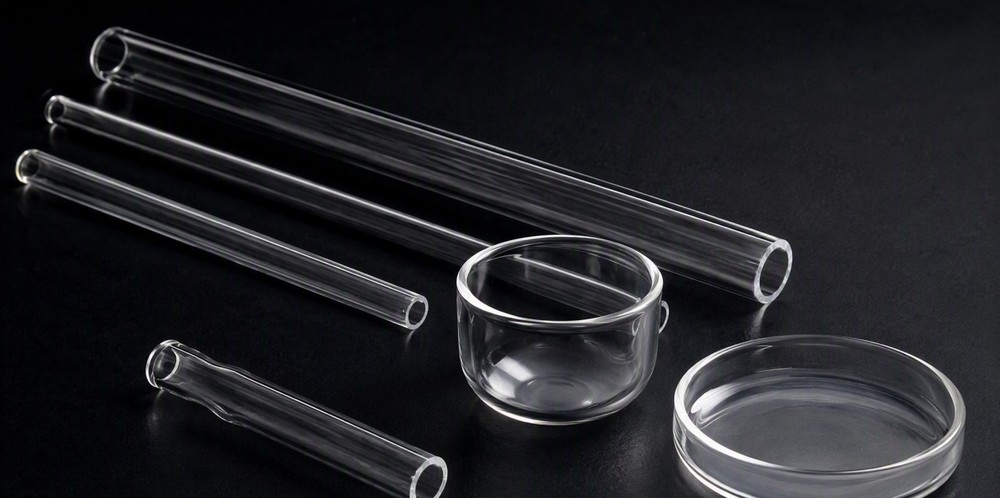 Fused quartz glassware: nearly zero expansion, near-total purity.
Melt high-purity quartz at 1,800 °C and it freezes into fused quartz — an amorphous SiO₂ glass with no grain boundaries and a thermal expansion coefficient of just 0.55 × 10⁻⁶/K, one of the lowest of any engineering material. That single number explains most of its career: fused quartz crucibles hold molten silicon at 1,420 °C through day-long Czochralski growth cycles without cracking or contaminating the melt, furnace tubes ride through thousands of thermal cycles, and optical components transmit from deep UV to infrared. Add 99.99%+ purity, electrical resistivity around 10¹⁶ Ω·cm, and resistance to nearly every acid except hydrofluoric, and the result is the default container material of the semiconductor and solar industries.
We supply silicon dioxide as fused quartz and silica glass components — crucibles, tubes, boats, plates, and labware — alongside high-purity quartz powders and sands for fillers, casting, and specialty glass. Synthetically produced fused silica grades are available where ppb-level metallic purity matters.
Silicon Carbide: From Grinding Wheels to Electric Cars
Born in the Acheson furnace, where quartz sand and petroleum coke react above 2,200 °C, silicon carbide earns its living twice over. As a ceramic it is famously hard — 9.2 to 9.5 on the Mohs scale, just below diamond — which keeps it at the top of the abrasives business and makes it the material of kiln furniture, wear parts, nozzles, and heating elements that run to about 1,600 °C. As a semiconductor it is transformative: the 4H polytype carries a 3.26 eV bandgap, a breakdown field roughly ten times that of silicon, and single-crystal thermal conductivity approaching 490 W/m·K. Power devices built on SiC switch EV inverters, solar farms, and fast chargers with 10–20% lower losses than silicon equivalents.
Our SiC range covers black and green grit from coarse F12 down to F1200 micro-powder, sub-micron powders for ceramics, sintered components, and substrate material for wide-bandgap research.
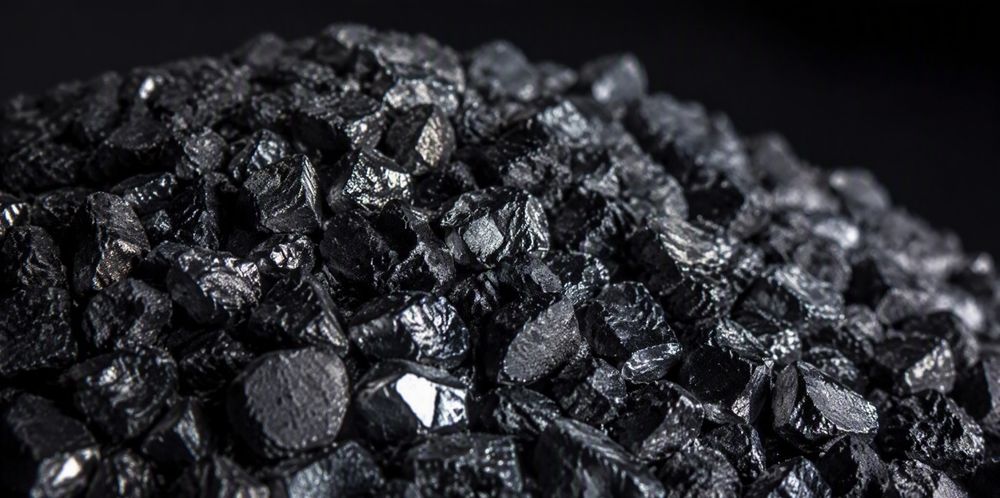 Angular SiC grains — harder than any metal.
Ask a spindle designer why silicon nitride balls replaced steel in high-speed bearings and the answer is a stack of numbers: density 3.2 g/cm³ against steel's 7.6, hardness 1,600 Vickers against 700, thermal expansion a third of steel's, and a working temperature ceiling near 1,000 °C. Lighter balls mean less centrifugal load on the raceway, which is why hybrid bearings with Si₃N₄ balls run up to 50% faster, run cooler, need less lubrication, and — being electrical insulators — are immune to the stray-current erosion that kills steel bearings in inverter-driven motors.
Beyond precision balls and rollers, we offer silicon nitride powders, substrates, and custom-sintered parts — plus Si₃N₄-bonded silicon carbide refractories for aluminum cells and blast furnace linings, where nitride bonding delivers the erosion resistance molten metal demands.
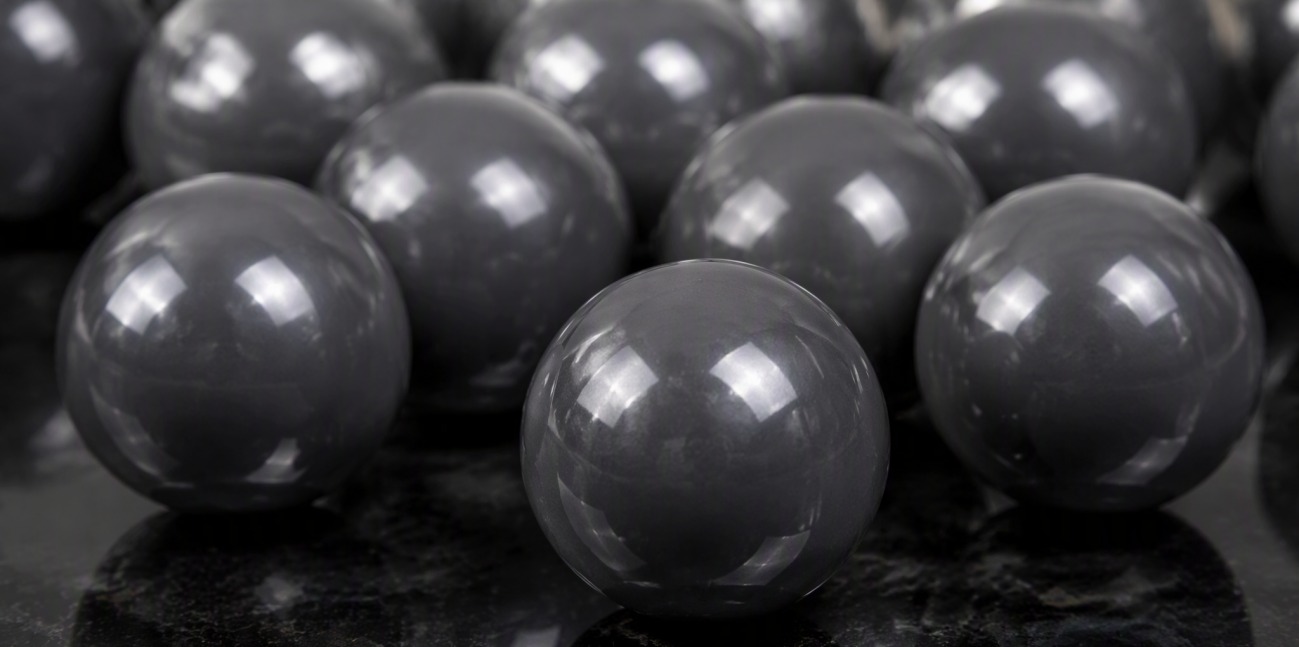 Silicon nitride bearing balls, 58% lighter than steel.
Between oxide and nitride sits a quieter family with outsized industrial value. Silicon oxynitride (Si₂N₂O) and the related sialon compositions bond exceptionally well to silicon carbide, resist attack from molten aluminum and cryolite, and tolerate the thermal cycling of ironmaking. That is why sialon- and oxynitride-bonded SiC refractories line blast furnace stacks, coke oven load zones, torpedo ladles, and aluminum electrolytic cells worldwide. We supply oxynitride and sialon powders and bonded refractory products for these duties, and can advise where they outperform straight nitride bonding.
The best-known silicide product hides inside every very hot laboratory furnace. Molybdenum disilicide heating elements operate in air at up to 1,800 °C — beyond anything resistance wire or SiC elements can sustain — because the material protects itself: at temperature it grows a dense silica skin, and if that skin cracks, oxygen simply grows it again. The self-repair works best between 800 and 1,300 °C and requires an oxidizing atmosphere, which is the one operating rule worth respecting. A quieter advantage is that MoSi₂ elements hold their resistance nearly constant over life, sparing the controller recalibration that aging SiC elements demand.
The family reaches further: tungsten and titanium silicides form the low-resistance contacts inside integrated circuits, magnesium silicide draws interest as a non-toxic thermoelectric, and zirconium and chromium silicides serve wear-resistant coatings. Eata Silicon supplies MoSi₂ heating elements in standard U and W shapes as well as silicide powders — MoSi₂, WSi₂, TiSi₂, Mg₂Si and others — for metallurgy, electronics, and research.
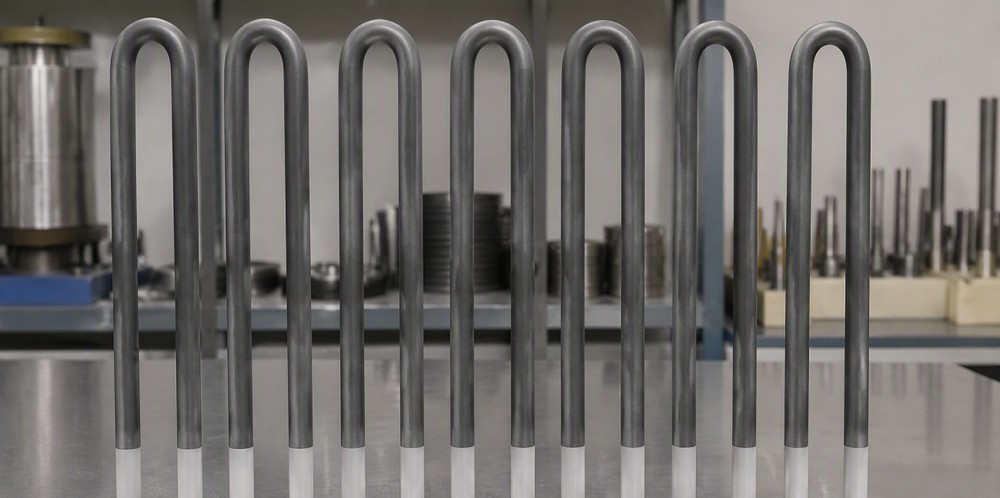 MoSi₂ heating elements, rated to 1,800 °C in air.
Silicates: Nature's Largest Mineral Family
A quarter of all known minerals are silicates, and industry uses them at every scale. Sodium silicate — water glass — binds foundry molds, adhesives, and coatings by the tonne. Zircon and feldspar feed ceramics and refractories. Wollastonite reinforces polymers and friction materials. The most engineered members of the family are the zeolites: crystalline aluminosilicates whose pores are sized in ångströms, admitting some molecules and refusing others. Type 3A, 4A, and 5A sieves dry gases and solvents; 13X captures CO₂ and separates air; acid forms like ZSM-5, Beta, and USY crack crude oil into gasoline; SSZ-13 scrubs NOx from diesel exhaust. Same silicon-oxygen backbone, dozens of different careers.
We supply zeolite molecular sieves in bead and powder form, sodium silicate, and processed silicate minerals, with adsorption or catalytic grades matched to the process they will serve.
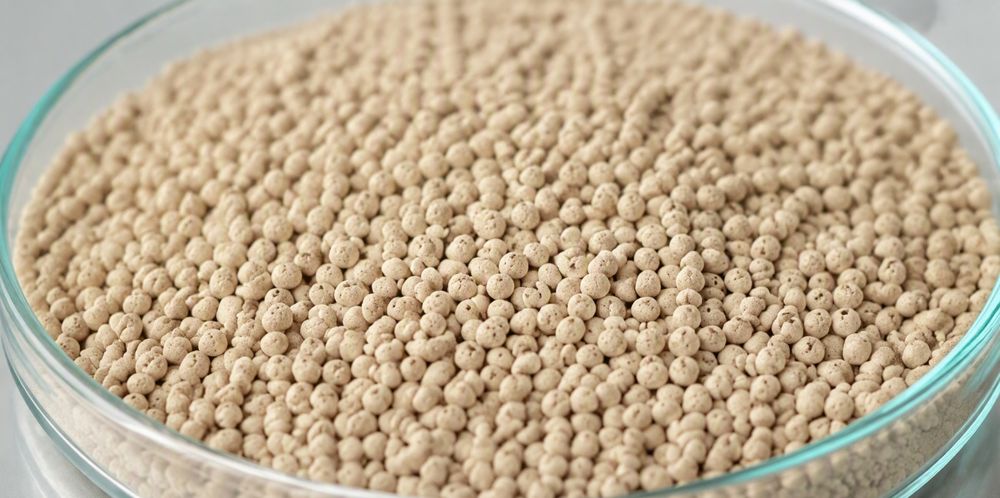 Molecular sieve beads with ångström-sized pores.
Combine silicon ceramics with fibers or metals and whole new property sets appear. The flagship example flies today: ceramic matrix composites of silicon carbide fiber in a silicon carbide matrix, densified by melt infiltration, form the turbine shrouds of the LEAP engine — the first commercial jet engine to run CMCs in its hot high-pressure section — powering the Airbus A320neo and Boeing 737 MAX. One-third the weight of superalloy and able to run hotter with less cooling air, CMCs are now spreading into land-based gas turbines. Other branches of the family include SiC-particle-reinforced aluminum for lightweight stiffness, quartz-fiber composites for radomes and insulation, and SiC whisker-toughened ceramics.
Eata Silicon supplies SiC fiber and fabric, CMC plates and test materials, and composite feedstocks for development programs — and can source aerospace-grade variants for qualified applications.
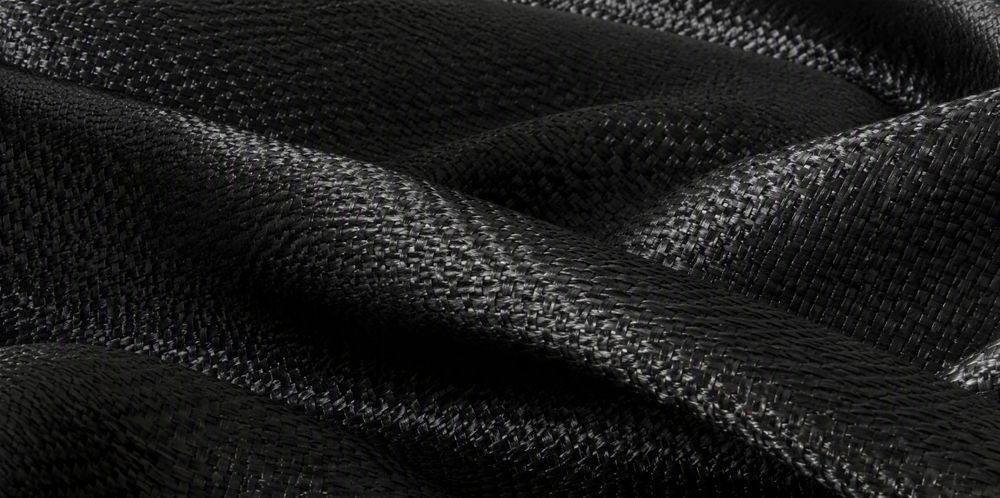 Woven SiC fiber — the reinforcement inside CMCs.
Representative Products at a Glance
| Product |
Chemistry |
Typical Form |
Main Use |
| Fused Quartz Components |
SiO₂ ≥99.99% |
Crucibles, tubes, boats, plates |
Crystal growth, furnaces, labs |
| High-Purity Quartz Powder |
SiO₂ |
Mesh and micron grades |
Fillers, casting, specialty glass |
| Silicon Carbide Grit & Powder |
SiC 98–99%+ |
F12–F1200, sub-micron |
Abrasives, refractories, ceramics |
| SiC Ceramics & Substrates |
Sintered SiC |
Parts, plates, substrates |
Kiln furniture, power electronics R&D |
| Silicon Nitride Products |
Si₃N₄ |
Balls, powders, sintered parts |
Bearings, wear parts, refractories |
| SiON & Sialon Materials |
Si₂N₂O / sialon |
Powders, bonded refractories |
Blast furnace, aluminum industry |
| MoSi₂ Heating Elements |
MoSi₂ |
U / W-shaped rods |
Furnaces to 1,800 °C |
| Silicide Powders |
WSi₂, TiSi₂, Mg₂Si |
Fine powders |
Electronics, coatings, thermoelectrics |
| Zeolites & Silicates |
Molecular sieves, Na silicate |
Beads, powders, liquid |
Drying, adsorption, catalysis, binders |
| SiC Fiber & CMC Materials |
SiC/SiC composites |
Fiber, fabric, plates |
Aerospace and energy R&D |
Quality and Documentation
Inorganic materials are bought on data, so we ship data. Purity is certified by XRF or GDMS as appropriate; powders carry laser particle-size distributions and, where relevant, BET surface area; ceramic parts are checked for density, hardness, and dimensional tolerance; molecular sieves ship with adsorption capacity results; and every heating element is tested for resistance before packing. Certificates of analysis travel with each lot, and retained samples are archived for traceability.
How to Choose the Right Family
- Extreme heat in air? Fused quartz to about 1,200 °C, SiC elements to 1,600 °C, MoSi₂ to 1,800 °C — pick by furnace temperature, then by atmosphere.
- Wear and abrasion? SiC for grinding and wear parts, Si₃N₄ where impact and speed join the mix.
- Molten metal contact? Sialon- or oxynitride-bonded SiC for aluminum; nitride-bonded grades for iron and steel.
- Electronics and energy? SiC substrates for wide-bandgap devices, silicide powders for contacts and coatings, zeolites for separations and catalysis.
- Still weighing options? describe the operating conditions and we will narrow the family, grade, and form with you.
Many requests start with a drawing rather than a catalog number: a quartz crucible of non-standard diameter, a sialon-bonded brick shaped for a specific furnace course, MoSi₂ elements bent to a one-off chamber, a zeolite ion-exchanged to a particular cation form, a CMC panel cut for a test rig.
Send the specification, the drawing, or simply the problem — we will engineer the inorganic silicon material around it.
For Research or Industrial Raw Materials, Not For Personal Medical Use!