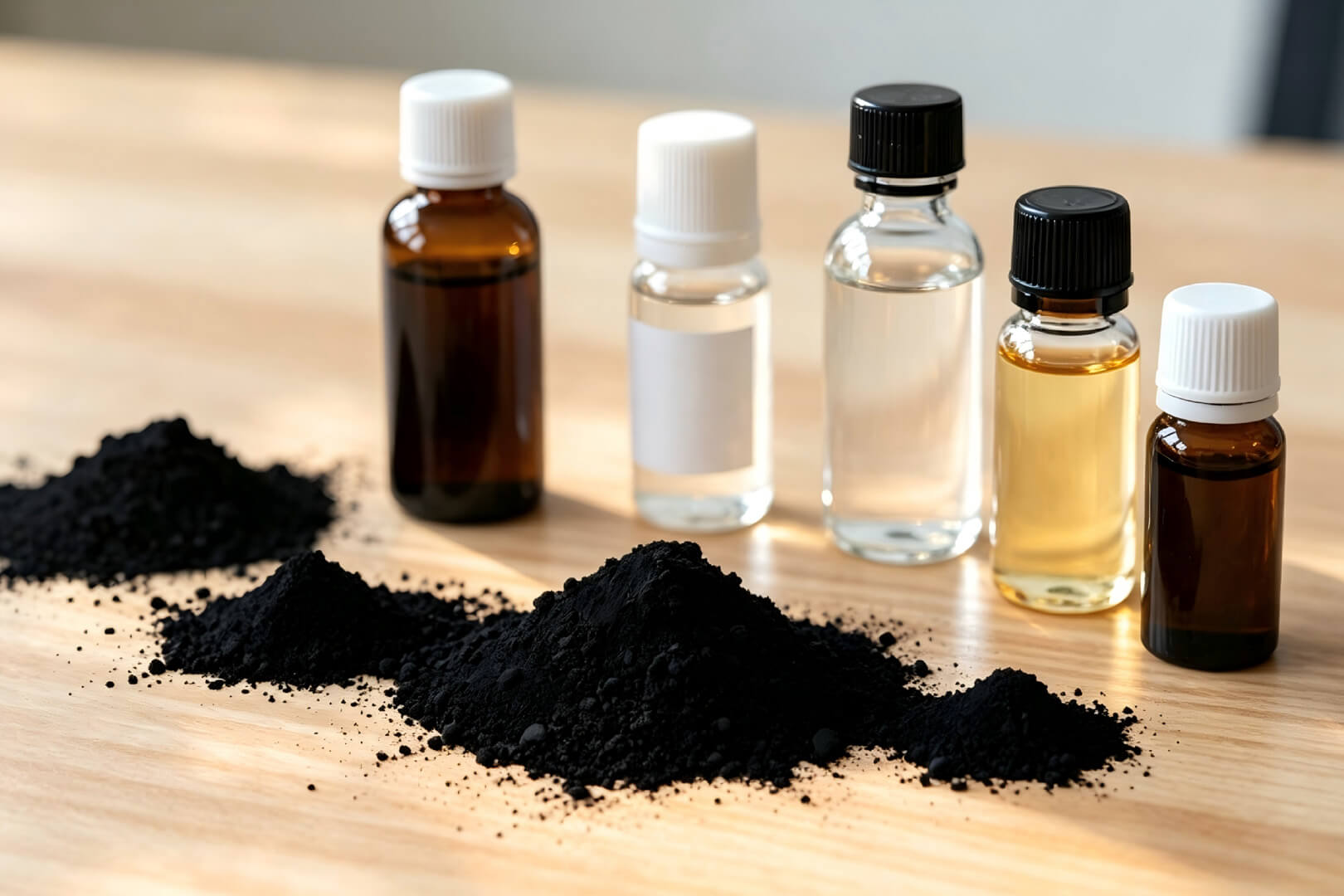
Silicone-based dispersing agents are selected when formulators need more than simple dilution: the additive must help a liquid phase contact a difficult solid surface, support deagglomeration during mixing or milling, and keep particles from rebuilding hard clusters after shear stops. Organomodified siloxanes and silicone-polyether structures are especially useful because their organic modification can be adjusted to change water compatibility, resin compatibility, surface activity and affinity for pigments or mineral fillers.
Eata Silicon supports industrial and research customers looking for silicone dispersant raw materials, polyether-modified polysiloxanes, organomodified siloxanes, silicone wetting and dispersing additives, and custom modified silicone fluids. The best choice depends on the solid you are dispersing, the continuous phase, the processing route and the downstream surface properties the finished formulation must retain.
Why Silicone Chemistry Works Well in Dispersion Systems
A dispersing additive has two jobs that are related but not identical: wet the particle surface and stabilize the resulting particles against reflocculation. In polymeric dispersants, stabilization is often created by segments that adsorb onto the particle while compatible chains extend into the surrounding liquid or resin. This steric barrier keeps neighboring particles from approaching closely enough to rebuild a flocculated structure. Silicone-based structures add another design lever: very low surface energy and tunable organic modification can improve interfacial wetting and compatibility where an unmodified silicone oil would be too hydrophobic or too incompatible.
Wetting is not the same as stabilization
A silicone surfactant may dramatically lower surface tension and improve substrate or particle wetting, yet a true dispersing package also needs sufficient adsorption and stabilization for the target solid. In practice, formulators often screen silicone wetting additives and silicone dispersants together because the optimum balance depends on pigment chemistry, filler surface, resin polarity and shear history.
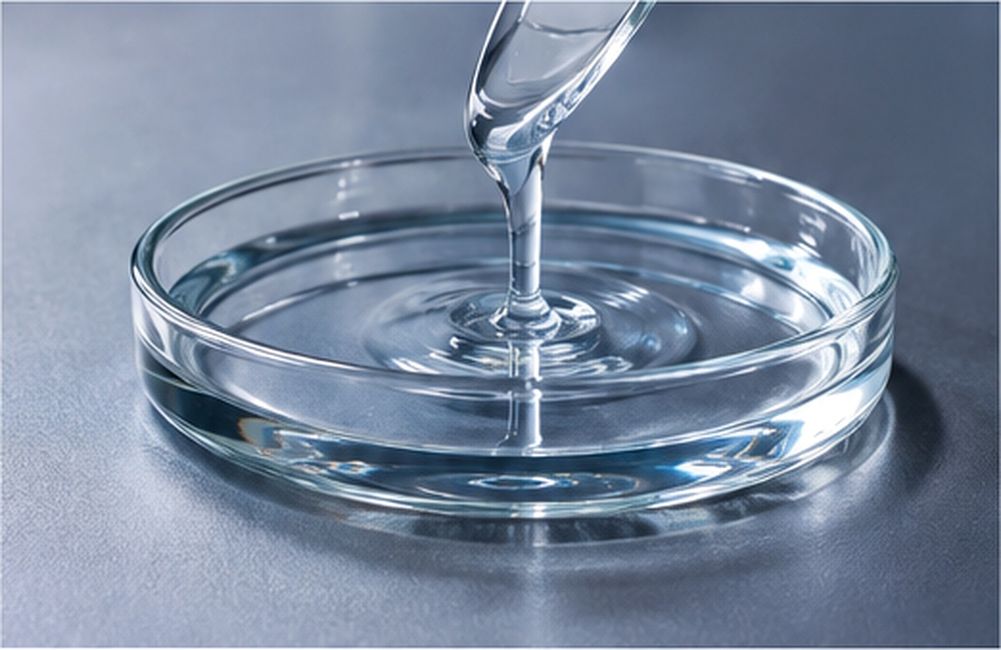 Figure 1. Clear modified silicone fluid representing a silicone-polyether additive supplied for formulation work.
Core Silicone-Based Dispersing Agent Chemistries
| Material family |
Keywords |
Primary formulation role |
Typical systems |
Key selection variables |
| Polyether-modified polysiloxane |
silicone polyether; polyether modified silicone; organosilicone surfactant |
Improves wetting, compatibility and emulsification; selected structures can support particle dispersion. |
Waterborne coatings and inks; solvent-borne or high-solids systems depending on EO/PO architecture. |
EO/PO balance, HLB or water dispersibility, viscosity, active content, end group, foam profile. |
| EO-rich silicone polyether |
hydrophilic silicone surfactant; waterborne silicone wetting agent |
High hydrophilicity and compatibility with aqueous systems; improves wetting and flow. |
Waterborne coatings, inks and other aqueous industrial formulations. |
Water solubility/dispersibility, surface tension, recoatability, foam, resin compatibility. |
| PO-rich silicone polyether |
solvent-borne silicone wetting agent; silicone additive for pigment dispersion |
Greater affinity for many solvent-borne and high-solids systems, with wetting and leveling support. |
Solvent-borne coatings, high-solids coatings, inks and pigment-dispersion work. |
Solvent compatibility, molecular weight, viscosity, active form and effect on surface properties. |
| Organomodified siloxane for solid-surface treatment |
filler dispersant; pigment dispersant for masterbatch; organomodified siloxane dispersing agent |
Treats or hydrophobizes pigment/filler surfaces to make incorporation and dispersion easier. |
Thermoplastics, masterbatches, engineering resins, mineral-filled and flame-retardant compounds. |
Solid type and surface area, matrix polarity, filler loading, processing temperature and compounding route. |
| Organomodified trisiloxane |
trisiloxane surfactant; silicone superspreader; silicone wetting additive |
Strong surface-tension reduction and spreading for difficult-to-wet interfaces. |
Waterborne coatings and inks; selected solvent-borne or radiation-curable systems. |
Use level, dynamic wetting, compatibility, air release, recoatability and foam. |
| Carboxyl-modified silicone fluid |
carboxyl silicone; reactive silicone dispersant; modified silicone fluid dispersant |
Reactive/functional silicone direction used in resin modification and dispersant applications. |
Specialty resin systems, industrial dispersions and formulation development. |
Acid functionality or equivalent weight, viscosity, compatibility, reactivity and target substrate. |
| Polyether-modified polysiloxane for defoamer formulation |
silicone dispersant for defoamer emulsion; polysiloxane emulsifier |
Disperses and stabilizes phases in oil-based, silicone-based or water-based defoamer systems. |
Industrial antifoam/defoamer concentrates and emulsions. |
Water solubility, emulsifying behavior, carrier system, active content and phase stability. |
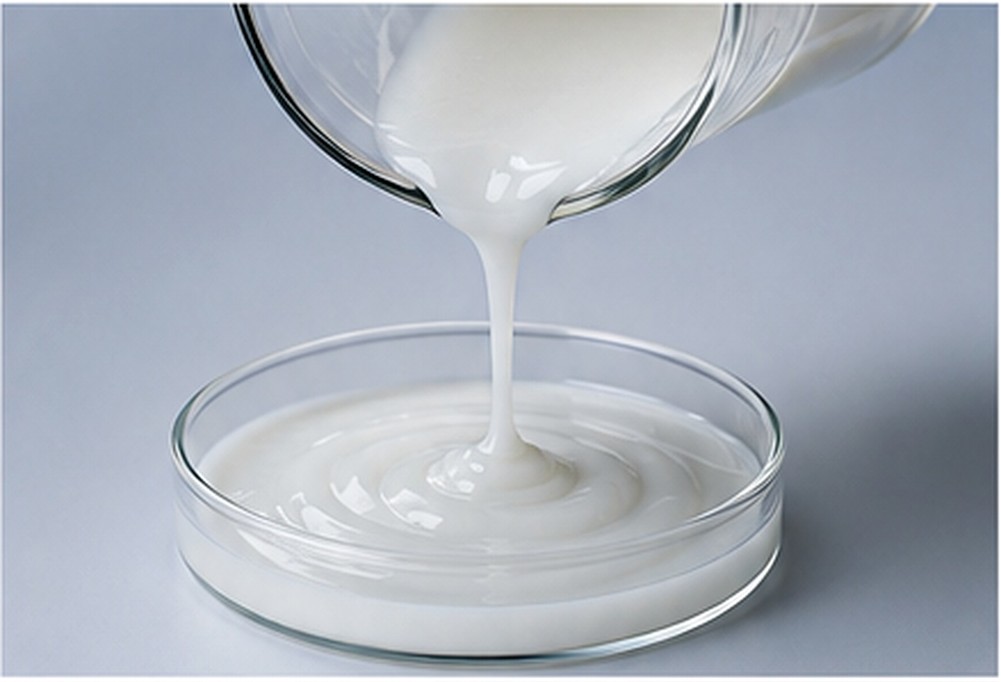 Figure 2. Smooth liquid dispersion representing uniform incorporation of a silicone-based formulation additive.
From Wetting to Stable Particle Distribution
Good dispersion begins when the liquid phase displaces air or moisture from the solid surface. After wetting, mechanical energy separates agglomerates into smaller units. The dispersant then has to remain associated with those new surfaces. When the stabilizing part of the molecule is compatible with the surrounding medium, it can create a solvated barrier that resists particle-particle attraction. This is why a dispersant that works well in one resin or solvent may perform poorly in another even when the pigment is unchanged.
- Match the anchor or surface-treatment chemistry to the particle. Inorganic oxides, organic pigments, carbonaceous solids and mineral flame retardants do not present the same surface chemistry.
- Match the solvated portion of the additive to the continuous phase. Waterborne, solvent-borne, high-solids and thermoplastic matrices need different compatibility profiles.
- Use enough mechanical energy to expose fresh surface. A dispersant cannot compensate for an underpowered milling or compounding step when hard agglomerates remain intact.
- Evaluate stability after the process, not only during it. Viscosity recovery, settling, color development, gloss, filtration and storage behavior can reveal reflocculation that is not obvious immediately after mixing.
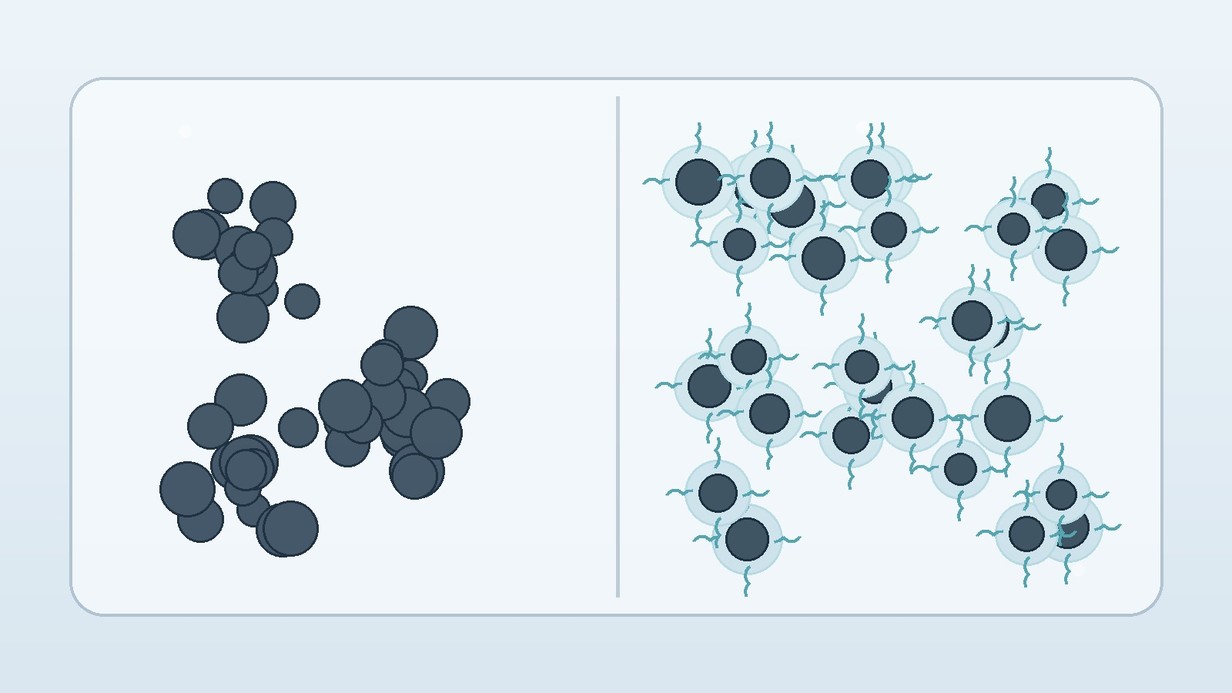 Figure 3. Conceptual contrast between agglomerated particles and a sterically stabilized dispersion.
Performance Goals Formulators Commonly Target
The value of a silicone-based dispersing agent is measured in the complete formulation. Depending on chemistry and system, development work may target one or several of the following outcomes:
- Faster pigment or filler wetting during premix, bead milling, high-shear mixing or compounding.
- Lower mill-base or compound viscosity, helping increase practical pigment or filler loading.
- Finer and more homogeneous particle distribution with fewer visible specks or hard agglomerates.
- Improved color strength, gloss or appearance when pigment deflocculation is the limiting factor.
- Lower flooding, floating or settling risk in multi-pigment and highly filled formulations.
- Improved hydrophobicity of selected filler surfaces and reduced water uptake in certain polymer compounds.
- Better processing rheology during extrusion, masterbatch production or high-solids mixing.
- Wetting of difficult surfaces while maintaining a formulation window for flow, leveling, air release and recoatability.
No single additive delivers all of these effects in every system. Surface properties should be checked alongside dispersion performance because excessive surface activity can alter foam, intercoat adhesion, slip or coating appearance.
Applications in Energy and Industrial Materials
Energy-related formulations often contain high levels of mineral, pigment or functional solids. That makes dispersion efficiency important not only for appearance, but also for processability and consistency of the finished material. Silicone-based dispersing and wetting chemistries can be evaluated in the following areas:
Flame-retardant polymer compounds - Organomodified siloxanes are used commercially to improve the dispersion of mineral flame retardants such as magnesium hydroxide (MDH) and aluminum trihydrate (ATH) in polyolefins and engineering resins. This is relevant to electrical and electronic compounds where filler loading, water uptake, rheology and tracking resistance may all matter.
Wire, cable and electrical polymer systems - Pigments, reinforcing fillers and flame-retardant packages must be distributed consistently through polymer matrices. A surface-treatment dispersant can help the compounding step when conventional lubrication alone does not provide enough filler compatibility.
Protective and functional coatings - Silicone polyethers and organomodified trisiloxanes are widely used in waterborne, solvent-borne and radiation-curable coatings to improve wetting, flow and surface uniformity. Where pigments are present, they can be part of a broader wetting-and-dispersion package.
Pigment concentrates and masterbatches - Liquid organomodified siloxanes are used in masterbatch manufacture to improve incorporation of inorganic and organic pigments and fillers. Search terms include silicone masterbatch dispersant, pigment dispersing additive for thermoplastics and organosiloxane filler treatment.
Industrial inks and coating concentrates - Modified silicone structures can support wetting of hard-to-wet surfaces and improve flow in ink systems; compatibility and recoatability should be checked when strong silicone surface activity is used.
Defoamer concentrates and emulsions - Certain polyether-modified polysiloxanes are specifically sold as dispersing agents for oil-based, silicone-based and water-based defoamer formulations, where phase compatibility and emulsion stability are central to performance.
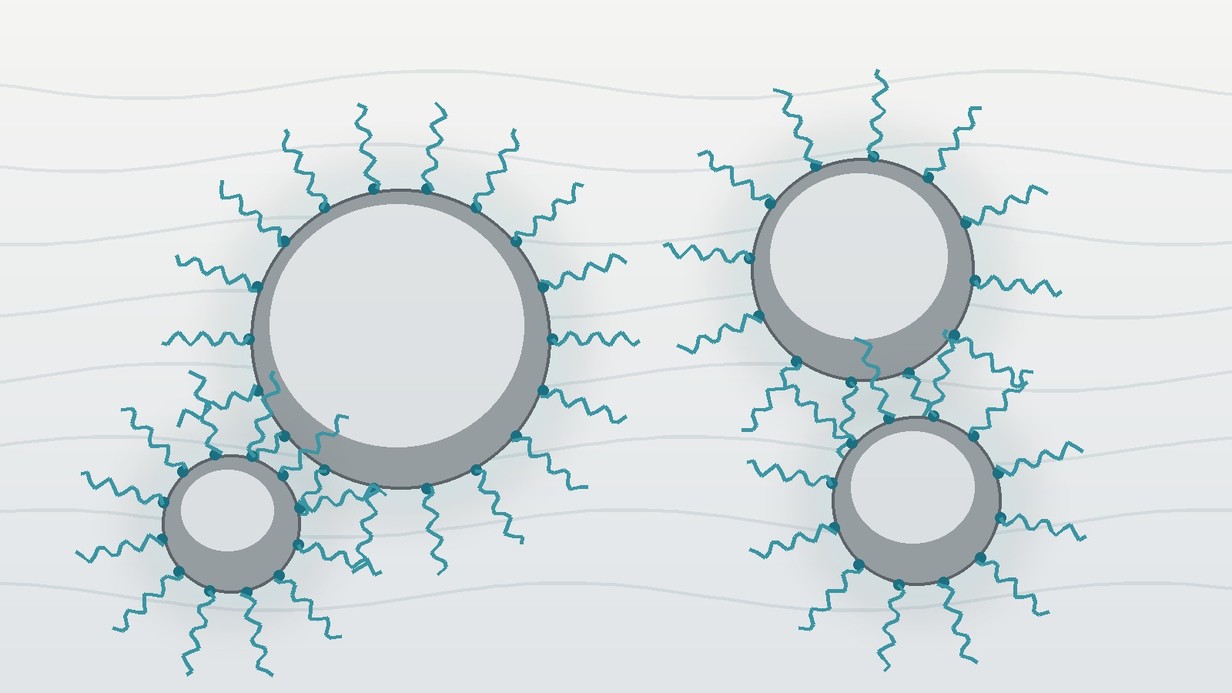 Figure 4. Conceptual organomodified siloxane layer around mineral filler particles in a compatible matrix.
Representative Products
| Search phrase |
Material direction |
Technical data to compare |
| Silicone polyether dispersing agent |
Modified polysiloxane / silicone-polyether |
Water compatibility, EO/PO character, HLB if applicable, viscosity, active content, ionic character. |
| Polyether modified polysiloxane wetting agent |
Silicone surface-active additive |
Surface tension, wetting speed, foam tendency, resin compatibility, recoatability. |
| Organomodified siloxane dispersing agent |
Siloxane surface-treatment additive |
Target pigment/filler, matrix, loading, surface hydrophobization, processing temperature. |
| Pigment dispersing agent for coatings and inks |
Silicone-based or silicone-containing additive direction |
Pigment type, binder, solvent, mill-base solids, target viscosity, color/gloss requirements. |
| Filler dispersant for ATH / MDH |
Organomodified siloxane for mineral fillers |
Filler grade and particle size, loading, polymer matrix, moisture/water uptake target, compounding route. |
| Silicone additive for masterbatch |
Liquid organomodified siloxane |
Carrier resin, pigment/filler, dosage screening, extrusion conditions, melt-flow and surface requirements. |
| Waterborne silicone wetting / dispersing additive |
Hydrophilic silicone polyether or trisiloxane direction |
Water solubility, pH/ionic compatibility, foam, substrate wetting, pigment stability. |
| Solvent-borne silicone wetting additive |
PO-rich or solvent-compatible silicone polyether direction |
Solvent/resin polarity, active form, leveling/slip effect, pigment concentrate compatibility. |
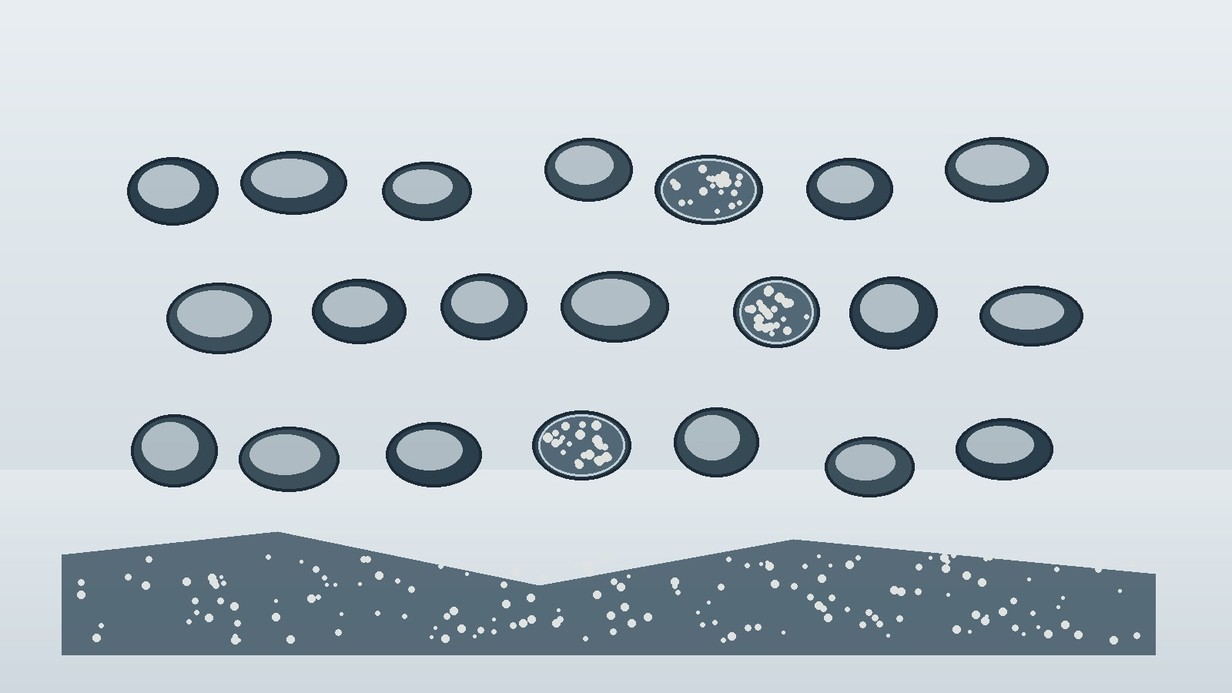 Figure 5. Uniform filler distribution in a masterbatch and polymer-melt concept after effective dispersion.
Standard silicone polyethers and organomodified siloxanes cover a wide range of industrial needs, but highly filled or surface-sensitive formulations often benefit from a tighter specification. Eata Silicon can review custom targets for organic modification, EO/PO balance, functional-group type, viscosity, active content, carrier system, water dispersibility, low-volatility requirements, pigment or filler compatibility and other project-specific analytical criteria.
Share the material you need to disperse, the liquid or polymer matrix, your processing route and the property that is currently limiting the formulation. We can discuss a standard material direction, a close functional analogue or a customized silicone-based dispersing agent for your research or industrial program.
Build the dispersion around the interface that actually matters
Contact Eata Silicon with your pigment, filler, resin and processing requirements to discuss a suitable silicone dispersant or customized modified siloxane solution.
For Research or Industrial Raw Materials, Not For Personal Medical Use!