When NASA needed bearings that could live inside the main engines of the Space Shuttle – bathed in the thermal shock and savage temperature gradients of hydrogen–oxygen combustion – it chose silicon nitride, one of the very few monolithic ceramics that proved completely reliable through the entire program. That endorsement still captures what Si₃N₄ offers engineers today: a rare pairing of metal-like toughness with ceramic hardness, wrapped in a package barely heavier than aluminum, that keeps its strength long after steels have softened.
Silicon nitride does not occur in nature – every gram is synthesized – and its strong covalent silicon–nitrogen bonds make it stubborn to manufacture: it decomposes near 1,850 °C rather than melting, and pure powder will not densify without sintering aids. Yet those same bonds give sintered parts their signature microstructure of interlocking rod-shaped β grains that bridge cracks and blunt them. Eata Silicon supplies silicon nitride raw materials across the full range – α-phase and β-phase powders, high-purity electronic grades, granulated press-ready feedstocks, and sintering-additive premixes – with custom particle size and chemistry available on request.
Browse Our Products
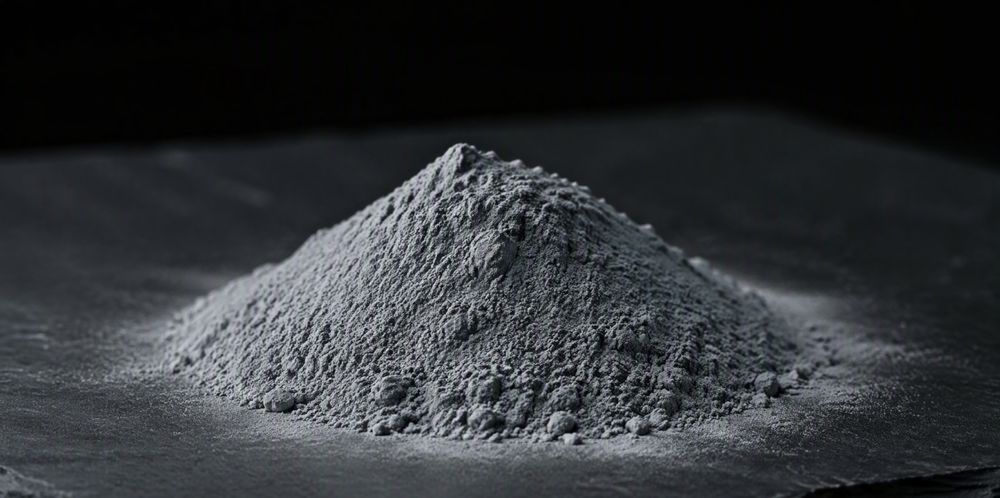 Fine gray silicon nitride powder – every component starts here.
Four Routes to Silicon Nitride Powder
The synthesis route decides the phase content, particle size, purity, and cost of the powder – and therefore what the finished ceramic can do:
- Carbothermal reduction–nitridation – silica and carbon react in nitrogen (3SiO₂ + 6C + 2N₂ → Si₃N₄ + 6CO) at 1,350–1,500 °C for several hours, followed by decarburization at 600–1,000 °C. The most economical large-scale route; it yields predominantly α-phase powder with controllable size distributions.
- Direct nitridation of silicon – silicon metal powder nitrided as 3Si + 2N₂ → Si₃N₄, including self-propagating combustion synthesis, produces highly crystalline β-rich lumps that are milled to powders centered around 1–3 µm.
- Gas-phase reaction – silicon tetrachloride and ammonia (3SiCl₄ + 16NH₃ → Si₃N₄ + 12NH₄Cl) deliver ultrafine 50–200 nm powders with total metallic impurities below 50 ppm, the grade of choice for electronics and optics.
- Polymer-derived synthesis – thermally decomposing polysilazane precursors over crystalline seed powder at 1,200–1,400 °C gives equiaxed particles with more than 92% α content and excellent packing behavior.
From Powder to Part: Why Sintering Si₃N₄ Is an Art
Strong covalent bonds mean atoms move slowly even near the decomposition point, so dense silicon nitride is always made with help – typically yttria, alumina, or magnesia additives that form a liquid phase at sintering temperature. The chosen consolidation route sets the property ceiling:
| Route |
Density |
Flexural Strength |
Fracture Toughness |
| Reaction-bonded (RBSN) |
70–88% of theoretical |
150–350 MPa |
1.5–3 MPa·m½ |
| Pressureless / gas-pressure sintered (SSN, GPSN) |
95–100% |
500–1,000+ MPa |
5–8 MPa·m½ |
| Hot-pressed / HIP (HPSN, HIPSN) |
~100% |
680–970+ MPa |
6–8.5 MPa·m½ |
During sintering, α grains dissolve and reprecipitate as elongated β crystals that interlock like a microscopic lattice of rods; when a crack tries to run, these rods bridge and deflect it – silicon nitride effectively toughens itself. Parts shrink about 20% during densification, so tight-tolerance components are finish-ground with diamond tooling, a cost worth planning for at the design stage.
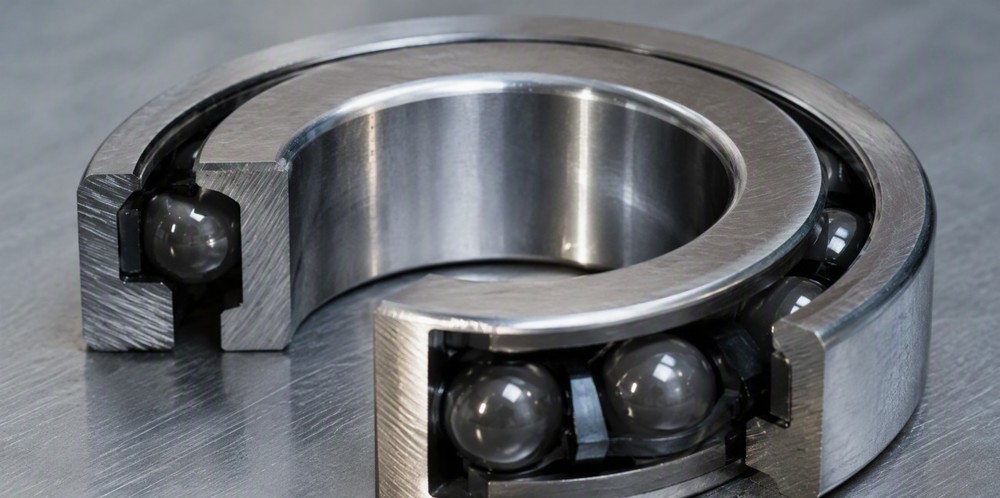 Ceramic balls in steel races: the hybrid bearing formula.
The Property Profile Behind the Demand
| Property |
Typical Value |
| Density |
3.18–3.29 g/cm³ – roughly 40% of bearing steel; centrifugal loads on races drop accordingly |
| Flexural strength |
680–970 MPa typical; GPSN grades reach 900–1,200 MPa and keep working past 1,000 °C |
| Fracture toughness |
5–8.5 MPa·m½ – double or triple most oxide ceramics |
| Hardness |
1,400–1,600 HV (~15–16 GPa) |
| Young's modulus |
300–340 GPa |
| Thermal expansion |
3.2–3.3 × 10⁻⁶ K⁻¹ – a close match to silicon and SiC chips |
| Thermal conductivity |
20–30 W/m·K structural grades; 80–90 W/m·K substrate grades |
| Service temperature |
~1,200–1,300 °C in air; 1,400–1,600 °C in inert atmosphere |
| Thermal shock |
R1 parameter 558–748 K – quench resistance few ceramics approach |
| Electrical |
Insulator: ≥10¹⁴ Ω·cm; dielectric strength 15–20 kV/mm |
Where Silicon Nitride Components Work
- Hybrid and all-ceramic bearings – Si₃N₄ rolling elements cut ball mass by ~60%, run faster and cooler, and in rolling-contact fatigue testing fully dense silicon nitride outlasts high-performance bearing steel ten to one. As an insulator it also blocks the stray shaft currents that erode steel bearings in inverter-driven EV motors.
- Cutting tools – ceramic inserts machine gray cast iron at maximum speed without coolant, outrunning carbide where heat and abrasion end other edges.
- Welding and joining – locating pins, TIG and plasma nozzles, and weld positioners that shrug off thermal cycling and resist weld-spatter adhesion.
- Molten non-ferrous metal handling – thermocouple sheaths, heater tubes, and pump components in aluminum, zinc, lead, and tin melts; silicon nitride is not wetted by these alloys (though molten magnesium, titanium, iron, and cryolite attack it).
- Engines and turbines – turbocharger rotors, valves, and cam followers, the demanding automotive applications for which today's highest-quality bodies were originally developed.
- Semiconductor and power electronics – process chamber components, and the AMB circuit substrates that have become the standard platform under SiC power modules.
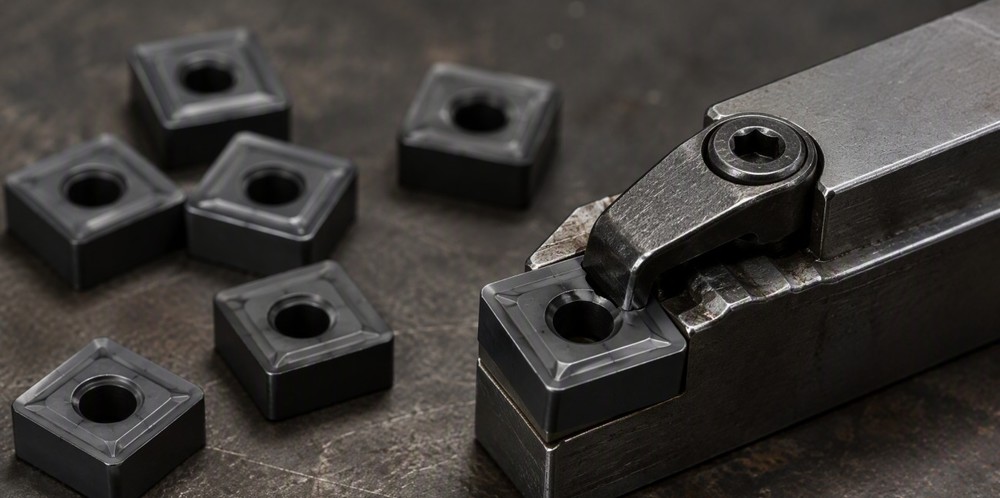 Inserts that machine cast iron dry, at full speed.
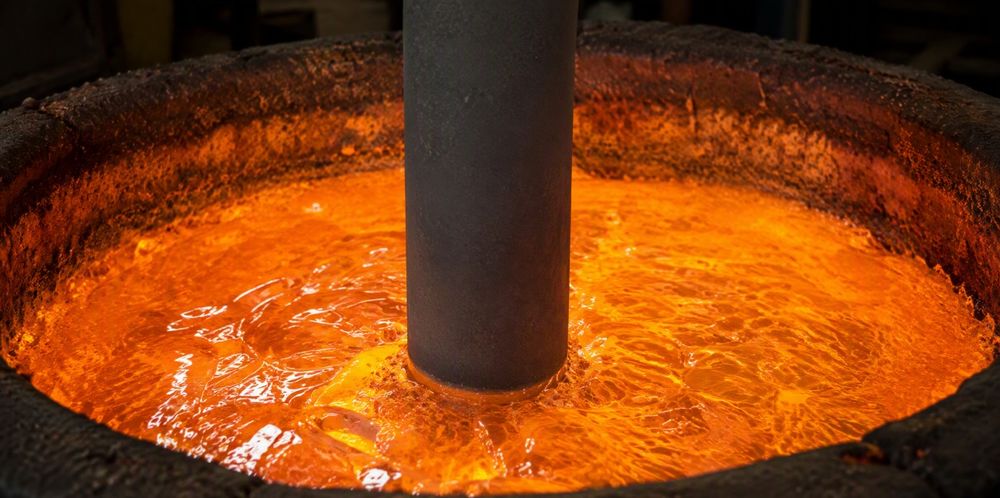 Non-wetting by nature: a Si₃N₄ sheath in molten aluminum.
Silicon Nitride in Power Electronics: The AMB Story
The fastest-growing demand for high-grade Si₃N₄ comes from the energy transition itself. Active-metal-brazed (AMB) substrates bond thick copper – 0.3 to 0.8 mm – directly onto silicon nitride ceramic, and the combination has become the industry standard under 800-volt SiC traction inverters. The ceramic brings thermal conductivity of 80–90 W/m·K (three times alumina), bending strength of 650–800 MPa (double AlN), and a thermal expansion of 2.6–3.2 ppm/K that almost exactly matches the silicon and SiC chips soldered above it. In thermal cycling from ∓40 °C to 150 °C, alumina substrates show delamination after 400–500 cycles; silicon nitride substrates pass 1,000 cycles without significant degradation. Because the ceramic is so strong it can be made thinner – down to 0.25 mm – which returns much of the thermal-resistance advantage of higher-conductivity AlN. Behind every one of these substrates sits a tightly specified powder: low oxygen, low metals, D50 at or below one micron.
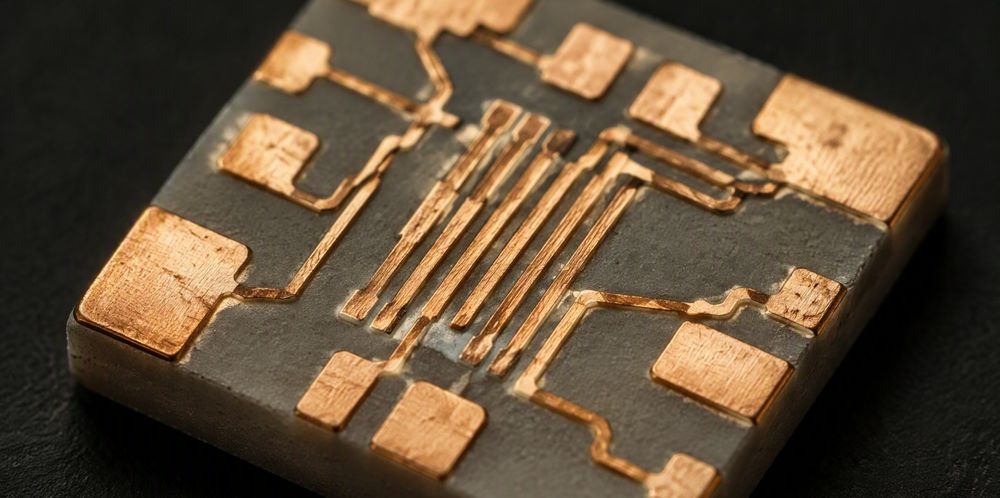 Copper brazed to ceramic: an AMB substrate up close.
Representative Products at a Glance
| Product Type |
Typical Specification |
Typical Use |
| α-Si₃N₄ powder (alpha phase) |
≥90–95% α, D50 0.5–2 µm |
Sintering structural ceramics, GPSN parts |
| High-purity Si₃N₄ powder |
Metals < 50 ppm, gas-phase synthesized |
Electronics, optics, semiconductor equipment |
| Granulated press-ready powder |
Spray-dried 50–100 µm granules, binder system |
Uniaxial and isostatic pressing |
| Sintering-additive premix |
Si₃N₄ + Y₂O₃/Al₂O₃/MgO, pre-blended |
Direct-to-press sintering formulations |
| β-Si₃N₄ powder and whiskers |
Beta phase, elongated crystals available |
Self-reinforced ceramics, seeds, composites |
| Substrate-grade Si₃N₄ powder |
Low O, D50 ≤ 1 µm, high-TC formulation ready |
AMB substrates for SiC/IGBT modules |
| Nano silicon nitride powder |
50–200 nm primary particles, high BET |
Coatings, polymer reinforcement, R&D |
| Thermal-spray feedstock |
Sized agglomerates for plasma spraying |
Wear and corrosion-resistant coatings |
| RBSN-grade nitriding mix |
Si powder + diluent, reaction-bonding ready |
Reaction-bonded Si₃N₄ shapes |
| Custom Si₃N₄ formulations |
Customer-specified phase, size, additives |
Process development, proprietary grades |
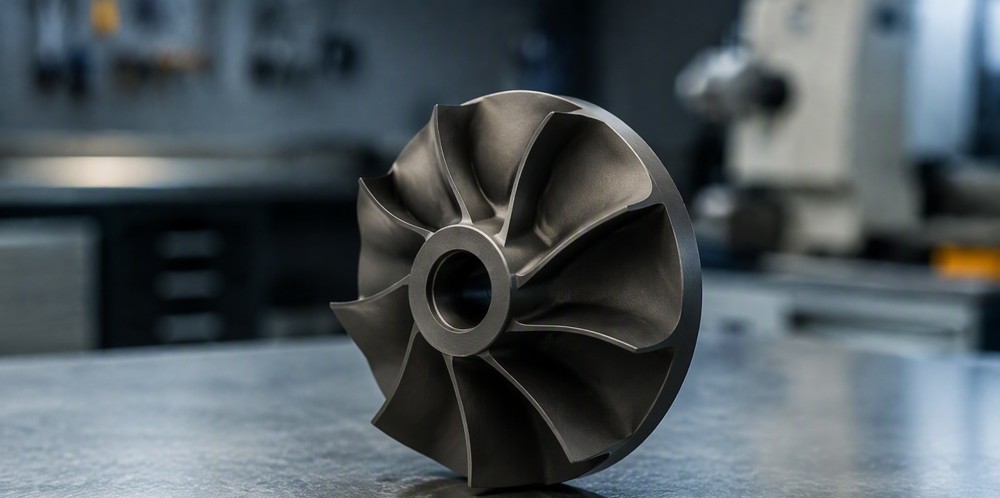 A ceramic rotor built for heat and speed.
Catalog powders cover the mainstream, but sintering recipes are personal. Eata Silicon routinely produces custom phase ratios and particle size cuts, low-oxygen powders for high-thermal-conductivity substrates, customer-specified additive premixes, granulations tuned to a particular press or caster, and pilot-scale development lots that bridge laboratory formulation and production commitment.
Share your target phase content, particle size, chemistry limits, and forming route, and our team will answer with a recommended grade, a data sheet, and samples for evaluation.
For Research or Industrial Raw Materials, Not For Personal Medical Use!