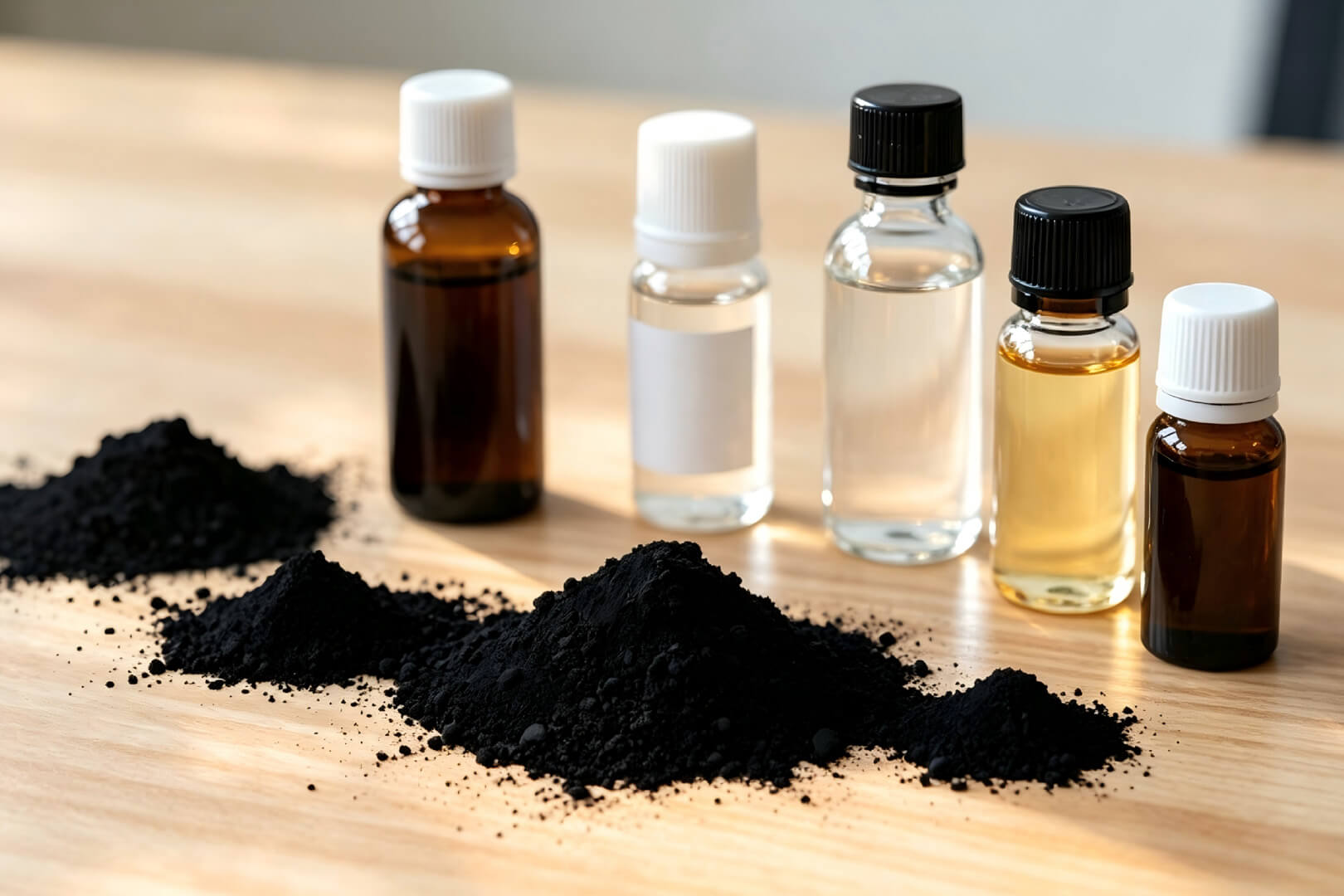
Fluorinated organosilane monomers combine a silicon-based reactive center with a fluorinated organic group, giving materials developers a direct way to introduce fluorine-rich surface character into siloxane networks, oxide surfaces and other compatible interfaces. Depending on molecular structure, these monomers can support lower surface energy, controlled wetting, hydrophobic or oleophobic behavior, and tailored interfacial chemistry.
Eata Silicon works with customers evaluating fluorinated alkoxysilanes, fluorinated chlorosilanes and related organosilicon intermediates for coatings, silica modification, porous materials, microfabrication and specialized material systems. Product selection is best driven by the substrate, hydrolyzable group, fluorinated chain architecture, processing route and the surface performance the formulation must achieve.
How Fluorinated Organosilanes Build Low-Energy Interfaces
On hydroxyl-bearing substrates, organosilanes can form Si–O–surface linkages either directly or through hydrolysis to silanol intermediates followed by condensation. The fluorinated organic portion remains oriented toward the outer interface, where it can change polarity and wetting behavior. The practical result depends on surface preparation, water content, catalyst, deposition method and molecular architecture rather than fluorine content alone.
Methoxy, ethoxy and chloro groups create different processing windows. Trialkoxysilanes are widely used for hydrolytic deposition and sol–gel chemistry, while chlorosilanes are more reactive and are frequently chosen for tightly controlled surface-silanization or self-assembled-monolayer work. This difference is important when a customer moves from a simple screening experiment to a reproducible coating process.
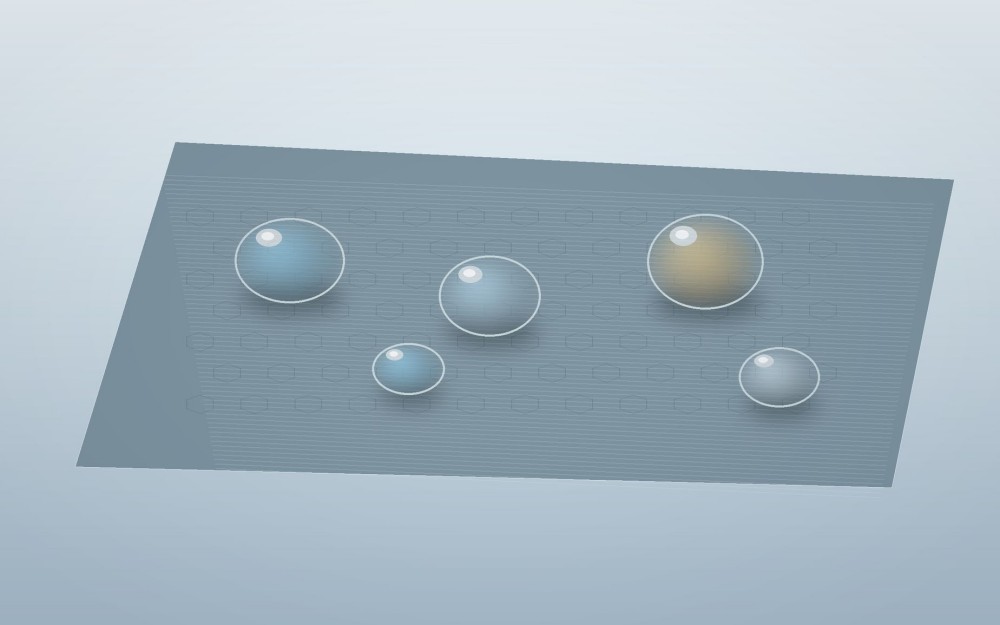 Fig. 1. Low-energy surface treatment concept showing discrete liquid beading on a structured metal substrate.
Representative Products
| Product / Search Term |
CAS No. |
Silane Functionality |
Typical Technical Context |
| Trimethoxy(3,3,3-trifluoropropyl)silane |
429-60-7 |
Trimethoxy |
Fluorinated silsesquioxane synthesis; hydrophobic silica and aerogel chemistry; organosilicon intermediate |
| Trichloro(3,3,3-trifluoropropyl)silane |
592-09-6 |
Trichloro |
Reactive silanization; fluorinated POSS precursor; preparation of other trifluoropropyl silanes |
| Diethoxy(methyl)(3,3,3-trifluoropropyl)silane |
86876-45-1 |
Diethoxy / methyl |
Fluorinated organosilicon intermediate for structure and formulation development |
| Dimethylmethoxy(3,3,3-trifluoropropyl)silane |
4852-13-5 |
Methoxy / dimethyl |
Monofunctional fluorosilane intermediate for organosilicon synthesis and surface-chemistry screening |
| Dichloro(methyl)(3,3,3-trifluoropropyl)silane |
675-62-7 |
Dichloro / methyl |
Reactive fluorosilane intermediate for siloxane, coating and surface-modification chemistry |
| 1H,1H,2H,2H-Perfluorooctyltriethoxysilane (FOTS / POTS) |
51851-37-7 |
Triethoxy |
Low-surface-energy coatings; hydrophobic or superhydrophobic surface treatment; anti-fouling interface research |
What These Monomers Can Do in Material Design
- Low-surface-energy modification: Fluorinated groups can reduce the affinity of a treated surface for water and, depending on chain structure and surface coverage, may also reduce wetting by oils or other low-polarity liquids.
- Surface anchoring on inorganic substrates: Hydrolyzable silane groups can be used to modify glass, silica, silicon oxide, ceramics, mineral particles and many metal-oxide surfaces after suitable pretreatment.
- Network incorporation: Trifluoropropyl alkoxysilanes can participate in sol–gel and silsesquioxane chemistry, allowing fluorinated groups to be introduced into hybrid inorganic–organic networks.
- Controlled friction and adhesion: Fluoroalkyl silane monolayers are widely studied on silicon and silica surfaces where reduced adhesion and anti-stiction behavior are important.
- Wetting control in fluid-contact systems: Selected fluorinated silanes are used to tune surface behavior in microfluidic channels, porous membranes and anti-fouling interfaces.
Fluorinated Silanes in Silica and Aerogel Systems
Trifluoropropyl alkoxysilanes are particularly relevant to silica-rich materials because they can be incorporated during sol–gel chemistry or used as post-treatment reagents. Published studies have used fluorinated silylation to make silica aerogels hydrophobic while preserving the lightweight porous framework that makes aerogels attractive for insulation, adsorption and specialty functional-material development.
For procurement, the useful questions are not limited to nominal purity. Customers should also consider water sensitivity, hydrolysis behavior, catalyst system, co-precursor ratio, solvent compatibility and whether the fluorinated group must be distributed throughout the bulk network or concentrated near the surface.
 Fig. 2. Porous silica-based material represented with a fluorinated surface layer for moisture-control studies.
Microfluidics, Membranes and Process-Surface Wetting
In microfluidic devices and membrane systems, unwanted wetting or surface fouling can change flow behavior, droplet transport and process reproducibility. Fluoroalkyl trialkoxysilanes have been evaluated as surface modifiers for polymeric and ceramic substrates, while related silanes are used on glass and oxide surfaces to create more water-repellent interfaces. The best candidate depends on the substrate chemistry and whether the process uses solution deposition, vapor treatment or a sol–gel route.
 Fig. 3. Surface-treated microfluidic channels illustrating controlled droplet transport and reduced wetting.
MEMS, Silicon and Precision Surface Engineering
At micro- and nanoscale dimensions, adhesion and capillary forces can dominate device behavior. Perfluoroalkylsilane self-assembled monolayers have therefore been investigated as low-friction, anti-stiction treatments on silicon and silica microstructures. For this type of work, precursor volatility, hydrolyzable group, moisture control, deposition temperature, film uniformity and substrate oxide condition can be as important as the fluorinated tail itself.
 Fig. 4. Micromachined silicon structures represented with a thin anti-stiction surface layer.
Protective and Anti-Fouling Surface Concepts
Fluorinated organosilanes are frequently selected when a project needs a chemically anchored surface treatment rather than a free additive. On compatible metal-oxide, glass, ceramic and silica surfaces, a well-designed treatment can support water repellency, easier release, reduced contamination pickup or improved resistance to liquid spreading. Performance should always be validated under the actual temperature, solvent, abrasion and cleaning conditions of the final process.
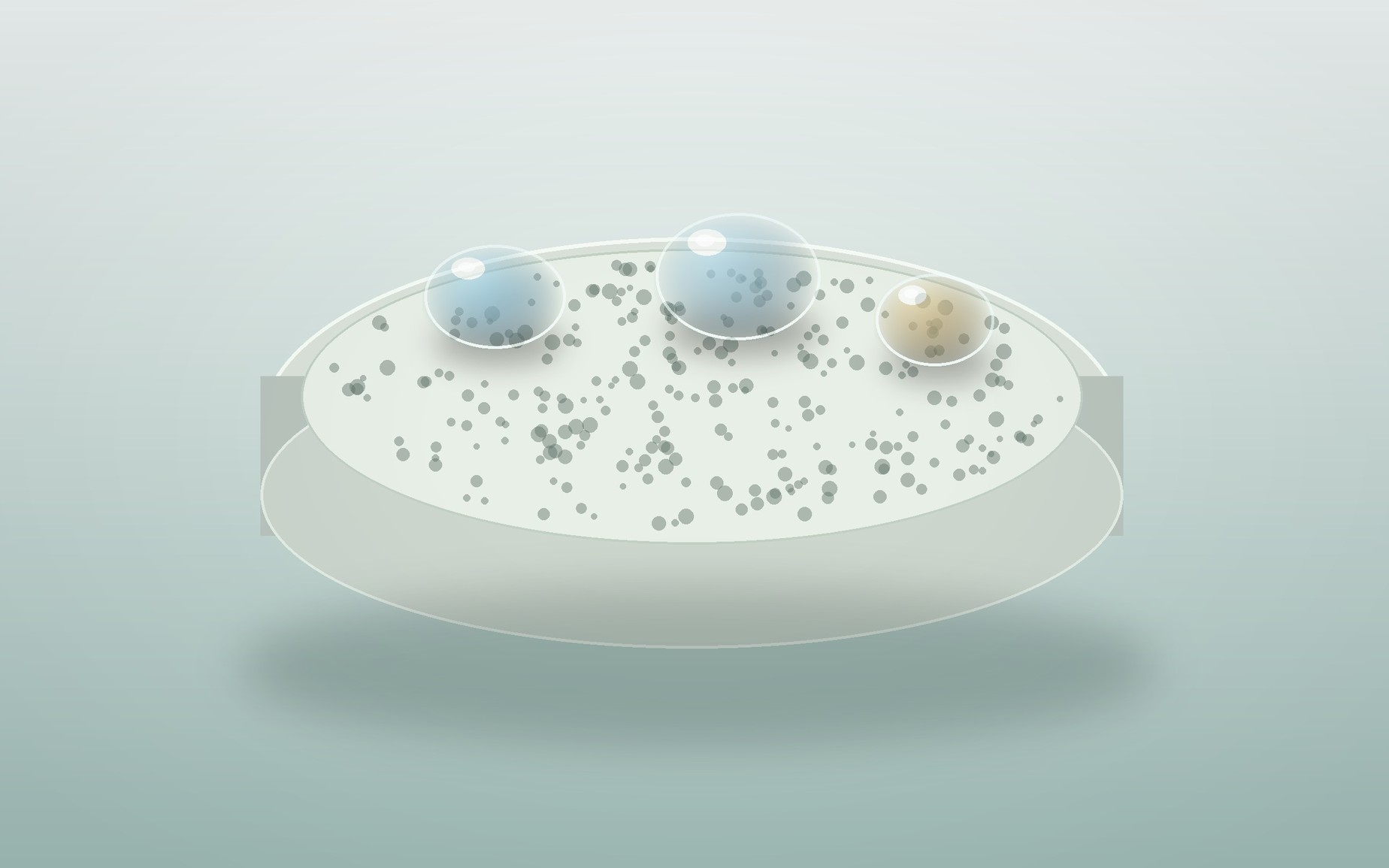 Fig. 5. Hydrophobic ceramic membrane concept for controlled wetting and fouling-resistance research.
Selecting the Right Fluorinated Organosilane
- Substrate chemistry: Identify glass, silica, silicon oxide, ceramic, metal oxide, mineral filler, porous membrane or another target surface.
- Fluorinated group: Define whether a short trifluoropropyl unit is sufficient or a longer fluoroalkyl architecture is required for the target surface behavior.
- Hydrolyzable group: Choose among methoxy, ethoxy, chloro or other silicon functionality according to reactivity, deposition route and process tolerance.
- Application route: Indicate solution coating, vapor treatment, sol–gel incorporation, particle treatment, polymer synthesis or another process.
- Performance target: Provide the desired wetting behavior, release property, anti-fouling function, friction reduction or network modification goal.
- Specification priorities: Include target assay, water limit, color, critical impurities, analytical method, quantity and preferred packaging format.
Why Buyers Choose Eata Silicon
- Chemistry-focused sourcing: Compare fluorinated silane structures by functional group, hydrolyzable group, CAS number and intended interface rather than by a generic product label.
- Specification-led discussion: Assay, moisture, critical impurities, packaging and analytical requirements can be reviewed against the application instead of applying unnecessary limits.
- Application-aware product matching: Surface-treatment, sol–gel, porous-material and organosilicon-synthesis projects can be evaluated from the process requirements backward to the candidate monomer.
- Flexible project support: Standard structures can be compared alongside customized fluorinated organosilicon intermediates where a different functionality or specification is needed.
When an off-the-shelf fluorosilane does not match the required process window, Eata Silicon can evaluate a customized material request. Projects may involve a different fluorinated chain, alternative methoxy/ethoxy/chloro functionality, a defined assay or impurity profile, a related organosilicon intermediate, or application-specific packaging.
For the most focused technical review, send the target chemical name or structure, CAS number when available, intended substrate or reaction, process route, target purity, critical impurity limits, expected quantity and any performance criteria that matter to your formulation. We can then assess a suitable standard option or a custom product pathway.
Tell us the surface, chemistry and specification you need — Eata Silicon can help define a fluorinated organosilane solution for your project.
| Catalog Number |
Product Name |
Order |
Quantity |
|
ORM-0207 |
Diisopropylsilyl Bis(trifluoromethanesulfonate), CAS 85272-30-6
|
Inquiry
|
|
|
ORM-0208 |
Chlorodimethyl[3-(pentafluorophenyl)propyl]silane, CAS 157499-19-9
|
Inquiry
|
|
|
ORM-0209 |
(3,3,3-Trifluoropropyl)methyldimethoxysilane, CAS 358-67-8, ≥97%
|
Inquiry
|
|
|
ORM-0210 |
1H,1H,2H,2H-Heptadecafluorodecyltriethoxysilane, CAS 101947-16-4, ≥97%
|
Inquiry
|
|
|
ORM-0211 |
1H,1H,2H,2H-Heptadecafluorodecyltrimethoxysilane, CAS 83048-65-1, ≥97%
|
Inquiry
|
|
|
ORM-0212 |
1H,1H,2H,2H-Tridecafluorooctyltriethoxysilane, CAS 51851-37-7, ≥97%
|
Inquiry
|
|
|
ORM-0213 |
3,3,3-Trifluoropropyltrimethoxysilane, CAS 429-60-7, 98%
|
Inquiry
|
|
|
ORM-0214 |
(3,3,3-Trifluoropropyl)methyldimethoxysilane (≥97%), CAS 358-67-8
|
Inquiry
|
|
|
ORM-0215 |
1H,1H,2H,2H-Heptadecafluorodecyltriethoxysilane, ≥97% (CAS 101947-16-4)
|
Inquiry
|
|
|
ORM-0216 |
1H,1H,2H,2H-Heptadecafluorodecyltrimethoxysilane – CAS 83048-65-1, ≥97%
|
Inquiry
|
|
For Research or Industrial Raw Materials, Not For Personal Medical Use!