Silane crosslinking monomers give formulators a compact way to place reactive silicon functionality exactly where a polymer, coating, composite or silicone network needs it. Vinyl, methacryloxy, acryloxy, alkoxy and acetoxy silanes can participate in grafting, copolymerization or condensation pathways, allowing a material to move from a processable state to a more durable three-dimensional network.
Eata Silicon supports customers selecting silane crosslinkers by chemistry rather than by trade name alone. The useful starting points are the polymer or resin, cure route, hydrolyzable group, desired crosslink density, substrate or filler, moisture conditions, purity target and any critical inhibitor or impurity limits.
How Silane Crosslinking Chemistry Creates a Network
The defining advantage of many crosslinking silanes is dual reactivity. One part of the molecule can join an organic polymer or resin, while the silicon-bound hydrolyzable groups can convert to silanols and then condense to Si-O-Si linkages. This two-step logic is the basis of widely used moisture-crosslinkable thermoplastics and also appears in silane-modified binders, hybrid resins and filler-treated compounds.
Vinyltrialkoxysilanes such as vinyltrimethoxysilane and vinyltriethoxysilane can be grafted to polyethylene through peroxide-initiated processing. After grafting, the material remains thermoplastically processable; later exposure to moisture converts the alkoxy groups to silanols, followed by condensation into a crosslinked siloxane network. Methacryloxy- and acryloxy-functional silanes take a different route: their unsaturated organic group can enter free-radical or UV-curable polymerization while the trialkoxysilyl group supplies a second path for bonding, moisture cure or interaction with inorganic surfaces.
Condensation-cure silicone systems use the same silicon-oxygen network logic from another direction. Alkoxy and acetoxy silanes can react with silanol-terminated silicone chains to generate a three-dimensional elastomer network. The ideal monomer therefore depends on whether the job is polymer grafting, radical copolymerization, interfacial coupling or direct silicone crosslinking.
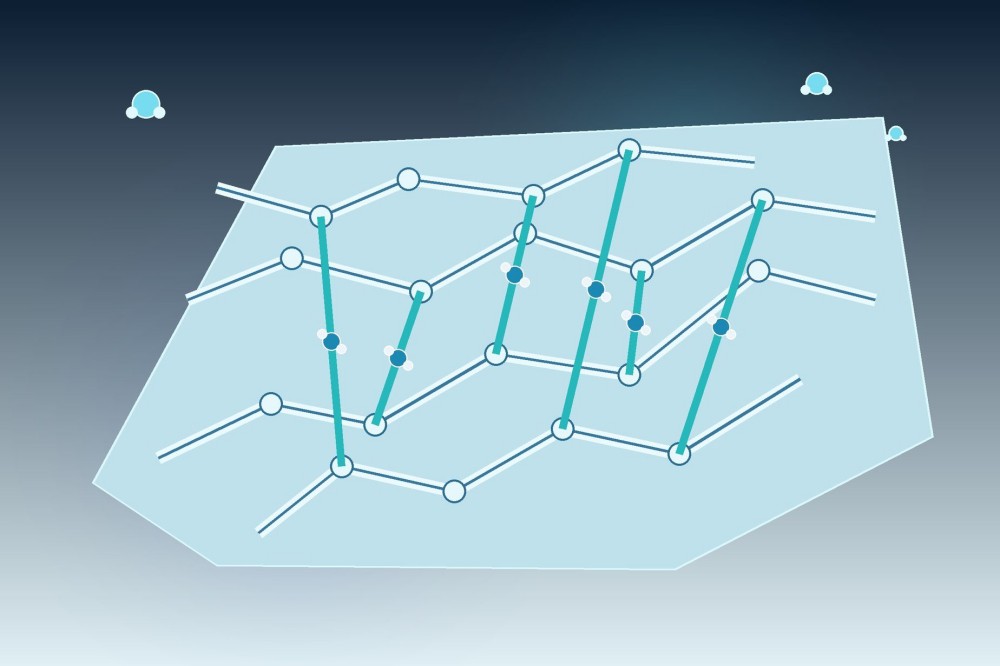 Fig. 1. Conceptual polymer network after silane grafting, hydrolysis and siloxane condensation.
Representative Products
| Product |
CAS No. |
Functional Pattern |
Typical Technical Context |
| Vinyltrimethoxysilane (VTMS / VTM) |
2768-02-7 |
Vinyl + trimethoxy |
Moisture-crosslinkable polyethylene; silane-modified polymers; adhesion and filler modification |
| Vinyltriethoxysilane (VTES / VTE) |
78-08-0 |
Vinyl + triethoxy |
Moisture cure of polyolefins; binders; cable and pipe compounds; coatings |
| Vinyltris(2-methoxyethoxy)silane (VTMOEO) |
1067-53-4 |
Vinyl + 2-methoxyethoxy |
Mineral-filled polymers; cable compounds; co-monomer and adhesion applications |
| Vinyltri(n-butoxy)silane |
18402-29-4 |
Vinyl + n-butoxy |
HFFR polyolefin compounds; PE-Xb pipes and cables; filler treatment |
| 3-Methacryloxypropyltrimethoxysilane (MPS / MEMO / MAPTMS) |
2530-85-0 |
Methacrylate + trimethoxy |
Free-radical resin modification; crosslinking; composites; filled polymers; coatings |
| Methacryloxypropyltriethoxysilane |
21142-29-0 |
Methacrylate + triethoxy |
Radical- and UV-cure systems; polymer synthesis; particle and surface modification |
| 3-Acryloxypropyltrimethoxysilane |
4369-14-6 |
Acrylate + trimethoxy |
UV/free-radical copolymerization; coatings; optical-fiber and composite chemistry |
| Methyltrimethoxysilane (MTMS) |
1185-55-3 |
Trifunctional methoxy |
Alkoxy crosslinker; condensation-cure silicone; siloxane and sol-gel network formation |
| Methyltriethoxysilane (MTES) |
2031-67-6 |
Trifunctional ethoxy |
Condensation crosslinking; organosiloxane network formation; formulation development |
| Tetraethoxysilane / TEOS |
78-10-4 |
Tetrafunctional ethoxy |
Condensation crosslinker and silica-network precursor in silicone and hybrid systems |
| Methyltriacetoxysilane |
4253-34-3 |
Trifunctional acetoxy |
Acetoxy crosslinker for condensation-cure silicone RTV formulations |
| Vinyltriacetoxysilane |
4130-08-9 |
Vinyl + triacetoxy |
Acetoxy-type crosslinker for condensation-cure silicone systems |
Why Crosslinking Silanes Are Chosen in Polymer Systems
- Heat and dimensional stability: crosslinking limits chain mobility, helping thermoplastics retain useful properties at temperatures where an uncrosslinked grade may soften more readily.
- Mechanical durability: properly designed crosslinked systems can improve resistance to tear, cracking, abrasion and long-term deformation.
- Wet performance: siloxane crosslinks and stronger filler/polymer interfaces can help maintain mechanical or electrical properties after moisture exposure.
- Filler compatibility: organofunctional silanes can improve bonding and dispersion between mineral fillers and organic polymers, which is especially relevant to cable compounds and reinforced formulations.
- Adhesion to inorganic surfaces: hydrolyzable silane groups can bond with glass, silica, metal oxides and mineral surfaces, while the organic group participates in the surrounding resin chemistry.
- Formulation flexibility: changing the organic group or the hydrolyzable group can alter grafting behavior, hydrolysis rate, cure window, byproduct profile and compatibility with the chosen resin.
Moisture-Crosslinked Polyolefins for Wire, Cable and Pipe
Vinylalkoxysilanes are established building blocks for moisture-crosslinked polyethylene, often described as PE-Xb. In a typical grafting route, the vinyl silane is introduced to polyethylene under peroxide-initiated extrusion conditions. The grafted polymer can then be shaped using normal thermoplastic processing before moisture and a suitable catalyst drive silanol condensation and final network formation.
This chemistry is widely associated with cable insulation and sheathing, hot-water and sanitary piping, underfloor-heating pipe and other polyolefin applications where elevated-temperature performance and mechanical durability matter. Vinyltrimethoxysilane offers a fast-hydrolyzing methoxy route, while vinyltriethoxysilane and longer-alkoxy analogues can be selected when the processing window or formulation balance points in another direction.
 Fig. 2. Cable insulation cross-section representing a common use of moisture-crosslinked polyolefins.
Mineral-Filled and HFFR Compound Development
In highly filled cable and polymer compounds, the silane can do more than create crosslinks. Hydrolyzable silicon functionality can interact with hydroxyl-rich mineral fillers such as aluminum trihydrate (ATH) or magnesium hydroxide (MDH), while the organofunctional side participates in the polymer phase. Better interfacial compatibility can support filler dispersion, rheology control and retention of mechanical or electrical properties in wet conditions.
For halogen-free flame-retardant cable formulations based on EVA, EPDM, LLDPE or related polyolefins, the choice of vinyl silane should be made alongside filler type, filler surface area, loading level, peroxide system, processing temperature and target cure schedule. A molecule that is appropriate for a simple polyethylene grafting trial may not be the best choice for a heavily filled compound.
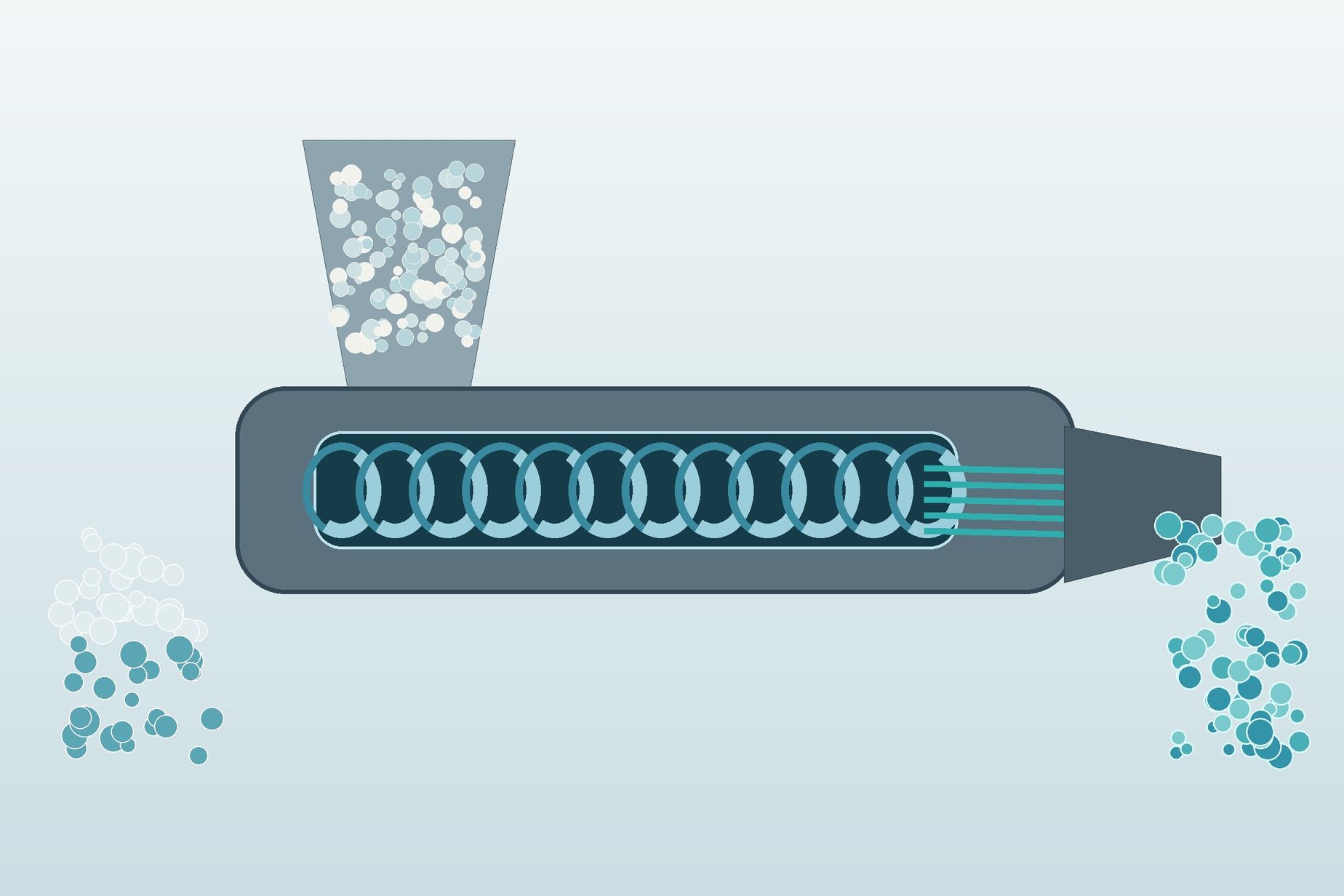 Fig. 3. Mineral-filled compounding concept for silane-assisted filler compatibility during extrusion.
Free-Radical, UV-Curable and Hybrid Resin Routes
Methacryloxypropyl and acryloxypropyl silanes are useful when the organic side of the molecule needs to enter an acrylic, methacrylic or other free-radical cure mechanism. 3-Methacryloxypropyltrimethoxysilane is widely used as a co-monomer, crosslinker, surface modifier and coupling agent. Related methacryloxypropyltriethoxysilane and acryloxypropyltrimethoxysilane extend the design space for radical- and UV-curable formulations.
These monomers are particularly useful in composite resins, filled polymers, coatings and adhesive systems that benefit from both an organic polymerizable group and a hydrolyzable silyl group. The balance between organic conversion and silane hydrolysis should be considered carefully: premature moisture contact can change storage or processing behavior, while insufficient hydrolysis or condensation may leave part of the silane functionality unused.
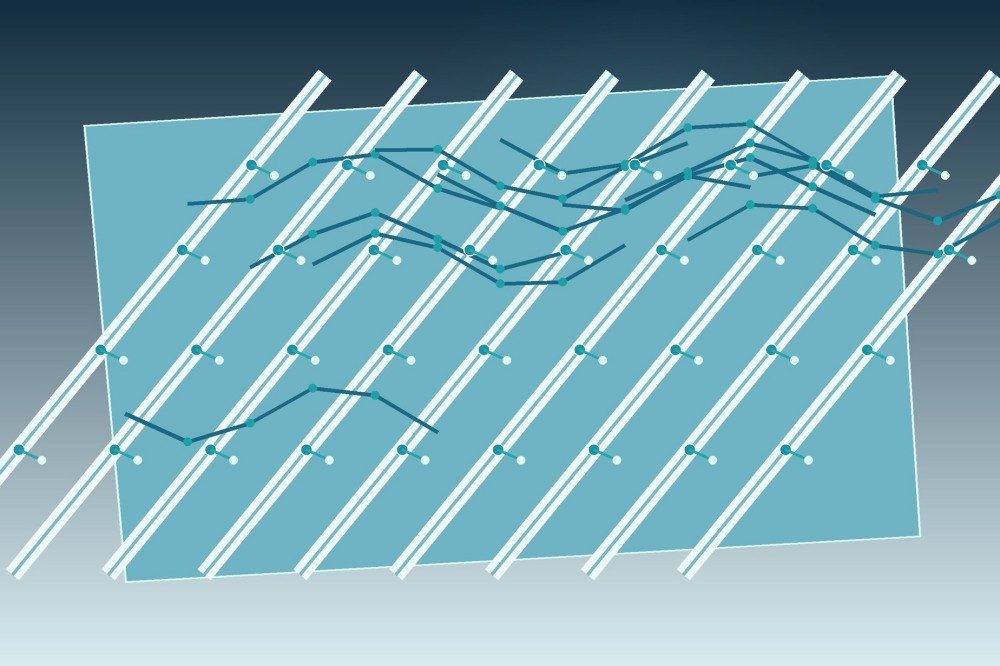 Fig. 4. Organosilane interface concept in a glass-fiber reinforced resin system.
Condensation-Cure Silicone Crosslinkers
Silane crosslinking monomers are also central to condensation-cure silicone chemistry. Alkoxy crosslinkers such as methyltrimethoxysilane, methyltriethoxysilane and tetraethoxysilane can build Si-O-Si networks through hydrolysis and condensation, while acetoxy crosslinkers such as methyltriacetoxysilane and vinyltriacetoxysilane are used in acetoxy-type RTV formulations.
Selection here is driven by the base polymer functionality, desired skin and through-cure behavior, catalyst package, ambient moisture, filler package, adhesion target and acceptable cure byproducts. Methyltriacetoxysilane is commonly identified as a primary acetoxy crosslinker for condensation-cure silicone RTVs, whereas alkoxy systems offer a different cure profile and byproduct chemistry.
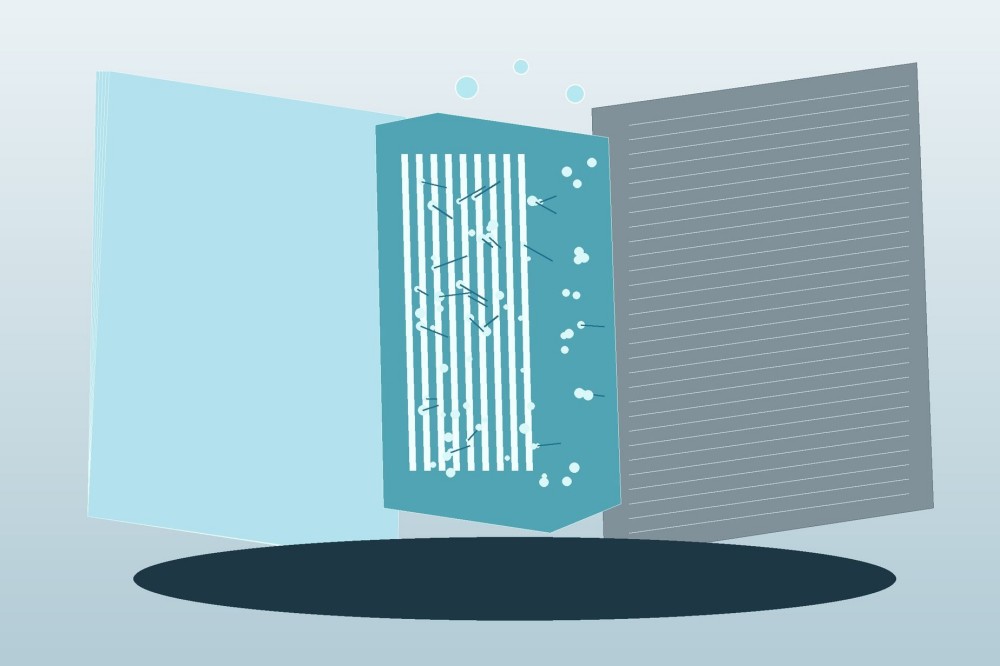 Fig. 5. Condensation-cure silicone joint illustrated between inorganic surfaces.
How to Select a Silane Crosslinking Monomer
| Decision Point |
What to Specify |
Why It Matters |
| Organic functionality |
Vinyl, methacryloxy, acryloxy, alkyl or other reactive group |
Controls whether the silane grafts, copolymerizes, couples to the resin or mainly contributes to condensation crosslinking. |
| Hydrolyzable group |
Methoxy, ethoxy, longer alkoxy, acetoxy or another silicon-bound leaving group |
Influences hydrolysis rate, cure behavior, compatibility and the volatile byproduct released during moisture reaction. |
| Polymer or resin |
PE, EVA, EPDM, acrylic, polyester, silicone, hybrid binder or filled compound |
Determines the organic reaction pathway and whether peroxide, UV, radical or condensation chemistry is appropriate. |
| Filler / substrate |
ATH, MDH, silica, glass fiber, glass, metal oxide, ceramic or other hydroxyl-bearing surface |
Helps define the value of coupling and the level of interfacial bonding required. |
| Cure route |
Extrusion grafting, ambient moisture cure, hot-water cure, free-radical cure, UV cure or RTV condensation |
The process window can favor one silane family over another even when multiple products appear chemically similar. |
| Specification controls |
Assay, water, inhibitor, color, critical impurities and analytical method |
Small differences can influence storage, polymerization behavior and reproducibility in moisture-sensitive or radical systems. |
| Packaging needs |
Container material, moisture protection, headspace and requested pack size |
Hydrolyzable silanes are sensitive to unwanted moisture exposure, so packaging should match the chemistry and planned use. |
Why Work with Eata Silicon
- Chemistry-led matching: compare silanes by functional group, hydrolyzable group, polymer route and intended network rather than relying only on commercial trade names.
- Specification-based discussion: assay, water, inhibitor, critical impurities, color, analytical method and packaging can be reviewed against the actual process requirement.
- Application-aware sourcing: wire and cable compounds, moisture-crosslinked polyolefins, composites, coatings, adhesives and silicone formulations can be approached from the process need back to the candidate silane.
- Custom development path: when a standard monomer does not fit the required reactivity, crosslink density or processing window, related structures and custom specifications can be evaluated.
When a catalog structure does not provide the required hydrolysis rate, radical reactivity, filler compatibility, cure profile or crosslink density, Eata Silicon can evaluate a customized silane or project-specific specification. Requests may involve an alternative vinyl, acrylate, methacrylate, alkoxy or acetoxy structure; a defined assay or impurity profile; inhibitor control; moisture limits; related organosilicon intermediates; or packaging matched to the handling requirements of the material.
For the most efficient technical review, send the target structure or closest commercial analogue, intended polymer or silicone system, reaction or cure route, required purity, critical impurity limits, inhibitor requirement, expected quantity and any application performance criteria. We can then assess whether a standard product, a close chemistry analogue or a custom route is the most practical fit for your project.
Discuss Your Silane Crosslinking Requirements with Eata Silicon
Share the target chemistry, polymer or formulation, cure route and critical specifications so we can evaluate a suitable standard or customized silane solution.
| Catalog Number |
Product Name |
Order |
Quantity |
|
ORM-0236 |
3,3-Bis(trichlorosilylpropoxymethyl)-5-oxa-tridecane, CAS 862911-99-7
|
Inquiry
|
|
|
ORM-0237 |
MEKO-Free Methoxyvinyl Bis(acetone Oxime) Silane Crosslinker, CAS 797751-44-1
|
Inquiry
|
|
|
ORM-0238 |
Vinyltris(methyl Ethyl Ketoxime)silane, CAS 2224-33-1, 95%
|
Inquiry
|
|
|
ORM-0239 |
Phenyltris(isopropenyloxy)silane Crosslinker for RTV Silicone Rubber, CAS 52301-18-5
|
Inquiry
|
|
|
ORM-0240 |
Methyltris(methyl Ethyl Ketoxime)silane Crosslinker, CAS 22984-54-9, 95%
|
Inquiry
|
|
|
ORM-0241 |
Guanidine-Functional Trimethoxysilane, CAS 69709-01-9, 95%
|
Inquiry
|
|
|
ORM-0242 |
Methyltriacetoxysilane Condensation Crosslinker, 95%
|
Inquiry
|
|
|
ORM-0243 |
Methacryloxypropyl Tris(trimethylsiloxy)silane, 98%
|
Inquiry
|
|
|
ORM-0244 |
Methacryloxy-Hydroxypropoxypropyl Bis(trimethylsiloxy)methylsilane, 96%
|
Inquiry
|
|
|
ORM-0245 |
Methacryloxypropyl Tris(trimethylsiloxy)silane Blend, 85% with 12% Disiloxane
|
Inquiry
|
|
For Research or Industrial Raw Materials, Not For Personal Medical Use!