Few materials sit as comfortably at the heart of the energy industry as silicone rubber. Built on an inorganic silicon–oxygen backbone rather than the carbon–carbon chains of organic rubbers, polysiloxane elastomers keep their flexibility, dielectric integrity and weathering resistance across a service window that stretches from roughly −60 °C to +230 °C — and beyond for specialty formulations. Eata Silicon supplies the upstream raw materials behind these elastomers: silicone gum bases, ready-to-process rubber compounds, and functional grades engineered for insulation, flame resistance and liquid injection molding.
Whether you are compounding for high-voltage cable accessories, extruding seals for grid equipment, or developing next-generation components for electric vehicles and renewable installations, our portfolio is organized so you can match a material to a processing route and an end-use requirement in minutes, not weeks. The range spans nine product families: silicone gum, silicone rubber compounds, insulating and flame-retardant grades, liquid silicone rubber, plus silicone elastomers, vulcanized silicone rubber systems, pre-blended silicone rubber mixtures and silicone gels for potting and encapsulation.
 Silicone gum base polymer
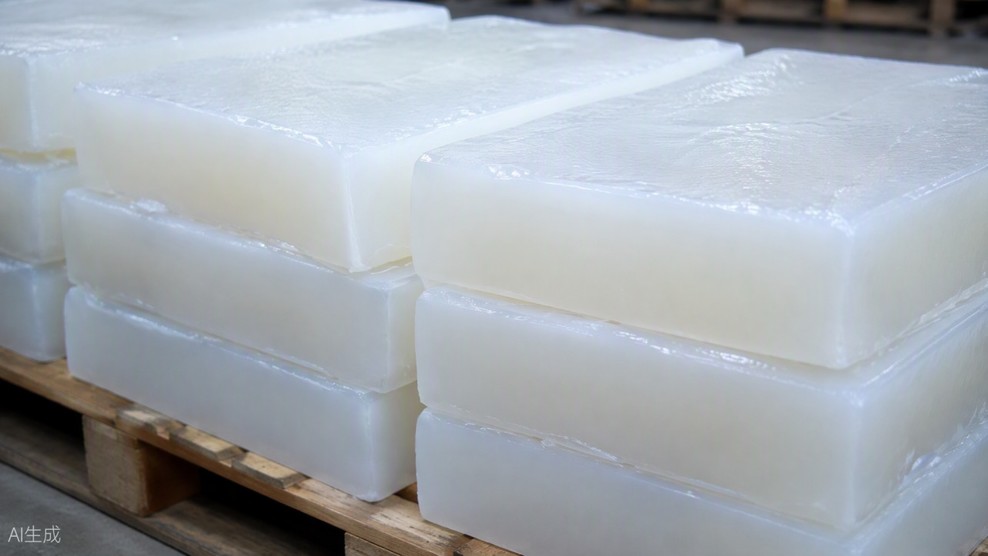
Figure 1. Silicone gum — the ultra-high-molecular-weight base polymer behind every solid silicone rubber compound.
What Makes Silicone Rubber Different
The chemistry explains the performance. A C–C backbone bond measures about 1.54 Å with a 112° bond angle; the Si–O unit of a polysiloxane is longer (1.63 Å) and wider (130°), and the bond itself demands more energy to break. The practical consequences are well documented across the industry:
- Thermal stability — continuous service from about −60 °C to +230 °C; heat-stabilized grades tolerate 250 °C for extended periods and short excursions toward 300 °C.
- Electrical reliability — dielectric strength typically 15–30 kV/mm, volume resistivity on the order of 10¹³–10¹⁵ Ω·cm, and electrical properties that stay nearly constant from −45 °C to +180 °C, even after water immersion.
- Weathering immunity — ozone, UV radiation and oxidative aging that destroy organic rubbers leave silicone largely untouched, which is why it dominates outdoor high-voltage hardware.
- Low-temperature flexibility — with a glass transition near −120 °C, silicone stays rubbery where other elastomers have long since gone brittle.
- Hydrophobicity — silicone surfaces shed water and can transfer that hydrophobicity to deposited pollution layers, suppressing leakage currents and flashovers on outdoor insulation.
Our Product Categories
Silicone gum is the foundation of the entire solid silicone rubber industry: an ultra-high-molecular-weight polydimethylsiloxane, typically 400,000 to over 850,000 g/mol, supplied as a stiff, non-flowing gum that is banded on a two-roll mill or worked in a kneader before compounding. We offer methyl-vinyl gums across a range of vinyl contents — from low-vinyl bases around 0.03–0.06 mol% for general molding compounds up to high-vinyl grades for improved compression set and crosslink density. Silanol-terminated and trimethyl-terminated options are available for condensation-cure systems and specialty formulations. If you compound in-house, this is where your formulation starts.
For fabricators who want to skip the compounding step, our high-consistency rubber compounds arrive ready for the press or extruder. Reinforced with fumed silica and available in peroxide-cure or platinum (addition-cure) versions, the range covers hardnesses from roughly 20 to 90 Shore A, with typical vulcanizate tensile strengths of 7–12 MPa, elongations of 320–1,000 % and tear strengths of 15–32 N/mm depending on grade. Compression molding, transfer and injection molding, extrusion and calendering are all supported. Post-curing guidance is provided with every grade so you can drive compression set down and clear peroxide decomposition products on the first production run.
 Silicone rubber compound on a two-roll mill
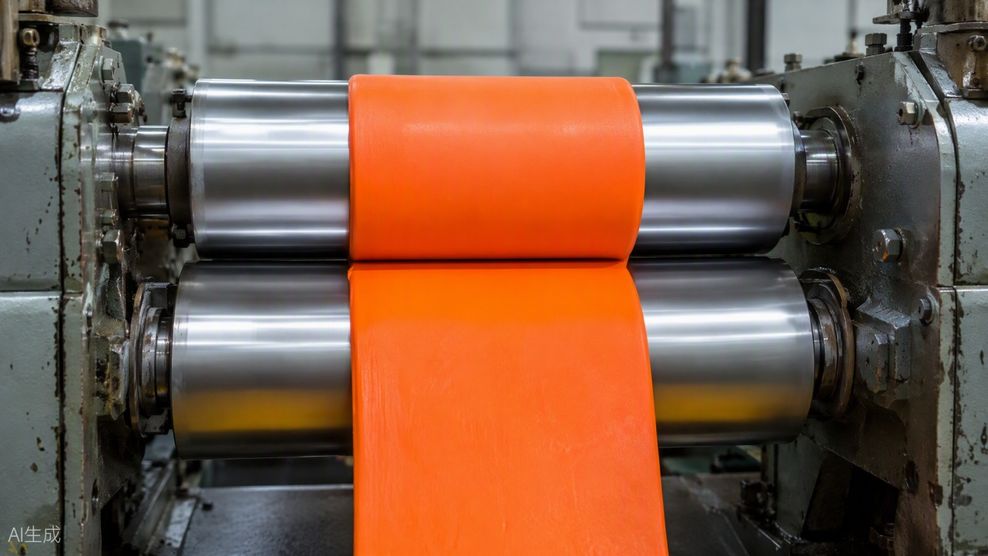
Figure 2. Pigmented silicone rubber compound being worked on a two-roll mill prior to molding or extrusion.
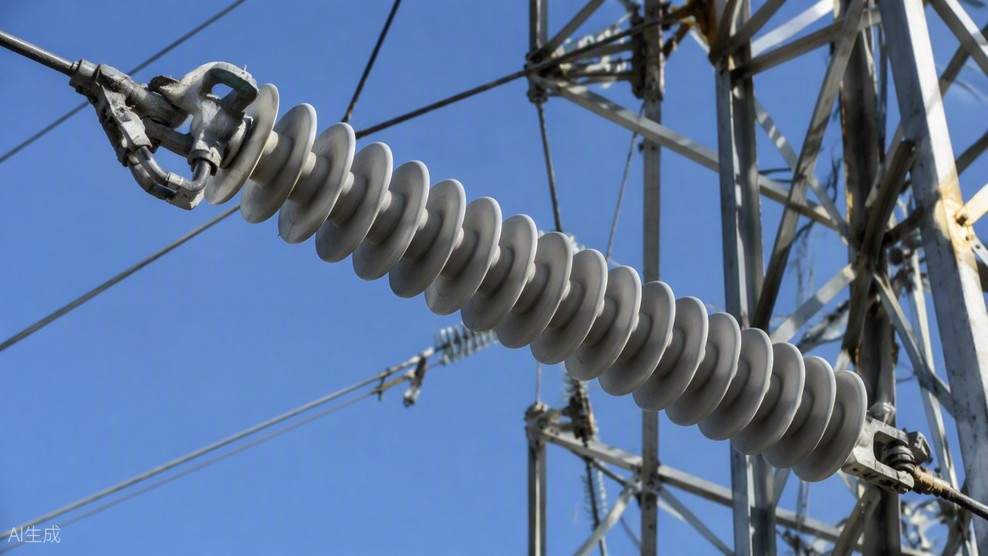
Grids run on insulation, and silicone has become the reference housing material for composite insulators, surge arresters, bushings and cable accessories. Our insulating compounds are formulated for tracking resistance (inclined-plane classes up to 1A 4.5 kV per IEC 60587), dielectric strength up to 20–30 kV/mm, and the hydrophobic surface behavior that keeps pollution flashover at bay. Weight matters on a transmission tower too — a silicone-housed insulator can be around 80 % lighter than its porcelain equivalent. Typical applications include long-rod and hollow-core insulators, cold-shrink cable terminations, transformer-adjacent components and medium- to extra-high-voltage connector systems.
 Composite insulator with silicone rubber sheds
Figure 3. A composite high-voltage insulator housed in silicone rubber — hydrophobic, weatherproof and far lighter than porcelain.
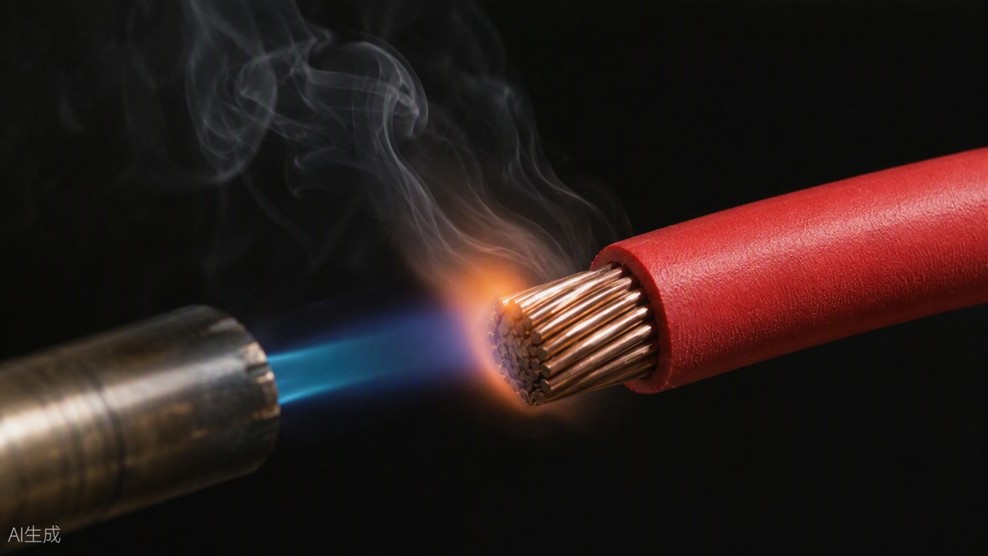
Silicone is inherently reluctant to burn — its combustion products are largely silica and water vapor, and the residual silica skin can preserve electrical function after short flame exposure. For specifications that demand more, our flame-retardant compounds use halogen-free additive systems to reach UL 94 V-0 performance, with limiting oxygen index values around 35 % in representative grades. These materials serve wherever fire behavior is written into the spec: EV battery pack gaskets and thermal-runaway barriers, power distribution cabinets, rail and transit sealing, and industrial cable jacketing.
 Flame test on silicone-jacketed cable
Figure 4. Flame-retardant silicone jacketing keeps its integrity under direct flame exposure.
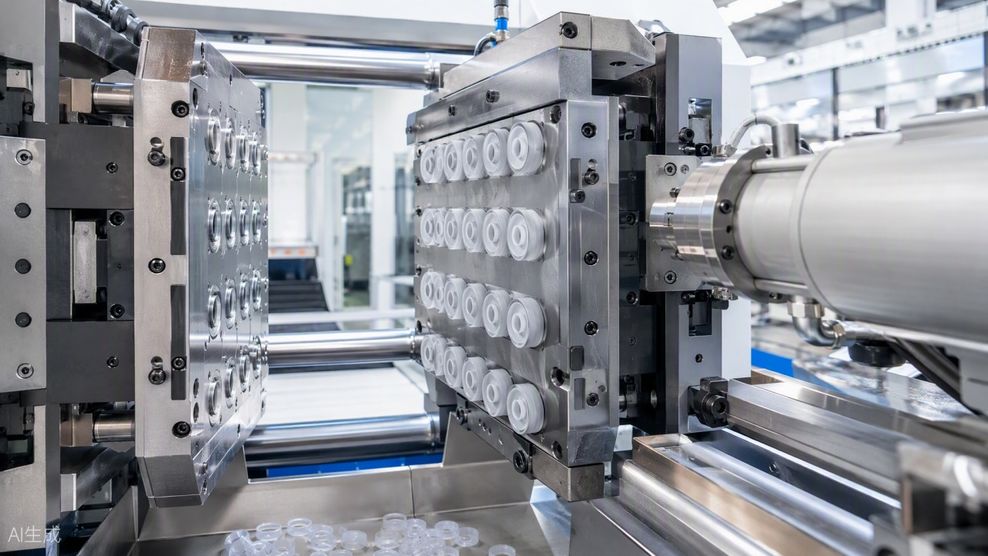
Liquid silicone rubber changes the economics of part production. Supplied as a two-part, platinum-cured system (1:1 mix ratio) in pails or drums, LSR is metered through a static mixer into a heated mold — thin-wall parts often cure in 30–60 seconds, a fraction of the cycle time of millable rubber. Vulcanizate properties rival HCR: representative grades deliver 8–11 MPa tensile strength, 350–800 % elongation and Shore A hardness from 10 to 80. With pot lives measured in days at room temperature and no cure byproducts, LSR is the default choice for high-volume precision parts — connector seals, sensor diaphragms, valve components and overmolded assemblies.
 LSR injection molding tooling
Figure 5. Multi-cavity tooling for liquid silicone rubber injection molding, built for fast automated cycles.
Beyond the standard VMQ workhorse, we stock the wider polysiloxane elastomer family for applications where a general-purpose grade falls short. High-tear and high-resilience variants suit demanding mechanical parts; phenyl-modified PVMQ elastomers stay flexible in deep-cold environments approaching −100 °C; and fluorosilicone (FVMQ) resists swelling where fuels, oils and solvents are present. Heat-stabilized elastomers rated for prolonged exposure at 250 °C round out the line. All are supplied in forms matched to your process — millable stock, extrusion grades or calendering compounds — with consistent lot-to-lot rheology so your production settings stay put.
Vulcanization is where polymer becomes elastomer, and the cure route you choose shapes both processing and final properties. We support all three mainstream systems:
- Peroxide cure — free-radical crosslinking at 150–200 °C, the traditional route for compression-molded and extruded goods; a post-cure step clears decomposition residues and optimizes compression set.
- Platinum (addition) cure — hydrosilylation between vinyl and hydride functional siloxanes; fast, byproduct-free, and essential for extruded profiles and food-adjacent industrial parts. Keep it away from sulfur, tin and amine contaminants, which poison the catalyst.
- Condensation (RTV) cure — room-temperature vulcanizing systems for casting, coating and on-site sealing where ovens and presses are impractical.
Whether you need a gum-and-curing-agent package for in-house vulcanization or a fully catalyzed compound ready for the mold, we configure the system to your equipment and cycle-time targets.
Not every fabricator wants to weigh out gum, silica, pigment and process aids batch by batch. Our pre-blended silicone rubber mixtures arrive at your plant as a finished recipe — base polymer, reinforcing filler, color and functional additives already dispersed and milled to specification. Options include color masterbatches matched to your reference, peroxide curing masterbatches for dosing into neutral bases, and complete ready-to-vulcanize blends built around your target hardness and mechanical profile. Every lot ships with a certificate of analysis, so the compound you qualify in January behaves identically in June.
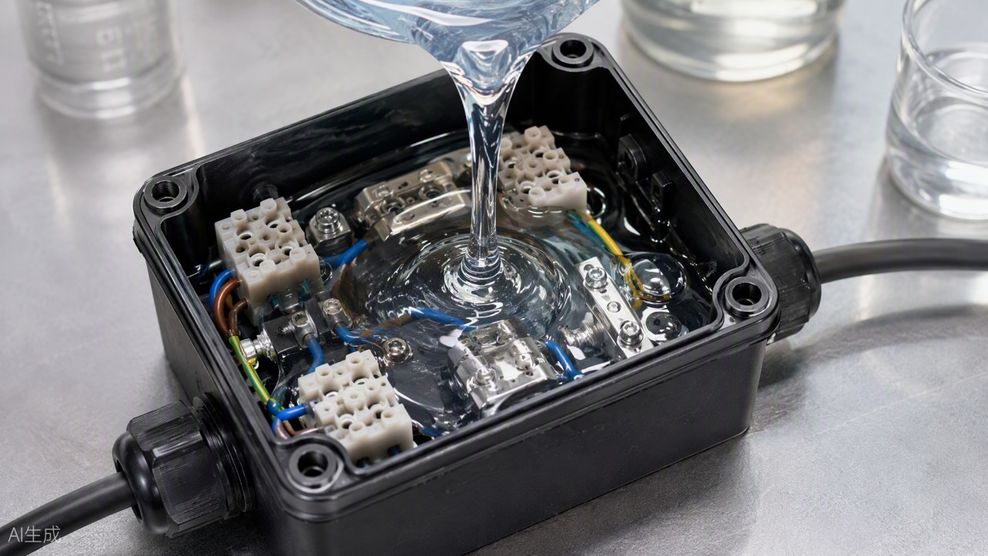
Silicone gels occupy the softest end of the elastomer spectrum — two-part, addition-cured systems (typically mixed 1:1) that set into an extremely soft, slightly tacky solid retaining much of the stress relief and self-healing character of a liquid. With mixed viscosities in the region of 300–2,000 mPa·s, they flow under and around delicate components before curing in place, then protect against moisture, vibration and thermal shock for years. Dielectric strength runs 15–25 kV/mm with volume resistivity up to 10¹⁵ Ω·cm, and most grades operate from −60 °C to +200 °C. Because the cured gel re-heals after being cut or probed, assemblies stay serviceable — technicians can test through the gel, then reseal simply by pouring fresh material over the repair. Typical destinations include PCB and IGBT module potting, automotive ECUs and sensors, PV junction boxes, and re-enterable cable splice enclosures. Vacuum defoaming after dispensing is recommended for void-free encapsulation.
 Clear silicone gel encapsulating electronics
Figure 6. Transparent silicone gel poured over a connector assembly — soft, self-healing dielectric protection that stays serviceable.
Typical Property Ranges at a Glance
| Category |
Hardness (Shore A) |
Tensile Strength |
Elongation at Break |
Notes |
| Silicone Gum |
— |
— |
— |
MW 400,000–850,000; vinyl content 0.03–5 % |
| HCR Compounds |
20–90 |
7–12 MPa |
320–1,000 % |
Peroxide or platinum cure |
| Insulating Grades |
40–70 |
≥4–10 MPa |
150–400 % |
Dielectric strength 17–30 kV/mm; tracking class 1A 4.5 kV |
| Flame-Retardant Grades |
40–70 |
6–10 MPa |
200–500 % |
UL 94 V-0 (thickness-dependent); halogen-free |
| LSR |
10–80 |
8–11 MPa |
350–800 % |
Two-part, 1:1; fast injection-molding cycles |
| Silicone Elastomers (specialty) |
20–90 |
6–12 MPa |
200–1,000 % |
High-tear, low-temperature (PVMQ), fluorosilicone (FVMQ), heat-stabilized |
| Vulcanized Silicone Rubber |
20–90 |
7–12 MPa |
320–1,000 % |
Peroxide, platinum or RTV condensation cure systems |
| Silicone Rubber Mixtures |
20–90 |
per recipe |
per recipe |
Pre-blended to customer specification; color & cure masterbatches |
| Silicone Gels |
Shore 00 scale; penetration 50–300 mm/10 |
— |
— |
Dielectric strength 15–25 kV/mm; mixed viscosity 300–2,000 mPa·s; self-healing |
Values above are typical figures drawn from published industry datasheets and are intended for material screening, not specification limits. Grade-specific datasheets are available on request.
Where These Materials Work
- Power transmission and distribution — composite insulator housings, arrester housings, bushings, cable terminations and joints
- Wire and cable — insulation and jacketing for high-temperature, flame-retardant and EV high-voltage cable
- Electric vehicles — battery pack sealing, thermal interface components, sensor and connector seals rated near cell arrays
- Solar and renewables — junction box potting, frame sealing and component encapsulation for photovoltaic installations
- Industrial equipment — transformer components, switchgear seals, gaskets and molded parts exposed to heat, ozone or outdoor weathering
- Electronics protection — silicone gel potting and encapsulation for power modules, control units, junction boxes and re-enterable cable splices
Off-the-shelf grades cover most requirements — but not all. Eata Silicon supports custom development across the full portfolio: tailored vinyl content and molecular weight in silicone gums, adjusted hardness, color and filler loading in compounds and mixtures, tuned dielectric or tracking performance in insulating grades, modified cure kinetics in LSR systems, and gel formulations adjusted for penetration, tack and cure speed. Send us your target specification, processing method and end-use environment, and our technical team will respond with a formulation proposal and supporting data. Contact us through the inquiry form to start the conversation.
For Research or Industrial Raw Materials, Not For Personal Medical Use!