Organic–inorganic hybrid silicon materials sit at the interface between silica- or siloxane-derived structures and organic chemistry. Depending on the architecture, the organic unit may decorate a silsesquioxane cage, bridge two silicon centers, modify a sol-gel network, or form the continuous phase around nanoscale silicon-containing domains. That design freedom is valuable when a formulation needs the stability of an inorganic network while retaining organic compatibility, reactivity, flexibility or processability.
Eata Silicon organizes this portfolio around four practical families: Silsesquioxane-Based Hybrid Materials, Organically Bridged Silicon Materials, Organically Modified Silicon Materials, and Silicon-Based Nanocomposites. Buyers can compare candidates by cage or network structure, organic functional group, hydrolyzable group, form, solids or particle characteristics, compatibility and intended interface—giving R&D teams and industrial formulators a clearer route from an application target to a material specification.
 Fig. 1. Molecular-scale concept of an organic-inorganic silicon network in which inorganic connectivity and organic functionality are engineered together.
Why Hybrid Silicon Chemistry Is So Versatile
The defining feature of this material class is not one single molecule; it is the deliberate combination of silicon-oxygen-rich structures with carbon-based functionality at molecular or nanoscale distances. In silsesquioxanes, the Si–O framework can form cages, ladders, networks or resin-like structures. In bridged organosilanes, an organic group connects two or more silicon centers and becomes part of the growing organosilica framework. In organically modified sol-gel systems, pendant organic groups tune interfacial behavior, curing and compatibility. Nanocomposites extend the same principle by dispersing nanoscale inorganic domains through an organic matrix.
This architecture gives formulators several independent levers. The inorganic contribution can support hardness, dimensional stability, barrier performance or thermal resistance, while the organic contribution can be chosen for resin compatibility, polymerization, flexibility, surface energy or other target interactions. The final result still depends on formulation, dispersion, cure conditions and substrate chemistry, so material selection should begin with the interface and process rather than with a generic "hybrid" label.
What Buyers Can Tune
- Network architecture: cage-like POSS, oligomeric or resinous silsesquioxane, pendant organosilane, bridged organosilane, porous organosilica, or particle/polymer nanocomposite.
- Organic functionality: vinyl, methacrylate, epoxy, amino, alkyl, phenyl, hydride, hydroxyl/silanol or another project-specific group.
- Hydrolyzable silicon chemistry: methoxy, ethoxy or other alkoxy groups selected around sol-gel behavior, formulation compatibility and processing conditions.
- Physical form: neat liquid, solution, resin, solid, powder, colloid or pre-dispersed nanocomposite system, depending on chemistry.
- Specification controls: purity or assay, residual solvent/monomer, water, solids content, viscosity, particle size, functional-group content and critical impurities where relevant.
Four Product Categories, Four Different Design Routes
| Product Category |
Defining Structure |
Buyer Search Terms |
Typical Development Directions |
| Silsesquioxane-Based Hybrid Materials |
Cage, ladder, network or resin structures based on RSiO1.5 units; includes functional POSS and polysilsesquioxane families. |
POSS materials; functional POSS; polyhedral oligomeric silsesquioxane; silsesquioxane resin; T8 POSS; silanol POSS |
Polymer modification, nanocomposites, coatings, dielectric/insulation systems, interfacial modifiers and advanced electrolyte research. |
| Organically Bridged Silicon Materials |
Two or more silicon centers connected through an organic bridge such as methylene, ethylene, propylene or phenylene. |
bridged organosilane; organosilica precursor; BTESE; BTESM; bis(trialkoxysilyl) precursor; PMO precursor |
Periodic mesoporous organosilica, hybrid membranes, porous monoliths, separation layers, sorbent/support frameworks and tailored sol-gel networks. |
| Organically Modified Silicon Materials |
Silicon alkoxide or siloxane chemistry carrying pendant organic functionality that remains available for compatibility or further reaction. |
organically modified silicate; ORMOSIL; sol-gel hybrid; epoxy silane; methacrylate silane; methyl silane; vinyl silane |
Hybrid coatings, adhesion and surface treatment, organic-inorganic resins, filler modification, barrier layers and functional films. |
| Silicon-Based Nanocomposites |
Nanoscale silica, organosilica, POSS or related silicon-containing domains dispersed or covalently integrated into an organic phase. |
silica polymer nanocomposite; POSS polymer hybrid; nanosilica hybrid resin; organosilica nanoparticle; silicon hybrid composite |
Composite reinforcement, dielectric and insulation research, coatings, membranes, polymer electrolytes, barrier materials and multifunctional formulations. |
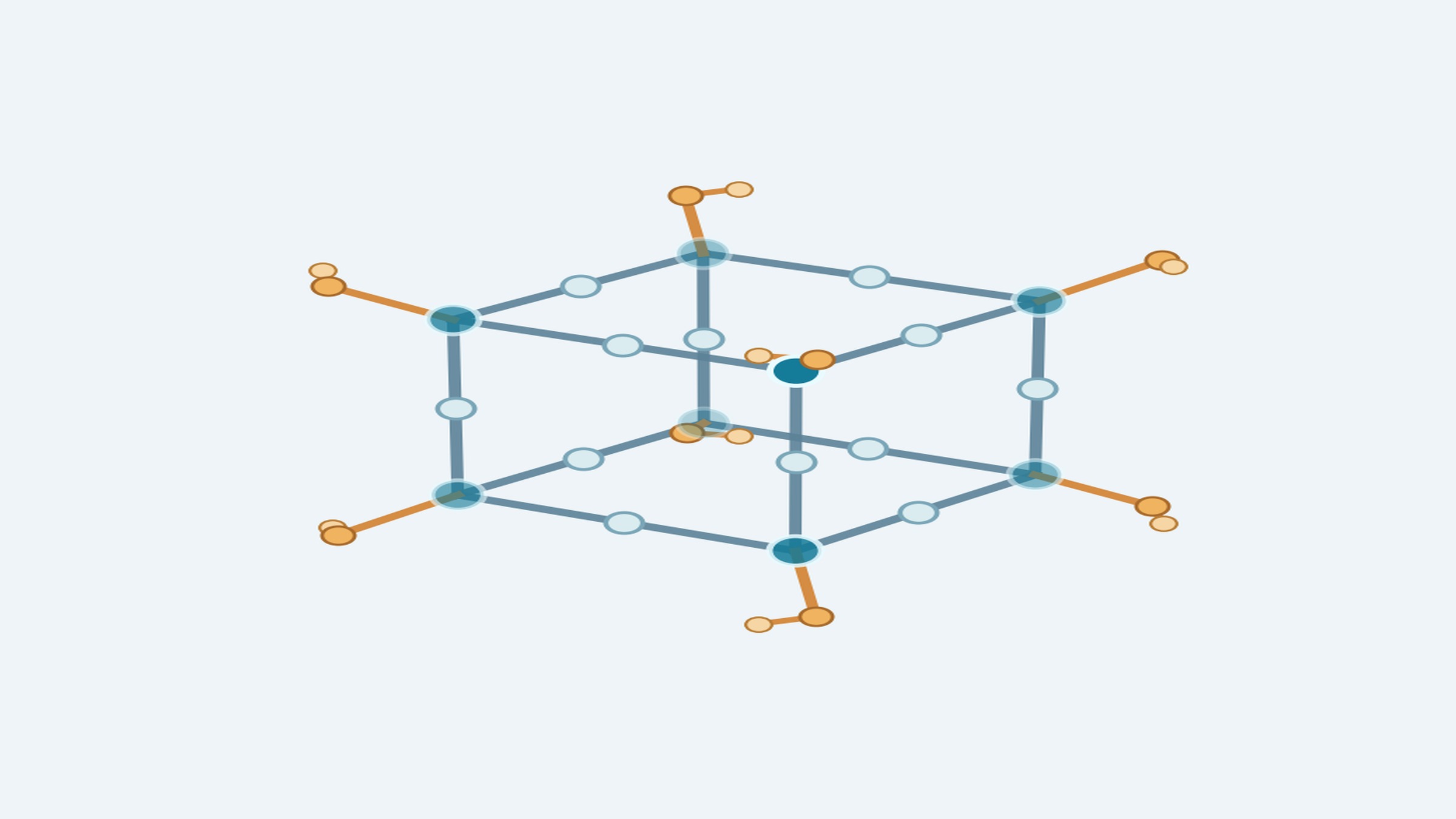 Fig. 2. Cage-like silsesquioxane architecture representing the compact inorganic core and outward-facing organic functionality of POSS-type building blocks.
Silsesquioxane-Based Hybrid Materials: From T-Resins to Functional POSS
Silsesquioxanes are commonly described by the RSiO1.5 structural motif, where the organic substituent R is attached directly to silicon. Commercial chemistry spans liquid and solid T-resins, cage structures, silanol-functional intermediates and selectively functionalized POSS materials. Public technical literature shows T8 and related cages carrying polymerizable, vinyl, hydride, alkyl, fluorinated or other substituents, while polysilsesquioxane resins are used in coatings, molding compounds and microelectronic materials.
For product selection, the word "POSS" is only the starting point. A buyer should define cage type, number of reactive groups, organic substituent, solubility, molecular form and the chemistry of the surrounding resin. Methacrylate-functional cages may be chosen for copolymerization; silanol-functional cages provide a different condensation route; vinyl or hydride functionality opens other reactive pathways. The useful comparison is therefore function + architecture + matrix compatibility, not cage nomenclature alone.
Organically Bridged Silicon Materials: Building the Organic Group into the Silica Network
Bridged organosilanes place an organic linker between silicon-bearing alkoxy groups, so the bridge becomes an integral part of the condensed organosilica framework. This family is central to periodic mesoporous organosilicas (PMOs) and related hybrid membranes. By changing the bridge—methylene, ethylene, propylene, phenylene or a more functional linker—developers can alter network spacing, hydrophobicity, pore chemistry, flexibility and interaction with guest molecules or process streams.
1,2-Bis(triethoxysilyl)ethane (BTESE) is a widely documented example: it is a double trialkoxysilyl precursor used in mesoporous organosilica and hybrid membrane research. Closely related search terms include bis(triethoxysilyl)methane (BTESM), 1,2-bis(trimethoxysilyl)ethane and bis(triethoxysilyl)benzene. For an RFQ, the bridge identity, alkoxy group, purity, moisture control, intended sol-gel route and target pore or film structure are more useful than a generic request for "organosilica."
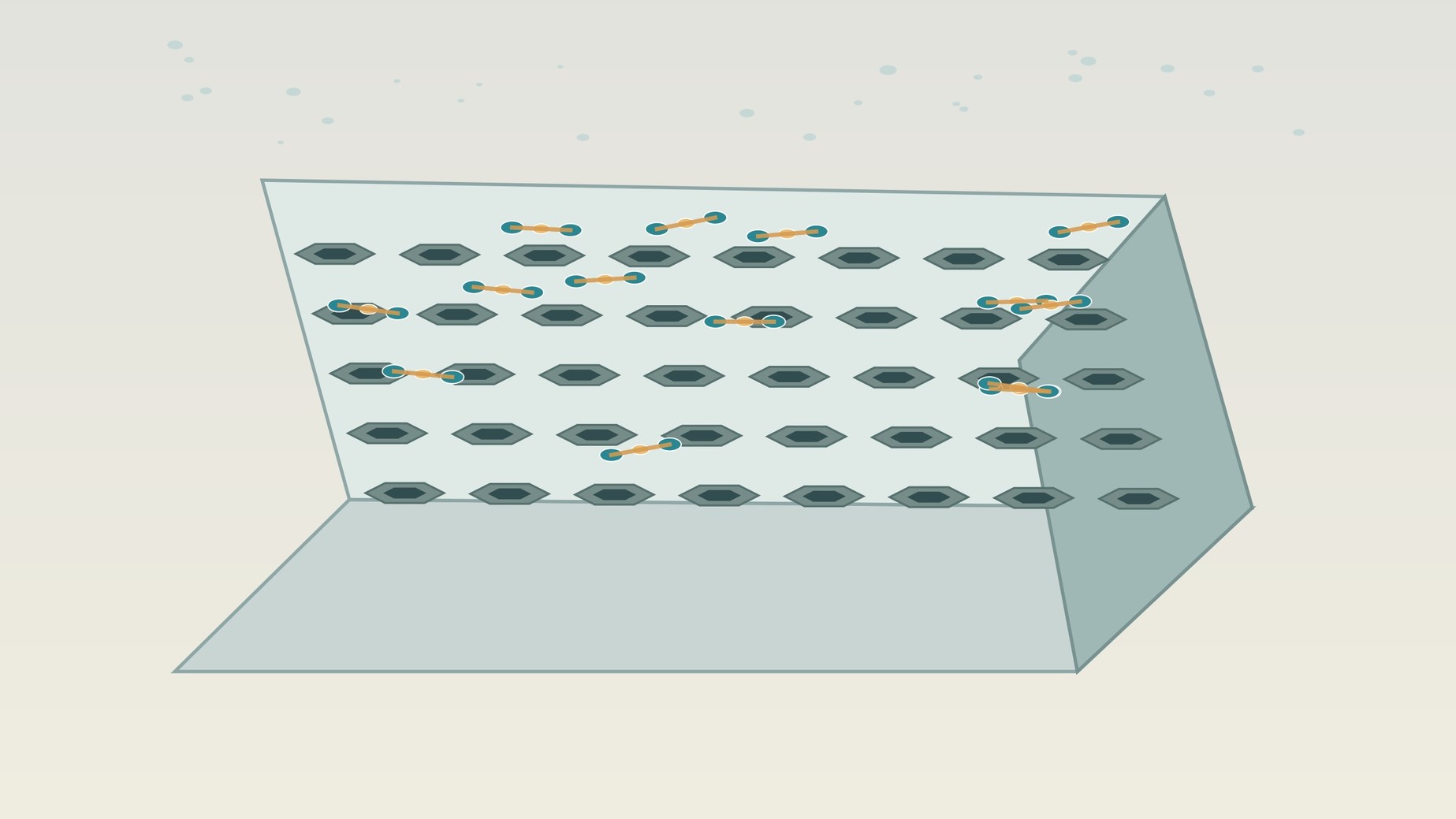 Fig. 3. Porous organosilica concept showing how bridged silicon precursors can create a network whose pore structure and internal chemistry are designed together.
Organically Modified Silicon Materials: Reactive Functionality on a Silicon-Derived Network
Organically modified silicon materials use pendant organic groups to give a silicon-derived network a second chemical identity. Epoxy-functional silanes such as 3-glycidyloxypropyltrimethoxysilane (GPTMS/GLYMO) combine an epoxide with hydrolyzable methoxysilyl groups; methacrylate-functional silanes such as 3-(trimethoxysilyl)propyl methacrylate (MPS/MEMO) provide polymerizable methacrylate functionality; methyl- and vinyl-functional silanes are often used when hydrophobicity, organic content, network density or copolymerization behavior must be adjusted.
These chemistries are the building blocks behind many sol-gel hybrid coatings, modified silicates and organic-inorganic resins. Fraunhofer’s ORMOCER work is a well-known example of how inorganic and organic networks can be linked at nanoscale to tune hardness, thermal or chemical stability, toughness, processability, surface energy and barrier behavior. In practical formulation work, the useful variables include hydrolysis state, water/solvent system, pH, cure route, organic functionality, inorganic fraction and substrate chemistry.
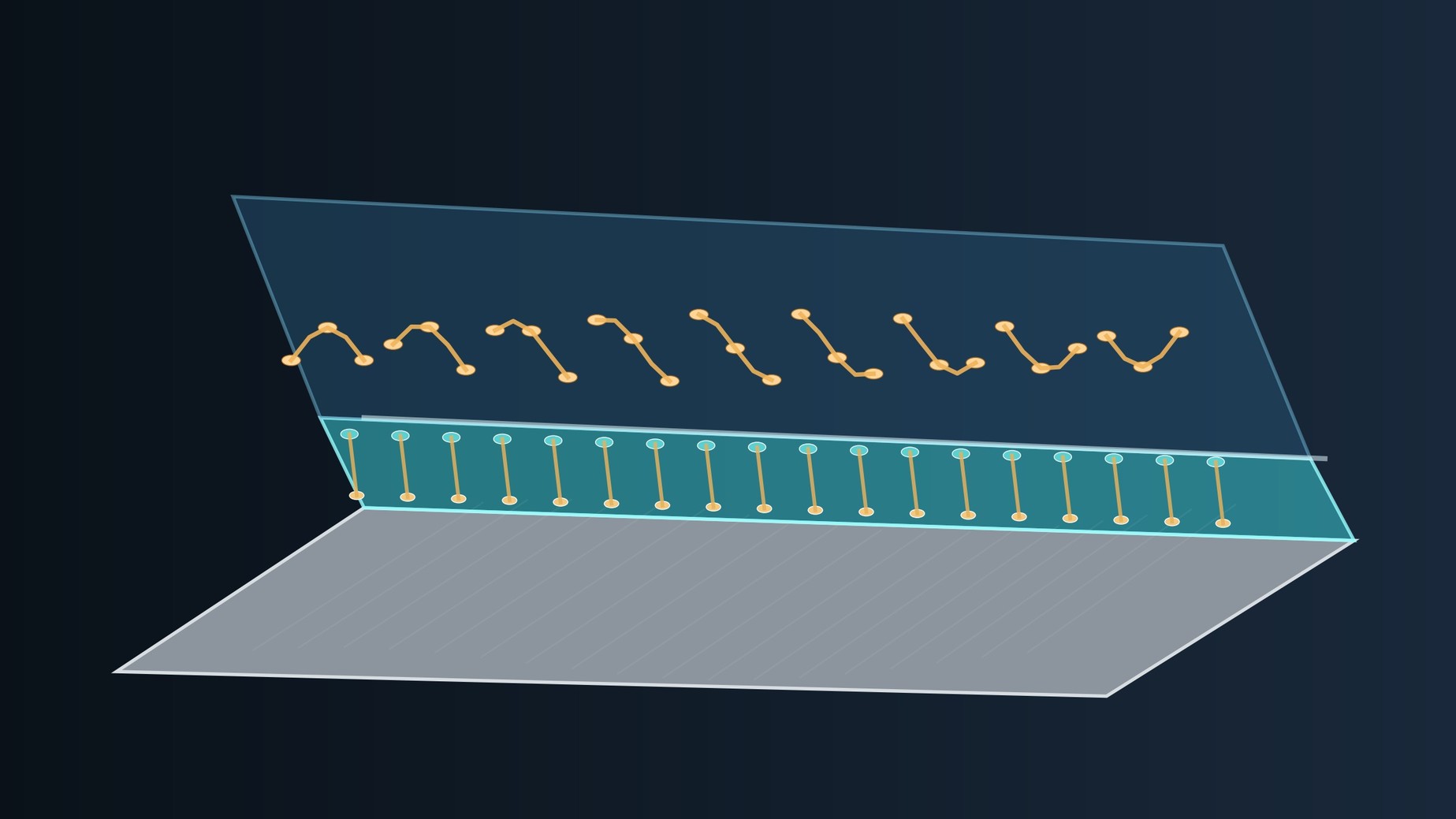 Fig. 4. Conceptual hybrid coating on a metallic substrate, illustrating an inorganic-rich interfacial layer coupled to organic functionality above the surface.
Silicon-Based Nanocomposites: Designing the Nanoscale Interface
Silicon-based nanocomposites take the hybrid concept beyond a single precursor. Nanosilica, organosilica particles, POSS domains or in-situ-generated silica can be distributed through polymers such as epoxies, acrylics, silicones and other matrices. When the particle surface and polymer chemistry are matched, nanoscale dispersion can influence stiffness, barrier behavior, dielectric response, thermal stability, abrasion resistance and other properties; poor dispersion or weak interfaces can remove much of that benefit.
This makes surface chemistry as important as particle size. Buyers may need untreated or organosilane-treated nanosilica, reactive POSS, pre-dispersed nanoparticle concentrates, hybrid resins or a project-specific combination. For electrical and energy-related materials, the same design logic appears in research on nanosilica-filled insulation, hybrid polymer electrolytes, protective coatings, separators and interface layers. The target electrical, mechanical, chemical and processing window should be specified together rather than optimized in isolation.
 Fig. 5. Nanoscale silica-rich domains dispersed through an organic matrix, representing the interface-control problem at the heart of silicon-based nanocomposites.
Representative Material and Precursor
| Representative Material / Precursor |
CAS No. |
Category |
Search / Formulation Context |
| Poly(vinylsilsesquioxane), T8 cage |
69655-76-1 |
Silsesquioxane-Based |
vinyl POSS; T8 vinyl silsesquioxane; reactive POSS |
| Methacryloxypropyl-substituted poly(isobutylsilsesquioxane) |
307531-94-8 |
Silsesquioxane-Based |
methacrylate POSS; polymerizable POSS; POSS nanocomposite additive |
| Silanol-functional poly(isobutylsilsesquioxane) |
307531-92-6 |
Silsesquioxane-Based |
silanol POSS; T7 silsesquioxane; condensation-reactive cage |
| 1,2-Bis(triethoxysilyl)ethane (BTESE) |
16068-37-4 |
Organically Bridged |
BTESE precursor; ethane-bridged organosilica; hybrid membrane precursor |
| 1,2-Bis(trimethoxysilyl)ethane |
18406-41-2 |
Organically Bridged |
bis(trimethoxysilyl)ethane; bridged silane; organosilicate precursor |
| Bis(triethoxysilyl)methane (BTESM) |
18418-72-9 |
Organically Bridged |
BTESM; methylene-bridged organosilica; membrane precursor |
| 1,4-Bis(triethoxysilyl)benzene |
2615-18-1 |
Organically Bridged |
phenylene-bridged organosilica; aromatic bridged silane; PMO precursor |
| 3-Glycidyloxypropyltrimethoxysilane (GPTMS / GLYMO) |
2530-83-8 |
Organically Modified |
epoxy silane; sol-gel hybrid precursor; adhesion and filler interface |
| 3-(Trimethoxysilyl)propyl methacrylate (MPS / MEMO) |
2530-85-0 |
Organically Modified |
methacrylate silane; polymerizable silane; hybrid resin precursor |
| Methyltrimethoxysilane (MTMS) |
1185-55-3 |
Organically Modified |
methyl silane; organically modified silicate; hydrophobic sol-gel network |
| Vinyltriethoxysilane (VTES) |
78-08-0 |
Organically Modified |
vinyl silane; vinyl-modified sol-gel; polymer/silica interface |
| Silica-polymer nanocomposite / POSS-polymer hybrid |
Family |
Silicon-Based Nanocomposites |
nanosilica hybrid resin; POSS polymer nanocomposite; dielectric hybrid composite |
Where These Materials Fit in Energy and Advanced Manufacturing
Hybrid silicon chemistry is especially useful where performance is controlled by an interface rather than by a bulk material alone. In energy and electrical systems, that can mean an electrode/coating interface, polymer/filler boundary, metal/protective layer, separator/electrolyte region or porous membrane surface. Relevant development directions include:
- Electrical insulation and encapsulation: silica- or organosilicon-modified polymer systems are studied for dielectric strength, partial-discharge resistance, thermal stability and long-term interface control.
- Battery and electrolyte research: POSS and other silicon-organic hybrids have been explored as components of polymer or gel electrolyte architectures and engineered interphases.
- Protective coatings for energy hardware: organically modified silicon networks can be formulated for adhesion, barrier behavior, surface durability and corrosion-control development on metal or oxide-rich substrates.
- Gas and liquid separation: organically bridged organosilica membranes are studied because the bridge and precursor chemistry can be used to tune network size, affinity and hydrothermal stability.
- Composite structures: functional silanes, silsesquioxanes and nanosilica can be used to engineer the filler/polymer interface in structural, thermal-management and electrically functional composites.
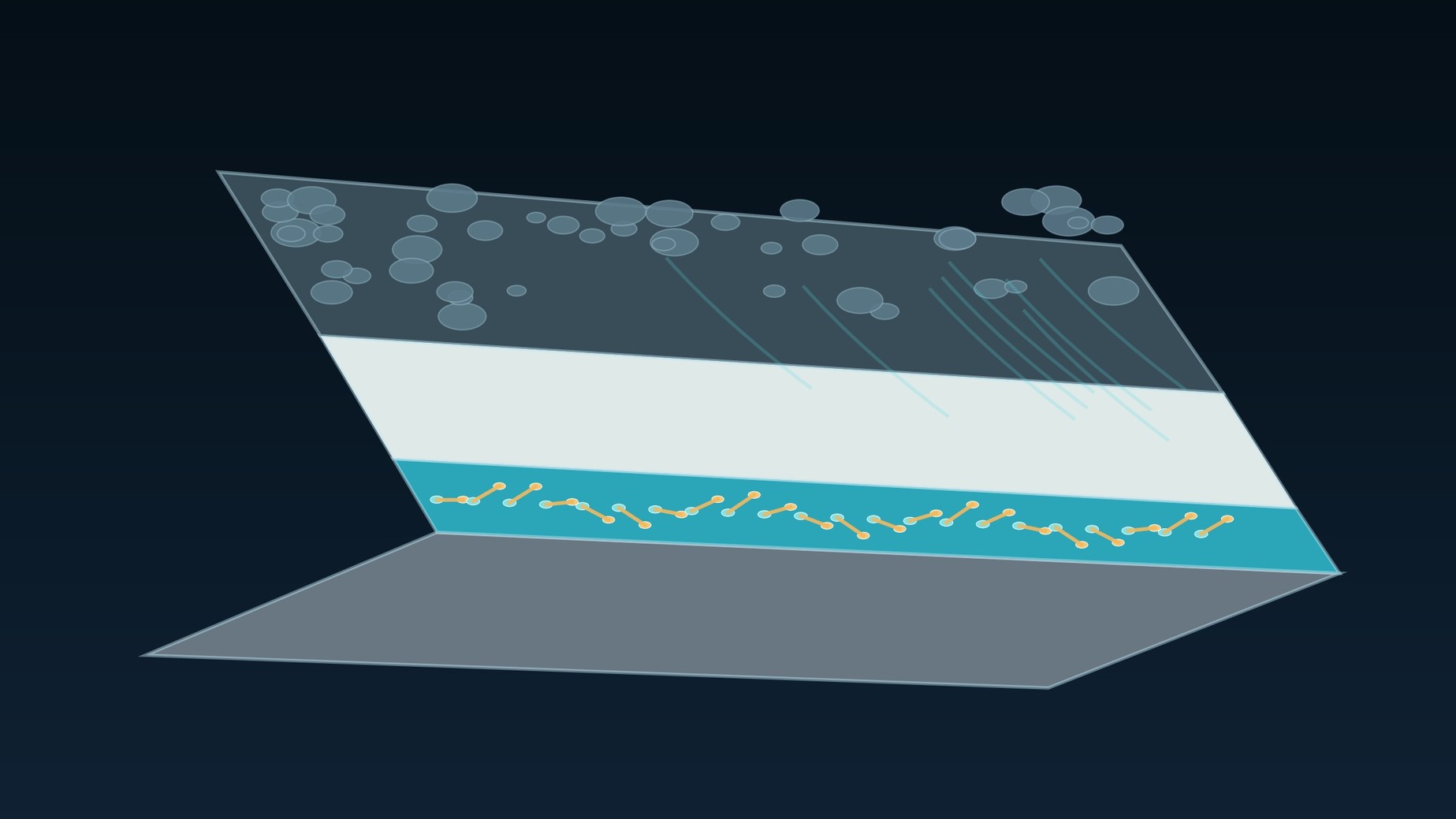 Fig. 6. Layered energy-material concept showing where a hybrid silicon interlayer can be positioned to influence adhesion, barrier behavior, insulation or interfacial compatibility.
How to Specify an Organic–Inorganic Hybrid Silicon Material
| Decision Point |
What to Define |
Why It Matters |
| Architecture |
POSS cage, silsesquioxane resin, bridged precursor, organofunctional silane, sol-gel hybrid, nanoparticle or pre-dispersion |
Determines whether the material behaves as a molecular building block, network precursor, resin or dispersed phase. |
| Organic functionality |
Epoxy, methacrylate, vinyl, amino, alkyl, phenyl, hydride, silanol or another group |
Controls compatibility, polymerization, coupling and downstream reaction pathways. |
| Silicon functionality |
Methoxy, ethoxy, silanol content or pre-condensed network state |
Influences hydrolysis, condensation, moisture sensitivity and sol-gel processing. |
| Physical form |
Neat liquid, solution, solid, powder, resin, colloid or dispersion |
Must match dosing, mixing, coating and handling conditions. |
| Purity / composition |
Assay, solids, residual monomer/solvent, water and critical impurities |
Supports reproducibility and qualification in moisture- or reaction-sensitive systems. |
| Particle / molecular range |
Particle size and dispersion state for nanocomposites; cage/functionality level or molecular range for oligomeric materials |
Affects dispersion, viscosity, surface area and network behavior. |
| Matrix / substrate |
Epoxy, acrylic, silicone, polyolefin, metal, glass, silica, ceramic, mineral filler or other surface |
Hybrid materials succeed or fail at the actual interface. |
| Process conditions |
Water/solvent system, pH, temperature, cure chemistry, sequence of addition and coating method |
Changes hydrolysis, condensation, reaction rate and final morphology. |
| Performance target |
Adhesion, barrier, dielectric, mechanical, thermal, wetting, pore/separation or other target |
Keeps the specification focused on the application rather than a trade name. |
Why Source Hybrid Silicon Materials from Eata Silicon?
- Chemistry-led matching: start from functional group, network architecture and application interface instead of relying only on a familiar product name.
- Specification-driven discussion: purity, solids, viscosity, particle size, functional-group content, solvent system and critical impurity limits can be reviewed against the actual process.
- Connected portfolio logic: POSS/silsesquioxanes, bridged organosilanes, organically modified silicon materials and nanocomposites can be considered as related design routes rather than isolated product families.
- Application-aware sourcing: coatings, composites, membranes, electrical materials and energy-material R&D can be approached from the performance target backward.
When a standard material does not match the required interface, Eata Silicon can discuss a customized specification or material-development route. Share the target functionality, hybrid architecture, purity or solids range, viscosity or particle-size requirement, solvent/water compatibility, critical impurity limits, downstream chemistry, performance objective and qualification method. We can then evaluate a standard option, a related analogue or a project-specific specification for your formulation.
Tell us what the material must accomplish in your process, and request a tailored quotation for your Organic–Inorganic Hybrid Silicon Materials project.
For Research or Industrial Raw Materials, Not For Personal Medical Use!