Personal care-grade silicone fluids are versatile formulation ingredients used when a product needs controlled slip, easy spreading, reduced tack, water-repellent character or a more refined after-feel. Eata Silicon offers linear dimethicone and phenyl-modified silicone fluid options across a broad viscosity range, giving formulators practical ways to tune flow, substantivity, optical gloss and compatibility without relying on a single one-size-fits-all silicone grade.
Silicone-fluid selection becomes more predictable when the chemistry is matched to the finished formulation rather than chosen only by viscosity. Straight dimethicone grades are commonly selected for lubricity, spreadability and film feel, while phenyl-modified silicones add a different optical and compatibility profile. Across both groups, molecular size and viscosity strongly influence flow, payoff, cushion, residue and the way the fluid interacts with oils, waxes, pigments and other formulation components.
Why Silicone Fluids Matter in Personal Care Formulation
The siloxane backbone gives silicone fluids a combination of low surface energy, smooth flow and chemical stability that is difficult to reproduce with a single conventional oil. The practical result is not one universal sensory effect, but a toolbox: lighter grades can improve spread and reduce heaviness, medium-viscosity grades can add slip and a soft film, and high-viscosity materials can increase conditioning, cushion and persistence.
- Sensory control: adjust glide, slip, cushion and the transition from wet application to final after-feel.
- Detackification and spreadability: help formulations move more evenly across skin, hair or a coated surface.
- Water-repellent film character: useful when the formulation requires a more persistent, non-water-miscible phase.
- Gloss and optical tuning: phenyl-modified silicone fluids can provide a higher refractive index than conventional dimethyl silicone fluids, supporting shine-focused formulations.
- Formulation flexibility: different viscosity and phenyl-content profiles allow the silicone phase to be matched to oils, esters, waxes, pigments and other ingredients used in the system.
 Fig. 1. Smooth, continuous flow is a useful visual reference for the rheology and spreadability that make silicone fluids easy to formulate across many product formats.
Representative Eata Silicon Product Families
| Product Name |
INCI or Chemistry |
Key Grade Data |
Formulation Positioning |
| Personal Care Linear Dimethicone Fluids, 50–1,000 cSt |
Dimethicone / Polydimethylsiloxane |
50, 100, 350, 500 and 1,000 cSt |
Low- to medium-viscosity range for soft feel, detackification, smooth surface film and water-resistant performance. |
| Personal Care Dimethicone Conditioning Gels, 5,000–60,000 cSt |
Dimethicone / Polydimethylsiloxane |
5,000, 12,500 and 60,000 cSt |
High-viscosity conditioning range for smoother feel, hair shine, film persistence and water resistance. |
| Ultra-High-Refractive-Index Trimethyl Pentaphenyl Trisiloxane Fluid |
Trimethyl Pentaphenyl Trisiloxane |
175 cSt; RI 1.5775–1.5800 at 25°C |
Phenyl-rich fluid for shine, optical brilliance, spreadability and reduced tack. |
| Diphenylsiloxy Phenyl Trimethicone High-Gloss Fluid |
Diphenylsiloxy Phenyl Trimethicone |
15–30 mm²/s; RI 1.495–1.505 |
Low-viscosity phenyl silicone for gloss, optical clarity and smooth application. |
| High-Refractive-Index Diphenyl Dimethicone Fluid |
Diphenyl Dimethicone |
400 mm²/s; RI 1.505 |
Medium-viscosity phenyl silicone for gloss-focused skin, hair and color-cosmetic systems. |
| Alcohol-Soluble Phenyl Trimethicone Cosmetic Fluid |
Phenyl Trimethicone |
22.5 cSt; RI 1.46 |
Phenyl-modified fluid with strong alcohol solubility, easy spreading and non-oily emollient character. |
| Phenyl Silicone Fluid Family with Three Personal-Care INCI Compositions |
Phenyl Trimethicone; Diphenylsiloxy Phenyl Trimethicone; Trimethyl Pentaphenyl Trisiloxane |
Family-level selection |
Search-friendly family option when the required phenyl silicone chemistry is known but the final grade is still being screened. |
 Fig. 2. Droplet shape and controlled spreading provide a visual cue for surface behavior and sensory design.
 Fig. 3. Optical clarity is especially relevant when a silicone fluid is selected for clear or gloss-focused formulations.
Dimethicone: Use Viscosity as a Design Variable
Dimethicone is polydimethylsiloxane supplied at many molecular weights and viscosities. The chemistry may remain broadly similar while the handling and sensory profile changes significantly. Lower-viscosity dimethicone moves quickly through the oil phase and generally gives lighter spread. As viscosity rises, the material becomes more persistent and can contribute more cushion, lubrication and conditioning.
For a purchasing or development brief, the viscosity value should always be tied to a test temperature. A request for "dimethicone" alone is often too broad; a 50 cSt fluid and a 60,000 cSt conditioning grade can behave very differently in processing and in the finished formulation.
| Viscosity Zone |
What It Usually Changes |
Questions to Ask |
| Low to medium |
Faster flow, lighter payoff, easy spreading and efficient detackification. |
How light should the after-feel be? Is the silicone being used as a carrier, slip agent or film modifier? |
| Medium to high |
More body, lubricity, film persistence and conditioning. |
How much cushion and substantivity are required? Is pumpability or mixing viscosity a constraint? |
| Very high / gel-like |
Strong conditioning, richer slip and more persistent surface film. |
Can the process handle the viscosity? What is the desired use level and final texture? |
Phenyl-Modified Silicone Fluids: When Gloss and Refractive Index Matter
Replacing part of the methyl functionality in a silicone fluid with phenyl groups changes the optical profile and can also change compatibility with other oils. Commercial personal-care portfolios therefore include phenyl trimethicone, diphenyl dimethicone, diphenylsiloxy phenyl trimethicone and other phenyl-rich structures rather than treating every silicone oil as interchangeable.
For gloss-driven products, refractive index is a useful screening parameter. The Eata Silicon product list includes examples around 1.46 for phenyl trimethicone, approximately 1.505 for a 400 mm²/s diphenyl dimethicone, and up to 1.5775–1.5800 for a trimethyl pentaphenyl trisiloxane fluid. These values help formulators compare optical positioning before compatibility and sensory testing in the complete formula.
- Phenyl Trimethicone: a familiar route when spreadability, gloss and compatibility with selected organic phases are important.
- Diphenyl Dimethicone: useful when a higher refractive index and more substantial silicone feel are desired.
- Diphenylsiloxy Phenyl Trimethicone: a lower-viscosity phenyl silicone option for clear, high-gloss systems.
- Trimethyl Pentaphenyl Trisiloxane: a phenyl-rich specialty fluid for very high refractive index and strong optical impact.
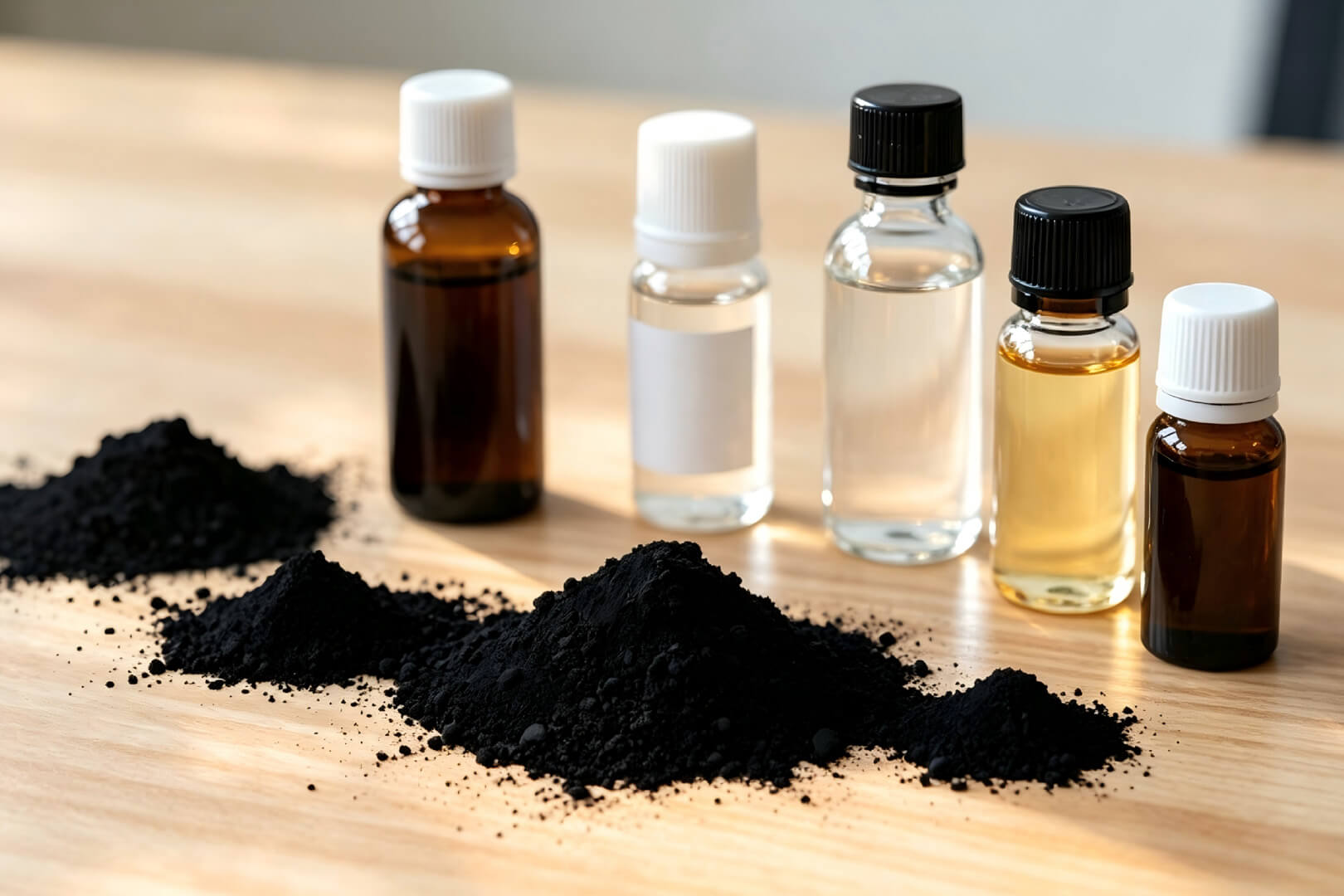
 Fig. 4. Side-by-side fluid samples support practical screening of clarity, flow and formulation compatibility before a final grade is selected.
Application Paths for Personal Care Formulators
Silicone fluids are rarely selected by application name alone. A skin formulation may need quick spread and low tack, while a hair product may prioritize lubricity, shine and combing feel. Color cosmetics can require optical clarity and pigment wetting, and an anhydrous system may place extra emphasis on compatibility with the oil and wax package.
| Formulation Area |
Silicone Options to Screen |
What to Optimize |
| Skin care |
Dimethicone across low to high viscosity; selected phenyl silicones |
Slip, reduced tack, soft film, spreadability, water-repellent character and sensory tuning. |
| Hair care |
Medium/high-viscosity dimethicone; phenyl-modified fluids |
Lubricity, conditioning, shine, smooth feel and improved manageability. |
| Color cosmetics |
Low/medium-viscosity dimethicone; high-refractive-index phenyl fluids |
Pigment wetting, spread, optical gloss, color intensity and clean payoff. |
| Anhydrous and oil-rich systems |
Dimethicone and phenyl silicone options matched to the oil and wax phase |
Film character, spreadability, reduced tack and compatibility with the complete non-aqueous phase. |
| Personal cleansing and grooming formats |
Low- to medium-viscosity silicone fluids |
Slip, spread, reduced stickiness and a clean, smooth sensory transition. |
| Clear or alcohol-containing systems |
Selected phenyl trimethicone or compatible specialty fluids |
Clarity, gloss and compatibility screening where alcohol or transparent oil-phase design matters. |
 Fig. 5. Personal-care development often starts with a clean base-fluid sample, followed by compatibility work with the full oil, pigment and additive package.
How to Specify the Right Silicone Fluid
A useful RFQ or technical discussion should translate the formulation target into measurable raw-material variables. This shortens screening and helps separate a visually similar silicone oil from a grade that actually fits the process.
- INCI or chemical identity: Dimethicone, Phenyl Trimethicone, Diphenyl Dimethicone, Diphenylsiloxy Phenyl Trimethicone, Trimethyl Pentaphenyl Trisiloxane or another defined silicone chemistry.
- Viscosity at a stated temperature: specify the preferred value or acceptable range and the test temperature.
- Optical requirement: note whether refractive index, transparency, color or gloss is a critical selection criterion.
- Formulation system: identify key oils, esters, waxes, alcohols, pigments, powders or other components that may affect compatibility.
- Processing constraints: share the available mixing method, temperature window and whether low pump or transfer viscosity is important.
- Performance target: describe the desired spread, tack reduction, conditioning, shine, film feel or water-repellent behavior.
- Acceptance criteria: include any analytical limits, appearance criteria, packaging preference and sample quantity needed for evaluation.
Why Work with Eata Silicon?
Eata Silicon approaches silicone-fluid sourcing from the specification first. Instead of limiting a request to a broad name such as "silicone oil," buyers can discuss the exact INCI, viscosity range, refractive index, appearance, compatibility target and application objective. This makes it easier to compare standard grades and identify close alternatives when a project needs a different balance of flow, gloss or sensory performance.
When an existing grade does not fit the target formulation, Eata Silicon can discuss customized silicone-fluid requirements. Development requests may focus on a target viscosity window, a selected phenyl-modified chemistry, optical properties, appearance, compatibility objectives, agreed analytical criteria, packaging preference or a project-specific combination of these variables.
For the most efficient review, send the target INCI or closest reference material, viscosity, key formulation components, intended application, critical performance goals and any acceptance limits that matter to your qualification process. Our team can then evaluate a standard product, a related analogue or a custom specification for the project.
| Catalog Number |
Product Name |
Order |
Quantity |
|
SFP-0047 |
Personal Care Linear Dimethicone Fluids, 50–1,000 cSt
|
Inquiry
|
|
|
SFP-0048 |
Personal Care Dimethicone Conditioning Gels, 5,000–60,000 cSt
|
Inquiry
|
|
|
SFP-0049 |
Ultra-High-Refractive-Index Trimethyl Pentaphenyl Trisiloxane Fluid, 175 cSt
|
Inquiry
|
|
|
SFP-0050 |
Diphenylsiloxy Phenyl Trimethicone High-Gloss Fluid, 15–30 cSt
|
Inquiry
|
|
|
SFP-0051 |
High-Refractive-Index Diphenyl Dimethicone Fluid, 400 mm²/s
|
Inquiry
|
|
|
SFP-0052 |
Alcohol-Soluble Phenyl Trimethicone Cosmetic Fluid, 22.5 cSt
|
Inquiry
|
|
|
SFP-0053 |
Phenyl Silicone Fluid Family with Three Personal-Care INCI Compositions
|
Inquiry
|
|
|
SFP-0054 |
Cosmetic-Grade Dimethyl Silicone Fluid Series, 0.65–100,000 mm²/s
|
Inquiry
|
|
|
SFP-0055 |
Diphenylsiloxy Phenyl Trimethicone Fluid, 15 mm²/s
|
Inquiry
|
|
|
SFP-0056 |
Phenyl Trimethicone Fluid, 22.5 mm²/s and RI 1.461
|
Inquiry
|
|
For Research or Industrial Raw Materials, Not For Personal Medical Use!