Walk through a silicone plant, a tire factory, a bridge-deck waterproofing crew, or an OLED research lab, and you will find the same kind of bottle on the shelf: a small silane monomer doing a job far bigger than its molecular weight. One family grows the polysilicon behind solar farms; another lets silica and rubber grip each other inside fuel-saving tires; a third turns concrete water-shy for twenty years; a fourth glows inside flexible displays. What unites them is architecture – a silicon atom carrying hydrolyzable groups that anchor to minerals, plus organic substituents that decide everything else.
Halogen on silicon means maximum reactivity; alkoxy means controlled hydrolysis; a long alkyl tail means water repellency; phenyl means heat; Si–H means addition chemistry; nitrogen, sulfur, fluorine, epoxy, and even silicon-containing rings each open their own branch of applications. The sections below tour all twelve families of our organosilicon monomer range – with the chemistry that justifies each one and the specifications we certify lot by lot.
Browse Our Products
 One shelf, twelve families: the organosilicon monomer library.
Chlorosilane and Halosilane Monomers: Maximum Reactivity on Demand
Chlorosilanes are the industry's foundation – dimethyldichlorosilane builds polymer chains, methyltrichlorosilane branches them, trimethylchlorosilane caps them, and trichlorosilane deposits solar-grade silicon – a family we cover in depth on our chlorosilane monomer page. Their heavier halogen cousins answer a different question: what if you need silicon's Lewis acidity and the halide's leaving-group power in organic synthesis itself?
- Iodotrimethylsilane (TMSI) – a colorless liquid boiling at 106–109 °C, and the benchmark reagent for cleaving ethers, esters, and ketals under mild, neutral conditions; classic procedures return protected alcohols in 83–89% yield, and it finds steady use in antibiotic process chemistry.
- Bromotrimethylsilane (TMSBr) – the milder, more chemoselective partner: slower on ethers and esters, but the reagent of choice for cleaving phosphonate esters cleanly, and valuable where TMSI would over-react.
- In-situ variants – TMSI generated from trimethylchlorosilane and sodium iodide in acetonitrile often outperforms the pre-formed reagent on ethers; we supply both the halosilanes and their chlorosilane precursors.
For fluorosilanes and mixed halogen grades, ask – specialty halosilane monomers are a routine part of our custom synthesis work.
 Halosilanes at the bench: cleavage chemistry under reflux.
Alkoxysilane Monomers: The Controllable Workhorses
Replace chlorine with methoxy or ethoxy and the monomer becomes storable, transportable, and tunable. Tetramethoxysilane (TMOS) and tetraethoxysilane (TEOS, ~28% SiO₂) hydrolyze into silica networks for sol-gel coatings, investment-casting binders, and stone consolidation; methyltrimethoxysilane (MTMS) and methyltriethoxysilane (MTES) carry one permanent organic group, yielding hydrophobic, flexible silsesquioxane networks instead of brittle glass. Hydrolysis speed is the practical dial: methoxy grades react faster and smell sharper, ethoxy grades forgive longer pot lives – and both release only alcohol as they condense, which is why alkoxysilane monomers have displaced chlorosilanes wherever corrosion and HCl fumes are unwelcome.
Hydrocarbyl and Arylsilane Monomers: Repellency and Heat Resistance
Give silicon a medium-length alkyl tail and it becomes a civil engineer. N-octyltriethoxysilane (CAS 2943-75-1) is small enough to migrate deep into concrete capillaries, where its ethoxy groups hydrolyze to silanols that condense with the pore walls into a permanent, vapor-open hydrophobic lining – no surface film, no change of appearance, but water, deicing salts, and freeze-thaw damage kept out for years. Highway specifications (EN 1504 practice) call for isobutyltrimethoxysilane at 92% concentration or higher as a chloride screen on bridge decks, and self-assembled monolayers of these hydrocarbyl silanes reach water contact angles of 150–170°. Longer C16 tails treat fillers, pigments, and glass for dispersion into nonpolar resins; the same chemistry waterproofs textiles and leather while letting them breathe.
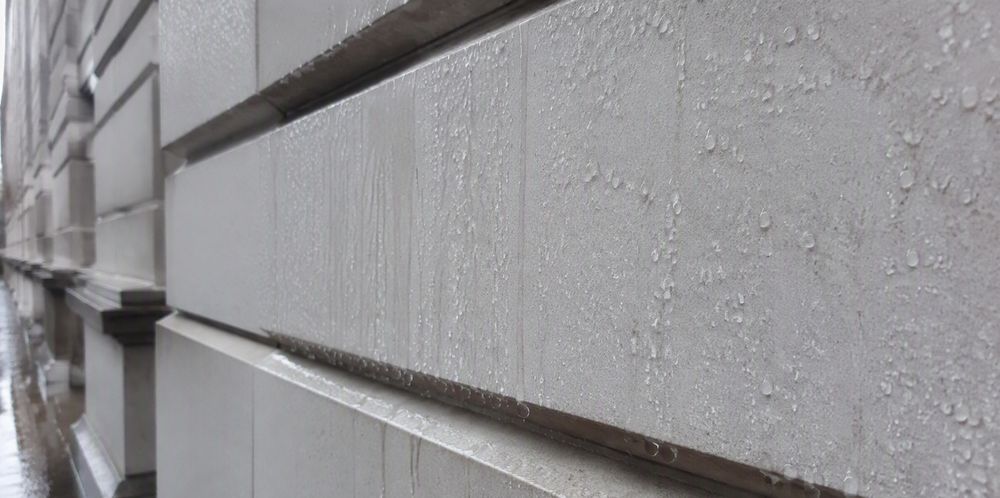 Silane-impregnated stone: rain runs off, the wall stays dry.
Swap the alkyl tail for phenyl and the priority shifts from water to temperature. Phenyltrimethoxysilane and diphenyldimethoxysilane build phenylated silicone resins that keep coatings, impregnating varnishes, and mica composites alive at 150–250 °C and beyond, raise refractive index for optical formulations, and add the weather and radiation resistance that methyl silicones cannot reach alone.
Representative Products at a Glance
| Monomer Family |
Representative Products |
Typical Use |
| Chlorosilane monomers |
Dimethyldichlorosilane, methyltrichlorosilane, trimethylchlorosilane, trichlorosilane |
Silicone chains/resins, polysilicon |
| Halosilane monomers |
Iodotrimethylsilane, bromotrimethylsilane |
Ether/ester cleavage, synthesis |
| Alkoxysilane monomers |
TMOS, TEOS, MTMS, MTES |
Sol-gel, binders, crosslinkers |
| Hydrocarbyl silane monomers |
N-octyltriethoxysilane, isobutyltrimethoxysilane, hexadecyl grades |
Concrete hydrophobization, filler treatment |
| Arylsilane monomers |
Phenyltrimethoxysilane, diphenyldimethoxysilane |
Heat-resistant resins, optics |
| Hydrosilane monomers |
Triethylsilane, trimethoxysilane, triethoxysilane |
Reductions, hydrosilylation |
| Nitrogen-containing silanes |
KH-550/540 aminosilanes, isocyanato and ureido silanes |
Coupling, adhesion promotion |
| Sulfur-containing silanes |
3-Mercaptopropyltrimethoxysilane, TESPT (Si-69 type) |
Silica-rubber tires, sealants |
| Fluorinated organosilanes |
Tridecafluorooctyltriethoxysilane, heptadecafluorodecyl grades |
Water/oil-repellent surfaces |
| Epoxy-functional silanes |
3-Glycidoxypropyltrimethoxysilane (KH-560) |
Adhesives, encapsulation |
| Heterocyclic silanes |
Siloles, silacyclobutanes, silafluorenes |
OLED emitters, ceramic precursors |
| Silane crosslinking monomers |
Vinyltrimethoxysilane, methylvinyldimethoxysilane |
XLPE cable, moisture-cure systems |
Hydrosilane Monomers: One Bond, Two Careers
The Si–H bond earns hydrosilane monomers two distinct professions. As reducing agents they are the gentle alternative to metal hydrides: triethylsilane (bp 107 °C) reduces carbonyls to alcohols, strips oxygen from sulfoxides, and turns nitro groups into amines with a selectivity that harsher reagents trample; triethoxysilane and trimethoxysilane reduce amides under metal-free conditions and feed cobalt- and iron-catalyzed asymmetric hydrosilylations. Their second career is bond-making: hydrosilylation across C=C bonds builds silicon-carbon links without byproducts, curing addition-type silicones and synthesizing the functional silanes elsewhere on this page. Purity, inhibitor-free stabilization, and low moisture decide reproducibility in both roles – and all three appear on our certificates.
Nitrogen- and Sulfur-Containing Silane Monomers: The Interface Specialists
- Aminosilanes (KH-550, KH-540, diamino KH-602) – the most-used coupling agents on earth: the amine end reacts into epoxy, polyamide, and phenolic resins while the trialkoxy end grips glass and minerals, lifting composite strength and adhesive durability.
- Isocyanato silanes – the isocyanate group reacts directly with hydroxyls, making these monomers fast adhesion promoters for urethane and hybrid systems without free NCO in the final network.
- Ureido and specialty nitrogen silanes – waterborne-friendly promoters for coatings that must bond in humid service.
- Mercaptosilanes (3-mercaptopropyltrimethoxysilane and homologs) – thiol chemistry couples silica and metal surfaces into unsaturated rubbers and UV-cure systems.
- TESPT (Si-69 type) – bis(triethoxysilylpropyl) tetrasulfide, the molecule behind the "green tire": its silane ends bind precipitated silica while the tetrasulfide vulcanizes into the rubber, improving filler dispersion, cutting rolling resistance, and boosting wet grip – the reason silica treads beat carbon black on fuel economy.
 Silica meets rubber: sulfur silanes inside the modern tire.
Fluorinated and Epoxy-Functional Silane Monomers
Fluorinated organosilane monomers chase the lowest surface energy chemistry allows. Reference data chart the ladder: trifluoropropyltrimethoxysilane lifts a surface's water contact angle to 84°; nonafluorohexyltriethoxysilane reaches 103°; tridecafluorooctyltriethoxysilane hits 110° with critical surface tension down to 14 mN/m; heptadecafluorodecyl and heneicosafluorododecyl silanes push to 115–118° and 6–12 mN/m – low enough to refuse oils, whose surface tensions sit at 20–40 mN/m. Blended with TEOS in sol-gel formulations they produce water- and oil-repellent coatings for textiles, glass, and metal, and superhydrophobic finishes on marine alloys. Epoxy-functional monomers, led by 3-glycidoxypropyltrimethoxysilane (KH-560), take the adhesion brief instead: the glycidyl ring opens into amine-, anhydride-, and acid-cured networks, which is why these silanes anchor electronics encapsulants, structural adhesives, and glass-reinforced laminates.
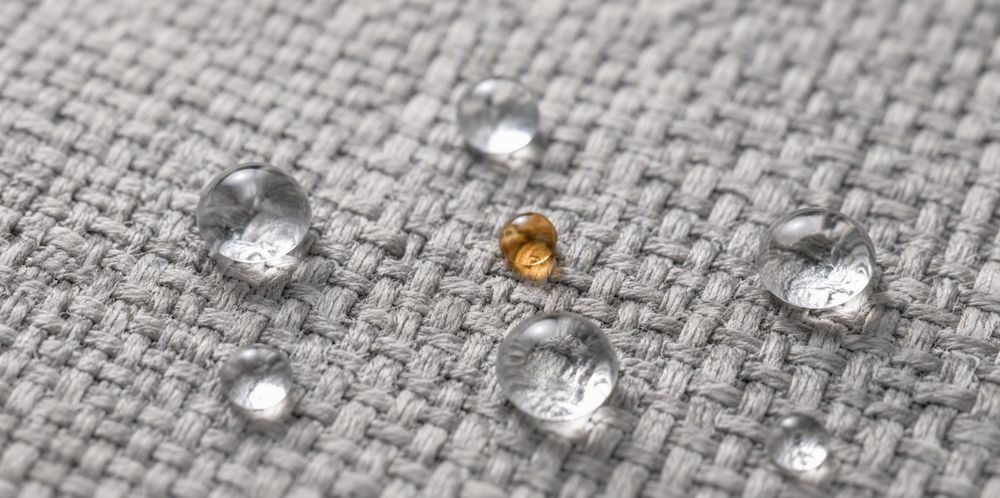 Fluorinated silanes teach fabric to refuse both rain and oil.
Heterocyclic and Silane Crosslinking Monomers: Rings with a Future
Put silicon inside a carbon ring and unusual electronics follow. Siloles – five-membered silicon-containing rings – combine σ*–π* conjugation with low-lying LUMO levels, giving them high electron affinity and fast electron mobility; that is why silole derivatives serve as electron transporters in optoelectronic devices. Their party trick is aggregation-induced emission: nearly dark in solution, hexaphenylsilole-type luminogens glow intensely when aggregated, enabling efficient non-doped OLEDs without the quenching that plagues conventional dyes. Silafluorenes extend the family into semiconducting polymers for OFETs, organic photovoltaics, and displays. On the materials side, strained silacyclobutanes undergo living anionic ring-opening polymerization – polydispersities of 1.04–1.15 at 2.3–60 kg/mol – into polycarbosilanes, the polymer-precursor route to silicon carbide ceramics and fibers.
The twelfth family is the quiet workhorse of the cable and sealant industries: silane crosslinking monomers. Vinyltrimethoxysilane grafts onto polyethylene so that ambient moisture later knits the chains into heat-resistant XLPE insulation for power cables and photovoltaic wiring; methylvinyldimethoxysilane and vinyltriethoxysilane tune crosslink density in moisture-cure silicones; tetrafunctional alkoxysilanes harden networks on demand. Small molecules, structural consequences.
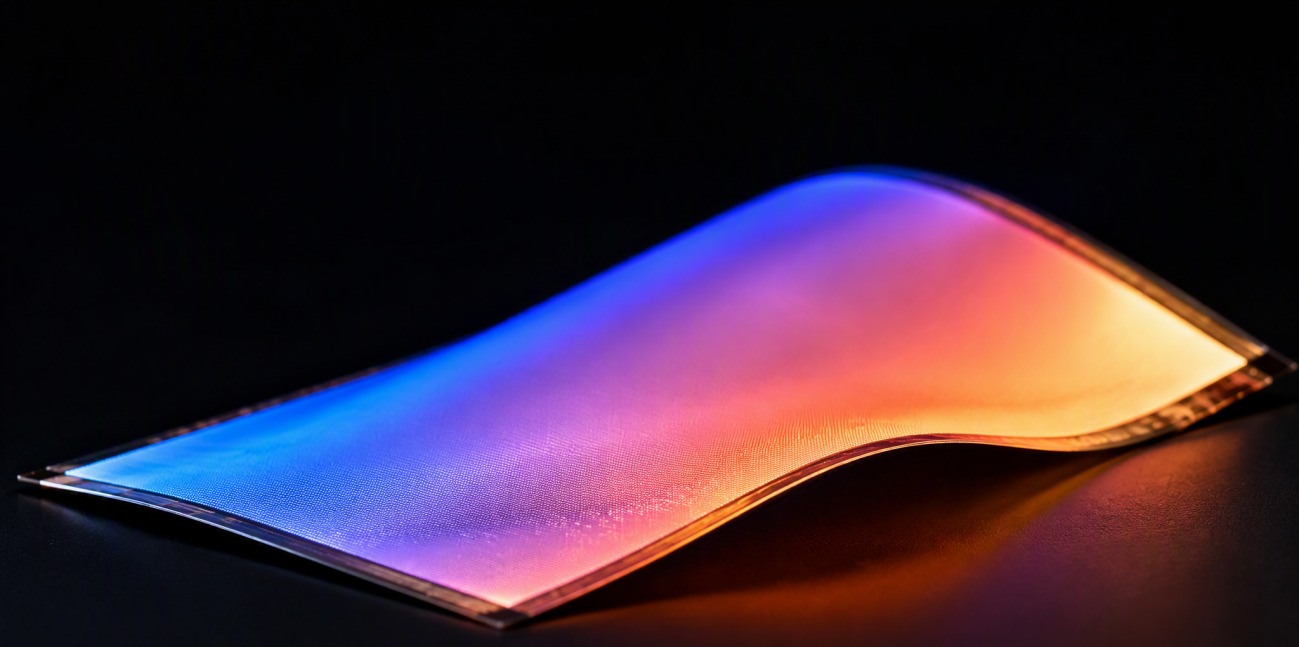 Silicon in the ring: silole luminogens light up flexible displays.
Twelve families cover most requests; the rest are why we keep a custom synthesis line. Eata Silicon regularly supplies specialty halosilanes and mixed-halogen grades, alkoxysilanes transesterified to customer alcohols, custom alkyl-chain lengths for hydrophobization, aryl and fluorinated silanes at specified assay, functional silane blends pre-formulated to a coupling recipe, and heterocyclic monomers for electronics research in gram-to-kilogram lots. Distillation cuts can be tightened around your specification, and research quantities are routine – most bulk agreements started as a 100 ml evaluation.
Share the structure or CAS number, the specification you are working to, and the volumes on your roadmap, and our team will respond with a recommended grade, complete analytical documentation, and samples for your own testing.
For Research or Industrial Raw Materials, Not For Personal Medical Use!