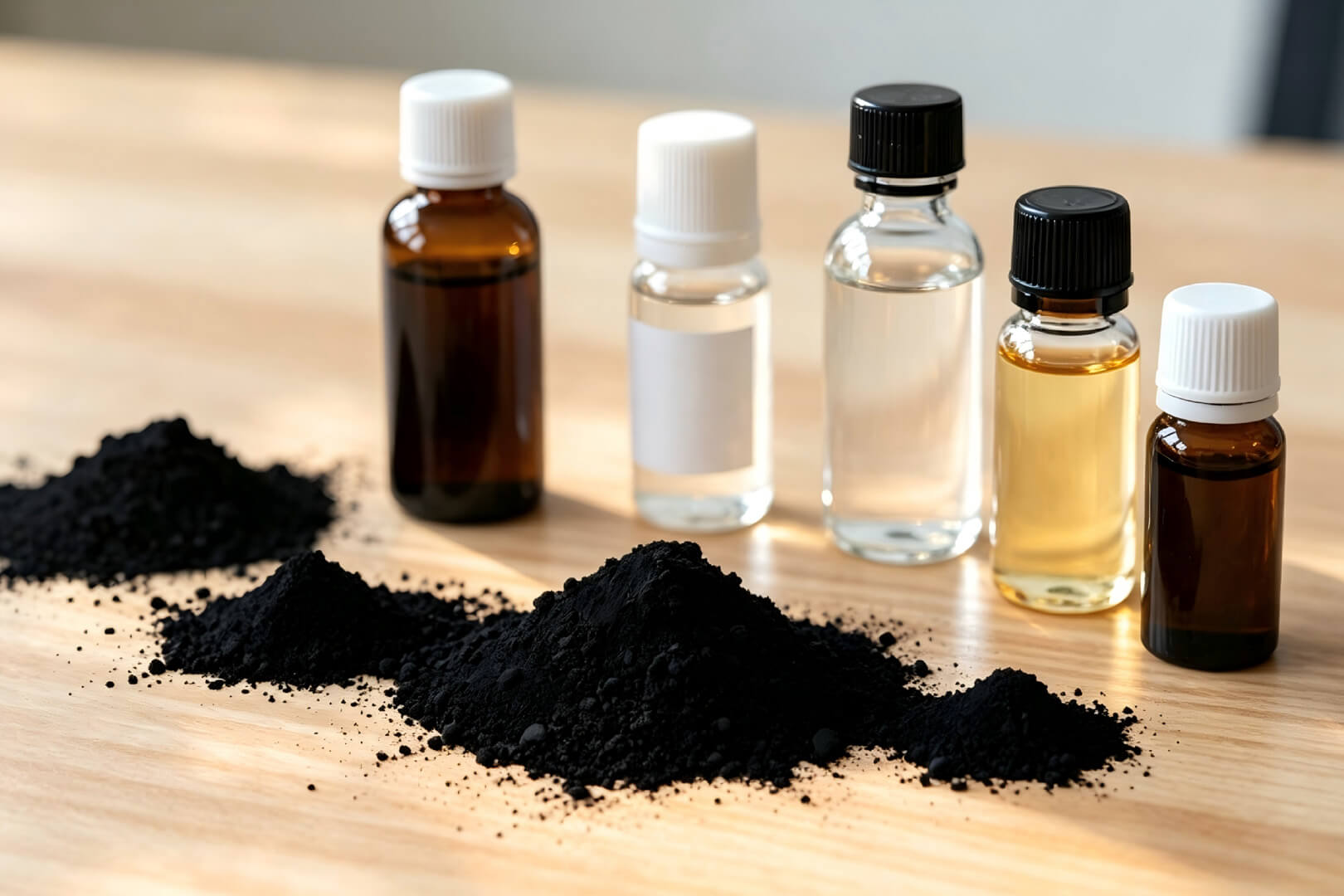
Silicone gels occupy the softest end of the cured-silicone spectrum: they flow before cure, then form a lightly crosslinked, conformable polysiloxane network that can cushion delicate components while preserving the temperature stability and dielectric usefulness associated with silicone materials. Eata Silicon supplies the raw-material building blocks used to design these systems—from vinyl-functional base polymers and Si-H crosslinkers to platinum catalysts, modifiers and reinforcing options—so formulators can tune viscosity, softness, transparency, tack and cure behavior around the application.
What Makes a Silicone Gel Different?
A silicone gel is a very soft cured polysiloxane material. In addition-cure systems, a vinyl-functional silicone reacts with Si-H groups in the presence of a platinum catalyst. Because the formulation is only lightly crosslinked, the cured network remains highly compliant and can retain a mobile silicone-fluid fraction. The result is gel-like behavior rather than the higher modulus associated with standard silicone elastomers.
This chemistry is attractive to formulators because platinum-catalyzed hydrosilylation can be used in two-part systems and does not rely on condensation by-products to build the network. By adjusting reactive functionality and formulation balance, cure can be configured for room-temperature processing or accelerated with heat.
Silicone gel vs. silica gel
Silicone gel is a soft organosilicon polymer network. Silica gel is an inorganic porous silica adsorbent used for moisture control. The names sound similar, but the materials, chemistry and applications are fundamentally different.
 Figure 1. Clear silicone gel protecting a power electronics module.
Why Raw-Material Selection Matters
Silicone gel performance is not set by one ingredient. Base-polymer viscosity influences flow and handling; the hydride-to-vinyl balance controls how densely the network forms; catalyst and moderator choices shape the processing window; and optional fluids, resins, phenyl-modified polymers or fillers can move the system toward a particular combination of softness, clarity, tack, reinforcement and stability.
Core Raw Materials for Silicone Gel Formulation
| Raw Material Family |
Keywords |
Typical Role |
Key Selection Variables |
| Vinyl-Terminated PDMS |
Vinyl PDMS; vinyl silicone oil; CAS 68083-19-2 |
Primary reactive base polymer in many addition-cure gel systems. |
Viscosity, vinyl equivalent, molecular weight, low-volatility profile. |
| Methylhydrosiloxane-Dimethylsiloxane Copolymer |
Hydride silicone oil; Si-H crosslinker; CAS 68037-59-2 |
Multifunctional crosslinker that builds the silicone network. |
Si-H content, viscosity, crosslink density, compatibility with base polymer. |
| Hydride-Terminated PDMS |
Si-H terminated PDMS; CAS 70900-21-9 |
Chain extender or network modifier for vinyl-addition silicones. |
Molecular weight, hydride content and effect on flexibility. |
| Platinum-Divinyltetramethyldisiloxane Complex |
Karstedt catalyst; platinum silicone catalyst; CAS 68478-92-2 |
Catalyst for hydrosilylation between vinyl and Si-H groups. |
Platinum concentration, cure rate, inhibitor tolerance and dispersion. |
| Vinyl Q / MQ-Type Reinforcing Resin |
Vinyl MQ resin; CAS 68584-83-8 |
Transparent reinforcing option for addition-cure silicone systems. |
Resin loading, vinyl functionality, clarity and final strength. |
| Vinylmethylsiloxane Cure Moderator |
Vinyl siloxane moderator; linear CAS 68037-87-6 |
Helps moderate the platinum-catalyzed cure and extend usable processing time. |
Compatibility, dosage and desired cure temperature. |
| Silicone Fluid Modifiers |
PDMS silicone fluid; dimethyl silicone oil |
Adjust flow, softness and the amount of mobile fluid in the gel network. |
Viscosity, volatility, compatibility and bleed-control target. |
| Treated Fumed Silica |
Hydrophobic fumed silica; treated silica |
Optional rheology or reinforcement aid when more body is required. |
Surface treatment, loading, optical requirements and mixing capability. |
| Phenyl-Modified Vinyl Silicones |
Phenyl silicone fluid; vinyl phenyl PDMS |
Used when optical or temperature-related properties need to be shifted. |
Phenyl content, refractive index, viscosity and cure compatibility. |
How the Addition-Cure Components Work Together
 Figure 3. Precision blending concept for two-component addition-cure silicone gel raw materials.
1. Base polymer sets the starting rheology. Vinyl-terminated PDMS is commonly used as the main reactive phase. Lower-viscosity grades can improve flow into fine gaps, while higher-viscosity grades add body and reduce the need for heavy rheology modification.
2. The crosslinker creates the network. Hydride-functional siloxanes supply Si-H groups that react with vinyl groups. In a gel, the network is intentionally sparse, so small changes in functionality or ratio can have a large effect on softness.
3. Platinum activates hydrosilylation. Karstedt-type platinum complexes are widely used catalysts for vinyl-addition silicone cure. Catalyst concentration and inhibitor choice should be considered together rather than optimized separately.
4. Modifiers shape processing and final feel. Cure moderators, compatible silicone fluids, reinforcing resins, treated silica or phenyl-modified polymers can be introduced when the target requires longer handling time, different flow, more reinforcement, altered optical behavior or tighter bleed control.
Formulation principle
More crosslinking generally pushes a silicone system toward higher hardness. Gel behavior is obtained by keeping crosslink density low enough for the material to remain extremely soft and conformable, while still forming a stable network.
Performance Directions You Can Design Around
A raw-material platform becomes valuable when it gives the formulator room to tune the finished gel. Depending on the polymer and additive package, silicone gel systems can be developed toward the following performance directions:
Low-Viscosity Flow
For filling complex cavities, narrow spaces and component geometries before cure. |
Ultra-Soft Response
For very low mechanical stress on delicate electronic or optical assemblies. |
Transparent Systems
For optical coupling, visual inspection or clear encapsulation concepts. |
Stress & Vibration Damping
For cushioning, mechanical decoupling and movement around sensitive components. |
Dielectric Encapsulation
For protective gel concepts in boards, modules, sensors and power-electronic assemblies. |
Controlled Cure Profile
For room-temperature processing, heat acceleration or a deliberately extended working window. |
 Figure 2. Soft silicone gel layer dissipating mechanical vibration around sensitive components.
For power electronics, formulators may also prioritize higher-temperature capability, crack resistance, low oil bleed and adhesion behavior. Those outcomes belong to the complete formulation, so they should be validated on the finished gel rather than inferred from a single raw-material specification.
Application Areas for Silicone Gel Systems
Silicone gels are used where soft protection is more valuable than a rigid potting compound. Commercial gel systems from major silicone manufacturers are used for electronics encapsulation, stress relief, mechanical and environmental protection, optical coupling and power-module protection. For energy and electrification projects, the same formulation concepts are relevant to a growing range of high-value assemblies.
- IGBT and SiC power modules — soft encapsulation around high-voltage components, busbars and wire-bond regions.
- Solar and wind power electronics — inverter and converter modules where electrical insulation and stress relief are important design goals.
- Battery and industrial electronics — sensor assemblies, control boards, smart-meter hardware and automation modules.
- PCB potting and component protection — conformal filling around complex components without imposing the stiffness of a conventional hard encapsulant.
- LED and display optical coupling — clear gel layers that can provide a soft optical interface between components and transparent covers.
- Cable joints and connectors — soft filling and environmental protection in selected electrical interconnect designs.
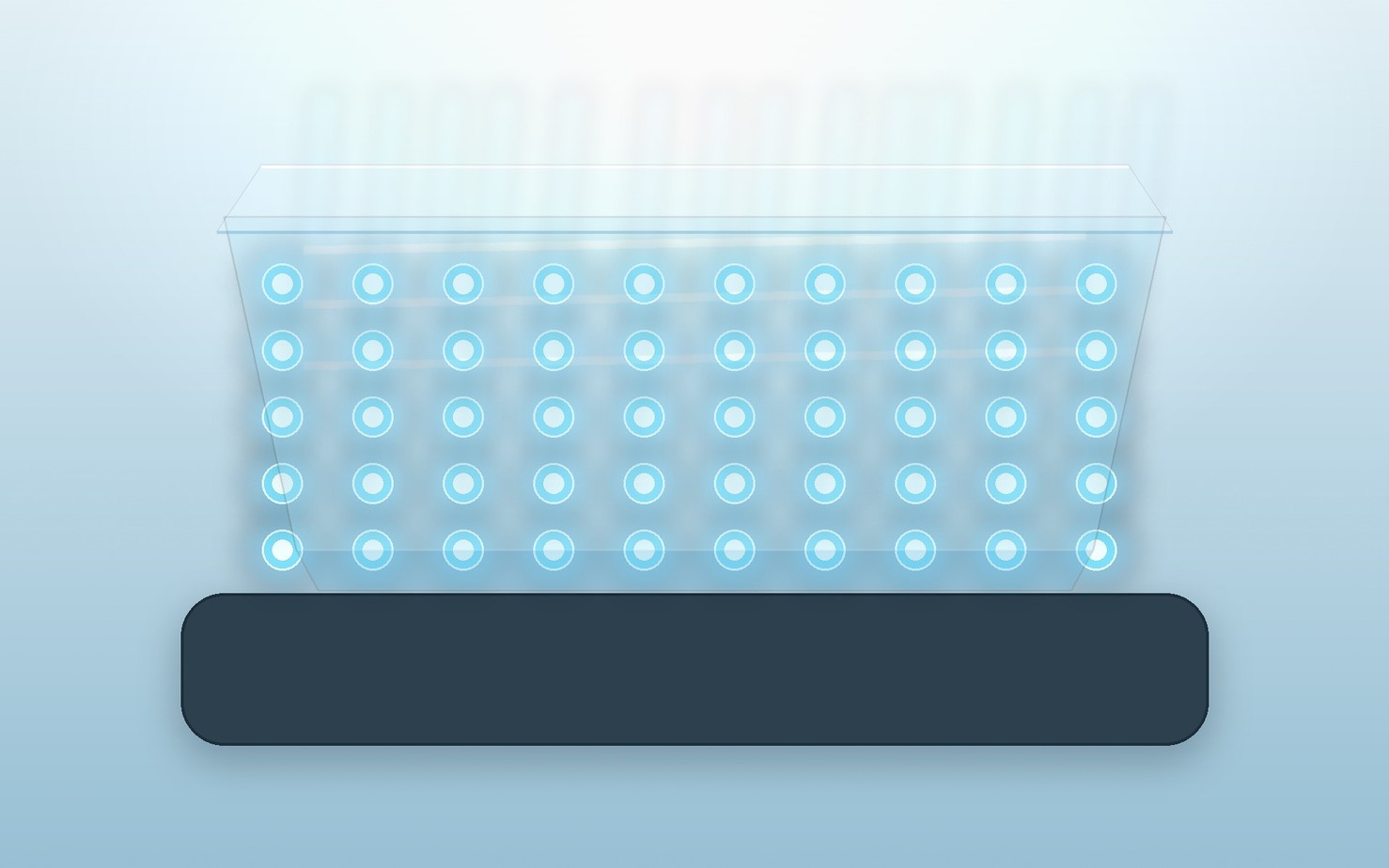 Figure 4. Transparent silicone gel coupling layer over a light-emitting electronic array.
What to Specify When You Request a Silicone Gel Raw Material
A useful inquiry gives enough information to match the raw-material chemistry to your process. If you already have a formulation, the same checklist helps identify an equivalent direction or a more targeted custom grade.
- Application and substrate — power module, PCB, sensor, optical assembly, cable component or other target use.
- System format — one-part concept, two-part A/B system, or individual raw materials for in-house formulation.
- Processing viscosity — desired flow before cure and any limits imposed by dispensing, vacuum degassing or filling equipment.
- Target gel softness — penetration, Shore 00/000 target, qualitative softness or an existing benchmark formulation.
- Cure conditions — room-temperature cure, heat-accelerated cure, working-time requirement and maximum process temperature.
- Optical and surface behavior — clear or translucent appearance, tack level, adhesion strategy and refractive-index considerations if relevant.
- Reactive specifications — vinyl content, Si-H content, catalyst concentration or preferred hydride-to-vinyl balance when those values are already known.
- Additional formulation priorities — low volatility, low bleed, reinforcement, phenyl modification, filler use or compatibility with specific additives.
 Figure 5. Conceptual view of a lightly crosslinked silicone polymer network.
Standard raw materials are a good starting point, but silicone gels often benefit from specification work at the ingredient level. Eata Silicon can support custom directions around polymer viscosity, vinyl functionality, Si-H content, phenyl modification, catalyst concentration, cure-moderator package, low-volatility goals and compatible blends.
For customers developing a complete addition-cure silicone gel platform, we can also discuss matched components so the base polymer, crosslinker and catalyst are selected as a coherent system rather than as isolated ingredients. Share your target viscosity, gel softness, cure conditions and end-use environment, and we can help identify a practical raw-material route for your silicone gel project.
Build the gel around the performance you actually need.
Contact Eata Silicon to discuss raw-material selection, matched addition-cure components or a custom silicone gel specification.
| Catalog Number |
Product Name |
Order |
Quantity |
|
SRE-0087 |
Hydrogenated Polyisobutene Silicone Elastomer Gel, ≥15% Content
|
Inquiry
|
|
|
SRE-0088 |
PEG-10 Dimethicone Crosspolymer Elastomer Gel, ≥24% Nonvolatile
|
Inquiry
|
|
|
SRE-0089 |
Cyclopentasiloxane Silicone Elastomer Gel, ≥14% Nonvolatile
|
Inquiry
|
|
|
SRE-0090 |
High-Solids Dimethicone Elastomer Gel, >70% Nonvolatile
|
Inquiry
|
|
|
SRE-0091 |
Low-Solids Cyclopentasiloxane Elastomer Gel, 12.00–12.75% Nonvolatile
|
Inquiry
|
|
|
SRE-0092 |
Dimethicone Crosspolymer Elastomer Gel, 9–14% Nonvolatile
|
Inquiry
|
|
|
SRE-0093 |
Multi-Crosspolymer Dimethiconol Elastomer Gel, 14–17% Nonvolatile
|
Inquiry
|
|
|
SRE-0094 |
Self-Emulsifying Hydrophilic Silicone Elastomer Gel, 13–17% Nonvolatile
|
Inquiry
|
|
|
SRE-0095 |
Film-Forming Silicone Resin Elastomer Gel, 15–25% Nonvolatile
|
Inquiry
|
|
|
SRE-0096 |
Self-Emulsifying Cyclopentasiloxane Elastomer Gel, 30,000–100,000 cP
|
Inquiry
|
|
For Research or Industrial Raw Materials, Not For Personal Medical Use!