Nano-Inorganic Modified Silicone Resins combine a silicone-rich binder or network with carefully selected inorganic phases at nano or submicron scale. The modifier may be introduced as dispersed silica, alumina, titania or other ceramic particles, created through a sol-gel route, or incorporated through silsesquioxane/POSS chemistry. The objective is not simply to add filler: it is to engineer the resin–particle interface so the cured system can target a more useful balance of thermal stability, hardness, barrier behavior, dielectric performance, optical response and rheology.
At Eata Silicon, material selection begins with the application and processing window. Resin chemistry, particle surface treatment, primary particle size, aggregate state, specific surface area, purity, loading, dispersion medium, viscosity and cure route all influence the final result. That specification-led approach helps customers compare raw materials on measurable parameters instead of relying on a generic "nano-modified" label.
Why Nano-Inorganic Modification Matters
Silicone resins are already valued as binders for heat-resistant and weatherable coating systems. Introducing a nanoscale inorganic phase adds a second design lever: the high interfacial area between particle and resin can change how stress, heat, moisture, light and flow are managed inside the formulation. The benefit depends on dispersion and interfacial compatibility; an agglomerated nanofiller can behave very differently from a well-dispersed, surface-matched one.
- Nano-silica and fumed silica — commonly used to reinforce silicone-containing systems and to tune viscosity, thixotropy and anti-settling behavior. Surface-treated grades can improve compatibility with less polar resin phases, while high-surface-area hydrophilic grades are useful where strong particle–network interaction is desired.
- Nano-alumina — a useful route when the formulation target includes thermal-management behavior, electrical insulation and ceramic reinforcement. Published silicone/alumina composite work shows that interfacial treatment and filler distribution are central to the thermal and mechanical response.
- Nano-TiO₂ — used in coating research where reflectance, UV interaction, opacity or photocatalytic behavior are relevant. A silicone matrix can be paired with titania, but particle grade, surface chemistry and loading must be chosen around the optical and durability target.
- POSS and silsesquioxane modification — places an inorganic siloxane-rich structure at molecular scale rather than relying only on dispersed oxide powder. Studies on POSS-modified silicone resins report routes to higher thermal stability when the cage chemistry and resin network are compatible.
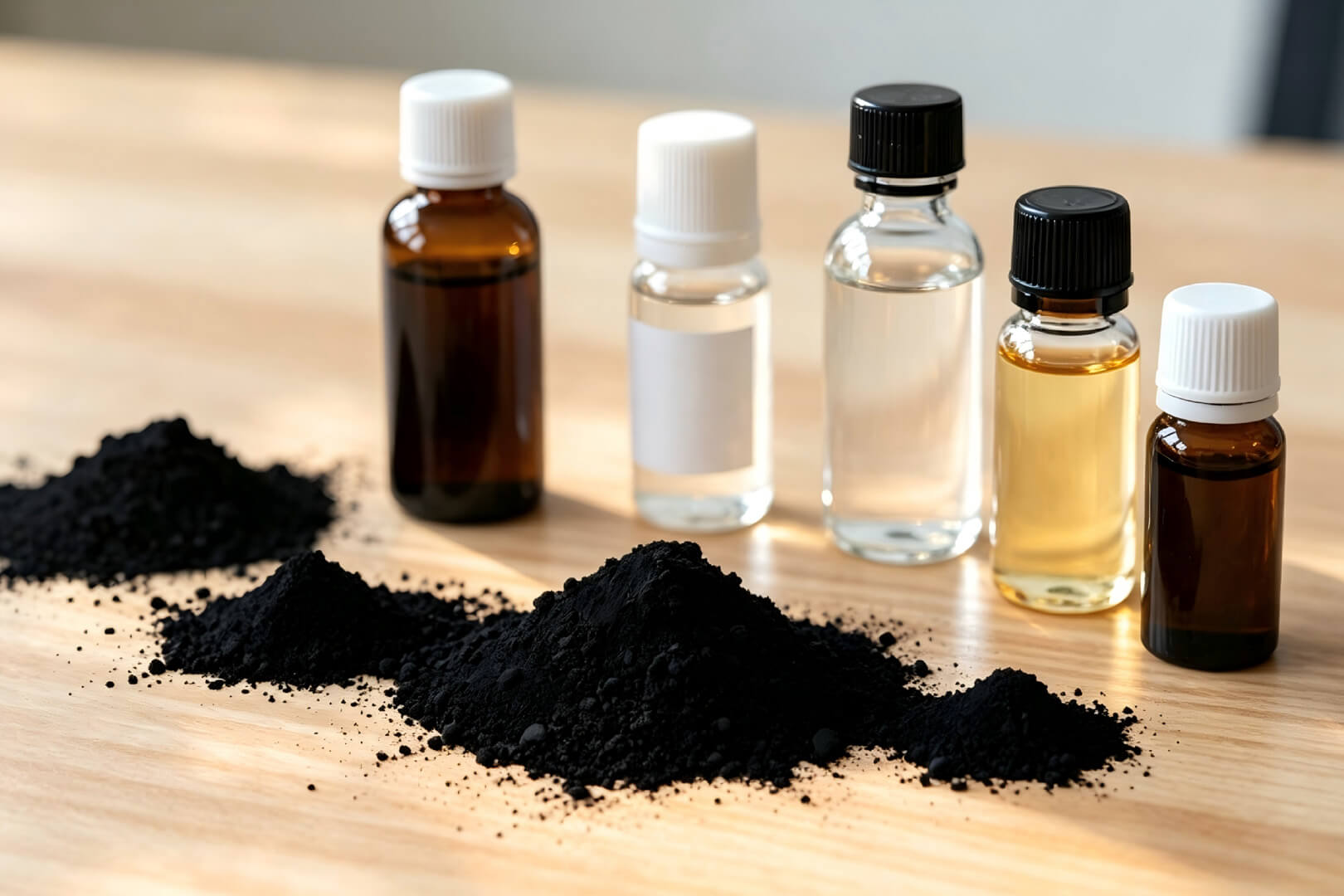
 Image 1. Representative liquid silicone resin matrix before inorganic modification and curing.
Material Architectures to Match Different Performance Targets
The phrase "nano-inorganic modified silicone resin" covers several architectures. Choosing the right one means deciding where the inorganic phase should sit, how it should interact with the silicone network and what the customer actually needs the cured material to do.
- Nano-silica-modified silicone resin — for rheology control, reinforcement, surface durability and barrier-oriented coating development. Fumed silica, colloidal silica or surface-modified silica may be considered depending on solids, solvent compatibility and transparency requirements.
- Nano-alumina-modified silicone resin — for thermally functional and electrically insulating composite systems, including encapsulation, heat-spreading coatings and ceramic–polymer hybrid studies.
- Nano-TiO₂-modified silicone resin — for reflective, UV-responsive, optical or functional coating development where titanium dioxide is selected for the required phase, surface treatment and particle profile.
- Silica/zirconia sol-gel silicone hybrids — for formulations where the inorganic phase is built in situ from hydrolyzable precursors, enabling close control over network formation and interface chemistry.
- POSS/silsesquioxane-modified silicone resin — for molecular or nanoscale hybrid networks targeting thermal resistance, dimensional control, dielectric research or high-performance coating matrices.
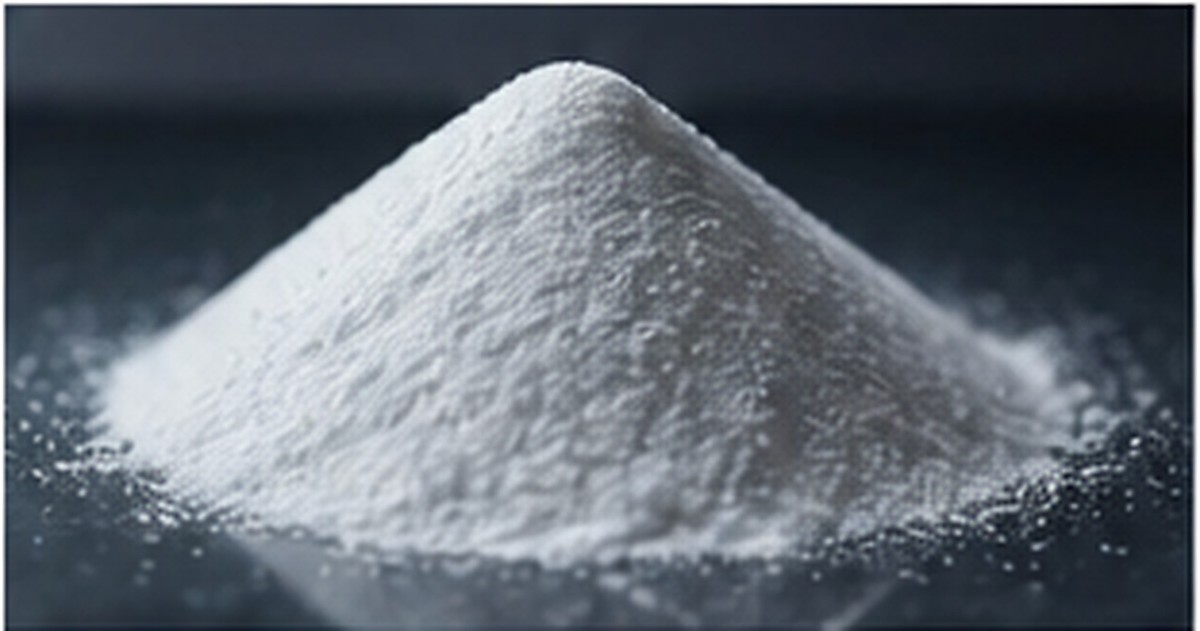 Image 2. Fine inorganic oxide powders are selected by chemistry, purity, particle scale and surface characteristics.
Related Raw Materials and Precursors
| Related material |
Verified specification |
Why it is relevant |
| Hydrophilic Fumed Nano Silica Hydrophilic-200 |
SiO₂; CAS 112945-52-5; ≥99.8% metals basis; 7–40 nm; BET 200 m²/g |
High-surface-area silica for coatings, polymer reinforcement and nanocomposite development. |
| High-Purity Aluminum Oxide Nanopowder |
Al₂O₃; CAS 1344-28-1; 99.8% trace-metals basis; 13 nm primary particle size (TEM) |
Nano-oxide candidate for thermal-management, electrically insulating and reinforced composite studies. |
| High-Purity Anatase Titanium Dioxide |
TiO₂; CAS 1317-70-0; ≥99.9% metals basis; powder |
Functional oxide for coating, optical/reflective and inorganic-modification research. |
| Nano Magnesium Oxide |
MgO; CAS 1309-48-4; nanoparticle grade; nanopowder |
Ceramic nanomaterial for coating, insulation, thermal-management and interface-development studies. |
| Zirconium(IV) Isopropoxide–Isopropanol Complex |
CAS 14717-56-7; ≥99.9% metals basis |
Molecular zirconium precursor for zirconia sol-gel, hybrid coating and in-situ inorganic-network development. |
Where These Resin Systems Fit
Nano-inorganic modified silicone resins are most valuable where a coating, binder or encapsulant must balance several properties at once. The following application directions are common starting points for specification discussions:
- High-temperature protective coatings — silicone-rich binders combined with ceramic phases for metal equipment, heat-exposed components, industrial bake coatings and maintenance systems.
- Electrical insulation and encapsulation — resin matrices designed around dielectric behavior, moisture resistance, adhesion and thermal cycling for power-electronics and electrical-material development.
- Thermal-management composites — alumina or other thermally functional inorganic phases dispersed in silicone-rich matrices for heat-spreading or thermally conductive insulation research.
- Reflective and UV-oriented coatings — titania-containing silicone coatings where solar reflectance, optical response or UV exposure is part of the performance target.
- Barrier and surface-protection layers — hybrid coatings developed around abrasion resistance, corrosion-control interfaces, moisture resistance or substrate adhesion.
- Adhesive, sealant and composite modification — nano-silica, silsesquioxane or oxide phases used to alter reinforcement, flow, interfacial adhesion and dimensional behavior in silicone-containing formulations.
 Image 3. Layered coating architectures illustrate how a modified silicone binder can function at protective material interfaces.
How to Specify a Nano-Inorganic Modified Silicone Resin
| Decision point |
What to define |
Why it matters |
| Base resin chemistry |
Methyl, methyl-phenyl, phenyl-rich, silanol-functional, alkoxy-functional or other silicone resin |
Controls heat resistance, flexibility, compatibility, cure and surface behavior. |
| Inorganic phase |
SiO₂, Al₂O₃, TiO₂, MgO, ZrO₂/precursor, POSS or mixed system |
Sets the main reinforcement, thermal, dielectric or optical contribution. |
| Particle specification |
Primary size, D10/D50/D90, aggregate size, BET area and morphology |
"Nano" alone does not describe the real dispersion or surface area seen by the resin. |
| Surface chemistry |
Hydrophilic/hydrophobic treatment, silane functionality, hydroxyl level or coupling chemistry |
Determines wetting, agglomeration tendency and resin–particle interface. |
| Composition & form |
Filler loading, solids, solvent or dispersion medium, one-part/two-part format |
Changes viscosity, coating behavior, cure and final inorganic fraction. |
| Processing window |
Mixing method, addition sequence, cure temperature/time and substrate |
Strongly affects dispersion, network formation and adhesion. |
| Critical performance |
Thermal conductivity, dielectric strength/loss, hardness, adhesion, reflectance, barrier or other target |
Keeps the material specification tied to the customer's actual qualification test. |
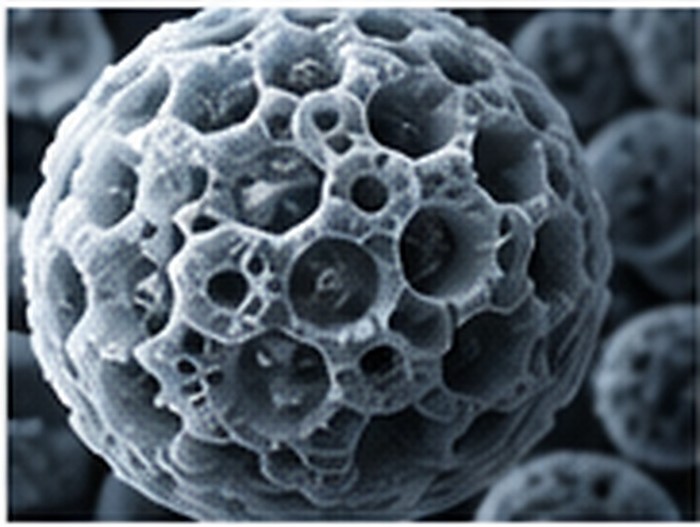 Image 4. Particle morphology and accessible surface area influence dispersion, resin demand and interfacial behavior.
Frequently Asked Questions
What does "nano-inorganic modified silicone resin" mean?
It describes a silicone-resin matrix whose structure or formulation incorporates an inorganic phase at nano or near-nano scale. The inorganic component may be a dispersed oxide, a surface-treated nanoparticle, an in-situ sol-gel phase or a silsesquioxane/POSS structure.
Does a nano modifier automatically make the coating transparent?
No. Optical clarity depends on refractive-index contrast, particle/aggregate size, loading and dispersion quality. Some high-surface-area silica systems can be formulated with good transparency, while titania and other high-index oxides can rapidly increase haze or opacity.
Which modifier is most relevant for thermal-management work?
Alumina is a common electrically insulating ceramic filler for thermal-management composites. The effective result depends on loading, packing, interface treatment, viscosity and the continuous heat-transfer path created in the cured material.
Why is surface treatment important?
Nanoparticles have high surface area and can agglomerate strongly. Matching the surface chemistry to the resin or using an appropriate silane treatment can improve wetting and dispersion, which in turn changes viscosity and the quality of the particle–polymer interface.
 Image 5. Resin formulation can be adjusted around solids, viscosity, functionality and the chosen inorganic phase.
Eata Silicon can support custom material matching for nano-inorganic modified silicone resin projects. Depending on the chemistry and application, the discussion can cover base silicone resin type, inorganic modifier, particle size and BET surface area, surface treatment, solids content, viscosity range, solvent or dispersion medium, functional groups, moisture/impurity limits and packaging configuration.
Share the process window and the performance target—such as thermal stability, heat transfer, electrical insulation, coating hardness, adhesion, reflectance, rheology or barrier behavior—and we can help define a technically relevant raw-material specification for evaluation and quotation.
For Research or Industrial Raw Materials, Not For Personal Medical Use!