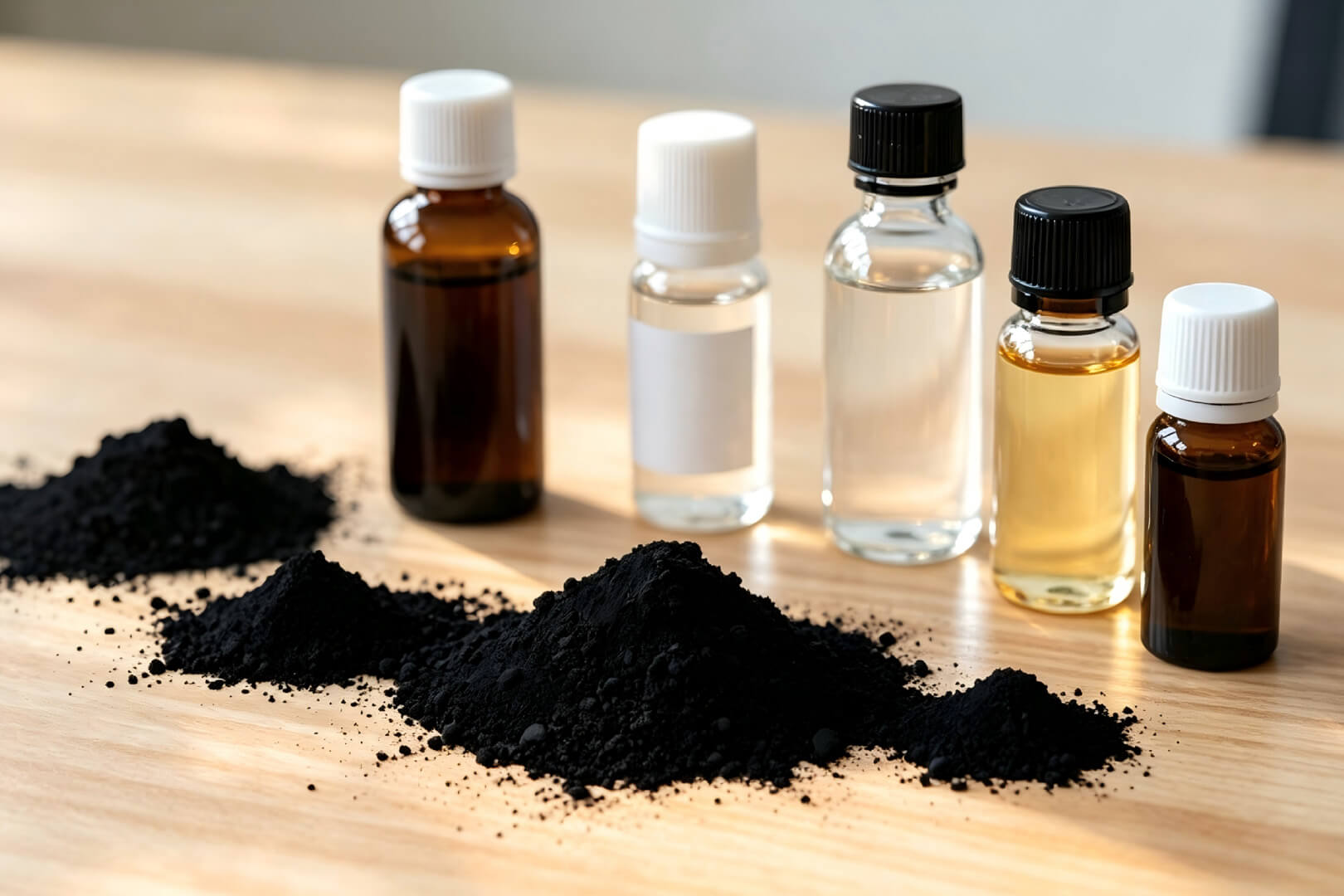
Grind silicon metal down to a powder and its personality changes. Suddenly it disperses into refractory castables, packs into ceramic green bodies, reacts faster in chemical synthesis, and stores lithium in next-generation battery anodes. Particle size drives all of it — which is why two powders with identical chemistry can behave like entirely different materials on the production line.
Eata Silicon mills and classifies silicon powder (CAS 7440-21-3) across a wide window, from coarse 20-mesh cuts down to submicron grades, in purities spanning metallurgical 98.5% to electronic 5N.
Browse Our Products
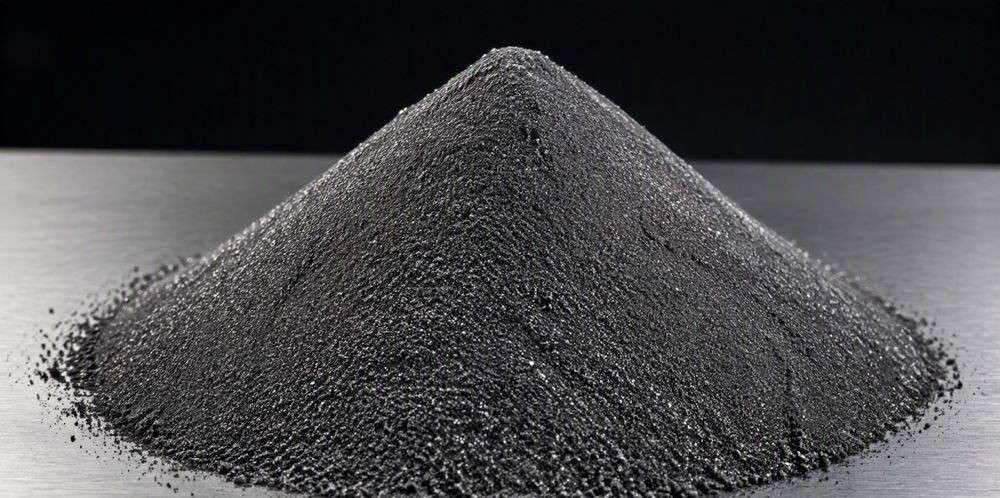 Micronized silicon powder, milled and classified to size.
From Lump to Micron: How Silicon Powder Is Made
Every batch starts as selected silicon metal, which is crushed, milled, and then classified until the particle size distribution hits its target window. Jet milling and ball milling each leave a different fingerprint on particle shape, and the classification step decides whether a powder carries only a top cut — a ceiling on coarse particles — or both a top and bottom cut for customers who must control fines as well. For sensitive applications, contamination-free milling keeps iron pickup from the grinding media out of the product.
That process control matters in practice. A 325-mesh powder, for instance, passes a screen with 44-micron openings, yet two nominally identical 325-mesh powders can still differ widely in average particle size and distribution width — and those differences show up later in reaction speed, packing density, and flow.
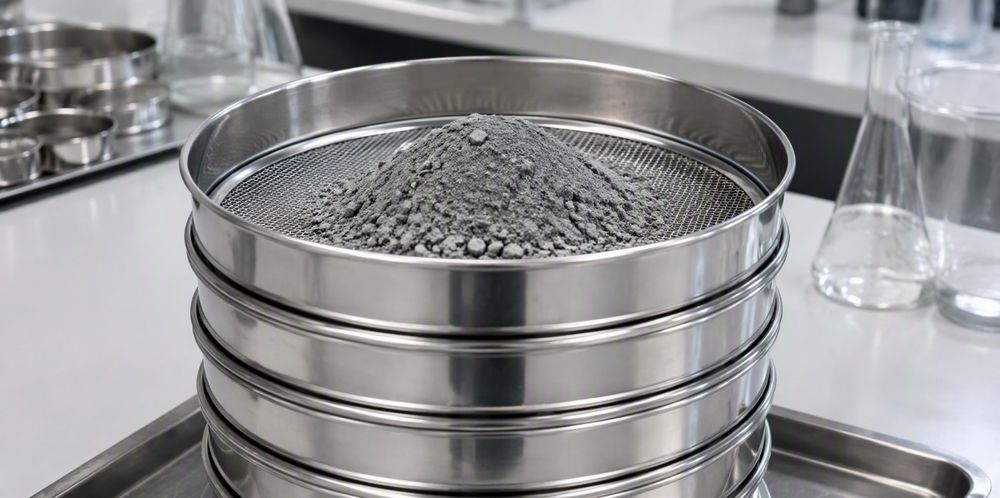 Screen analysis keeps every cut on specification.
Specifications Worth Comparing
- Purity: metallurgical grades run 98.5–99.5% Si, chemical grades 99–99.9%, and high-purity material reaches 3N to 5N for electronics and research.
- Particle size: expressed in mesh (20 to 500), micrometers, or D10/D50/D90 values — tell us which convention your specification uses.
- Distribution width: narrow distributions pack and react more predictably; wide ones can be more economical where tolerance allows.
- Morphology: irregular milled particles suit most uses, while spherical powder flows better for additive manufacturing and thermal spray.
- Surface and chemistry details: oxygen content, BET surface area, tap density, and trace elements such as Fe, Al, Ca, B, and P are reported on the certificate of analysis.
Where Silicon Powder Earns Its Keep
- Refractories and castables: fine silicon powder acts as an antioxidant and sintering aid in iron-trough mixes, SiC-containing castables, and other high-temperature linings.
- Technical ceramics: the raw material behind reaction-bonded silicon carbide, reaction-bonded silicon nitride, and SiAlON components for wear and heat service.
- Lithium-ion battery anodes: micron and submicron silicon feed SiOx and silicon-carbon composite anodes, raising capacity well beyond graphite alone.
- Aluminum and steel metallurgy: powdered additions dissolve quickly for alloying, deoxidation, and powder-metallurgy preforms.
- Silicones and chemical synthesis: ground silicon feeds the direct process toward silanes, silicone rubber, resins, and fluids.
- Coatings and electronics: high-purity powder serves thermal spraying, sputtering target preparation, and CVD/PVD processes.
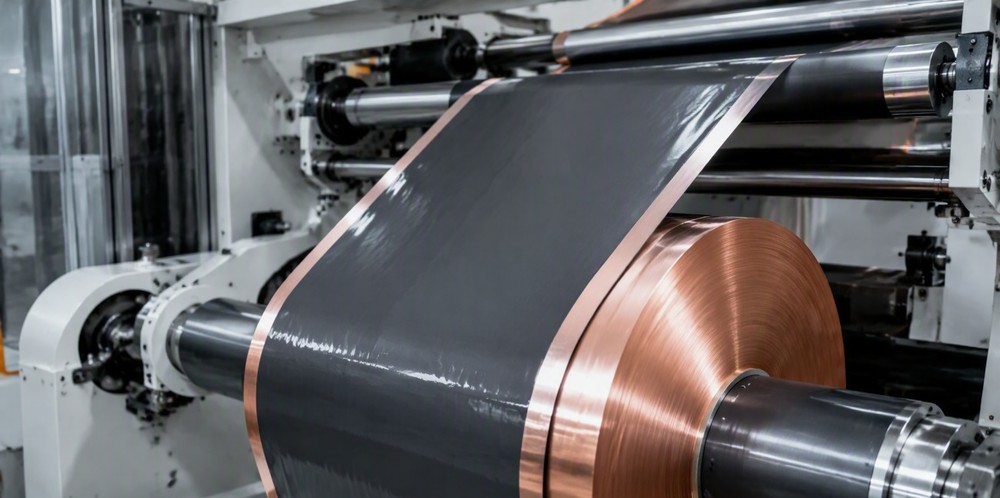 Silicon-bearing anode coatings on the battery production line.
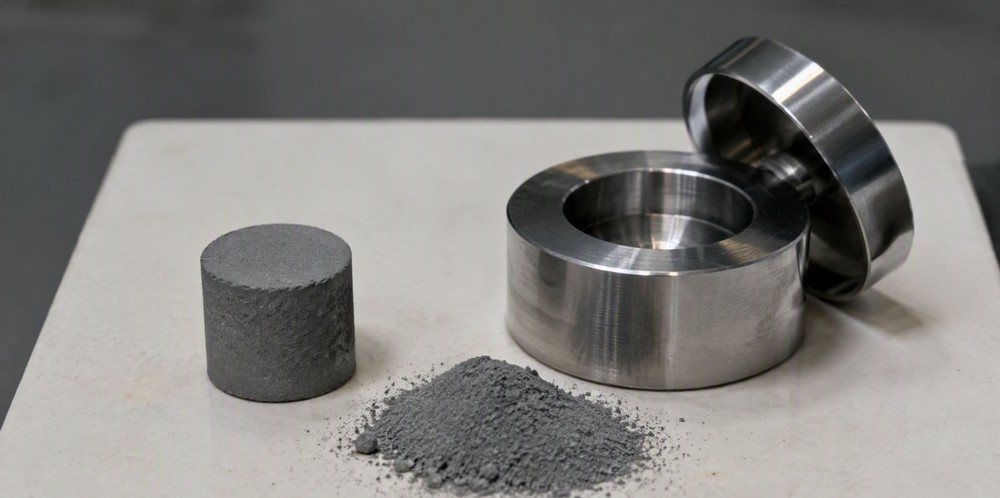 Powder pressed into a green body — the first step toward a ceramic part.
Representative Products at a Glance
Frequently requested powders are summarized below. Mesh, micron, and D50-based specifications can all be accommodated; ask if your target cut is not shown.
| Product |
Purity |
Particle Size |
Main Applications |
| Metallurgical Grade Silicon Powder |
98.5–99.5% Si |
45–325 mesh |
Aluminum alloys, steel deoxidation, foundry |
| Chemical Grade Silicon Powder |
99–99.9% Si |
75–150 µm |
Silicones, silanes, resins |
| Micronized Silicon Powder |
99–99.99% Si |
D50 1–10 µm |
Battery anodes, advanced ceramics, coatings |
| High-Purity Silicon Powder |
3N–5N |
1–10 µm |
Electronics, sputtering targets, R&D |
| Spherical Silicon Powder |
99.9%+ Si |
1–50 µm |
Additive manufacturing, thermal spray |
| Coarse Silicon Powder |
98.5–99.5% Si |
20–100 mesh |
Refractories, metallurgical additions |
| Anode-Grade Silicon Powder |
Custom purity |
Submicron–5 µm |
SiOx and Si-C composite anode production |
Packaging, Documentation, and Handling
- Packaging: moisture-proof 25 kg bags and 1,000 kg jumbo bags cover routine orders; vacuum-sealed or inert-atmosphere packs protect submicron and high-surface-area grades.
- Documentation: each lot leaves with a certificate of analysis covering chemistry and particle size distribution, plus an SDS; BET surface area and tap density can be added on request.
- Sampling: trial quantities from a few hundred grams upward let you qualify a powder in your own process before committing to volume.
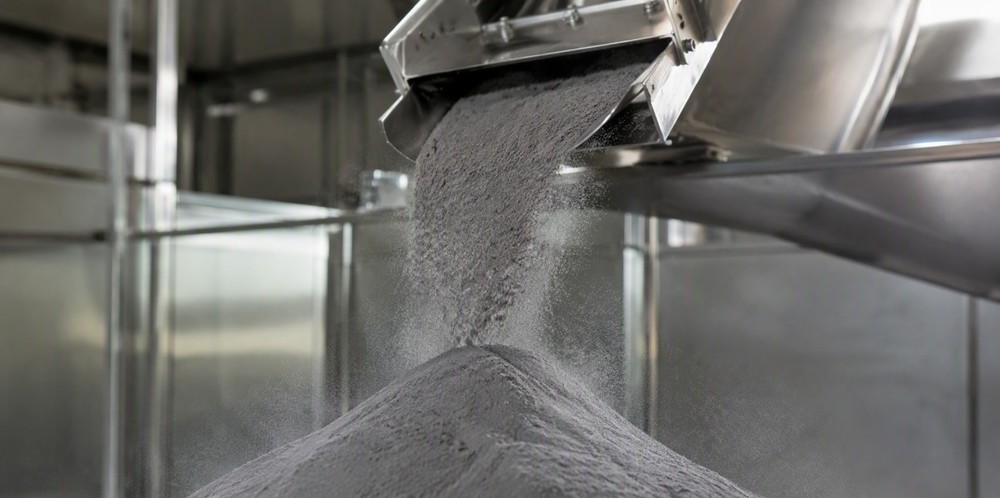 Silicon powder moving through the packing line.
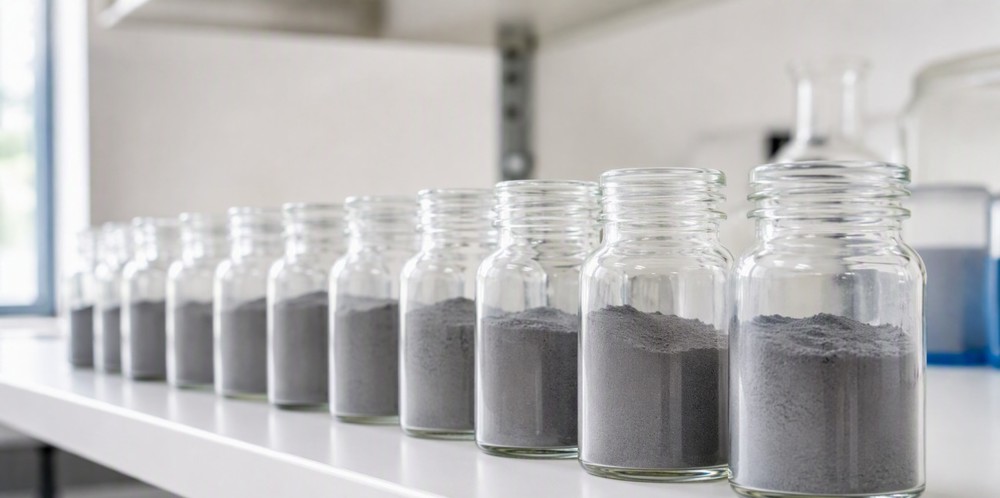 Research packs ready for evaluation.
Choosing the Right Silicon Powder
- For refractory formulations: start with a metallurgical grade in the 200–325 mesh range, then tune the cut to your packing and reaction-speed requirements.
- For anode development: narrow-D50 submicron powder with controlled oxygen content is the usual starting point; share your electrode recipe and we will match it.
- For silicone synthesis: chemical-grade powder with low calcium and a defined top cut keeps fluid-bed reactions steady.
- For electronics and coatings: specify 3N purity or better, and ask about contamination-free milling when even trace iron is unacceptable.
Custom Silicon Powder Services
Catalog cuts cover most processes, but particle engineering is where we add the most value. Eata Silicon can mill to a specified D50 with a narrow distribution, apply top and bottom cuts simultaneously, adjust chemistry for boron or phosphorus limits, blend spherical and irregular fractions, and package anything from argon-sealed 100 g research pouches to palletized jumbo bags. If your specification reads like nobody else's, that is exactly the kind of request we built this line for.
Send us your target purity, particle size, and application — we will come back with a powder that fits, or a plan to make one.
For Research or Industrial Raw Materials, Not For Personal Medical Use!