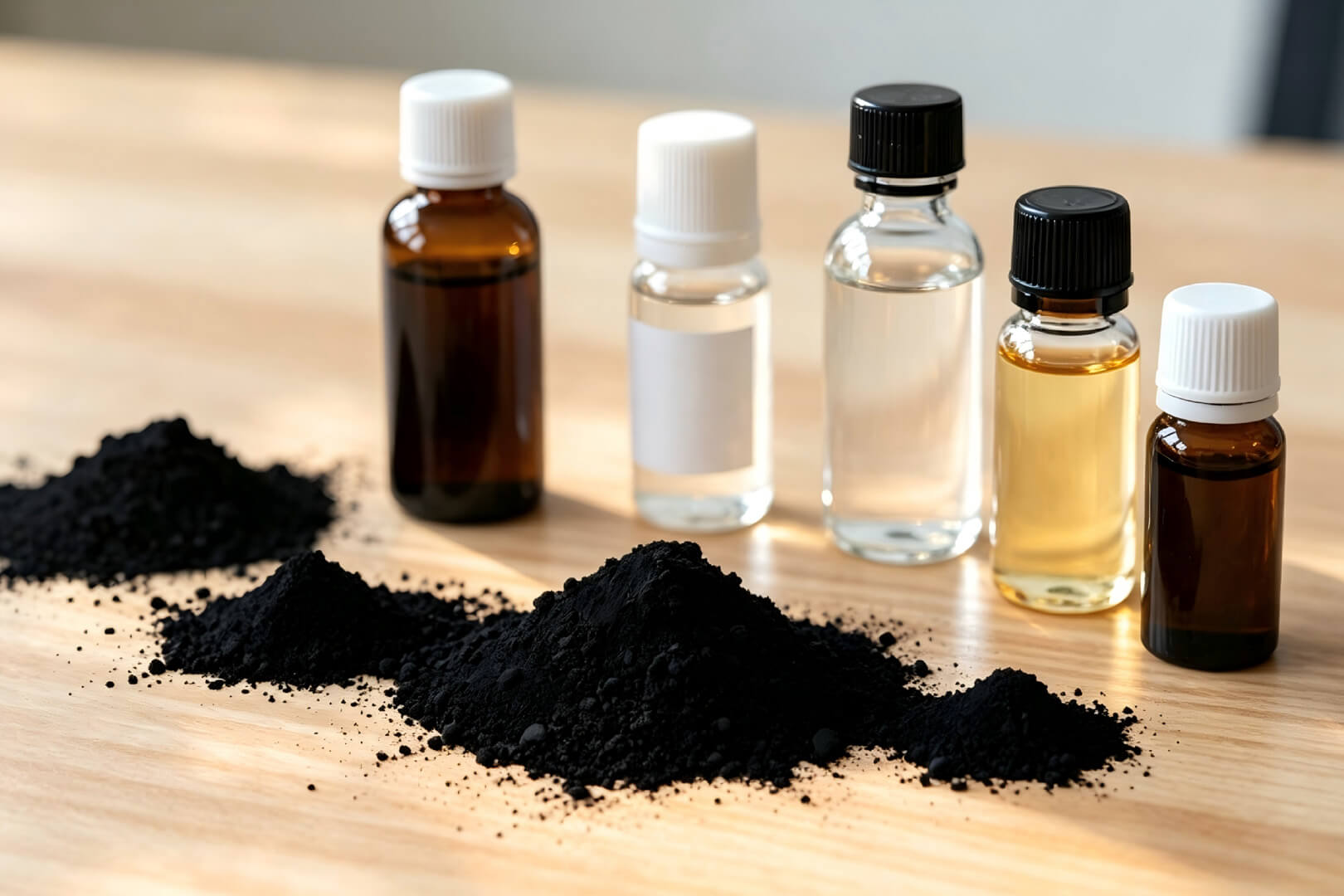
In 1940 and 1941, working independently on opposite sides of the Atlantic, Richard Müller in Germany and Eugene Rochow in the United States discovered that passing methyl chloride over silicon metal with a copper catalyst yields methylchlorosilanes directly. The wartime aviation industry needed heat-resistant resins; what it got instead was the foundation of an entire branch of chemistry. Eighty-five years later the "Direct Process" remains the exclusive industrial gateway to silicones: every sealant cartridge, every silicone keypad, every photovoltaic junction box on the planet traces its silicon-carbon bonds back to that one gas-solid reaction at 250–300 °C.
Organosilicon monomers – chlorosilanes, alkoxysilanes, and the dual-function coupling agents – carry the reactive groups that build polymer chains and bond them to other materials. Organosilicon intermediates – cyclic siloxanes like D4, mixed oligomers, disilazanes, and orthosilicate esters – are the refined feedstocks that polymerization, surface treatment, and casting operations consume by the tonne. Eata Silicon supplies both families with the purity documentation their applications demand, from cable and solar production lines to research laboratories.
Browse Our Products
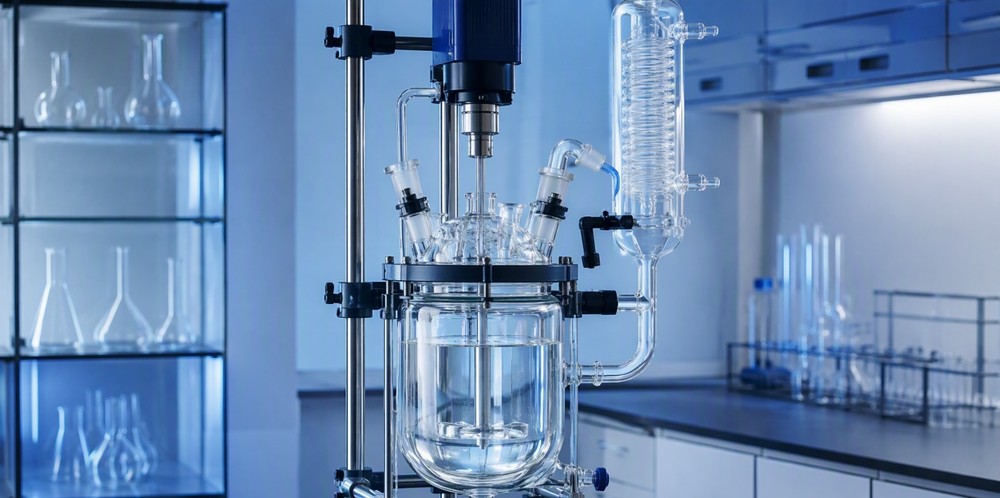 Where monomers are born: synthesis under the condenser.
The Direct Process runs in a fluidized-bed reactor: finely ground silicon and copper catalyst (with zinc, tin, or aluminum promoters – lead is a poison) fluidized by gaseous methyl chloride at 250–300 °C and a few bars of pressure. The reaction is fiercely exothermic, achieves 90–98% silicon conversion, and produces not one silane but a slate of them, separated afterwards by fractional distillation. Modern reactors make up to 40,000 tonnes of crude silane per year, and the target molecule is always the same:
| Direct-Process Product |
Share |
Boiling Point |
Role Downstream |
| Dimethyldichlorosilane (M2) |
80–85% (up to ~94% optimized) |
70 °C |
The chain builder – hydrolyzed to silicone oils, rubbers, resins |
| Methyltrichlorosilane (M1) |
8–18% |
66 °C |
Branching and crosslinking units; silicone resins, fumed silica feed |
| Trimethylchlorosilane (M3) |
2–4% |
57 °C |
Chain terminator and end-capper; silylation reagent |
| Methyldichlorosilane (SiH) |
~0.5% |
41 °C |
Si–H functionality for hydrosilylation chemistry |
The separation is harder than it looks: M1 and M2 boil just 4 °C apart, so the distillation columns are tall, the reflux ratios high, and the purity stakes absolute – a trace of trifunctional M1 gels the polymer, while monofunctional M3 stops the chains short. The industry speaks about these functions in a four-letter alphabet: M units (R₃SiO½) terminate, D units (R₂SiO) build chains, T units (RSiO₃⁄₂) branch, and Q units (SiO₄⁄₂) form resin cores. Choose the monomer mix and you have chosen the silicone's architecture. Nothing is wasted in a well-run plant, either: the HCl released downstream reacts with methanol to regenerate methyl chloride, closing the chlorine loop.
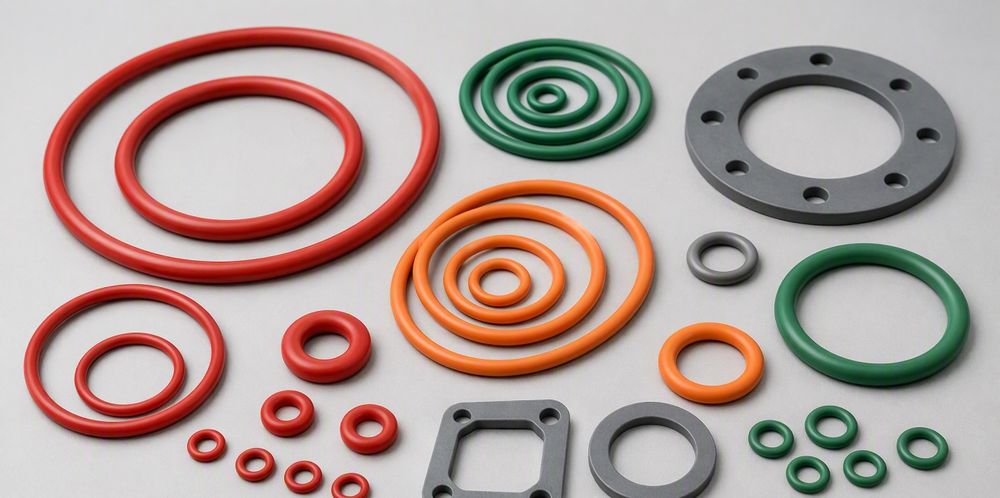 From those monomers: the elastomers that seal the energy world.
Functional Silanes: Coupling Agents and Surface Chemistry
A second monomer family carries two personalities in one molecule: an alkoxysilyl end (typically –Si(OCH₃)₃ or –Si(OC₂H₅)₃) that hydrolyzes and bonds to glass, minerals, and metal oxides, joined by a short carbon bridge to an organic group that reacts into a resin matrix. That dual loyalty makes these functional silanes the standard coupling agents of the composites, coatings, and adhesives world – the molecular rivets across organic–inorganic interfaces:
| Silane (Common Name) |
Organic Function |
Where It Works |
| 3-Aminopropyltriethoxysilane (KH-550) |
Primary amine |
Glass-fiber sizing for epoxy/polyamide, foundry resin-sand bonding, coatings and adhesives |
| 3-Glycidoxypropyltrimethoxysilane (KH-560) |
Epoxy ring |
Adhesives and sealants, electronic potting, glass-fiber finishes (CAS 2530-83-8) |
| 3-Methacryloxypropyltrimethoxysilane (KH-570) |
Methacrylate |
Mineral-filled unsaturated polyester, dental and casting resins |
| Vinyltrimethoxysilane (VTMS) |
Vinyl |
Grafting onto polyethylene for moisture-cured XLPE cable and photovoltaic encapsulants |
| Sulfur silanes (TESPT type) |
Tetrasulfide |
"Green tire" technology – coupling precipitated silica into rubber treads |
Their reach is easy to underestimate: virtually every strand of reinforcement glass leaves the bushing coated in a silane-containing size, and the flexural strength of the finished composite is decided at that nanometer-thick interface. The same chemistry primes metals before painting, treats filler surfaces, and keeps adhesive bonds alive in hot, wet service.
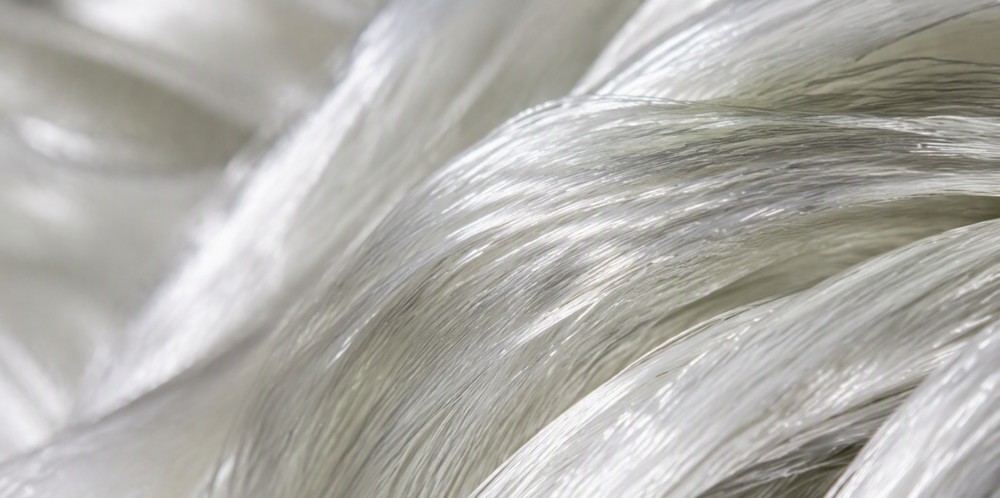 Coupling agents live at this interface: silane-sized glass fiber.
Representative Products at a Glance
| Product |
Typical Specification |
Typical Use |
| Dimethyldichlorosilane (M2) |
≥99.5%, low M1/M3 content |
Silicone polymer production |
| Trimethylchlorosilane (M3) |
≥99%, clear colorless liquid |
End-capping, silylation, HMDS feed |
| Vinyltrimethoxysilane (VTMS) |
≥98%, stabilized |
XLPE cable, PV encapsulant grafting |
| 3-Aminopropyltriethoxysilane (KH-550) |
≥98%, low color |
Coupling agent, foundry, coatings |
| 3-Glycidoxypropyltrimethoxysilane (KH-560) |
≥97%, CAS 2530-83-8 |
Adhesives, sealants, electronics |
| 3-Methacryloxypropyltrimethoxysilane (KH-570) |
≥98% |
Filled-resin and composite systems |
| Tetraethoxysilane (TEOS) |
CAS 78-10-4, SiO₂ ~28% |
Casting binders, zinc-rich primers, sol-gel |
| Octamethylcyclotetrasiloxane (D4) |
≥99%, mp 17 °C |
Ring-opening polymerization to PDMS |
| Dimethylsiloxane cyclic mixture (DMC) |
D3–D6 blend, low volatiles |
Silicone oil and rubber feedstock |
| Hexamethyldisilazane (HMDS) |
Industrial ≥98% / electronic ≥99.9% |
Silica treatment, silylation, lithography primer |
Hydrolyze dimethyldichlorosilane and the chlorine leaves as HCl while the silicon-oxygen backbone assembles into a mixture of cyclic and linear oligomers. Distill that mixture and you meet the silicone industry's workhorse intermediate: octamethylcyclotetrasiloxane, D4, a liquid above 17 °C whose strained-enough ring opens under acid or base catalysis to build polydimethylsiloxane chains. Ring-opening polymerization is an equilibrium – propagation competes with back-biting – so the kinetics, catalyst, and end-blocker together set the molecular weight; its smaller cousin D3, with far higher ring strain, opens faster under anionic conditions. The undistilled cyclic blend, DMC, feeds polymerization directly where exact cut matters less than cost, and hexamethyldisiloxane (MM) caps the chain ends to fix viscosity.
Hexamethyldisilazane (HMDS) plays a different game. Boiling at 124–127 °C and releasing only ammonia as it reacts, it swaps surface silanol groups for trimethylsilyl caps – turning hydrophilic fumed silica hydrophobic, derivatizing polar molecules for GC analysis, and priming silicon wafers so photoresist adheres in lithography. That last duty explains the grade ladder: industrial HMDS at ≥98% serves silica treatment and analytical work, while electronic grade at ≥99.9% – chloride below 1 ppm, total metals below 100 ppb – commands a four-to-six-fold premium for semiconductor lines.
Tetraethoxysilane (TEOS) rounds out the toolkit. Hydrolyzed in ethanol with acid catalysis it forms the silica binder that holds investment-casting shells around turbine-blade wax patterns; formulated as ethyl silicate it binds the zinc-rich primers that protect marine and offshore steel (ASTM D520); and in sol-gel chemistry it grows protective silica networks on stone, glass, and metal.
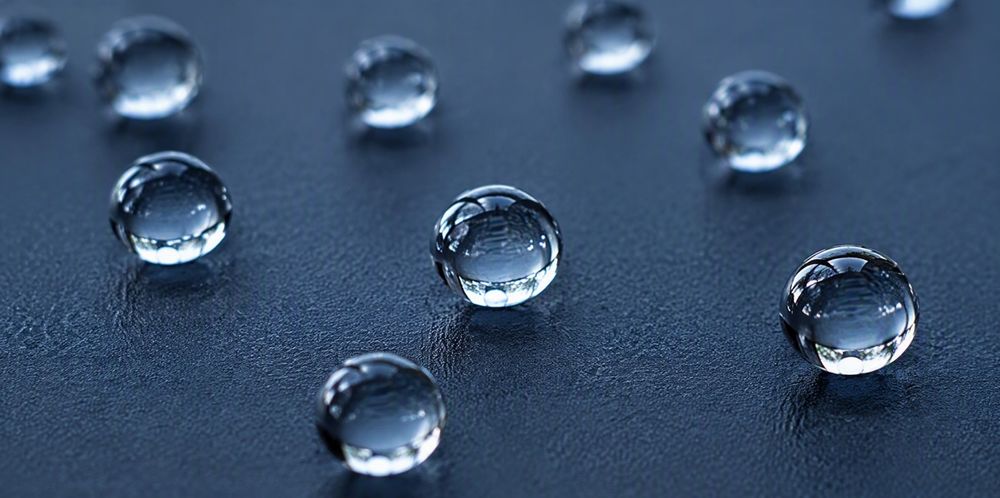 After HMDS treatment: water has nowhere to stick.
Organosilicon Raw Materials in the Energy Sector
Nowhere is this chemistry growing faster than in energy. Medium-voltage power cable increasingly insulates with silane-crosslinked polyethylene: vinyltrimethoxysilane is grafted onto PE chains during extrusion at 180–200 °C, then ambient moisture converts the grafted groups into Si–O–Si bridges between chains over 24–48 hours – releasing only methanol and eliminating the continuous-vulcanization line that peroxide curing demands. Photovoltaic modules rely on the same vinyl silane chemistry to crosslink and stabilize encapsulants, while silicone adhesives seal the junction boxes against decades of weather.
Electrification compounds the demand: thermal-interface silicones manage heat in fast-charging systems, high-voltage connectors and battery packs lean on silicone seals and gels, and analysts tracking the silicone market count e-mobility among its strongest drivers – the global market, valued near US$24.5 billion in 2024, is projected toward US$33 billion by 2030 at roughly 5.2% annual growth. Behind every one of those applications sits a monomer or intermediate that had to be specified, documented, and delivered – which is exactly our business.
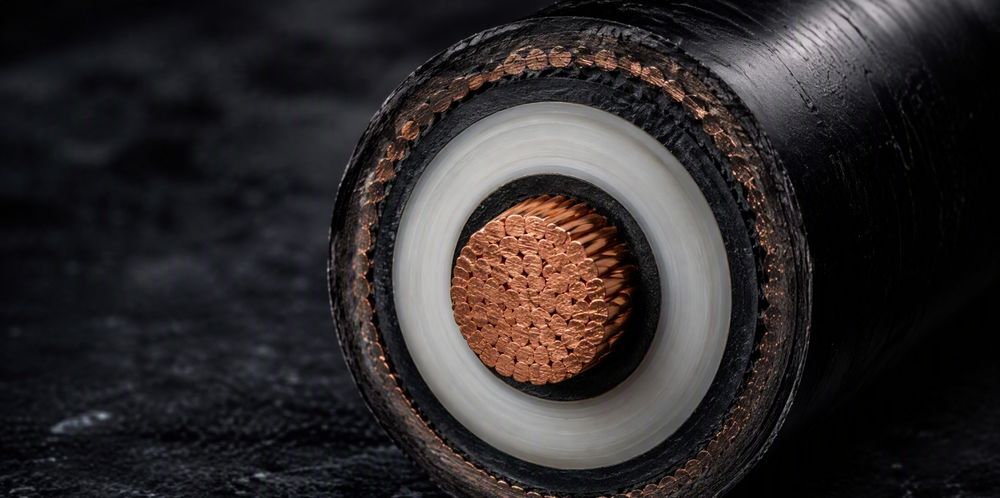 Moisture-cured XLPE: vinyl silane chemistry inside the cable.
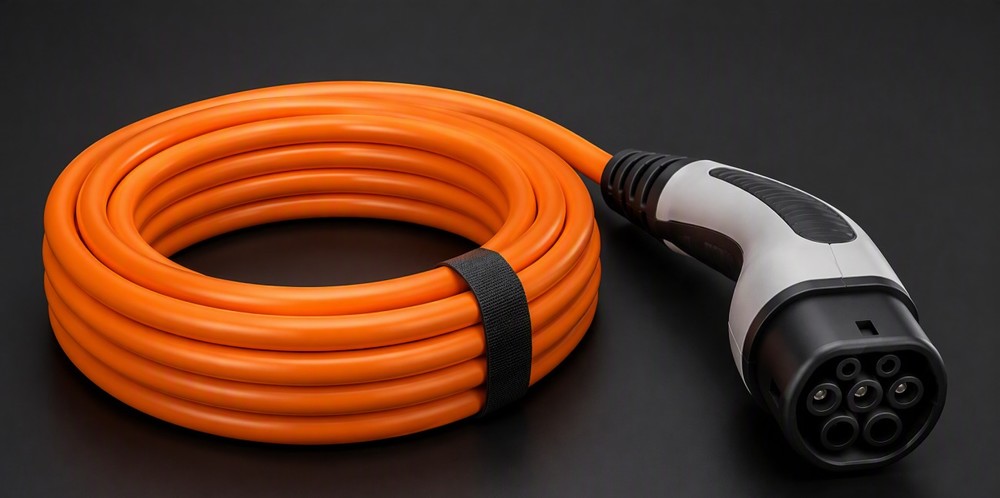 Silicones ride the e-mobility wave.
Quality Control and Moisture-Smart Packaging
Organosilicon quality is measured in tenths of a percent and parts per million. Certificates report GC assay with the impurity profile that matters for the job – M1/M3 content in M2, isomers in functional silanes – plus chloride, color (APHA/Pt-Co), refractive index, and Karl Fischer moisture. Electronic-grade HMDS adds ICP-MS trace metals and sub-ppm chloride. Stability data and, where relevant, inhibitor content accompany light- or heat-sensitive vinyl and methacryloxy grades.
Packaging respects the chemistry's one enemy: water. Chlorosilanes fume on contact with moist air, so they travel in dry, nitrogen-blanketed drums or ISO tanks; alkoxysilanes and coupling agents ship in sealed drums under dry gas; cyclics and intermediates in lined drums away from heat. Opened containers should be re-blanketed and used promptly – and every lot, whatever the size, leaves with its measured COA.
Catalog purity is a starting point, not a ceiling. Eata Silicon regularly supplies custom-cut monomer fractions with tightened impurity limits, functional silanes at specified assay and color, stabilized vinyl and methacryloxy grades, D4/DMC blends prepared to a target cyclic profile, electronic-grade HMDS with documented trace metals, and TEOS hydrolysates pre-hydrolyzed to a customer recipe. Research quantities for process development are routine – most long-term supply agreements began as a one-kilogram evaluation.
Share the application, the specification you are working to, and the volumes you foresee, and our team will respond with a recommended grade, full analytical documentation, and samples for your own testing.
For Research or Industrial Raw Materials, Not For Personal Medical Use!