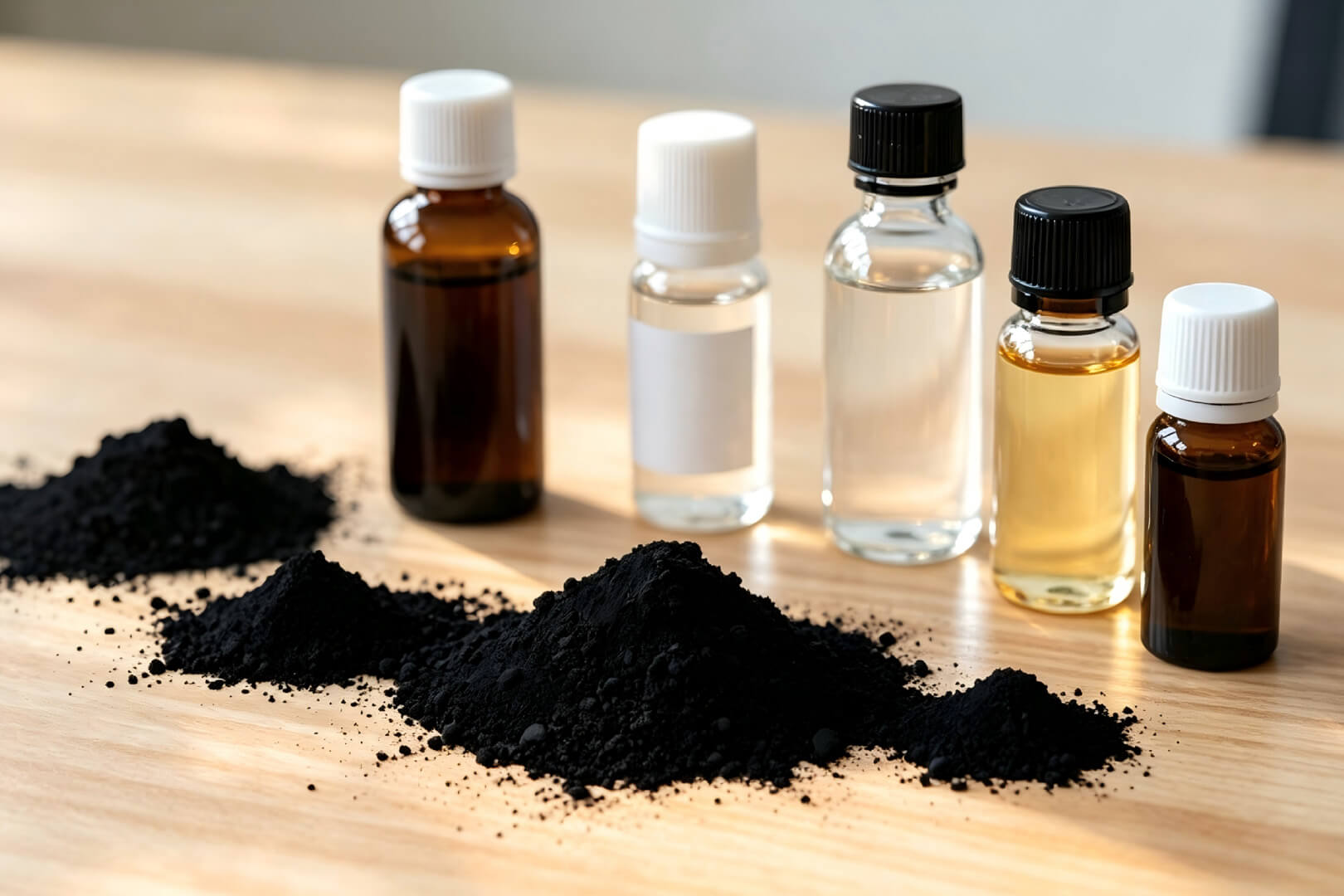
In a hydrocarbyl silane, the silicon atom is only the anchor. The part that does the visible work is the hydrocarbon group riding on it: once the silane hydrolyzes and condenses onto a mineral surface, that carbon chain points outward and rewrites the surface's personality — turning water-loving concrete, glass, silica, or pigment into something water simply rolls off. Chain by chain, from a single methyl carbon to an eighteen-carbon octadecyl tail, this family lets engineers dial in exactly how hydrophobic, how lipophilic, and how durable a surface needs to be.
Eata Silicon produces and stocks hydrocarbyl silane monomers across the full chain-length ladder, in methoxy, ethoxy, and chloro functionalities, from drum quantities of concrete-protection workhorses to high-purity reagents for chromatography and nanotechnology. The sections below map the chemistry, the flagship applications, and the specification points that separate a good lot from a costly reformulation.
Browse Our Products
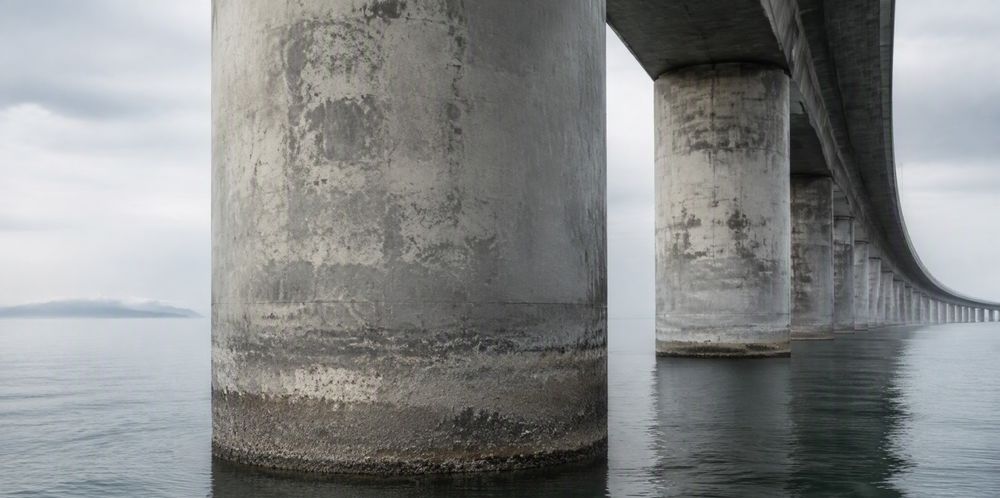 Marine bridge piers face constant chloride attack — hydrocarbyl silanes keep the water, and the salt, out of the concrete.
One Silicon Anchor, Many Carbon Chains
Every hydrocarbyl silane shares a two-part architecture. At one end sits a hydrolyzable group — typically three methoxy or ethoxy ligands, or chlorine in the more reactive chlorosilane grades — that grips oxide surfaces. At the other end sits the hydrocarbyl group: methyl, propyl, isobutyl, octyl, hexadecyl, octadecyl, and beyond. Manufacturing follows dependable routes; methyltrimethoxysilane, for instance, is made by alcoholysis of methyltrichlorosilane with methanol, while longer chains are introduced through Grignard or hydrosilylation chemistry before the alkoxy groups are installed.
Deposition is elegantly simple. The monomer meets moisture, its alkoxy groups become silanols, and those silanols condense with hydroxyls on the substrate — or with each other — until the surface carries a covalently bonded layer only one or a few molecules thick, carbon chains bristling outward. Because that layer is non-polar, it shuts down hydrogen bonding with water; because it is not a film but a molecular lining, it still lets water vapor breathe through; and because ions cannot move through a non-polar barrier, chloride and other dissolved aggressors are blocked along with the liquid water that carries them.
Chain length is the main design dial, and the relationship is not linear:
| Chain |
Examples |
Behavior and Best Use |
| C1 (methyl) |
MTMS, MTES, trimethylmethoxysilane |
Dense, rigid hydrophobation; water-repellent filler treatment, flexible aerogels, end-capping |
| C3 (propyl) |
Propyltrimethoxysilane |
Balanced general-purpose water repellency for masonry and sol-gel systems |
| C4 (isobutyl) |
Isobutyltriethoxysilane |
Low volatility and small footprint — the classic deep-penetrating concrete impregnant |
| C8 (octyl, isooctyl) |
Octyltriethoxysilane, isooctyltrimethoxysilane |
Peak contact angles on flat sol-gel coatings; stone, cement, TiO₂, and carbon-black treatment |
| C16 (hexadecyl) |
Hexadecyltrimethoxysilane |
Strong steric shielding for fillers, nanoparticles, and superhydrophobic aerogels |
| C18 (octadecyl) |
Octadecyltrimethoxysilane |
Crystalline self-assembled monolayers; C18 chromatography phases; superhydrophobic textures |
Two subtleties are worth knowing. Longer chains raise hydrophobicity through steric shielding — octyl-functionalized silica is measurably more hydrophobic than methyl-functionalized material — but on smooth coatings the contact angle peaks around C8 and can fall again at C16 as the layer loses order. On properly textured substrates the story reverses: an octadecyl monolayer packs densely enough to push water contact angles past 150°, where an octyl layer under identical loading stays below 100°. Matching the chain to the substrate's roughness is where our technical team earns its keep.
 High-active silane creams hold a thick reservoir of monomer against the wall, giving it time to penetrate deep into the pores.
Concrete's Invisible Raincoat
The largest tonnage outlet for hydrocarbyl silanes is the protection of reinforced concrete. Branched short-chain grades — isobutyl and isooctyl trialkoxysilanes — are the monomers of choice: their small, compact molecules wick several millimeters into the pore network before hydrolyzing, and their low volatility lets them survive on the surface long enough to get there. Formulators deliver them as neat liquids or as thixotropic creams with up to 80 % active content, which cling to vertical and overhead faces without running off.
Performance is measured, not promised. Under EN 1504-2, a treated concrete cube is split and sprayed with water to reveal the non-wetted depth of silanization; capillary suction per EN 1062-3 quantifies the drop in water uptake; and effective treatments push the water contact angle above 100°. Field evidence is unusually long-dated: a landmark study of bridge decks treated with a 20 % alkyltrialkoxysilane solution recorded a 90 % reduction in water absorption after one month, still 78 % after twelve years, and 70 % after eighteen. Typical application rates run from 600 to 1,000 g/m² — a few hundred grams of monomer per square meter buying decades of chloride exclusion and rebar-corrosion delay.
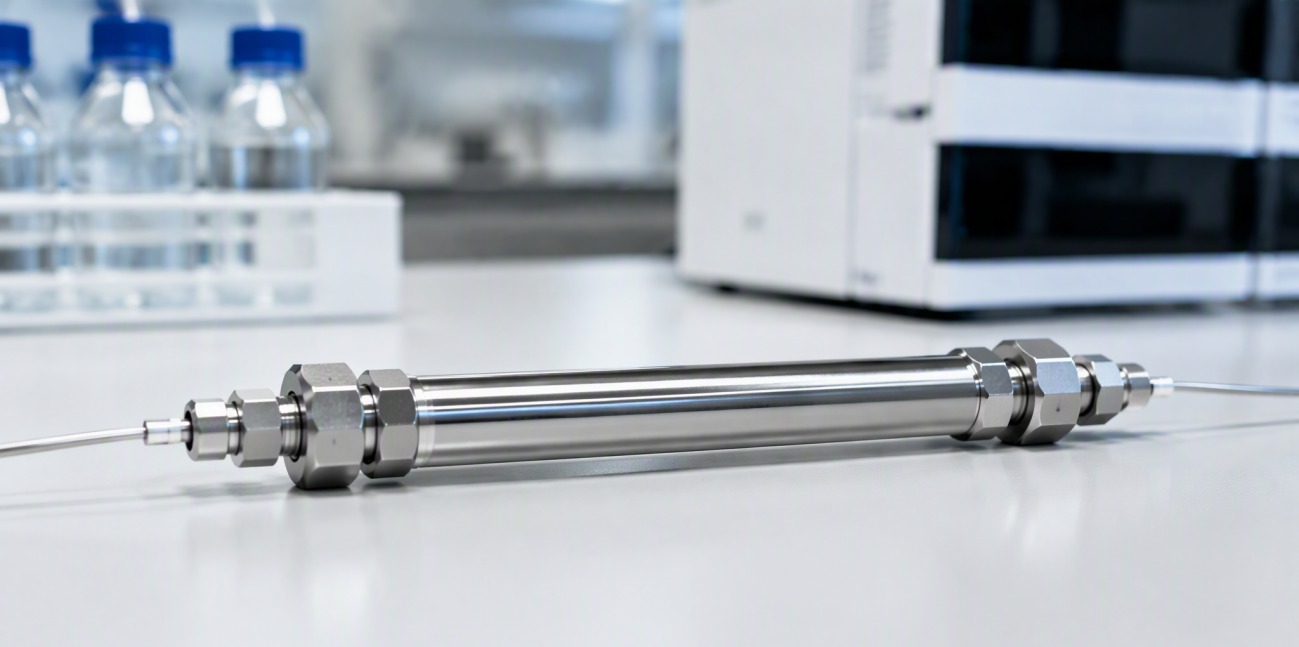 Every C18 column begins as bare silica and a hydrocarbyl silane — the monomer decides how the phase retains, separates, and ages.
The C18 Workhorse of the Analytical Lab
Ask an analytical chemist what octadecylsilane means and they will point at the most common object in their laboratory: the C18 (ODS) reversed-phase column. The stationary phase is nothing more than high-purity spherical silica reacted with an octadecylsilane reagent — and the quality of that monomer, its functionality, and its isomer profile flow directly into retention behavior and column lifetime. Commercial phases reach carbon loads of 11–20 % on silicas of 300–450 m²/g, and the USP L1 classification that governs pharmacopoeia methods is defined around exactly this chemistry.
Details matter at this level. Column makers choose between monofunctional reagents for monomeric phases and di- or trifunctional reagents for polymeric phases with higher shape selectivity; polymeric bonding also survives acidic mobile phases better. Residual silanols that escape the C18 layer tail basic analytes badly, so a second, smaller hydrocarbyl silane — typically a trimethylsilyl donor — is used to end-cap them, which is why the same C18 silica can perform so differently between brands. Silica-based phases operate roughly between pH 2 and 7.5; outside that window the bonded layer or the base silica itself dissolves.
Beyond chromatography, octadecyltrimethoxysilane has become the default reagent for self-assembled monolayers: it caps oxide surfaces with an ordered C18 film, serves as a molecular lubricant in MEMS devices, and modifies the silica dielectric in organic field-effect transistors, where treated surfaces show markedly higher charge-carrier mobility. Because the methoxy leaving group releases only methanol, it deposits smoothly on acid-sensitive oxides where the trichloro analogue would etch and haze.
Representative Products at a Glance
| Product |
CAS No. |
Chain |
Typical Role |
| Trimethylmethoxysilane |
1825-61-2 |
C1 |
End-capper and trimethylsilyl donor for surface passivation |
| Methyltrimethoxysilane (MTMS) |
1185-55-3 |
C1 |
Water-repellent filler treatment; flexible silica aerogels |
| Methyltriethoxysilane (MTES) |
2031-67-6 |
C1 |
Slower-curing hydrophobation; methyl silicone resins |
| n-Propyltrimethoxysilane |
1067-25-0 |
C3 |
General-purpose water repellent and sol-gel modifier |
| n-Propyltriethoxysilane |
2550-02-9 |
C3 |
Masonry protection and pigment surface treatment |
| Isobutyltriethoxysilane (IBTES) |
17980-47-1 |
C4 branched |
Deep-penetrating concrete impregnation; EN 1504 silane creams |
| n-Octyltriethoxysilane |
2943-75-1 |
C8 |
Concrete and masonry hydrophobation; coatings additive |
| Isooctyltrimethoxysilane |
34396-03-7 |
C8 branched |
Cement and stone waterproofing; TiO₂ and carbon-black treatment |
| Hexadecyltrimethoxysilane (HDTMS) |
16415-12-6 |
C16 |
Hydrophobic fillers and aerogels; XLPE scorch retardant |
| Octadecyltrimethoxysilane (ODTMS) |
3069-42-9 |
C18 |
C18/ODS chromatography phases, SAMs, superhydrophobic coatings |
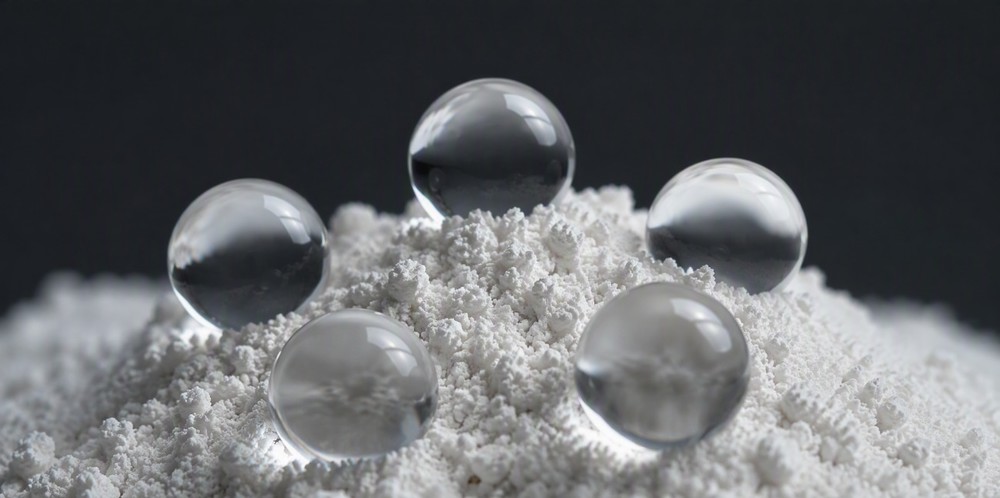 Treated correctly, mineral powder stops drinking water: droplets stand as beads instead of soaking in.
Powders, Pigments, and Plastics
Mineral fillers arrive hydrophilic, and polymers want them anything but. Treating titanium dioxide, carbon black, silica, calcium carbonate, talc, or mica with a hydrocarbyl silane flips the surface energy, so the powder disperses into resins and rubber instead of clumping, and the composite gains strength, flow, and moisture resistance. Isooctyl grades are established for TiO₂ and for boosting silica dispersion in rubber; longer C16 chains coat metal-oxide nanoparticles — ceria, magnetite, titania, zinc oxide — into dispersions that stay stable in plain hydrocarbon solvents.
The wire-and-cable industry uses the same monomers from a different angle. In moisture-crosslinkable polyethylene compounds, hexadecyltrimethoxysilane acts as a scorch retardant at loadings of roughly 0.5–1.5 wt %, keeping shelf life and extrusion behavior predictable; it also serves as a rheology modifier in polyolefin production. Downstream, sol-gel formulators co-condense methyl and long-chain alkyl monomers into anti-dirt, easy-clean coatings whose water contact angles and roll-off behavior are tuned by exactly the chain-length effects described above.
 Contact-angle measurement turns hydrophobicity into a number — our lots are checked so your coupons pass the first time.
How We Verify Every Lot
Hydrocarbyl silanes look alike in the drum; the certificate of analysis is what tells them apart. Our standard release panel covers:
- Assay by gas chromatography — ≥ 97 % for industrial surface-treatment grades, higher for chromatography and SAM reagents, with isomer distribution reported for long-chain products.
- Moisture by Karl Fischer titration, because a wet monomer is a pre-reacted monomer.
- Physical constants within tight windows — isobutyltriethoxysilane at 0.865–0.870 g/cm³, octyltriethoxysilane at 0.879 ± 0.005 with nD 1.414 ± 0.005 and color ≤ 30 Pt/Co, as examples.
- Functional verification on request: contact-angle measurement on treated glass or concrete coupons, so hydrophobation performance is confirmed before the material ships.
- Chloride and acidity checks for grades produced through chlorosilane routes, protecting downstream catalysts and metal substrates.
Packaging and Logistics
Short-chain grades are mobile, flammable liquids shipped in 25 L pails, 180–200 kg drums, and 870–1,000 kg IBCs, filled dry and sealed against moisture. Long-chain products behave more like waxes than solvents: octadecyltrimethoxysilane melts only around 13–17 °C, so it may arrive as a solid or cloudy liquid depending on the season — a gentle warm-water bath returns it to a clear, pourable state without harming the product. All grades should be stored sealed, cool, and dry, and opened containers used promptly.
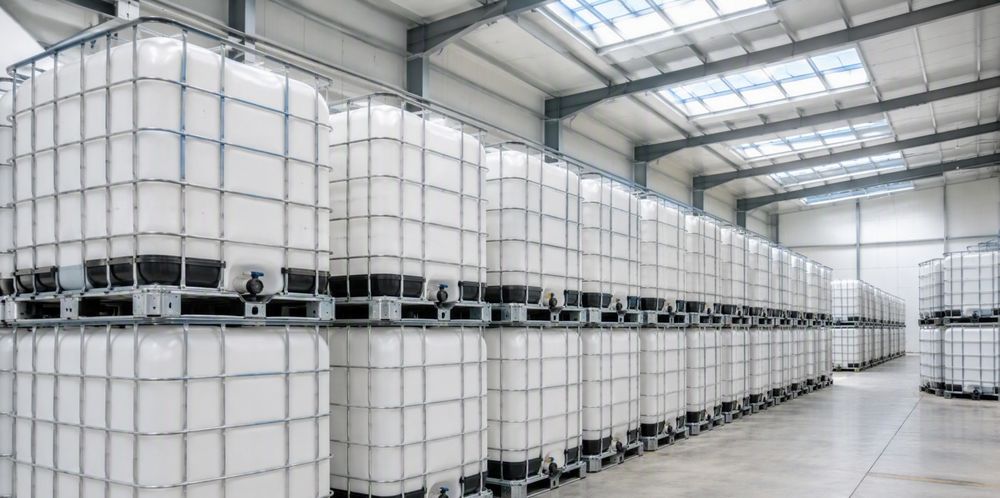 From pails to IBCs, hydrocarbyl silanes ship dry and sealed — long-chain grades travel warm to stay pourable.
Off-the-shelf is only the starting point. Eata Silicon synthesizes uncommon chain lengths and branched isomers to order, produces methoxy/ethoxy/chloro variants of the same hydrocarbyl group, blends monomers into ready-to-dilute hydrophobation concentrates, and supplies chromatography-grade octadecylsilane with defined functionality and low metal content. Custom packaging, pre-shipment samples, and full analytical documentation are part of every project, from a 500 g evaluation bottle to a recurring IBC program.
Tell us the surface you need to change — we will propose the monomer, the grade, and a quotation to match.
For Research or Industrial Raw Materials, Not For Personal Medical Use!