Silane oligomers are organosilicon materials in which multiple silicon centers are connected through short siloxane, silsesquioxane or co-hydrolyzed structures while useful organic functionality is retained. Compared with a single silane molecule, an oligomeric system can bring several silicon-reactive sites into one material, which makes this chemistry especially valuable when adhesion, filler treatment, surface modification or network formation must be engineered at an inorganic-organic interface.
Eata Silicon approaches silane oligomers from the formulation requirement backward. The starting point may be an amino, diamino, vinyl, epoxy-related or mixed-functional chemistry; an aqueous hydrolysate or a low-viscosity oligomer; a glass, metal, ceramic or mineral-rich surface; or a polymer system that needs better coupling and durability. Product selection can then be refined around functional group, oligomer architecture, viscosity, solids content, pH, water compatibility, residual monomer, critical impurities and the analytical data required for qualification.
What Are Silane Oligomers?
Silane oligomers occupy the space between monomeric coupling agents and higher polysiloxanes. Commercial materials in this area may be described as functional oligosiloxanes, oligomeric silane hydrolysates, silsesquioxane oligomers, silane resins, vinylalkoxysiloxane oligomers or co-hydrolysates. Those names are related, but they do not describe one universal structure: molecular range, branching, cyclic content, organic functionality and hydrolysis state can vary substantially from one grade to another.
The common design principle is multipoint silicon chemistry. Hydrolyzable or already hydrolyzed silicon groups can form silanols and condense to Si-O-Si structures or interact with hydroxyl-rich inorganic surfaces. At the same time, the organic side of the material can be selected for compatibility or reaction with epoxy, polyurethane, acrylic, silicone, polyolefin and other polymer systems. The resulting interphase is the reason silane oligomers are widely evaluated as coupling agents, adhesion promoters, primers, filler-treatment additives and network-forming modifiers.
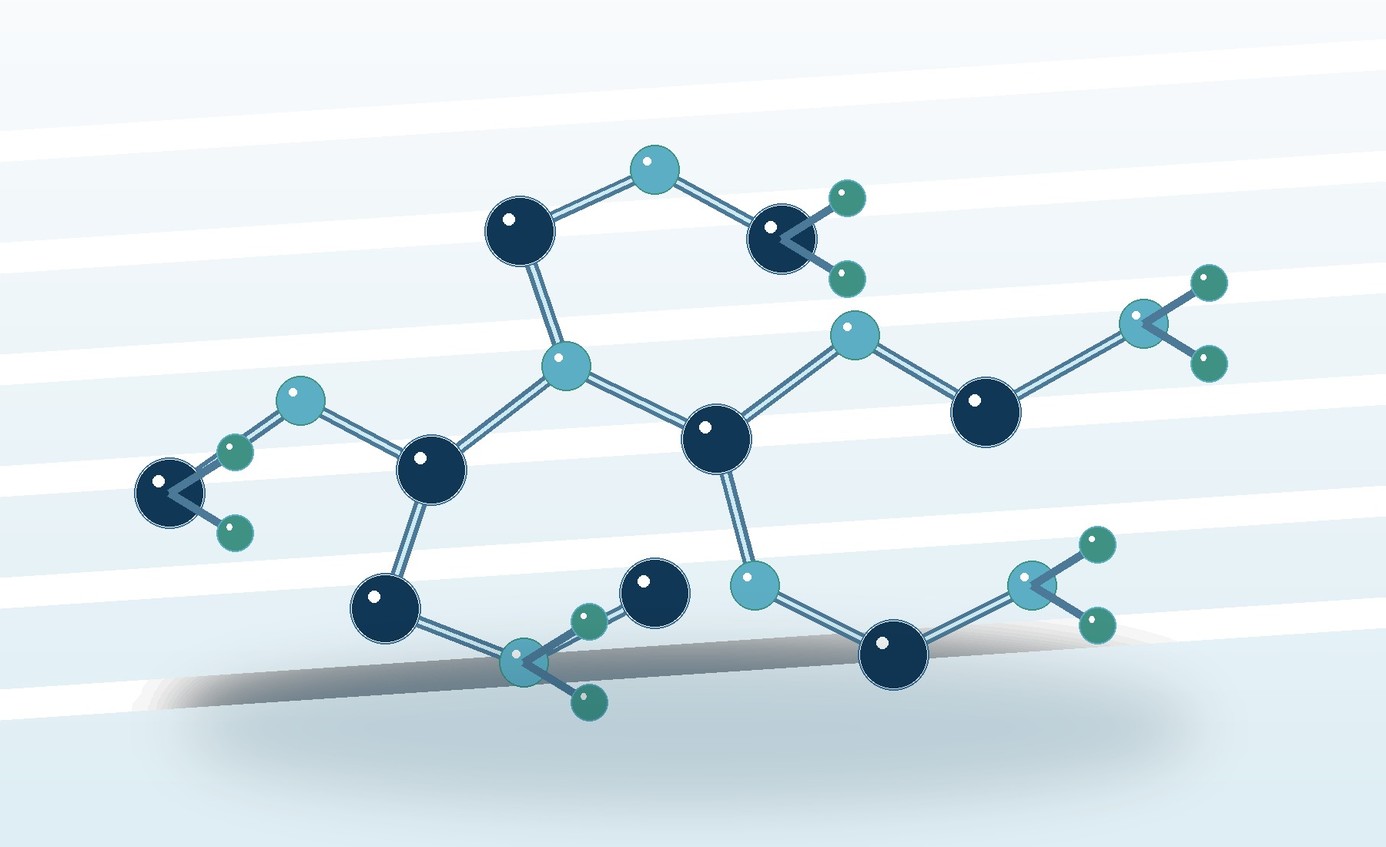 Fig. 1. Branched siloxane architecture illustrating the multi-silicon character of a functional silane oligomer.
Why Formulators Choose an Oligomeric Silane Format
- Multiple silicon sites in one material can increase the number of potential surface and condensation interactions available at a mineral-rich or oxide-rich interface.
- Specific commercial oligomeric systems are designed with lower volatility and lower monomer character than conventional monomeric silanes, which can simplify formulation where evaporation or odor is undesirable.
- Some oligomeric ethoxy-silane systems release less alcohol during hydrolysis than comparable monomeric silanes, reducing one source of volatile byproduct in processing.
- Pre-hydrolyzed and water-borne oligomer families allow silane functionality to be introduced without building the formulation around a neat alkoxysilane.
- Amino, diamino, vinyl, epoxy-related, diol and mixed-functional architectures give formulators several routes for matching the inorganic surface to the organic resin or polymer.
- Oligomeric structure can influence film formation, viscosity, hydrolysis behavior and the balance between surface reactivity and compatibility, so the application should drive selection.
Representative Products
| Chemistry / Product Term |
SEO & RFQ Keywords |
Published / Typical Form |
Technical Context |
| Oligomeric diamino silane / diaminofunctional oligosiloxane |
diamino silane oligomer; amino-functional oligosiloxane; adhesion promoter oligomer |
Neat or solvent-compatible liquid |
Adhesives, sealants, coatings, mineral surfaces and filler treatment |
| Reactive vinyl-alkyl siloxane oligomer |
vinyl siloxane oligomer; vinyl-alkyl silane oligomer; HFFR coupling silane |
Low-viscosity liquid |
Mineral-filled peroxide-crosslinked compounds; cable and polymer compounding |
| Aqueous oligomeric aminoalkyl silane hydrolysate |
water-borne aminosilane oligomer; amino silane hydrolysate |
Aqueous solution |
Glass, metals, fibers, fillers and polymer/resin interfaces |
| Aqueous aminoalkyl/vinyl silane hydrolysate |
amino vinyl silane oligomer; mixed-functional silane hydrolysate |
Aqueous solution |
Dual-function surface treatment, sizing and adhesion promotion |
| Aqueous oligomeric diol-functional silane hydrolysate |
diol-functional silane oligomer; water-borne functional silane |
Aqueous solution |
Coatings, surface modification and polymer/inorganic coupling |
| Aminopropyl/vinylsilsesquioxane in aqueous solution |
CAS 207308-27-8; amino vinyl silsesquioxane; silsesquioxane oligomer |
25-28 wt% aqueous solution in a published Gelest reference |
Water-borne coupling and primer chemistry |
| Aminopropylsilsesquioxane in aqueous solution |
CAS 29159-37-3; aminopropyl silsesquioxane |
Aqueous solution |
Water-borne amino-functional surface treatment |
| Vinylmethoxysiloxane homopolymer |
CAS 131298-48-1; vinylalkoxysiloxane oligomer |
8-12 cSt in a published Gelest reference |
Vinyl-functional oligomer for compounding and reactive siloxane formulations |
| Vinylethoxysiloxane homopolymer |
CAS 29434-25-1; ethoxy vinyl siloxane oligomer |
4-7 cSt in a published Gelest reference |
Vinyl/ethoxy oligomer for reactive polymer and filler-interface systems |
| Epoxy-functional silane resin / oligomer |
epoxy silane oligomer; epoxy-functional silane resin; glycidoxy siloxane oligomer |
Liquid resin / oligomer family |
Adhesives, coatings, composites, crosslinking and surface modification |
How Silane Oligomers Build an Interface
Many inorganic surfaces - glass, silica, metal oxides, ceramics and mineral fillers - carry hydroxyl groups or adsorbed water. Silicon-bound hydrolyzable groups can convert to silanols, and those silanols can condense with one another or with hydroxyl-bearing surface sites. The organic functionality points in the other direction, toward the polymer, resin or surrounding formulation. In an amino-functional oligomer, for example, the amine can interact with or react into suitable resin chemistries while the silicon side anchors toward the inorganic phase.
An oligomer does not simply behave as a larger monomer. Branching, pre-condensation, water content and the distribution of linear or cyclic structures can change how the material wets a surface, how rapidly additional hydrolysis occurs and how a thin interfacial film develops. That is why an RFQ should define the substrate, binder, mixing sequence and performance objective instead of choosing only by a familiar functional group.
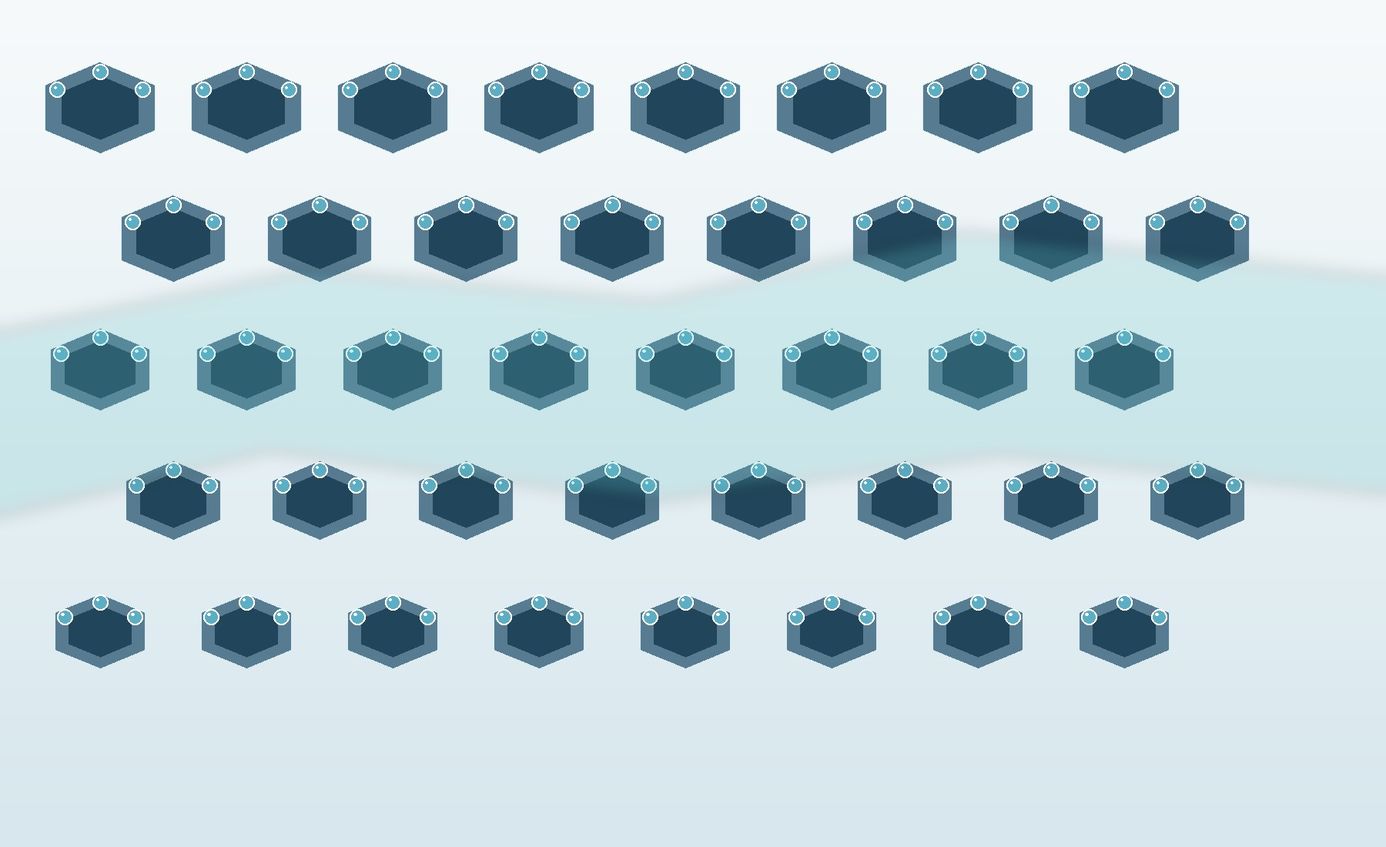 Fig. 2. Oligomeric silane layer distributed across a porous ceramic-like surface.
Water-Borne Silane Oligomers and Hydrolysates
Water-borne oligomeric silane systems are an important part of the market. Current product literature includes aqueous amino-functional, aminoalkyl-functional, aminoalkyl/vinyl-functional and diol-functional silane hydrolysates, as well as water-borne aminoalkyl silsesquioxane oligomers. These products are especially useful when a process already uses an aqueous size, primer, coating or treatment bath.
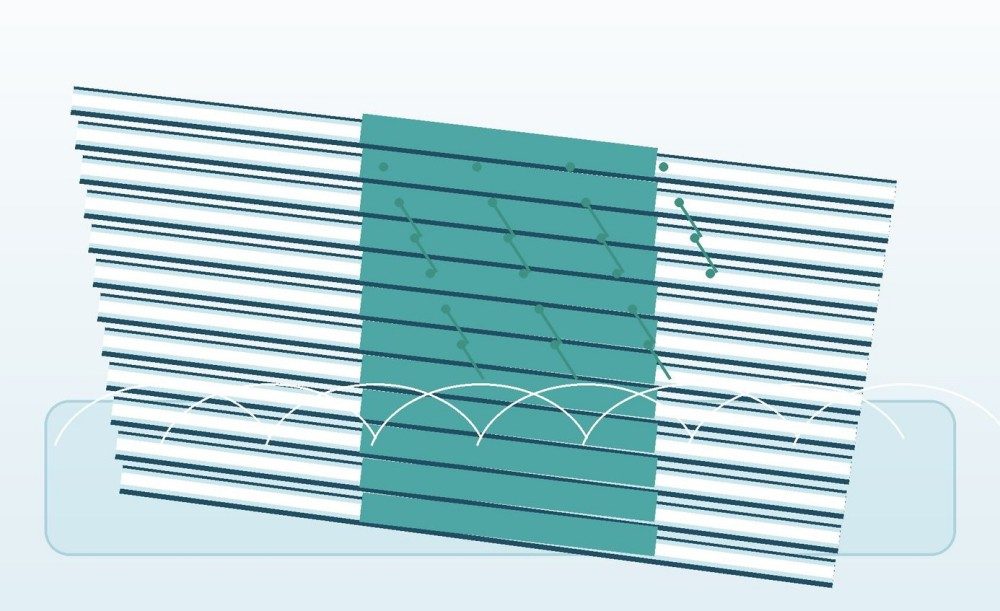 Fig. 3. Functional silane treatment surrounding a glass-fiber bundle to support interfacial coupling.
Published examples describe use on glass, glass fibers, glass beads, mineral wool, metals and fillers such as quartz, wollastonite and aluminum trihydrate, with compatibility across a wide range of thermoset and thermoplastic resins. Dilution behavior, pH, solids content, storage stability and the change in silanol content after dilution can differ by chemistry, so the target treatment concentration and process sequence should be part of the product discussion.
Mineral-Filled Polymers, Cable Compounds and Composites
Vinyl-functional siloxane oligomers are established in mineral-filled, peroxide-crosslinked polymer systems. A current commercial example is positioned for fillers such as kaolin, magnesium hydroxide and aluminum trihydrate in polymers including EPDM, EVA and polyethylene. The silicon-functional portion hydrolyzes and bonds toward the filler surface, while vinyl functionality can participate on the polymer side during peroxide crosslinking.
 Fig. 4. Surface-treated mineral particles dispersed through a polymer-rich composite phase.
This coupling logic is particularly relevant to highly filled systems where filler-polymer compatibility influences dispersion, mechanical performance, wet electrical properties, rheology and durability. Similar selection questions appear in flame-retardant cable compounds, composite insulation materials, filled encapsulants, molded components and other formulations that combine polar mineral surfaces with comparatively non-polar polymer phases.
Coatings, Primers, Adhesives and Sealants
Amino- and epoxy-related oligomeric silane systems are widely used where a resin must remain attached to glass, metal, mineral or other difficult surfaces. Published diamino oligosiloxane products are used as adhesion promoters in coatings, adhesives and sealants and can be added directly to a formulation or used as a primer. Epoxy-functional silane resins and oligomers add another route by combining hydrolyzable methoxysilyl groups with reactive epoxide functionality.
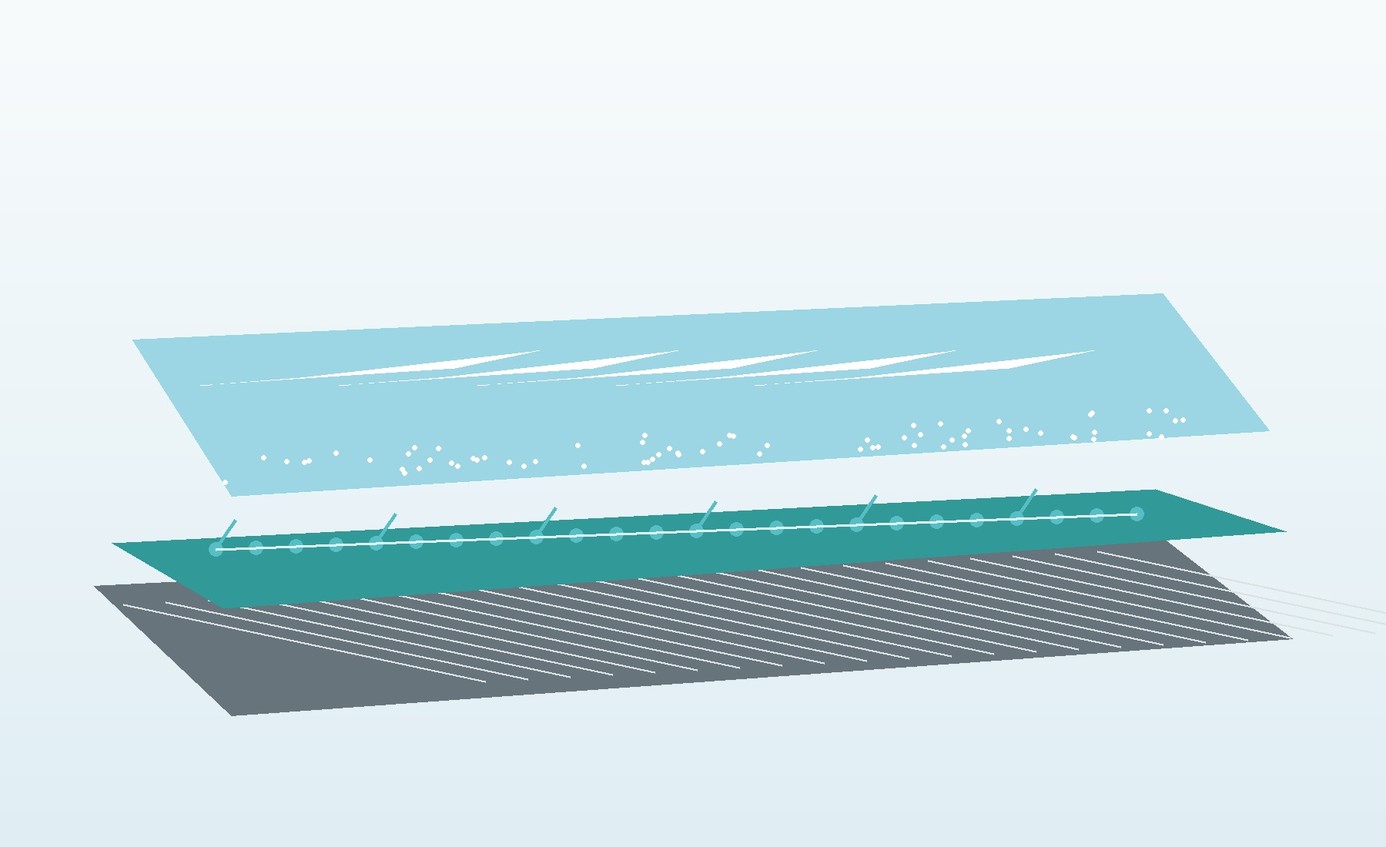 Fig. 5. Thin silane-oligomer interphase positioned between a metallic substrate and a protective coating.
For coatings, the useful outcome may be stronger wet adhesion, improved crosslinking, better interaction with mineral pigments or a more durable interface under moisture and temperature cycling. In adhesives and sealants, the same chemistry can help connect urethane, epoxy, silicone or hybrid binders to inorganic surfaces. The optimal level is formulation-specific: more silane is not automatically better, and compatibility with the binder, catalyst package, water content and cure route should be tested together.
Selecting the Right Silane Oligomer
| Decision Point |
What to Define |
Why It Matters |
| Organic functionality |
Amino, diamino, vinyl, epoxy-related, diol or mixed functionality |
Determines the organic-side interaction with resin, polymer or cure chemistry. |
| Oligomer architecture |
Linear/cyclic oligosiloxane, silsesquioxane, homooligomer or co-hydrolysate |
Changes molecular range, silicon-site density, film formation and handling. |
| Hydrolysis state |
Alkoxy-functional, partially hydrolyzed or pre-hydrolyzed aqueous system |
Affects when and how reactive silanols become available in the process. |
| Medium and concentration |
Neat liquid, solvent-compatible grade, aqueous solution, target solids |
Must fit the existing mixing, sizing, priming or coating process. |
| Substrate / filler |
Glass, silica, metal oxide, ceramic, ATH, MDH, kaolin, quartz, wollastonite or other mineral |
Surface chemistry and hydroxyl density influence bonding and required treatment level. |
| Polymer / resin |
Epoxy, polyurethane, acrylic, silicone, EVA, EPDM, PE, polyamide, phenolic or another binder |
The organic functionality should be compatible with or reactive toward the matrix. |
| Specification controls |
Viscosity, pH, solids, water, color, residual monomer, critical impurities and analytical method |
These parameters help translate a chemistry name into a reproducible purchasing specification. |
Application Areas for Silane Oligomers
- Adhesives and sealants - adhesion promotion and interface design for epoxy, polyurethane, silicone and hybrid systems.
- Coatings and primers - glass, metal, ceramic and mineral surfaces; binder crosslinking; pigment and filler interaction.
- Glass fiber and mineral fiber sizing - water-borne amino-functional and mixed-functional oligomer treatments.
- Mineral-filled polymers - ATH-, MDH-, kaolin-, silica- and other filler-rich compounds where coupling and dispersion are critical.
- Cable and insulation compounds - vinyl-functional oligomer chemistry for peroxide-crosslinked, mineral-filled polymer systems.
- Composites - filler pretreatment, fiber/resin interface modification and improved transfer of stress between phases.
- Sol-gel and hybrid materials - reactive silane building blocks for thin inorganic-organic networks and surface engineering.
- Energy-component materials - protective coatings, filled polymer systems, insulation and bonded metal/ceramic interfaces where the same coupling principles are relevant.
Why Work with Eata Silicon
- Chemistry-led product matching: start with the interface, resin system and function rather than relying only on a trade name.
- Specification-focused discussion: define the parameters that actually matter to the process, including functional type, physical form and project-specific quality limits.
- Application-aware screening: compare oligomeric amino, vinyl, epoxy-related and water-borne families against the intended substrate, filler and polymer.
- Flexible development path: evaluate standard chemistry, close analogues and customized specifications when an off-the-shelf option does not fit the formulation window.
A standard oligomer is not always the best fit for a new formulation. Eata Silicon can evaluate custom requests around organic functionality, alkoxy or hydrolyzed silicon chemistry, oligomer architecture, water-borne versus neat format, solids content, viscosity, pH, residual monomer, water level, color, selected impurity limits, packaging and application-specific analytical requirements. The target may be a modified analogue of an existing oligomer, a mixed-functional co-hydrolysate, a silsesquioxane-based system or a project-defined specification built around a known interface problem.
For the most focused technical review, send the target structure or closest commercial reference, the substrate or filler, polymer/resin, processing route, required physical form, critical specifications, expected quantity and the performance criteria used to judge success. Eata Silicon can then assess a suitable standard material, a related chemistry or a customized silane oligomer pathway for the project.
Discuss your silane oligomer requirement with Eata Silicon - share the chemistry, interface and specification that matter to your formulation.
For Research or Industrial Raw Materials, Not For Personal Medical Use!