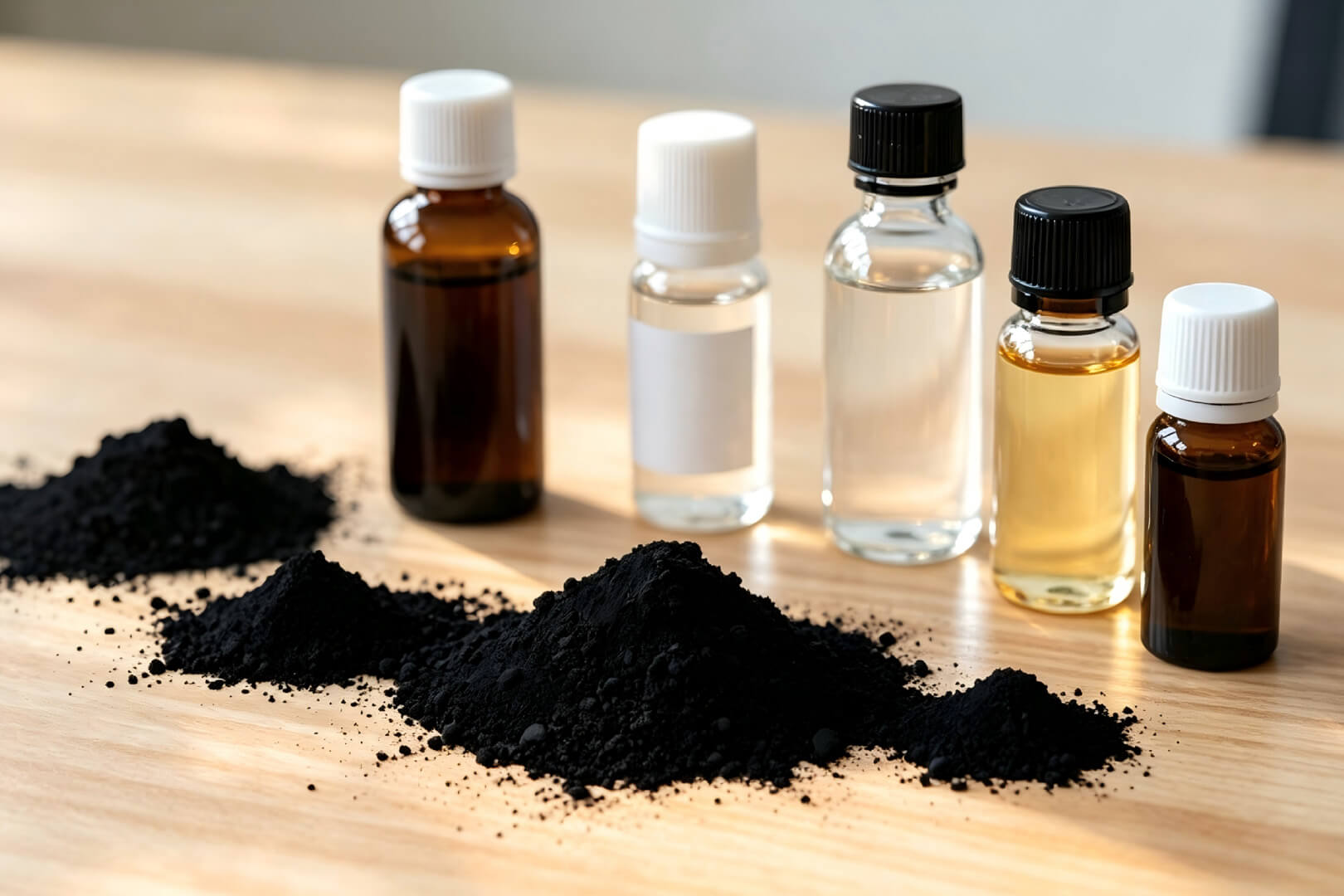
In most of the products silica powder goes into, it is not an additive — it is the majority ingredient. An electrical potting compound may carry two-thirds of its mass as filler; an engineered-stone slab runs above 90% aggregate; a coating leans on its mineral fraction for scrub resistance, whiteness, and cost control. When the powder makes up most of the formula, its particle size, mineral form, and surface chemistry stop being details and start being the design.
Eata Silicon supplies silica powders across the full industrial spectrum: crystalline quartz from coarse mesh to micronized cuts, ultra-low-expansion fused silica, high-whiteness cristobalite, and silane surface-treated grades for resin and rubber systems.
Browse Our Products
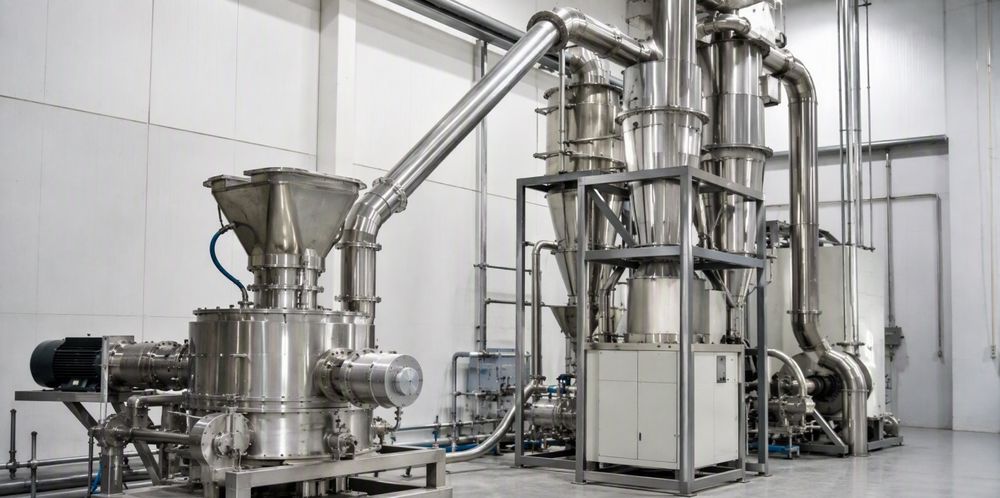 Grinding and air classification set the final distribution.
Four Size Classes, Four Different Jobs
| Class |
Size Range |
Where It Works |
| Coarse powder |
100 µm–10 mm (10–200 mesh) |
Construction, foundry sand, abrasive blasting |
| Fine powder |
10–100 µm (200–1250 mesh) |
Coatings, adhesives, rubber fillers, ceramic glazes |
| Ultrafine powder |
1–10 µm (D97 < 15 µm) |
Electronic packaging, high-performance concrete, advanced ceramics |
| Nano powder |
Below 1 µm (D50 < 500 nm) |
Semiconductor and photovoltaic research, specialty composites |
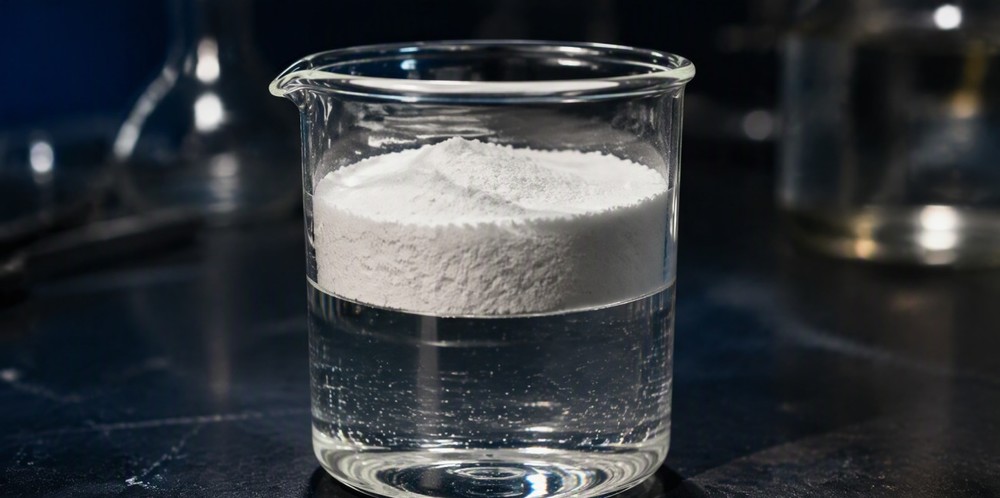 Where the powder meets the resin.
Three Minerals, One Formula: Choosing the Base
Crystalline quartz is the economical default: milled from high-purity sand, Mohs 7 hard, chemically inert, and happy in everything from foundry floors to paint.
Cristobalite begins as the same quartz, but a trip through a rotary kiln at roughly 1,500 °C rearranges its crystal lattice — density drops to 2.35 g/cm³, and the fired grains turn brilliantly white, with brightness values above 94. Its refractive index falls to about 1.48, remarkably close to common resins, so cristobalite-filled plastics and gelcoats stay translucent instead of clouding. That combination of whiteness, near-resin optics, and weather resistance makes it the premium filler for engineered stone, exterior paints, road-marking systems, and anti-blocking additives in polyolefin film — and in coatings it can stand in for part of the titanium dioxide.
Fused silica gives up crystallinity altogether: melted above 1,800 °C and milled as a glass, its thermal expansion collapses to about 0.5 × 10⁻⁶/K. Electrical epoxies, investment-casting shells, and any formulation that must survive thermal shock without cracking are its natural home.
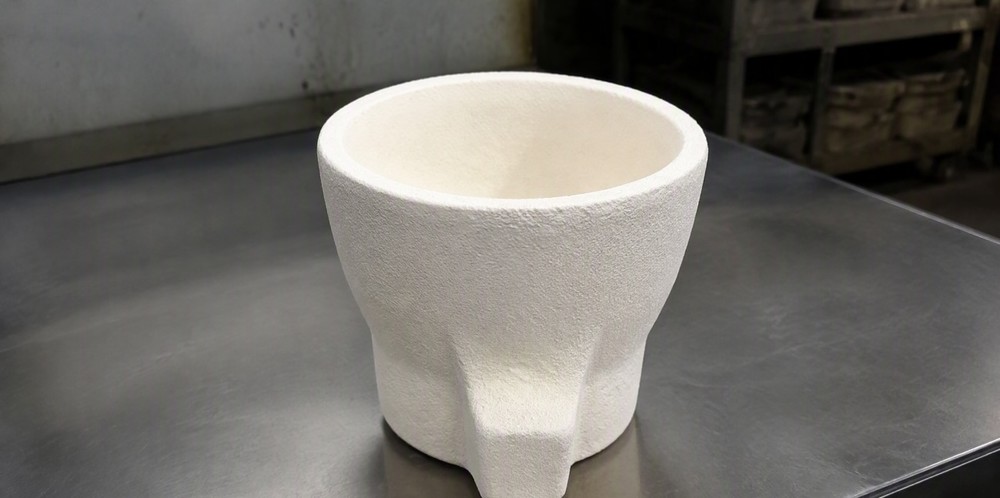 An investment-casting shell built on silica flour.
What the Filler Does Inside the Formula
- Electrical casting and potting: properly filled epoxy systems reach comparative tracking indices above 600, dielectric strengths beyond 20 kV/mm, thermal conductivity of 1.0–1.5 W/m·K, and UL94 V-0 ratings — the powder earns every one of those numbers.
- Coatings and plasters: cristobalite and fine quartz raise scrub and UV resistance, control gloss, and cut formulation cost through TiO₂ extension.
- Engineered stone: polymer-bound slabs run at over 90% mineral aggregate; whiteness and graded particle packing decide both the look and the bend strength.
- Silicone rubber and sealants: ultrafine and treated grades reinforce the elastomer and set its rheology without wrecking extrusion behavior.
- Plastic films: cristobalite-based anti-blocking grades keep PP and PE film layers from sticking, and 600-mesh quartz doubles as an infrared absorber in agricultural greenhouse film.
- Precision casting: silica flour builds the shell slurry; its expansion around 220–240 °C conveniently offsets resin and gypsum shrinkage during curing.
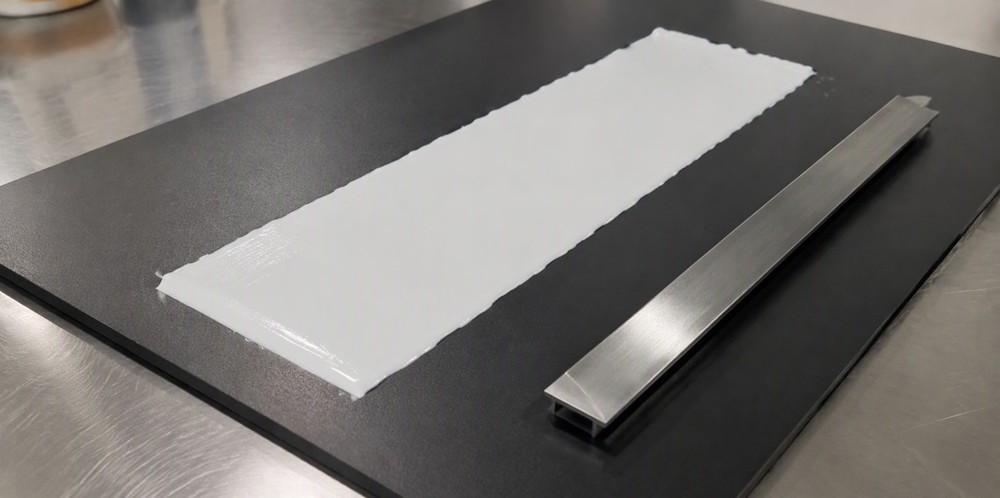 A filled coating drawn down for testing.
Surface Treatment: The Upgrade Most Formulas Deserve
Raw silica is hydrophilic; most resins are not. Silane coupling agents bridge that mismatch — methacryloxy types like KH-570 for acrylic and unsaturated polyester systems, amino types for epoxies, or HMDS treatment where outright hydrophobicity is the goal. Treated powder wets out faster, disperses without agglomerates, and holds its mechanical properties in humid service; the same resin accepts a noticeably higher filler loading at workable viscosity, and moisture stops creeping along the filler-resin interface. For any high-loading or high-reliability formulation, the treated grade usually pays for itself in processing alone.
Representative Products at a Glance
These lines cover the range we ship most often. Every grade can be adjusted in size cut, whiteness, purity, treatment, and packaging.
| Product |
Base / Treatment |
Typical Specification |
Main Use |
| Coarse Quartz Powder |
Crystalline quartz |
10–200 mesh |
Construction, foundry, blasting |
| Fine Quartz Powder |
Crystalline ≥99.5% |
200–1250 mesh |
Coatings, adhesives, glazes |
| Ultrafine Quartz Powder |
Crystalline, low iron |
D50 2–5 µm |
Electronics, advanced ceramics |
| Fused Silica Powder |
Amorphous ≥99.9% |
Micron cuts, CTE 0.5 ppm/K |
Potting, investment casting |
| Cristobalite Powder |
Calcined ≥99.5% |
Whiteness Y > 94 |
Engineered stone, paints, film |
| Silane-Treated Silica |
KH-550 / KH-570 / HMDS |
Hydrophobic grades |
Resins, rubber, sealants |
| Active Silica (Epoxy Grade) |
Treated fused or quartz |
Low Na⁺ / Cl⁻ ionics |
Electrical casting, potting |
| Anti-Blocking Silica |
Cristobalite-based |
Narrow size cuts |
PP / PE film production |
| Nano Silica Powder |
Amorphous |
D50 < 500 nm |
PV and electronics R&D |
| Custom Blends & Cuts |
Per specification |
Capped D97, tuned PSD |
Matched to your formulation |
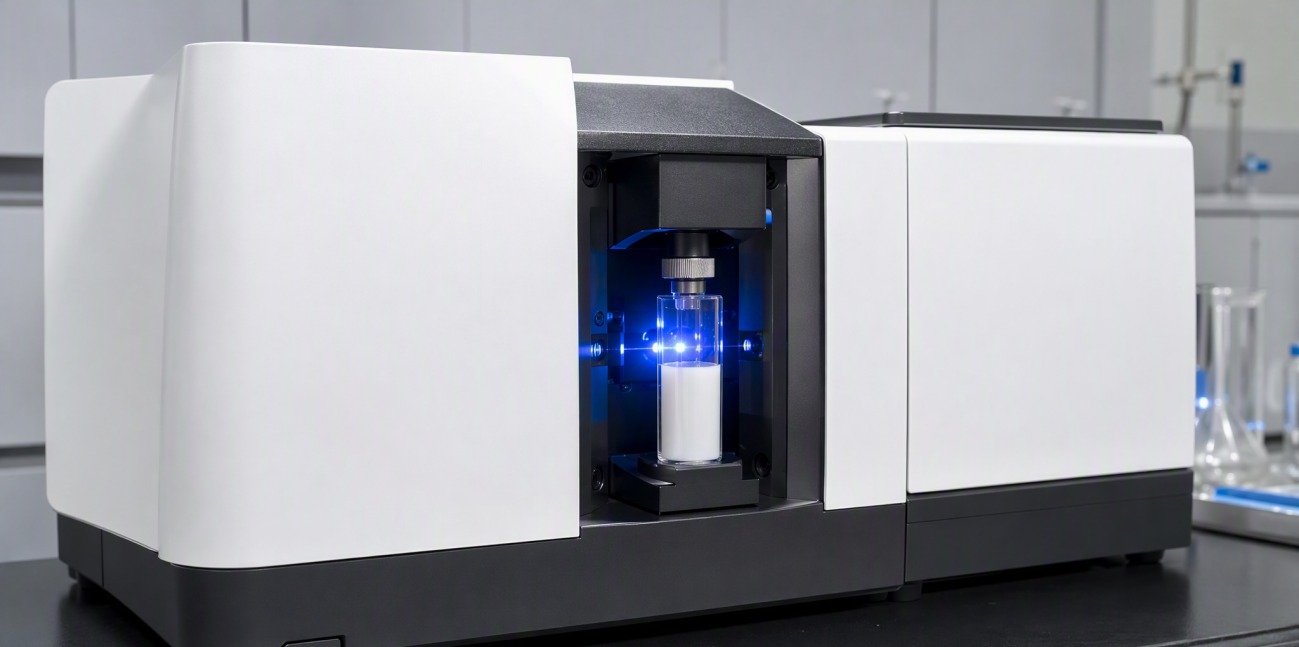 Every fine lot passes laser diffraction.
Quality Control and Packaging
Purity is verified by XRF, size distribution by laser diffraction on every fine lot, whiteness by reflectance measurement, and surface-treatment quality by carbon content and wetting tests. Powders ship in moisture-proof 25 kg valve bags or lined big bags, palletized and stretch-wrapped for export, with the COA attached to each lot and retained samples archived for traceability.
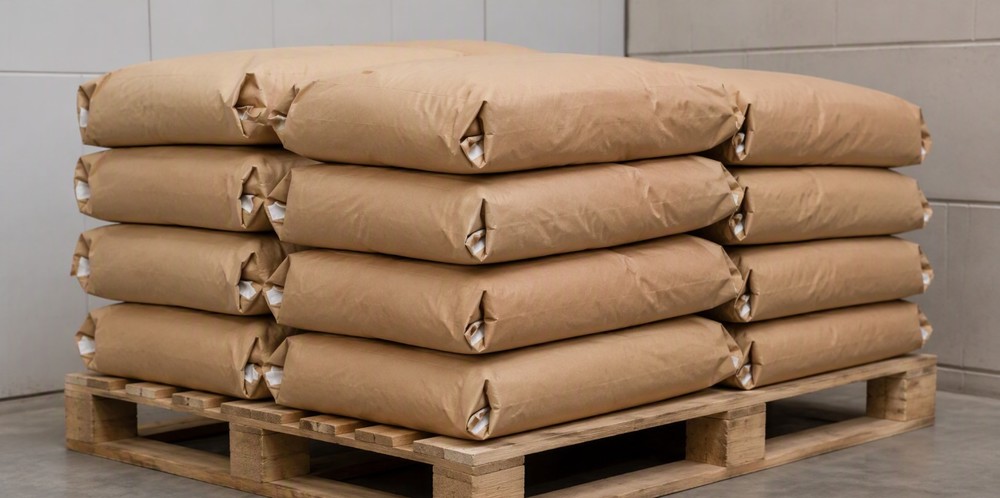 Moisture-proof bags, palletized for shipment.
How to Specify Silica Powder
- Pick the mineral first: quartz for economy, cristobalite for whiteness and optics, fused silica for thermal shock and electronics.
- Give D50 and D97 together: the median sets the feel of the formulation; the capped tail protects gates, films, and surfaces from stray coarse grains.
- State whiteness and iron: appearance-critical products live on Y-value and Fe₂O₃, not on nominal purity.
- Say whether to treat: name your resin system and we will match the silane — or supply untreated for in-house modification.
- Mention oil absorption if it matters: for high-loading formulations it predicts viscosity better than particle size alone.
Custom Silica Powder Services
If the grade you need is not in the table, that is normal — much of our output is made to formula: distributions blended to a specified curve with a hard D97 ceiling, silane treatments matched to a named resin, whiteness targets for premium surfaces, low-iron selections for electronics, and small trial lots ahead of volume supply. Documentation follows the same standard whether the order is one bag or one container.
Send us the formulation target — viscosity, loading, whiteness, or electrical performance — and we will engineer the powder to hit it.
For Research or Industrial Raw Materials, Not For Personal Medical Use!