A durable material system is often only as strong as the interface holding it together. When epoxy resins, coatings or adhesives must bond to glass, metal, mineral fillers or other inorganic surfaces, epoxy-functional silanes provide a practical way to engineer that interface. Their structure combines a hydrolyzable silane end with an epoxy-bearing organic end, allowing one small molecule to participate in inorganic surface bonding while remaining compatible or reactive with an organic formulation.
Eata Silicon supplies epoxy-functional silane monomers for material developers working with coatings, adhesives, sealants, filled polymers, glass-fiber composites, electronic encapsulation and other advanced material systems. The portfolio includes both glycidoxy-functional and cycloaliphatic epoxy silanes, with different alkoxy configurations available to help customers match the silane to the substrate, resin chemistry and processing route.
A Small Molecule with Two Jobs at the Interface
Epoxy-functional silanes are often described as molecular coupling agents because they bring together two different chemical environments. The alkoxysilane portion can hydrolyze to silanol species and participate in condensation with hydroxyl-bearing inorganic surfaces. The epoxy-containing organic portion can interact with, or react into, compatible organic resin chemistry. This dual character is the basis for their use as adhesion promoters, coupling agents, filler treatments and surface modifiers.
For formulators, the value is not simply "more adhesion." A properly selected silane can help reduce the mismatch between a polar inorganic surface and an organic matrix, improve wetting at the interface, support more efficient stress transfer in filled or reinforced materials, and help maintain performance when moisture challenges the bond line. The actual result depends on substrate preparation, resin chemistry, silane structure, concentration and processing conditions, so application testing remains essential.
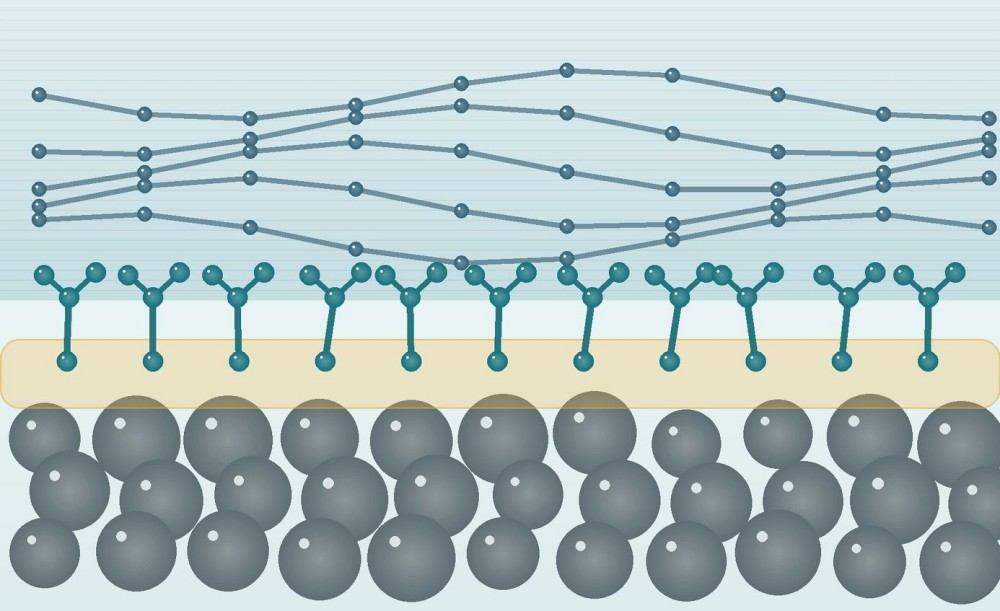 Fig. 1. Epoxy-functional silane concept at an inorganic filler–polymer interface.
Two Epoxy Families, More Than One Formulation Strategy
Epoxy-functional silane monomers are not a single chemistry. Two widely used families are glycidoxy-functional silanes and cycloaliphatic epoxy silanes. Both combine an epoxy-bearing organic group with hydrolyzable alkoxysilyl functionality, but the epoxy architecture and the methoxy/ethoxy substitution pattern can change reactivity, hydrolysis behavior and formulation fit.
- Glycidoxy-functional silanes. Common examples include 3-glycidoxypropyltrimethoxysilane and 3-glycidoxypropyltriethoxysilane. These are widely used in epoxy resins, coatings, adhesives, sealants, glass-fiber treatments and mineral-filled composites.
- Cycloaliphatic epoxy silanes. These structures use an epoxycyclohexyl group rather than a glycidyl ether group and are evaluated in epoxy, UV-curable, coating and surface-modification systems where their distinct ring structure is useful.
- Methoxy versus ethoxy silane groups. Changing the hydrolyzable group affects hydrolysis behavior, byproduct profile and process compatibility. The preferred option should be selected around the actual water level, solvent system, substrate and application method.
- Trialkoxy versus dialkoxy architecture. The number and type of hydrolyzable groups influence the silane-derived network and the balance between surface coupling, molecular flexibility and formulation compatibility.
 Fig. 2. Simplified epoxy–silane network concept linking an organic network to an inorganic surface.
Related Epoxy-Functional Silane Products
| Product / Search Term |
CAS No. |
Functional Architecture |
Catalog Grade |
| 2-(3,4-Epoxycyclohexyl)ethyltriethoxysilane |
10217-34-2 |
Cycloaliphatic epoxy / triethoxy |
≥98% |
| 2-(3,4-Epoxycyclohexyl)ethyltrimethoxysilane |
3388-04-3 |
Cycloaliphatic epoxy / trimethoxy |
≥98% |
| 3-Glycidoxypropylmethyldimethoxysilane |
65799-47-5 |
Glycidoxy / methyl dimethoxy |
≥97% |
| 3-Glycidoxypropyltriethoxysilane |
2602-34-8 |
Glycidoxy / triethoxy |
≥98% |
| 3-Glycidoxypropylmethyldiethoxysilane |
2897-60-1 |
Glycidoxy / methyl diethoxy |
98% |
| 3-Glycidoxypropyltrimethoxysilane |
2530-83-8 |
Glycidoxy / trimethoxy |
98% |
Where These Monomers Earn Their Place in a Formulation
Glass-Fiber and Epoxy Composites
Glass reinforcement has a naturally inorganic surface, while the surrounding epoxy matrix is organic. Epoxy-functional silanes are widely used in glass-fiber sizing and surface treatment to strengthen that transition zone. For composite developers, this makes them relevant to structural laminates, molded components and glass-reinforced systems used in demanding industrial and energy applications, including wind-energy composite development.
 Fig. 3. Glass-fiber composite with a functional interphase between the reinforcement and epoxy matrix.
Filled Epoxy, Mineral and Ceramic Interfaces
Silica, quartz and other inorganic fillers can raise stiffness, control rheology, improve dimensional behavior or provide other formulation functions, but their surface chemistry can differ sharply from the resin phase. Treating the filler, or adding a compatible epoxy silane into the formulation, can improve wet-out and interfacial coupling. Dow and Momentive both describe glycidoxy silanes for mineral-filled systems, while Gelest lists epoxy silanes for microparticle surface modification and epoxy coupling.
This is particularly relevant when energy-material developers work with highly filled epoxy compounds, protective potting materials, insulating composites or other formulations where the filler–resin boundary influences processing and final properties.
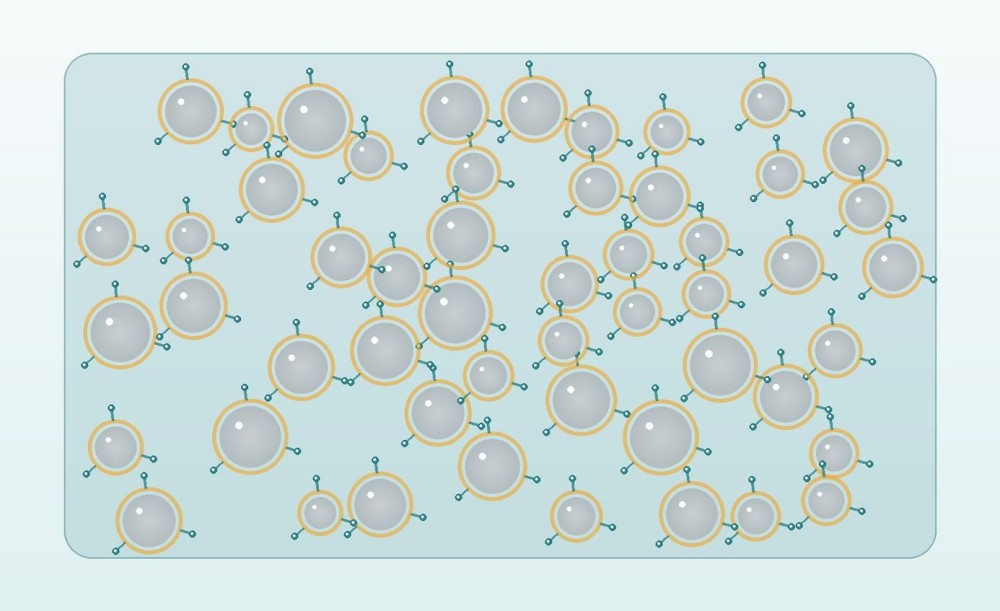 Fig. 4. Surface-functionalized inorganic filler dispersed through a polymer formulation.
Coatings, Primers, Adhesives and Sealants
Epoxy-functional silanes are frequently selected when a coating or adhesive must remain attached to glass, metal or mineral-rich surfaces. They may be incorporated as formulation additives, used in a primer, or applied as part of a surface-treatment step. Public supplier data describes applications in epoxy, urethane, acrylic, silicone and other resin families, as well as both water-borne and solvent-borne systems.
For industrial users, the practical question is not "Which silane is strongest?" but "Which silane fits this resin, this substrate and this process?" A methoxy trialkoxy silane, an ethoxy analog and a dialkoxy structure can behave differently during hydrolysis, storage and cure. Small formulation trials are therefore more useful than a one-size-fits-all dosage recommendation.
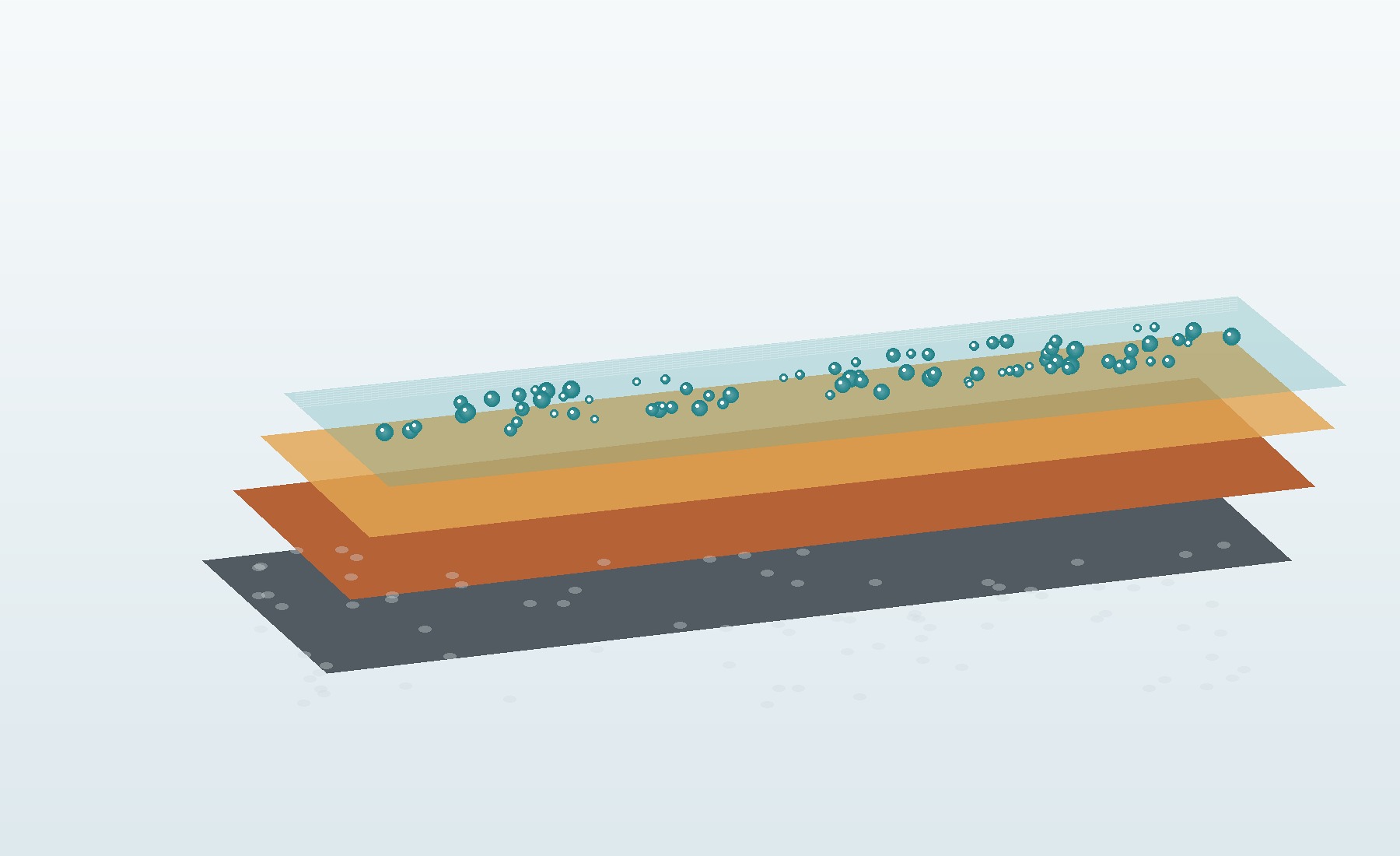 Fig. 5. Thin functional treatment layer on a conductive metal foil and engineered substrate stack.
Electronic Encapsulation and Power-Material Assemblies
Electronic encapsulation places unusual demands on the resin–filler–substrate interface: moisture resistance, stable adhesion and mechanical integrity can all matter at the same time. Momentive specifically describes epoxy-functional silanes for epoxy encapsulants and packaging materials, where improved bonding between resin and the substrate or filler can support electrical and mechanical performance.
In energy-related manufacturing, the same interfacial principles can be evaluated in power-electronics potting, ceramic-filled encapsulation, bonded metal and glass components, protective coatings, composite housings and other assemblies where epoxy or related resins contact inorganic materials. Suitability must be validated against the actual electrical, thermal and mechanical requirements of the finished component.
 Fig. 6. Encapsulated power-electronics material stack with multiple bonded inorganic–organic interfaces.
How to Narrow the Choice Before You Request a Quote
A useful silane shortlist begins with the interface and the cure chemistry, not only the product name. Sharing the points below helps Eata Silicon identify a more relevant starting material and avoids unnecessary trial-and-error.
- Substrate or filler: glass, silica, quartz, metal, ceramic, mineral filler, pigment, glass fiber or another inorganic surface.
- Resin system: epoxy, urethane, acrylic, silicone, hybrid resin or another polymer chemistry, including the expected curing mechanism.
- Use mode: filler pretreatment, surface primer, formulation additive, reactive intermediate or surface modifier.
- Silane architecture preference: glycidoxy versus cycloaliphatic epoxy; methoxy versus ethoxy; trialkoxy versus dialkoxy, if already known.
- Specification targets: assay/purity, water control, color or other project-critical quality parameters.
- Process conditions: solvent or water-borne system, mixing sequence, temperature window, cure conditions and any compatibility constraints.
Formulation note: Recommended addition level and application method should be established by testing in the customer's actual resin, substrate and process. The same silane can perform differently when water level, pH, filler surface area, cure chemistry or pretreatment conditions change.
What Eata Silicon Adds to Your Development Workflow
- A focused epoxy-silane portfolio. Current catalog entries cover glycidoxy and cycloaliphatic epoxy functionality, including methoxy, ethoxy, trialkoxy and dialkoxy options.
- Selection by chemistry, not only by trade name. Requests can be matched by CAS number, functional architecture, target substrate and resin system, making cross-reference searches more efficient.
- Specification-driven discussions. Customers can discuss purity, functional structure, quality parameters, packaging and other project-defined requirements before finalizing a material choice.
- Support for energy and advanced-material interfaces. The same chemistry principles are relevant to composite reinforcement, protective bonding, filled epoxy systems, power-electronics encapsulation and other interface-intensive material applications.
Not every material program fits a standard catalog structure. If your target requires a different epoxy group, alkoxy configuration, purity window or project-specific specification, Eata Silicon can discuss customized epoxy-functional silane development and sourcing options. Custom work may include structure selection, specification adjustment, synthesis evaluation, sample-scale development and packaging requirements, subject to technical feasibility.
To start a technical discussion, send us the target CAS number or structure (if known), substrate or filler, resin system, intended use mode, desired purity/specification and expected quantity. We can use that information to review a suitable catalog option or evaluate a customized route for your material-development program.
For Research or Industrial Raw Materials, Not For Personal Medical Use!