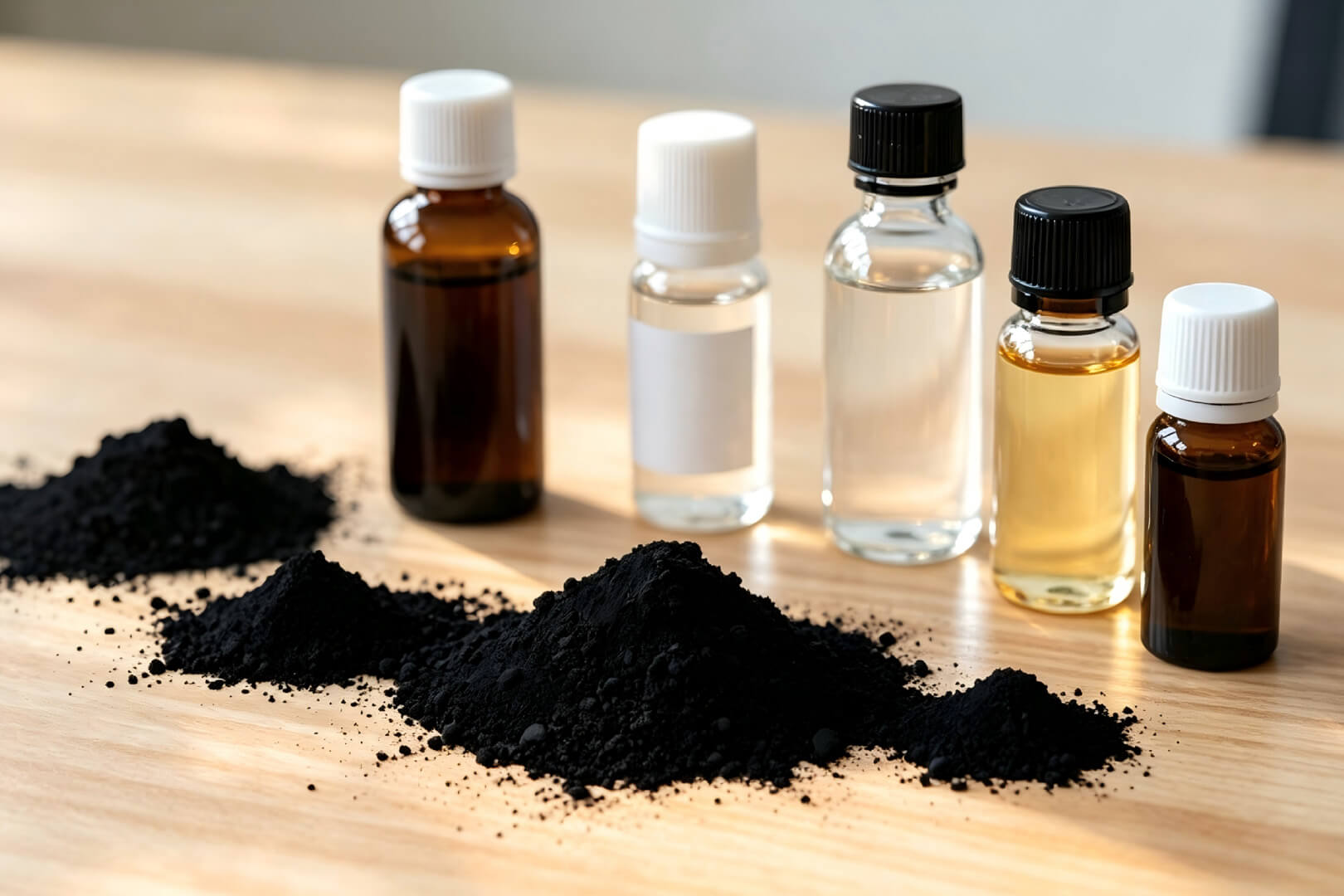
Swap chlorine for an alkoxy group and silicon chemistry changes its personality. Alkoxysilane monomers carry their reactivity in Si–OR linkages: stable enough to ship, store, and meter like ordinary organic liquids, yet ready to hydrolyze the moment moisture and a catalyst arrive, releasing a harmless alcohol instead of corrosive hydrogen chloride. That single substitution is why alkoxysilanes have become the workhorse reagents behind modern sealants, sol-gel coatings, mineral surface treatment, and precision casting.
Eata Silicon supplies the full alkoxysilane ladder — tetrafunctional silica builders such as TMOS and TEOS, trifunctional network formers from methyl to octyl to phenyl, difunctional chain extenders for RTV systems, and partially hydrolyzed oligomers like Ethyl Silicate-40 — in reagent, industrial, and customized grades. This page explains how the chemistry behaves, where each family earns its keep, and what belongs in your specification.
Browse Our Products
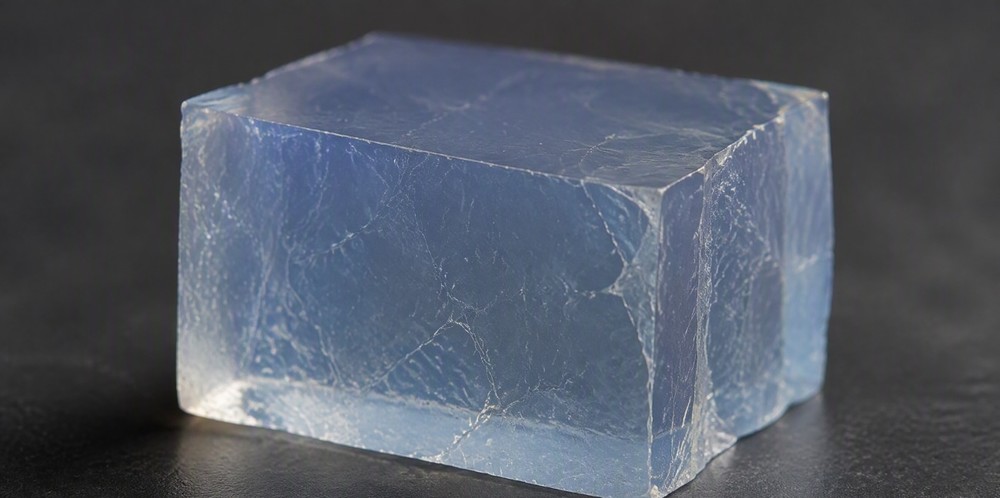 A silica gel monolith grown from an alkoxysilane precursor — the same hydrolysis–condensation chemistry that cures sealants and coats glass.
The Chemistry: Hydrolysis on Your Schedule
An alkoxysilane does its job in two steps. Water first replaces alkoxy groups with silanols (Si–OH); the silanols then condense, stitching silicon atoms together through oxygen bridges as an Si–O–Si network grows. Formulators control both steps, which is what makes these monomers so versatile: the reaction can be triggered by atmospheric moisture inside a sealant joint, by an added catalyst in a coating bath, or by a carefully dosed water feed in a sol-gel reactor.
Not all alkoxy groups react at the same pace, and the differences are large enough to design around:
- Methoxy versus ethoxy. Methoxysilanes hydrolyze roughly 6–10 times faster than their ethoxy equivalents — one isobutyl-silane comparison measured a 7.7× rate difference — so methoxy grades suit fast moisture-cure systems, while ethoxy grades buy pot life and processing latitude.
- Catalysis. Acid catalysis accelerates hydrolysis far more strongly than base; aminosilanes are the notable exception, typically handled under basic conditions because the amino group self-catalyzes.
- Substitution. Each organic group on silicon speeds the hydrolysis of the remaining alkoxy groups: trimethylmethoxysilane reacts faster than dimethyldimethoxysilane, which in turn outruns methyltrimethoxysilane.
- Condensation control. Silanols dimerize readily and trimerize more slowly; once tetramers and larger oligomers appear, haze and phase separation follow — the reason water content, pH, and temperature are specified so tightly in sol-gel work.
Four Functionalities, Four Jobs
Counting the alkoxy groups on a monomer tells you most of what it will do. Fewer alkoxy groups mean a lower crosslink density and a more organic character; more alkoxy groups mean a harder, more siliceous network.
| Family |
Representatives |
What It Builds |
| Tetrafunctional (4 alkoxy) |
TMOS, TEOS, tetrapropoxysilane |
Pure SiO₂ networks — sol-gel glasses, binders, casting shells, optical films |
| Trifunctional (3 alkoxy) |
MTMS, MTES; octyl-, phenyl-, vinyltriethoxysilane |
Flexible hybrid networks, hydrophobic surfaces, crosslinked sealants, coupling layers |
| Difunctional (2 alkoxy) |
Dimethyldiethoxysilane (DMDES) |
Chain extenders and structure-control agents for RTV silicones |
| Monofunctional (1 alkoxy) |
Trimethylethoxysilane |
End-cappers that terminate chains and tune resin viscosity and tack |
 A fresh silane-terminated polymer sealant bead on a facade joint — alkoxysilane end groups turn atmospheric moisture into a permanent elastic bond.
The Sealant Revolution: Silane-Terminated Polymers
The largest success story for alkoxysilane monomers began in Japan in the late 1970s, when Kaneka end-capped polypropylene-oxide polyols with methoxysilane groups to create MS Polymer. The concept — an organic backbone cured through inorganic silane chemistry — produced a sealant that kept the weatherability of silicone and the paintability and adhesion of polyurethane while shedding the weaknesses of both. Today silane-terminated polyethers (STPE) and silane-modified polyurethanes anchor a global hybrid-sealant category for construction, transport, and industrial assembly.
Cure follows the same two stages as the monomer chemistry: moisture hydrolyzes the trimethoxysilyl or dimethoxymethylsilyl end groups, and the resulting silanols condense into a siloxane network while bonding to hydroxyls on glass, concrete, or metal — usually with no primer. A bead skins over in 30–90 minutes at 23 °C and 50 % relative humidity, gains strength at roughly 2–4 mm of cure depth per day, and reaches full properties within one to two weeks.
Why formulators keep switching:
- Movement and recovery: elongation of 400–600 % (some grades reach 800 %) with a low modulus of 0.5–0.8 MPa meets ASTM C920 Class 25 for joints moving ±25 %.
- Paintable and stain-free: no silicone oil to bleed into coatings or collect dirt, and no isocyanates — an increasingly decisive advantage as EU rules tighten around diisocyanate handling.
- No bubbling: unlike moisture-cured polyurethane, silane cure releases alcohol rather than CO₂, so beads stay smooth even on damp substrates.
- Cleaner formulations: solvent-free, low-VOC systems, with the industry steadily moving from organotin catalysts toward titanium chelates and organic bases.
Representative Products at a Glance
| Product |
CAS No. |
Functionality |
Typical Role |
| Tetramethoxysilane (TMOS) |
681-84-5 |
Tetra |
Fast-hydrolyzing SiO₂ builder for sol-gel, binders, and chemical milling |
| Tetraethoxysilane (TEOS) |
78-10-4 |
Tetra |
Standard silica precursor — casting binders, coatings, crosslinking |
| Methyltrimethoxysilane (MTMS) |
1185-55-3 |
Tri |
Fast trifunctional crosslinker; hydrophobic hybrid networks |
| Methyltriethoxysilane (MTES) |
2031-67-6 |
Tri |
Slower-curing crosslinker for RTV systems and surface treatment |
| n-Propyltriethoxysilane |
2550-02-9 |
Tri |
Water repellents and filler treatment with a short-chain hydrophobe |
| n-Octyltriethoxysilane |
2943-75-1 |
Tri |
Deep-penetrating hydrophobation of concrete and mineral substrates |
| Phenyltriethoxysilane |
780-69-8 |
Tri |
Heat-resistant silicone resins and refractive-index tuning |
| Dimethyldiethoxysilane (DMDES) |
78-62-6 |
Di |
Chain extender and structure-control agent for RTV silicone rubber |
| Vinyltriethoxysilane |
78-08-0 |
Tri |
Moisture-graft crosslinking of polyethylene; adhesion promotion |
| Ethyl Silicate-40 (polyethyl silicate) |
11099-06-2 |
Oligomer |
Pre-hydrolyzed binder for investment-casting shells and zinc-rich primers |
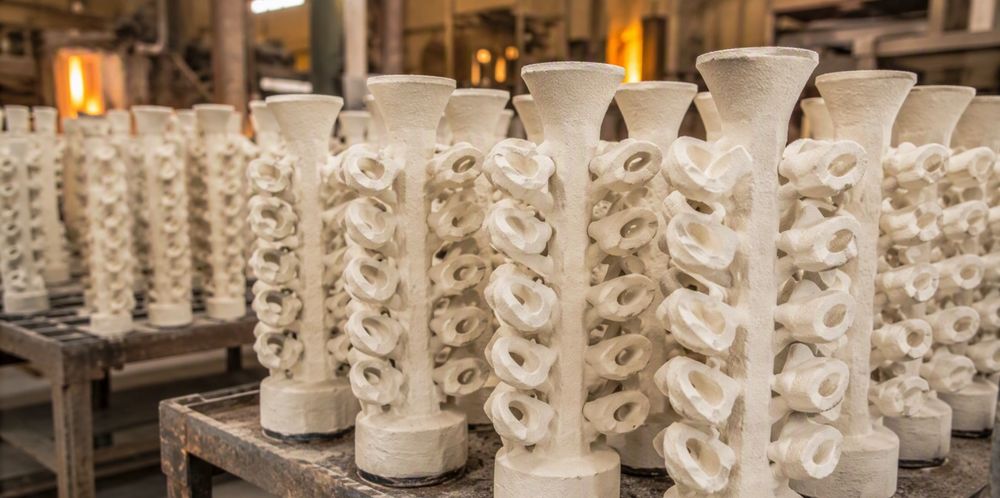 Ceramic shell molds built layer by layer with hydrolyzed ethyl silicate binder, awaiting the molten-metal pour in a precision foundry.
Casting, Coatings, and Mineral Surfaces
Investment foundries have relied on hydrolyzed ethyl silicate for decades: the binder gels between successive ceramic slurry and stucco coats, building dimensionally precise shells strong enough to cast nickel-superalloy turbine blades. Monomeric TEOS hydrolyzes too unpredictably for this duty, so the industry standardized on pre-polymerized grades such as Ethyl Silicate-40 — partially hydrolyzed oligomers whose silica content of roughly 40–42 % delivers stable, repeatable gellation and long bath life.
The same binder chemistry protects steel. Inorganic zinc-rich primers formulated with ethyl silicate have guarded bridges, tanks, and offshore structures since the 1950s: silanol groups bind zinc dust to the steel and to itself, curing into a zinc–silicate–iron network that withstands temperatures beyond 400 °C and continues to densify with atmospheric CO₂ for weeks after application. Solvent flexibility across ethanol, butanol, and butyl acetate lets coaters tune application viscosity without reformulating.
Trifunctional alkyl grades complete the picture on porous mineral surfaces. Octyltriethoxysilane penetrates concrete and masonry, hydrolyzes on the pore walls, and leaves a covalently anchored hydrophobic lining that blocks chloride-laden water while still letting vapor escape. Demand tracks these uses closely: the alkoxysilane market is estimated at about USD 1.5 billion in 2025 and is projected to grow at roughly 6.8 % annually through 2033, with construction, rubber, and composites as the largest outlets.
In sol-gel coating, TMOS and TEOS are the classic precursors: hydrolyzed under acid catalysis, deposited by dip or spin coating, and fired, they form dense SiO₂ films only hundreds of nanometers thick — the basis of anti-reflective stacks, scratch-resistant finishes, and barrier layers. Dry the same gel slowly instead, and the network survives as an aerogel or xerogel monolith with controllable porosity for catalyst supports, insulation, and chromatography media.
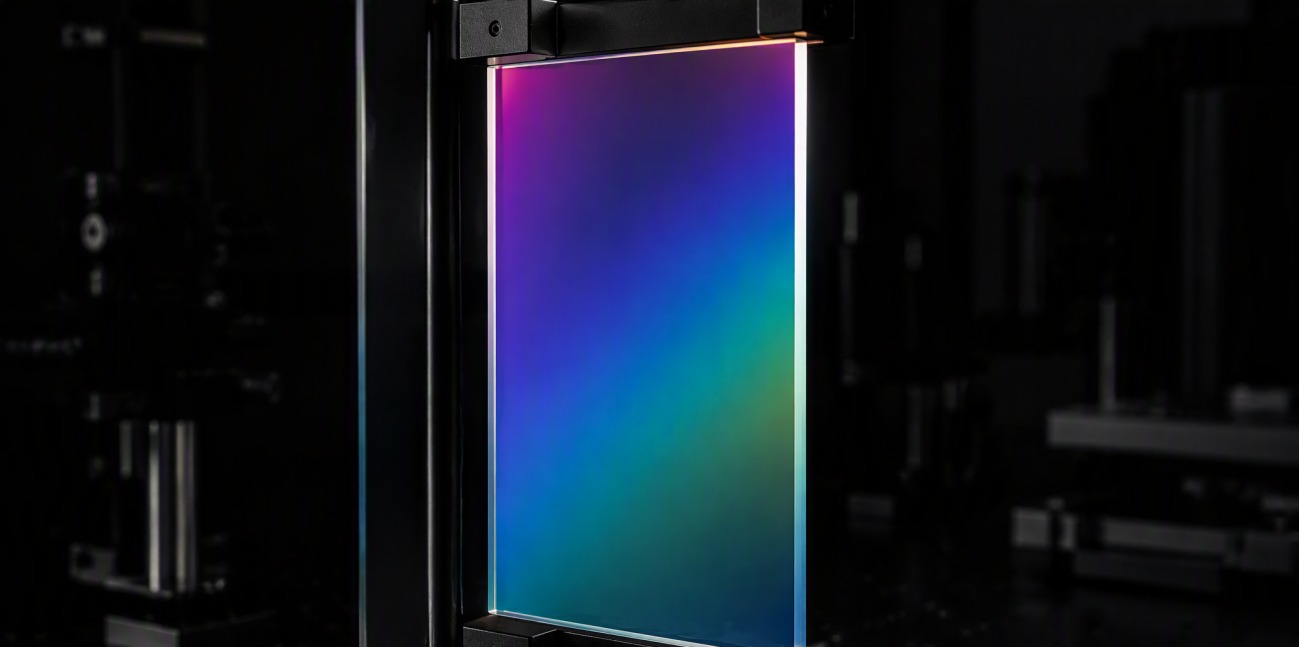 Iridescent interference colors reveal a sub-micron sol-gel film — alkoxysilane-derived coatings tune reflection, hardness, and surface energy on glass.
Quality Control You Can Audit
Every lot leaving our facility is verified against a written specification, with a certificate of analysis issued per shipment:
- Assay and identity: gas chromatography against internal standards — typically ≥ 98 % for industrial grades and ≥ 99 % for reagent grades, with isomer and oligomer profiles reported.
- Moisture: Karl Fischer titration on every lot — the single most important variable for shelf life, since trace water starts hydrolysis in the drum.
- Alkoxy and SiO₂ content: titration for monomers, gravimetric silica for oligomers such as Ethyl Silicate-40, where the silica percentage defines binder performance.
- Physical constants: density, refractive index, and viscosity checked against specification windows — DMDES, for instance, at about 0.84–0.87 g/cm³ with nD near 1.380.
- Color and clarity: APHA color on clear liquids, plus chloride residue monitoring where chlorosilane feedstock routes are used.
 Rotational viscometry confirms that an oligomer batch sits inside its specification window before drumming.
Packaging and Logistics
Alkoxysilanes travel as ordinary liquids rather than the fuming corrosives typical of chlorosilanes, which simplifies freight considerably. Standard packs are 25 L HDPE jerrycans, 200 L lined steel drums, and 1,000 L IBCs, all filled dry and sealed moisture-tight; nitrogen blanketing is available for hydrolysis-sensitive grades. Keep containers sealed, cool, and dry, and consume opened drums promptly — the same moisture that cures your product will slowly degrade ours if it gets in.
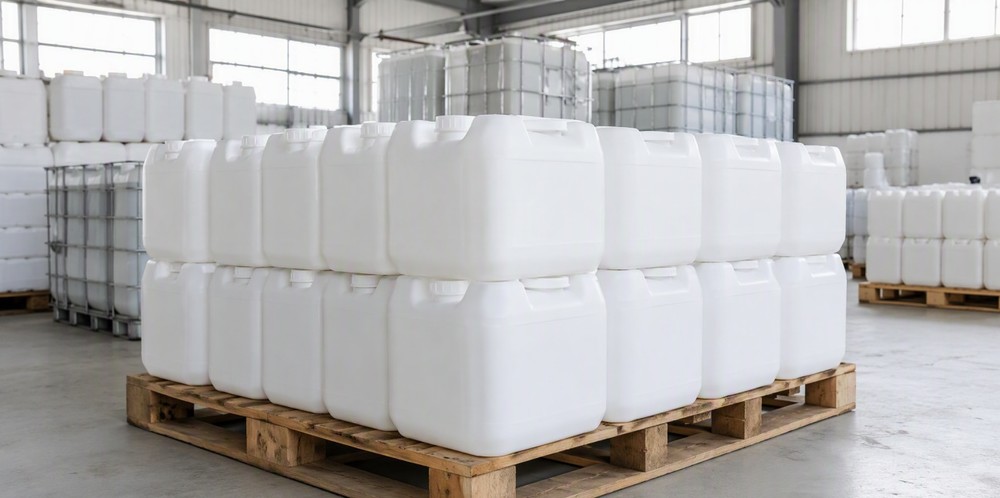 Moisture-tight HDPE jerrycans and lined drums keep alkoxysilane monomers dry from the filling line to the formulation plant.
Beyond catalog grades, Eata Silicon supports custom work across the alkoxysilane family: tailored hydrolyzates and co-condensates with defined SiO₂ content and viscosity, blended functionality packages for sealant and RTV formulators, low-chloride and low-metal grades, private-label packaging from 1 L bottles to IBCs, and pre-shipment samples with full analytical documentation. If your formulation calls for an alkoxysilane you cannot source consistently, there is a good chance we can make it.
Send us your target monomer, specification, or even just the application — our team will respond with a matched product, a data sheet, and a quotation.
| Catalog Number |
Product Name |
Order |
Quantity |
|
ORM-0111 |
Chlorodimethoxymethylsilane, CAS 994-07-0
|
Inquiry
|
|
|
ORM-0112 |
3-(Trimethoxysilyl)propyl 2-Bromo-2-methylpropanoate, CAS 314021-97-1
|
Inquiry
|
|
|
ORM-0113 |
Chloromethylmethyldiethoxysilane, CAS 2212-10-4
|
Inquiry
|
|
|
ORM-0114 |
Dimethylvinylethoxysilane, CAS 5356-83-2
|
Inquiry
|
|
|
ORM-0115 |
Phenyltrimethoxysilane, CAS 2996-92-1, 99%
|
Inquiry
|
|
|
ORM-0116 |
3-(Acryloxy)propyltrimethoxysilane, CAS 4369-14-6, 98%
|
Inquiry
|
|
|
ORM-0117 |
3-Methacryloxypropylmethyldimethoxysilane, CAS 14513-34-9, 98%
|
Inquiry
|
|
|
ORM-0118 |
3-Methacryloxypropyltrimethoxysilane, CAS 2530-85-0, 98%
|
Inquiry
|
|
|
ORM-0119 |
3-Aminopropyltriethoxysilane, CAS 919-30-2, 98%
|
Inquiry
|
|
|
ORM-0120 |
Vinylmethyldimethoxysilane, CAS 16753-62-1, ≥97%
|
Inquiry
|
|
For Research or Industrial Raw Materials, Not For Personal Medical Use!