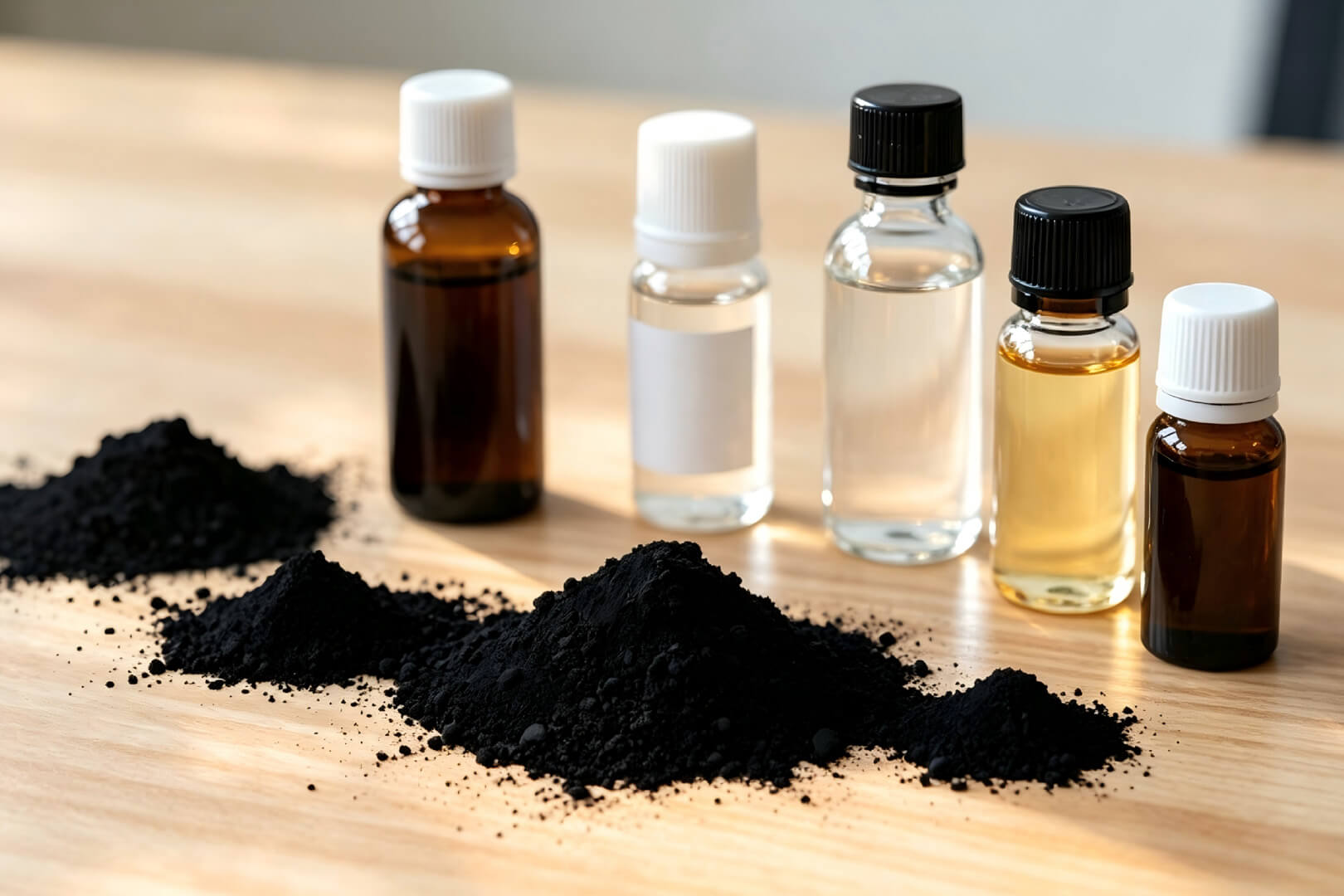
Organically modified silicon materials bring organic functionality directly into silicon-based chemistry, giving formulators a practical way to tune adhesion, surface energy, polymer compatibility, crosslinking behavior and network structure. From epoxy- and methacrylate-functional silanes to methyl, vinyl, amino, mercapto and aromatic alkoxysilanes, these materials are widely used as raw materials for hybrid coatings, treated fillers, functional surfaces and sol-gel derived systems.
Eata Silicon focuses on chemistry-led material selection rather than one-size-fits-all catalog labels. When a project needs a specific reactive group, alkoxy pattern, moisture profile, inhibitor level, physical form or application interface, we can work from the target specification and help identify a suitable standard precursor, close analogue or custom organosilicon route.
A Practical View of Organically Modified Silicon Chemistry
The core idea is simple: a silicon atom carries hydrolyzable groups that can form siloxane or surface bonds, while an organic substituent provides a second chemical function. That organic group may remain relatively inert, as in methyl- or octyl-substituted silanes, or it may participate in further reactions through epoxy, methacrylate, acrylate, vinyl, amino or thiol chemistry. This dual character is why organofunctional silanes are so useful at the boundary between inorganic surfaces and organic resins.
In sol-gel processing, hydrolysis converts alkoxy groups into silanol-rich species, followed by condensation into Si-O-Si connectivity. The organic substituent is retained and becomes part of the developing hybrid material. By changing the organic group, the number and type of hydrolyzable groups, and the co-precursors in the formulation, developers can adjust network density, wetting, flexibility, compatibility and reaction pathways without abandoning the silicon-derived backbone.
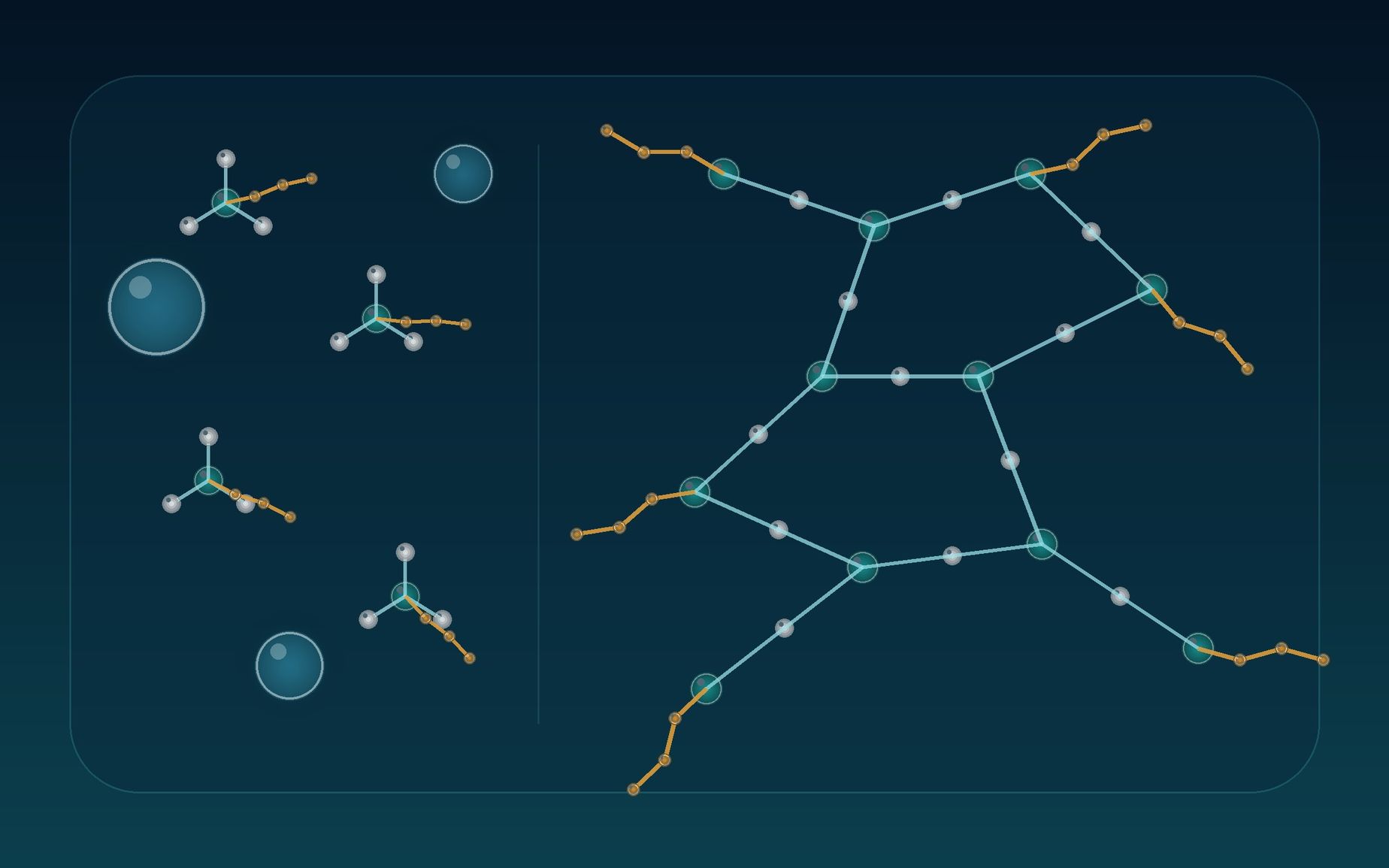 Fig. 1. Conceptual progression from discrete organosilane precursors toward a condensed silicon-oxygen network that retains organic functionality.
Choose the Organic Functionality Around the Job
| Functional Family |
What It Brings to the System |
Common Development Directions |
| Epoxy-functional silanes |
A hydrolyzable silicon end plus an epoxide that can participate in epoxy-compatible or ring-opening chemistry. |
Hybrid sol-gel coatings, epoxy adhesion, glass/mineral coupling, surface modification. |
| Methacrylate / acrylate silanes |
Polymerizable unsaturation for acrylic, free-radical and UV-curable systems. |
Hybrid resins, UV-curable coatings, particle treatment, polymer-silica interfaces. |
| Vinyl silanes |
Reactive vinyl functionality with a silicon alkoxy group for coupling or graft/crosslink routes. |
Polyolefin modification, filler coupling, moisture-crosslinkable systems, functional surfaces. |
| Amino silanes |
Basic amine functionality with strong affinity for many resin and oxide-surface chemistries. |
Epoxy and phenolic systems, mineral/glass treatment, adhesion promotion, interfacial modification. |
| Mercapto silanes |
Thiol functionality for sulfur-reactive and selected metal/surface interactions. |
Adhesion, silica functionalization, specialty coupling, thiol-modified surfaces. |
| Alkyl / methyl silanes |
Non-polar organic groups that reduce surface polarity and alter hydrophobicity and network character. |
Hydrophobic sol-gel networks, surface treatment, release behavior, barrier formulation. |
| Phenyl silanes |
Aromatic substitution that changes polarity, compatibility and the organic character of the silicon network. |
Aromatic hybrid networks, surface treatment, specialty sol-gel and polymer-interface design. |
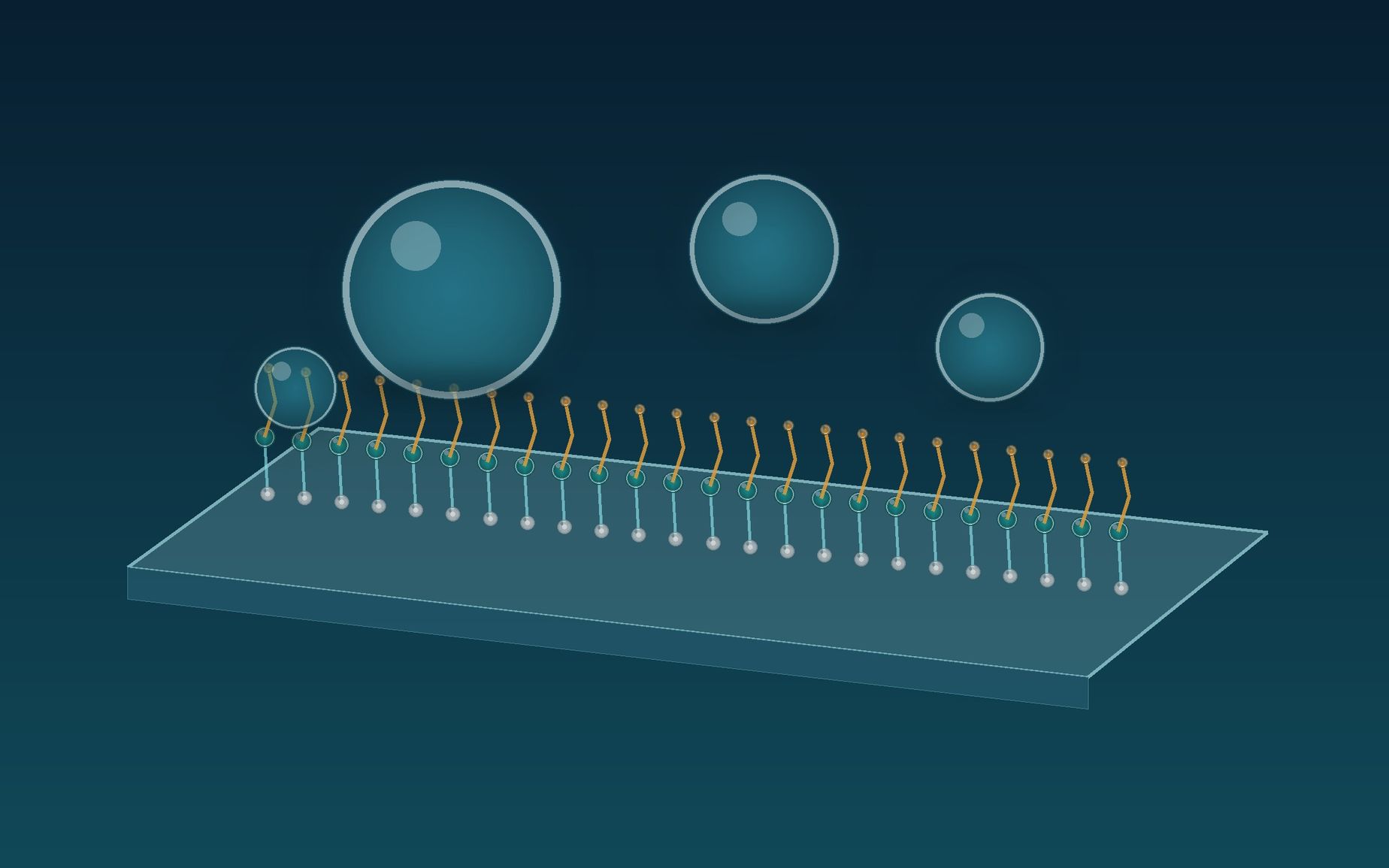 Fig. 2. Surface-bound organosilane layer on glass, illustrating how an organic termination can change wetting while the silicon end anchors to the surface.
Representative Raw Materials
| Representative Materials |
Functional Chemistry |
Keywords |
3-Glycidoxypropyltrimethoxysilane (GPTMS / GLYMO)
CAS 2530-83-8 |
Epoxy-functional trimethoxysilane |
epoxy silane; GPTMS supplier; sol-gel hybrid precursor; epoxy-silica coupling; hybrid coating raw material |
(3-Glycidoxypropyl)methyldiethoxysilane
CAS 2897-60-1 |
Epoxy-functional dialkoxysilane |
epoxy dialkoxy silane; UV/epoxy coupling agent; lower-condensation silane; functional surface modifier |
3-Methacryloxypropyltrimethoxysilane (MPS / MEMO / KH-570)
CAS 2530-85-0 |
Methacrylate-functional trimethoxysilane |
methacrylate silane; MPS silane; KH570; polymerizable silane; hybrid acrylic resin precursor |
3-Acryloxypropyltrimethoxysilane
CAS 4369-14-6 |
Acrylate-functional trimethoxysilane |
acryloxy silane; UV cure silane; acrylic coupling agent; microparticle surface modification |
Vinyltrimethoxysilane (VTMS)
CAS 2768-02-7 |
Vinyl-functional trimethoxysilane |
vinyl silane; VTMS; polymer grafting silane; moisture crosslinking; filler coupling |
Vinyltriethoxysilane (VTES)
CAS 78-08-0 |
Vinyl-functional triethoxysilane |
VTES supplier; vinyl triethoxy silane; coupling agent; polymer/fiberglass interface |
Methyltrimethoxysilane (MTMS)
CAS 1185-55-3 |
Methyl-functional trialkoxysilane |
MTMS; methyl silane; hydrophobic sol-gel precursor; organically modified silicate; ORMOSIL raw material |
Methyltriethoxysilane (MTES)
CAS 2031-67-6 |
Methyl-functional triethoxysilane |
MTES; hydrophobic surface treatment; condensation network modifier; methyl organosilane |
3-Aminopropyltriethoxysilane (APTES / AMEO)
CAS 919-30-2 |
Amino-functional triethoxysilane |
APTES; amino silane; epoxy coupling agent; glass/mineral surface modifier; adhesion promoter |
3-Mercaptopropyltrimethoxysilane (MPTMS)
CAS 4420-74-0 |
Mercapto-functional trimethoxysilane |
mercapto silane; thiol silane; silica functionalization; sulfur-functional coupling agent |
n-Octyltriethoxysilane (OTES)
CAS 2943-75-1 |
Long-chain alkyl triethoxysilane |
octyl silane; hydrophobic silane; mineral filler treatment; low-surface-energy organosilane |
Phenyltrimethoxysilane (PTMS)
CAS 2996-92-1 |
Phenyl-functional trimethoxysilane |
phenyl silane; aromatic organosilane; hydrophobic surface modifier; aromatic sol-gel precursor |
Where Organically Modified Silicon Materials Add Value
The strongest reason to use an organosilicon modifier is usually not the bulk material by itself; it is the interface. A few molecular layers can determine whether a filler wets into a resin, a coating bonds to glass, a hybrid network stays compatible with an organic phase, or a surface becomes more or less water-attracting.
- Coatings and protective layers: Functional silanes and ORMOSIL-type precursors can be incorporated into sol-gel or resin systems to influence adhesion, barrier behavior, hardness, wetting and network integrity.
- Filler and fiber treatment: Glass fibers, silica, ceramic powders, mineral fillers and oxide-rich surfaces can be modified to improve compatibility with organic matrices and reduce weak interfacial zones.
- Hybrid resin formulation: Epoxy, methacrylate, acrylate, vinyl and amino functionalities provide routes for chemically integrating silicon-containing components into organic polymer systems.
- Surface-energy control: Methyl, octyl and other non-polar groups can be used when a project needs lower surface polarity or stronger water beading, while more polar functions can be chosen where wetting and reactivity are the priority.
- Functional films and optical surfaces: Organosilicon chemistry is frequently used to build thin, transparent or abrasion-resistant layers where substrate adhesion and controlled network structure matter.
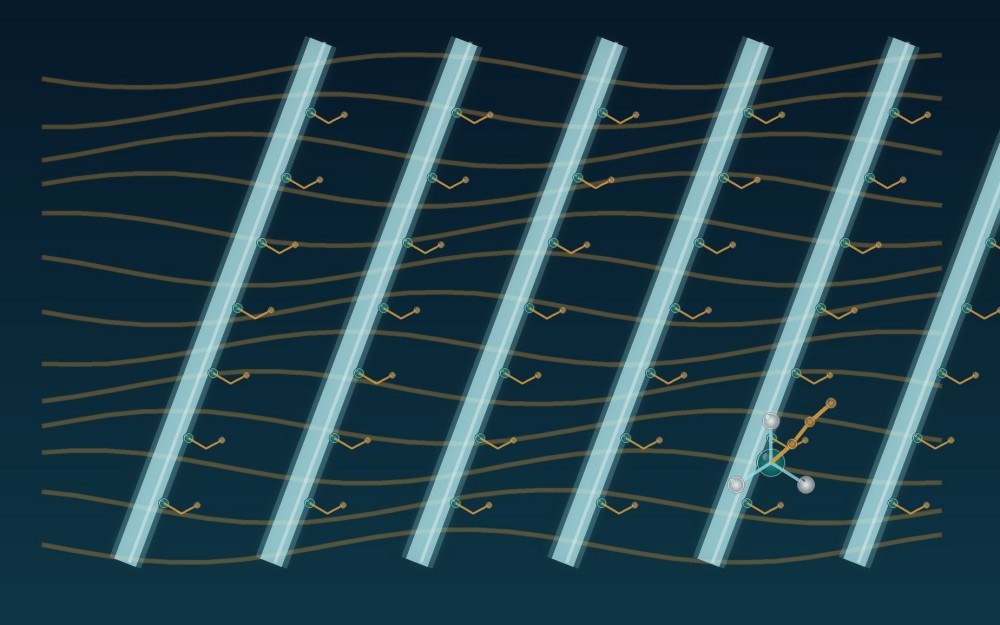 Fig. 3. Silane-modified glass fibers at a polymer interface, showing a molecular coupling layer between the inorganic fiber and the surrounding organic phase.
Energy and Advanced-Manufacturing Applications
- Photovoltaic cover glass and transparent functional coatings. Recent research has combined silica, silicone and organosilane chemistry to create transparent, hydrophobic and mechanically durable antisoiling layers for solar cover glass and PV modules.
- Battery separator and porous-film modification. Silanization and solution-processed silica layers have been used to coat microporous polyolefin separators, with reported improvements in thermal and dimensional stability while maintaining electrochemical function.
- Protective coatings on metals and energy hardware. GPTMS-, TEOS- and other hybrid sol-gel systems have been studied on aluminum, steel and related substrates where coating adhesion and barrier performance are important.
- Electrical and composite interfaces. Organosilanes are widely used to treat glass, silica and mineral surfaces in polymer systems, which makes them relevant when electrical insulation, encapsulation or mechanically robust composite interfaces are being developed.
 Fig. 4. Transparent organosilane-containing coating concept above solar glass, representing interface engineering without blocking the underlying optical surface.
Build the Specification Before You Build the Formula
| RFQ Variable |
Examples to Define |
Why It Matters |
| Organic functional group |
Epoxy, methacrylate, acrylate, vinyl, amino, mercapto, methyl, alkyl, phenyl |
Determines polymer compatibility, secondary reaction route and surface character. |
| Hydrolyzable groups |
Methoxy, ethoxy; trialkoxy vs dialkoxy structure |
Changes hydrolysis/condensation behavior and the connectivity available to the silicon network. |
| Purity / assay |
Target minimum assay, key isomer or by-product limits |
Important when residuals affect polymerization, optics, electrical behavior or repeatability. |
| Water / moisture control |
Maximum water target; handling sensitivity |
Hydrolysis can begin before use if moisture is not controlled appropriately. |
| Inhibitor requirement |
Needed or not needed for methacrylate/acrylate monomers; target level if critical |
Affects storage stability and downstream polymerization behavior. |
| Physical form |
Neat liquid, solution, pre-hydrolyzed system, oligomeric form or treated particle |
Determines how the material enters the process and how it is metered or dispersed. |
| Substrate / matrix |
Glass, silica, ceramic, metal oxide, epoxy, acrylic, polyolefin, silicone or other resin |
Selection should match the actual interface rather than a generic coupling-agent category. |
| Process window |
Solvent, water ratio, pH, addition sequence, temperature, cure chemistry |
These variables strongly influence hydrolysis, condensation, film formation and final network structure. |
| Performance target |
Adhesion, wetting, hydrophobicity, barrier, optical, dielectric, thermal or mechanical goal |
Keeps the RFQ tied to the function the customer needs to improve. |
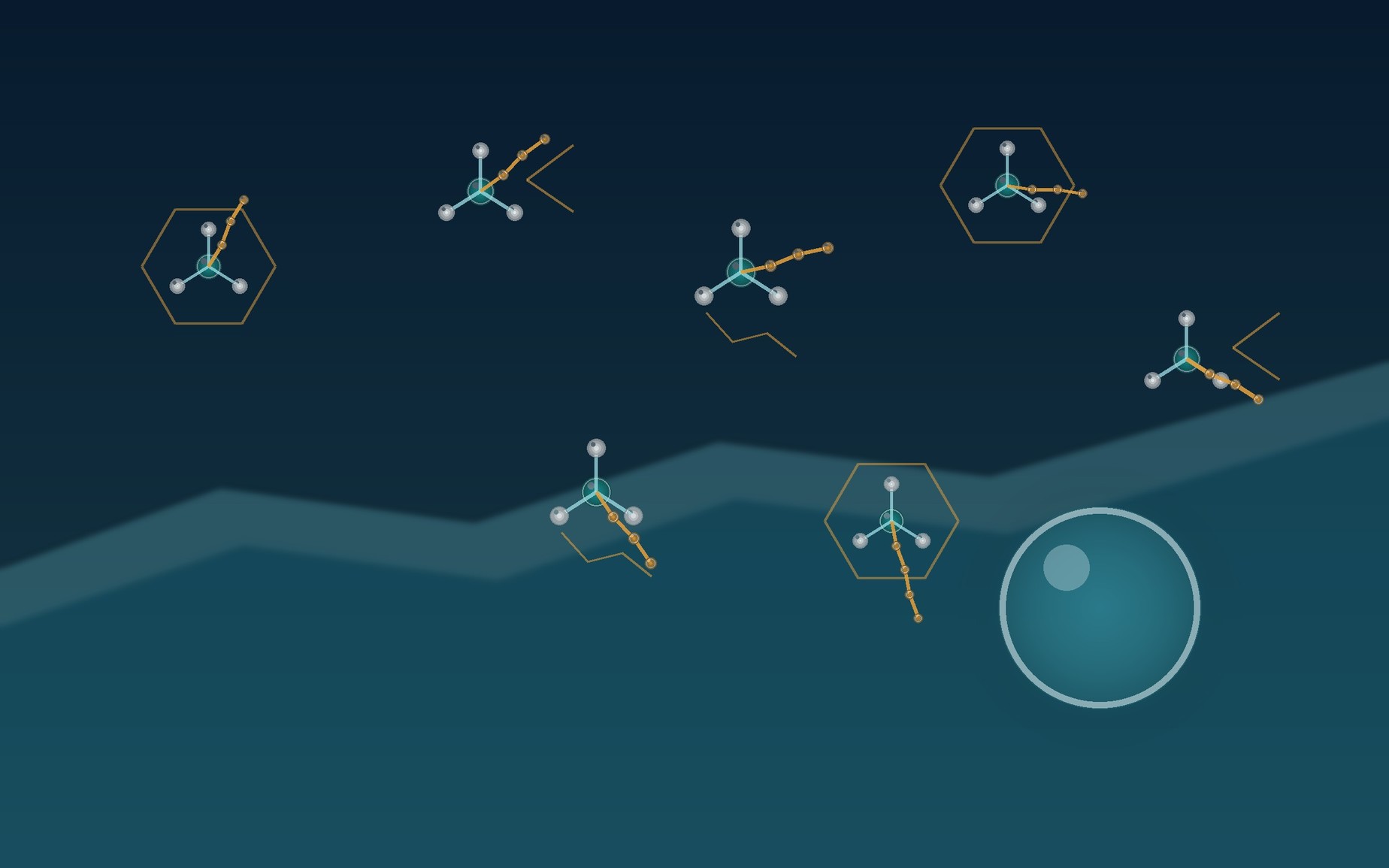 Fig. 5. Organically functionalized silicon building blocks distributed through a clear hybrid resin environment, representing the formulation freedom created by different organic side groups.
Why Work with Eata Silicon?
- Chemistry-first matching: We can review the target functional group, hydrolyzable silicon structure and intended interface before narrowing the material choice.
- Specification-driven discussion: Purity, water, inhibitor level, form, solvent system and critical impurities can be discussed around your process instead of treated as afterthoughts.
- Application-aware sourcing: Coatings, composites, glass and mineral treatment, sol-gel networks, electrical materials and energy-material interfaces require different selection logic; the project context matters.
- Connected organosilicon portfolio: Closely related structures can be compared when a standard chemistry does not deliver the right balance of reactivity, compatibility or surface properties.
- Custom material support: If the required functional group, substitution pattern or specification is outside a standard product range, Eata Silicon can evaluate a custom development route.
Some projects cannot be solved by selecting a standard coupling agent from a list. A different organic function, lower network functionality, a specific alkoxy pattern, tighter water control, a non-standard inhibitor level or a closely related analogue may be the better route. Share the target structure, application and critical specification points with Eata Silicon, and we can evaluate both established materials and custom organosilicon options for your formulation.
Start with the application, not just the product name
For a faster technical review, include the substrate or resin, target functional group, expected process route, purity target, moisture or inhibitor limits, and the performance property you are trying to improve.
For Research or Industrial Raw Materials, Not For Personal Medical Use!