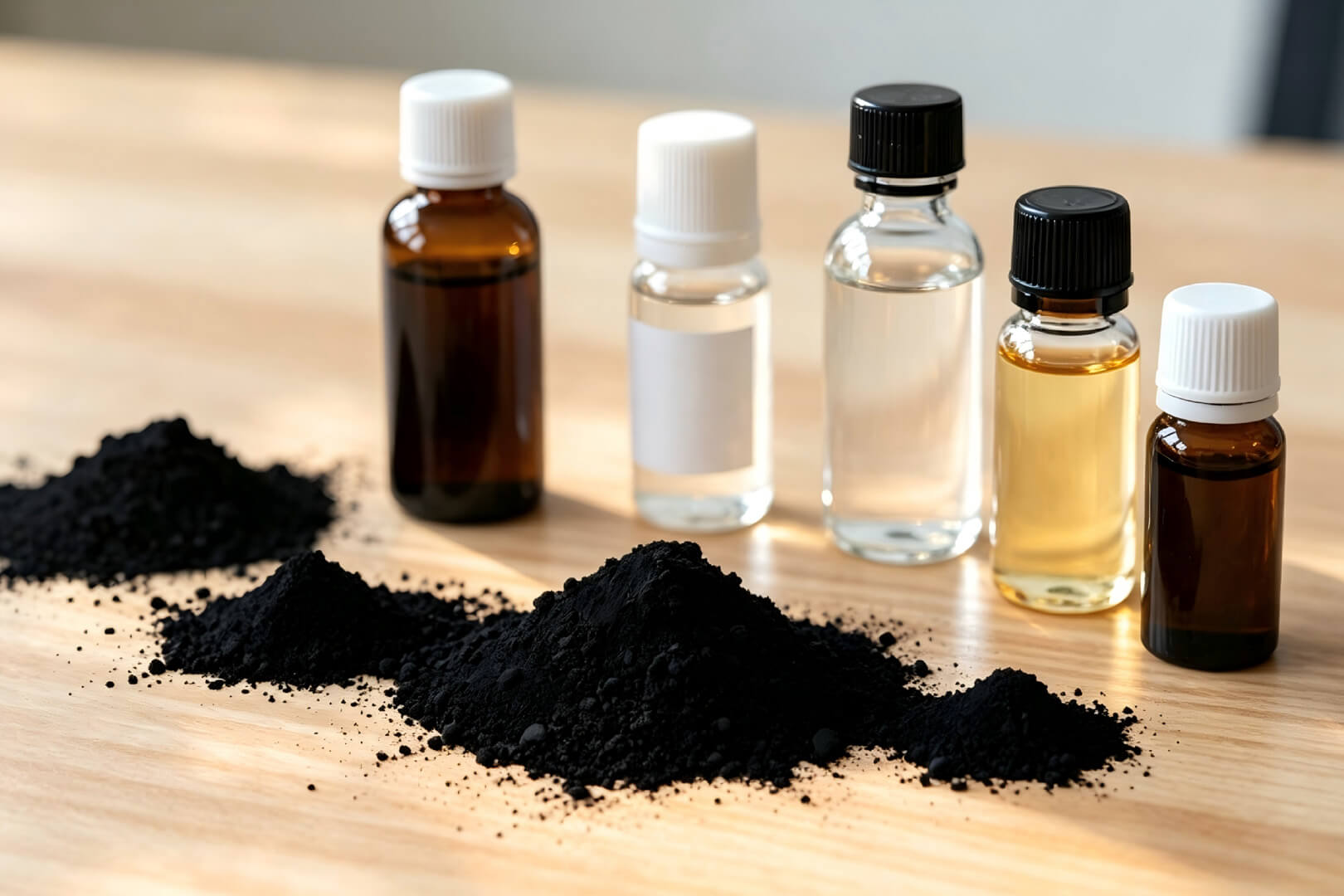
Some powders perform because of what they are made of. Silica microspheres perform because of how precisely they are shaped. Each particle is a near-perfect sphere of silicon dioxide, and when millions of them share the same diameter within a few percent, they stop behaving like an ordinary powder: they flow like liquid, pack into ordered layers, hold an exact gap between two sheets of glass, and scatter light in ways engineers can tune. That combination of chemistry and geometry has made silica microspheres a quiet workhorse in LCD panels, HPLC columns, LED lighting, thermal-insulation coatings, and semiconductor packaging.
The story starts with a classic 1968 paper by Stöber, Fink, and Bohn, which showed that hydrolyzing tetraethyl orthosilicate in a simple ethanol–water–ammonia mixture grows smooth silica spheres with remarkably narrow size distributions. Six decades later the same sol-gel principle – now extended with seed growth, surfactant templates, and flame fusion – supplies monodisperse spheres from 100 nanometers to 100 micrometers, in solid, porous, hollow, and surface-functionalized forms. Eata Silicon supplies silica microspheres across this full range, from research-scale lots to bulk filler volumes, with custom sizes, pore structures, and surface chemistries available on request.
Browse Our Products
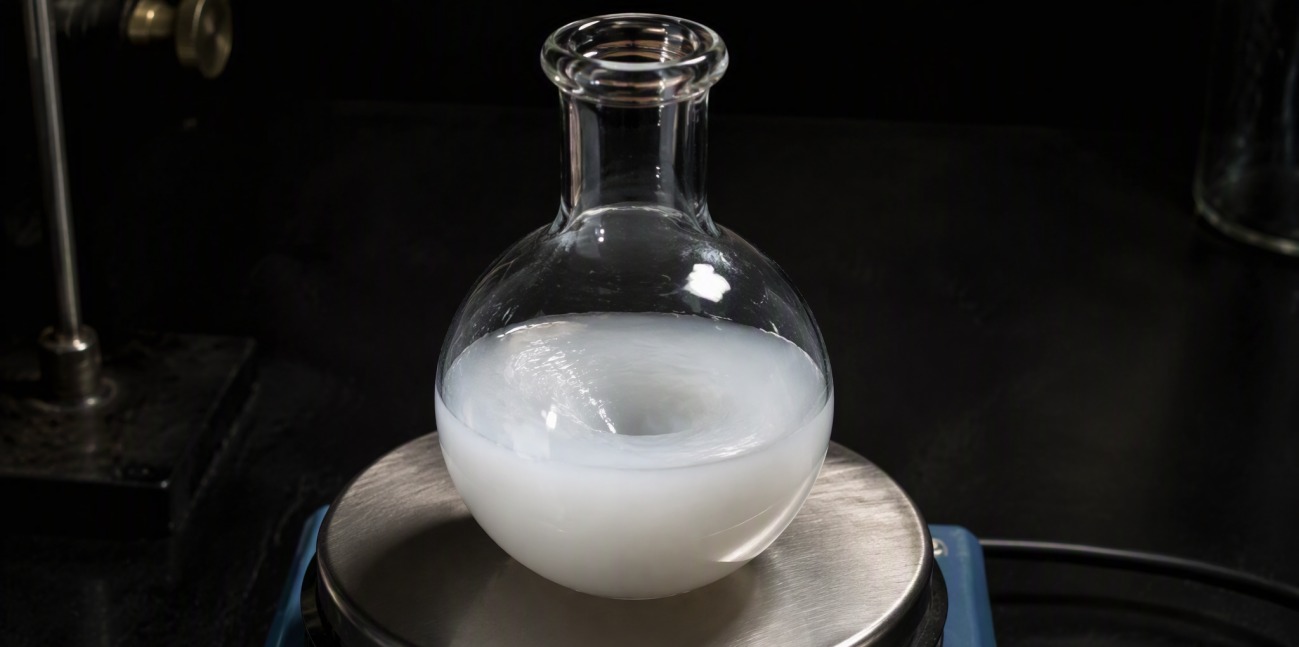 Monodisperse spheres growing in a Stöber synthesis.
How Uniform Spheres Are Made
Four production routes cover nearly every commercial grade of silica microsphere, and the route determines the size range, porosity, and price point:
- Stöber sol-gel synthesis – TEOS is hydrolyzed and condensed in an alcohol–water–ammonia system. Direct synthesis reliably reaches about 2 µm; seed growth, in which small spheres are fed silicate monomer in a starved regime so material deposits only on existing seeds, extends the range upward while keeping the size distribution tight.
- Surfactant-templated (mesoporous) synthesis – adding a structure-directing agent such as CTAB to a Stöber-type system produces spheres with ordered 2–50 nm pores; controlled alkaline etching around 95 °C can then widen pores across roughly 4–100 nm for protein-scale separations and catalyst supports.
- Flame fusion and spheroidization – crushed quartz or synthetic silica powder is passed through a high-temperature flame or plasma, where surface tension pulls each molten particle into a sphere. This route supplies the larger, solid spherical fillers (microns to tens of microns) used in epoxy molding compounds and coatings.
- Template and calcination routes – silica shells deposited on polymer or emulsion templates, then emptied by calcination or etching, yield hollow microspheres with low density and excellent thermal-insulation behavior.
Across all four routes, the selling points stay the same: sphericity, a narrow size distribution, and a surface chemistry that bonds cleanly into the customer's formulation.
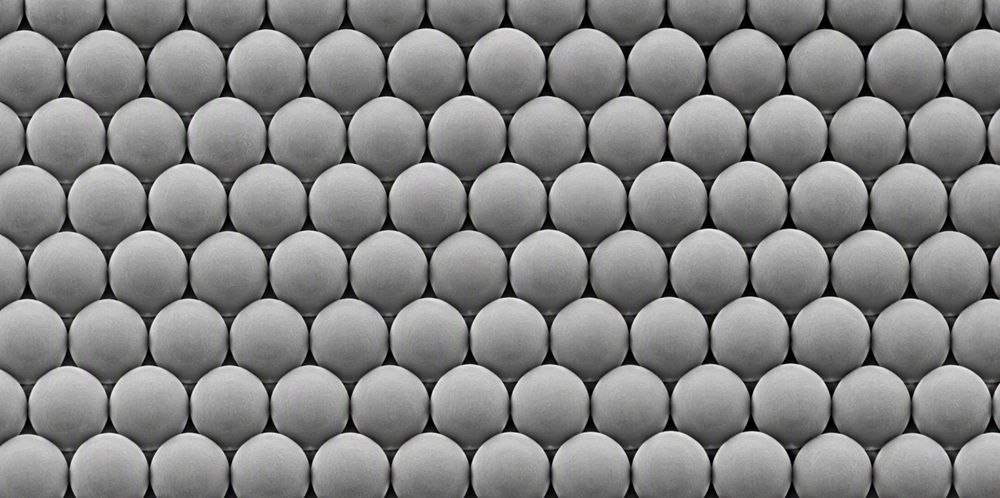 Same size, sphere after sphere – what monodispersity looks like up close.
Why Monodispersity Matters
A wide size distribution is not just a cosmetic flaw; it changes how the spheres behave in service. In a chromatography column, mixed diameters create uneven flow paths that broaden peaks and waste resolution. In a display panel, one oversized spacer particle sets the local cell gap for its neighborhood, and a population of oversized particles shows up as visible mura. In a coating or molding compound, fines fill the gaps between large particles and drive viscosity up, while oversized particles create stress points.
This is why grade-defining documents for silica microspheres lead with the coefficient of variation: a CV of 3% or better on mean diameter is the line that separates calibration and spacer grades from general filler grades. Eata Silicon characterizes every lot by SEM image analysis and reports mean diameter, CV, and sphericity on the certificate of analysis, so the number on your incoming inspection matches the number on ours.
Where Silica Microspheres Work
Six application domains account for most of the demand, and each exploits a different property of the sphere:
- Display spacers – monodisperse micro-spheres sprayed between LCD glass substrates define the cell gap. Spacer grades must survive the crush load of panel assembly, resist heat and chemicals, and hold an extremely narrow size distribution; a uniform gap is what keeps color and contrast even across the screen.
- Chromatography – porous silica microspheres remain the dominant HPLC packing. Monodisperse 5 µm porous spheres with ~10 nm pores handle small-molecule separations, while wide-pore (>30 nm) materials give proteins room to diffuse; sub-2 µm core-shell particles push the same chemistry into UHPLC instruments.
- Light management – silicone-resin or PMMA diffusers loaded with 0.5–5 wt% of fine spheres (refractive index ~1.41–1.45, stable to 300 °C) turn harsh LED point sources into soft, even panels, with total transmission tunable anywhere from about 92% down to 20% depending on loading.
- Thermal insulation and lightweighting – hollow silica and glass microspheres act as low-conductivity, low-density fillers in insulating coatings and composites, rolling like ball bearings to improve flow while their hollow cores block heat.
- Electronic packaging – spherical silica fillers raise the loading of epoxy molding compounds without destroying flow, cut the composite's thermal expansion toward that of silicon dies, and – in low-alpha grades – protect memory devices from soft errors.
- Research and photonics – monodisperse spheres self-assemble into face-centered cubic colloidal crystals whose Bragg diffraction produces iridescent structural color, the basis of photonic sensors, templates for inverse opals, and optical coatings.
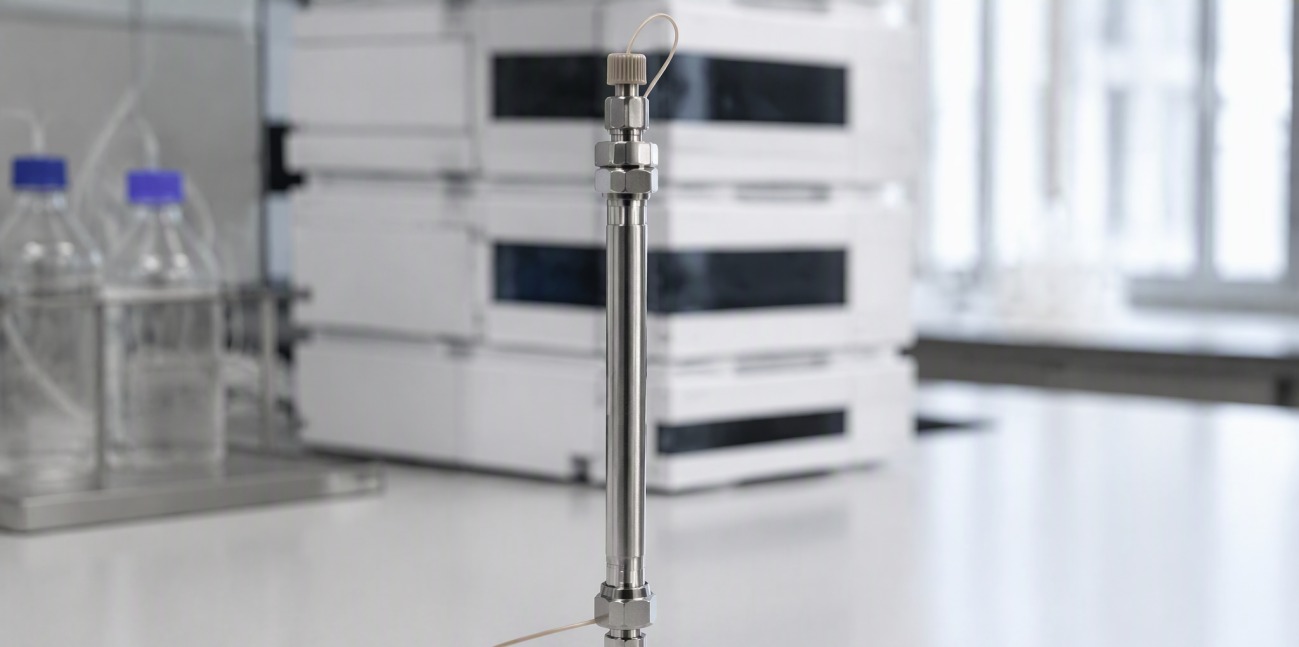 Packed with 5 µm porous silica spheres – the heart of an HPLC separation.
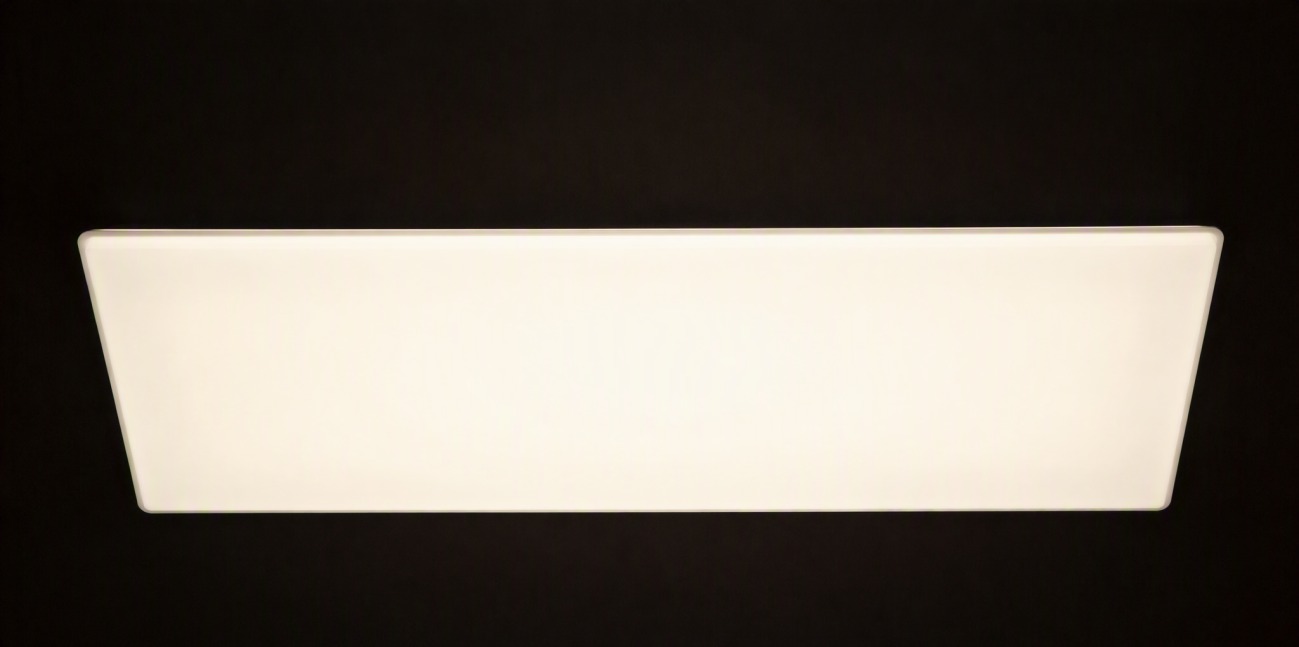 Diffuser plates turn points of light into panels of light.
Choosing a Microsphere Type
The word "microsphere" covers several distinct product families. Matching the family to the job is the first specification decision:
| Type |
Structure |
Best Suited For |
| Solid monodisperse |
Dense SiO₂ sphere, CV ≤ 3% |
Spacers, calibration, photonic assembly, coatings |
| Porous (chromatographic) |
Controlled pore network, 4–100 nm |
HPLC/UHPLC packings, catalyst and enzyme supports |
| Mesoporous |
Surfactant-templated ordered 2–50 nm pores |
Drug delivery research, adsorption, nano-reactors |
| Hollow |
Silica shell around an empty core |
Thermal-insulation coatings, lightweight composites |
| Functionalized |
Surface –NH₂, –COOH, epoxy, or silane groups |
Bioconjugation, immunoassays, resin coupling |
| Spherical filler (flame-fused) |
Solid spheres, microns to tens of microns |
Epoxy molding compounds, underfills, light diffusion |
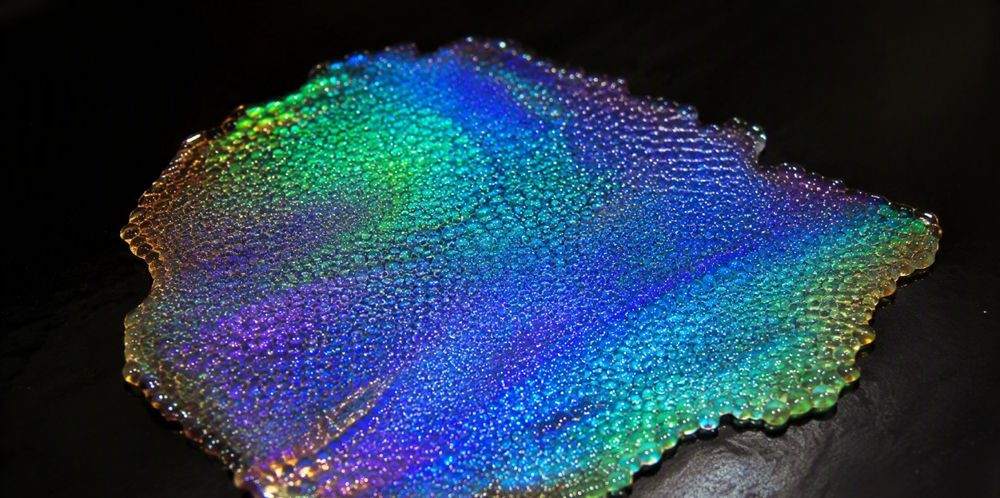 Self-assembled spheres forming a photonic crystal – color from structure, not pigment.
Representative Products at a Glance
The table below gathers the silica microsphere types buyers most often search for. Every line is available from Eata Silicon, and every parameter on it can be adjusted through our custom service.
| Product Type |
Typical Specification |
Typical Use |
| Monodisperse silica microspheres |
100 nm – 2 µm, CV ≤ 3% |
Calibration, spacers, colloidal assembly, research |
| Large monodisperse microspheres |
2 – 100 µm, narrow distribution |
Display spacers, standards, precision abrasives |
| LCD spacer-grade microspheres |
Tight CV, high crush/heat/chemical resistance |
LCD and touch-panel cell-gap control |
| Porous HPLC silica microspheres |
5 µm, ~10 nm pores, monodisperse |
Small-molecule chromatography packings |
| Wide-pore silica microspheres |
Pores > 30 nm via controlled etching |
Protein and biomolecule separations |
| Core-shell silica microspheres |
Sub-2 µm, solid core + porous shell |
UHPLC, high-speed high-resolution analysis |
| Mesoporous silica microspheres |
Ordered 2 – 50 nm channels, CTAB-templated |
Adsorption, catalysis, drug-delivery research |
| Hollow silica microspheres |
Low density, hollow core, micron sizes |
Insulating coatings, lightweight fillers |
| Functionalized silica microspheres |
–NH₂ / –COOH / epoxy surfaces |
Bioconjugation, diagnostics, resin bonding |
| Light-diffusion microspheres |
Silica or silica-core silicone-shell, fine sizes |
LED diffuser plates, films, light covers |
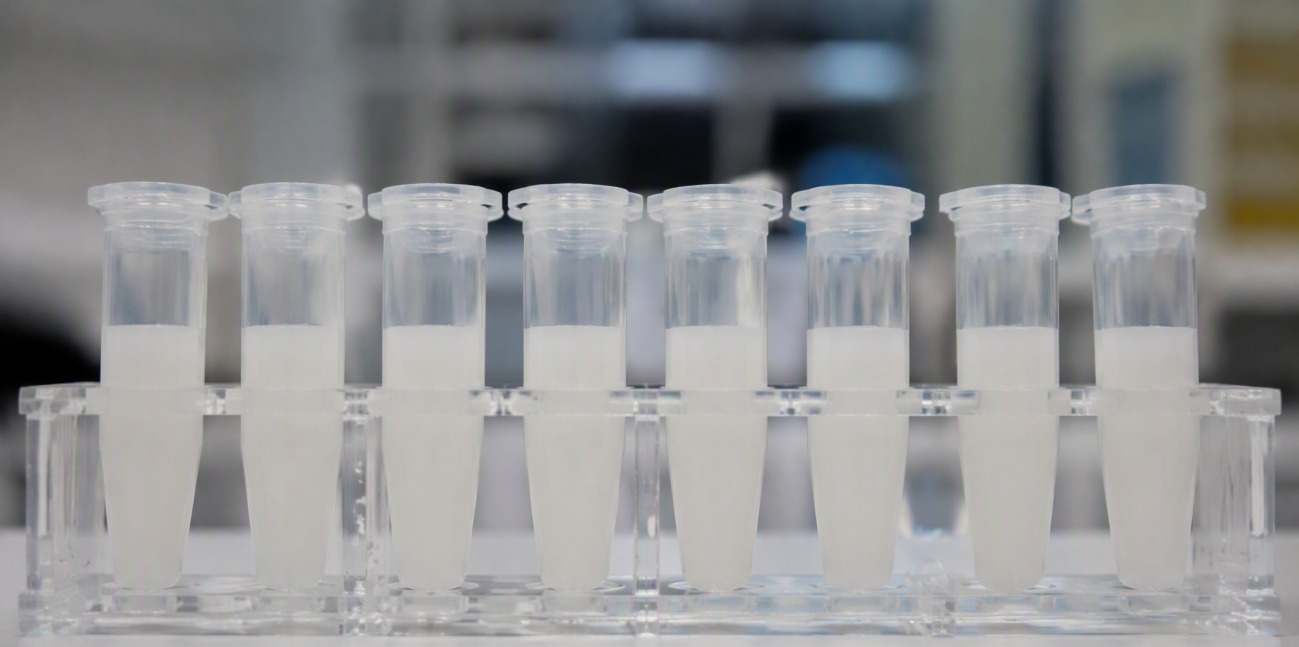 Suspensions packed and ready for the calibration bench.
Standard catalogs cover common diameters, but microsphere projects rarely stay standard for long. Eata Silicon regularly produces custom mean diameters with tightened CV targets, porous and mesoporous spheres at specified pore sizes, hollow spheres at specified shell thickness and density, and surfaces carrying amino, carboxyl, epoxy, or customer-selected silane chemistries. We also supply custom suspension concentrations, low-alpha and low-metal grades for semiconductor use, and pilot lots scaled to bridge the gap between a research paper and a production line.
Tell us the diameter, structure, surface, and application you are working toward, and our team will respond with a proposed grade, a specification sheet, and samples for evaluation.
For Research or Industrial Raw Materials, Not For Personal Medical Use!