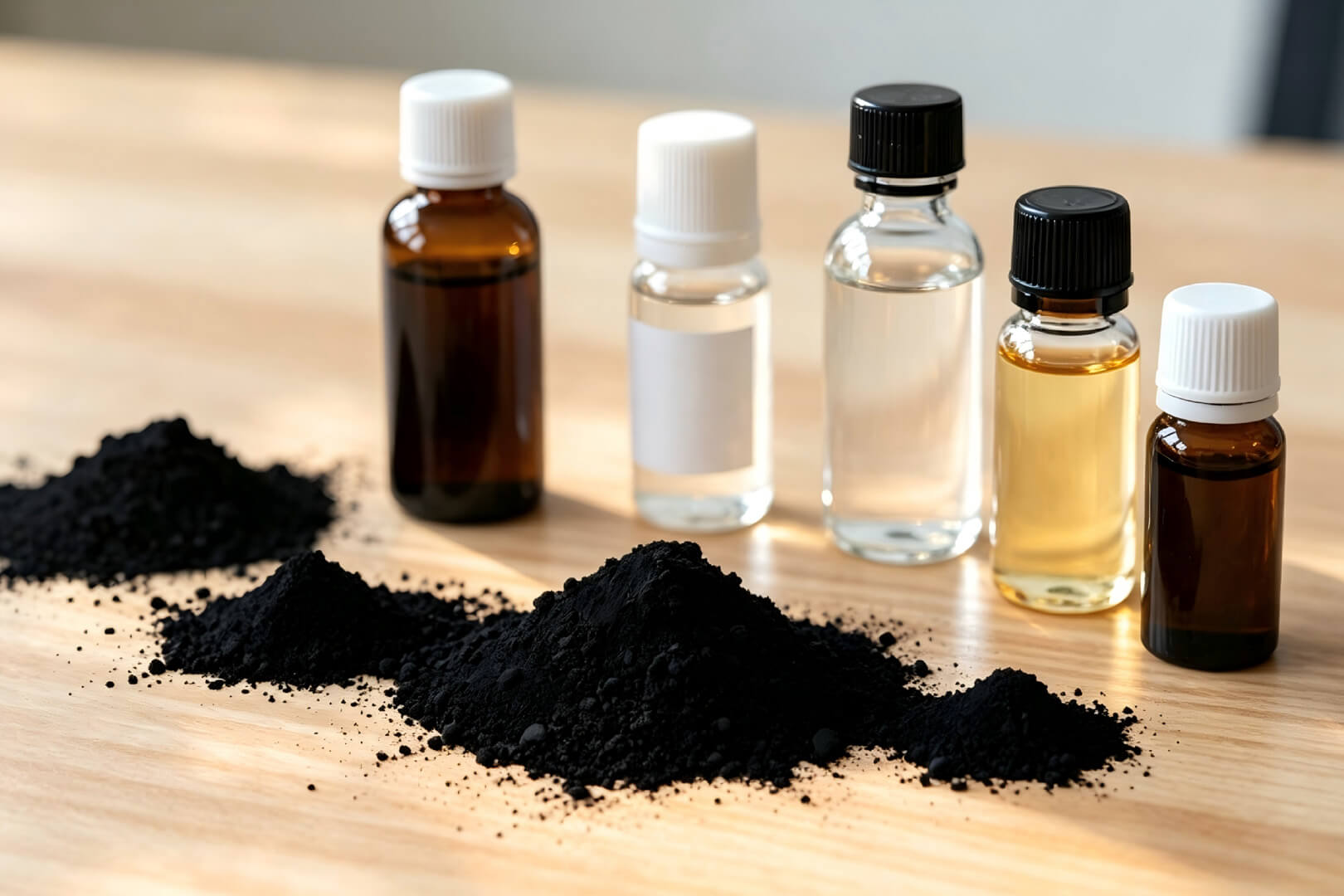
Organosilicon intermediates sit between basic silicon chemistry and finished high-performance materials. By selecting the silicon functionality, organic group, chain length and end group at the intermediate stage, formulators can control how a later silicone, coating, adhesive, sealant, composite or hybrid polymer is built and cured.
Eata Silicon supports specification-driven sourcing across four practical families: Siloxane Intermediates, Silicone Fluid Intermediates, Silane Oligomers and Organosilicon Prepolymers. The most useful inquiry starts with the reaction or formulation you want to run, then works backward to the functionality, molecular range, viscosity, purity profile and packaging conditions required by that process.
Four Intermediate Families, Four Different Roles
The term "organosilicon intermediate" covers materials with very different molecular sizes and processing behavior. A short disiloxane can act as a precise small-molecule building block, while a functional PDMS fluid or a silylated prepolymer is already much closer to the final binder or elastomer. Separating these families early makes product matching faster and avoids comparing materials only by a broad silicone label.
| Product Category |
What It Means |
Typical Material-Development Role |
| Siloxane Intermediates |
Low-molecular-weight Si-O-Si compounds, including hydride-, vinyl-, epoxy- and amino-functional structures |
Further organosilicon synthesis, functionalization, specialty formulation work |
| Silicone Fluid Intermediates |
Functional polysiloxane fluids selected by end group, side-group functionality and viscosity |
Addition cure, condensation cure, chain extension, resin modification and silicone formulation |
| Silane Oligomers |
Oligomeric or hydrolyzed silane systems with multiple silicon sites and organofunctional groups |
Adhesion, coating modification, filler treatment and lower-volatility coupling chemistry |
| Organosilicon Prepolymers |
Reactive polymers carrying silyl or siloxane functionality before final cure |
Moisture-curing adhesives, sealants, coatings, potting materials and hybrid binders |
 Fig. 1. Multiple organosilicon intermediate formats prepared for specification-driven material development.
Representative Products
| Category |
Representative Product / Search Term |
CAS / ID |
Technical Context |
| Siloxane Intermediates |
Hexamethyldisiloxane (HMDSO) |
107-46-0 |
Short-chain nonfunctional disiloxane; organosilicon processing and plasma-coating precursor chemistry |
| Siloxane Intermediates |
1,1,3,3-Tetramethyldisiloxane (TMDSO) |
3277-26-7 |
Hydride-bearing disiloxane building block for further organosilicon functionalization |
| Siloxane Intermediates |
1,3-Divinyltetramethyldisiloxane |
2627-95-4 |
Vinyl-functional disiloxane used in hydrosilylation-related silicone chemistry |
| Siloxane Intermediates |
1,3-Bis(glycidoxypropyl)tetramethyldisiloxane |
126-80-7 |
Epoxy-functional disiloxane intermediate for reactive resin and organosilicon development |
| Siloxane Intermediates |
1,3-Bis(3-aminopropyl)tetramethyldisiloxane |
2469-55-8 |
Amine-functional disiloxane intermediate for further synthesis and formulation work |
| Silicone Fluid Intermediates |
Silanol-terminated polydimethylsiloxane (PDMS) |
70131-67-8 |
Condensation-reactive telechelic silicone fluid; RTV and filler-treatment chemistry |
| Silicone Fluid Intermediates |
Vinyl-terminated polydimethylsiloxane (PDMS) |
68083-19-2 |
Vinyl-addition silicone base fluid; viscosity and vinyl content selected to formulation |
| Silicone Fluid Intermediates |
Hydride-terminated polydimethylsiloxane (PDMS) |
70900-21-9 |
Si-H telechelic fluid for chain extension and further functional silicone synthesis |
| Silicone Fluid Intermediates |
Amine-functional / epoxy-functional silicone fluids |
Family dependent |
Reactive fluid intermediates for resin modification, adhesion and specialty silicone systems |
| Silane Oligomers |
Diaminofunctional silane oligomers / oligosiloxanes |
Oligomeric mixture |
Multifunctional adhesion and coupling chemistry with reduced monomer volatility |
| Silane Oligomers |
Vinyl-functional siloxane oligomers |
Oligomeric mixture |
Mineral-filled polymer and peroxide-crosslinking applications |
| Silane Oligomers |
Aminoalkyl silane hydrolysate oligomers |
Formulation dependent |
Water-compatible oligomeric silane systems for surface and filler interaction |
| Organosilicon Prepolymers |
Silane-terminated polyether prepolymers |
Polymer family |
Moisture-curing binder platform for adhesives, sealants, coatings and potting compounds |
| Organosilicon Prepolymers |
Silane-terminated polyurethane prepolymers |
Polymer family |
Hybrid prepolymer platform combining silyl cure with polyurethane backbone properties |
Siloxane Intermediates: Small Molecules with Precise Reactivity
Siloxane intermediates contain a defined Si-O-Si unit but remain small enough to function as discrete chemical building blocks. Their value comes from the groups attached to silicon. A hydride-bearing disiloxane creates a route to hydrosilylation or additional functionalization; vinyl-functional structures participate in addition-cure chemistry; epoxy- and amino-functional disiloxanes provide organic reactivity while preserving a compact siloxane segment.
For procurement, the chemical name alone is not always enough. Purity, isomer profile, residual catalyst or chloride, water content, color and the analytical method can matter when the intermediate feeds a sensitive polymerization or electronic-material process. Customers working from a literature structure or an internal synthesis route should include the target CAS number or structure with the inquiry.
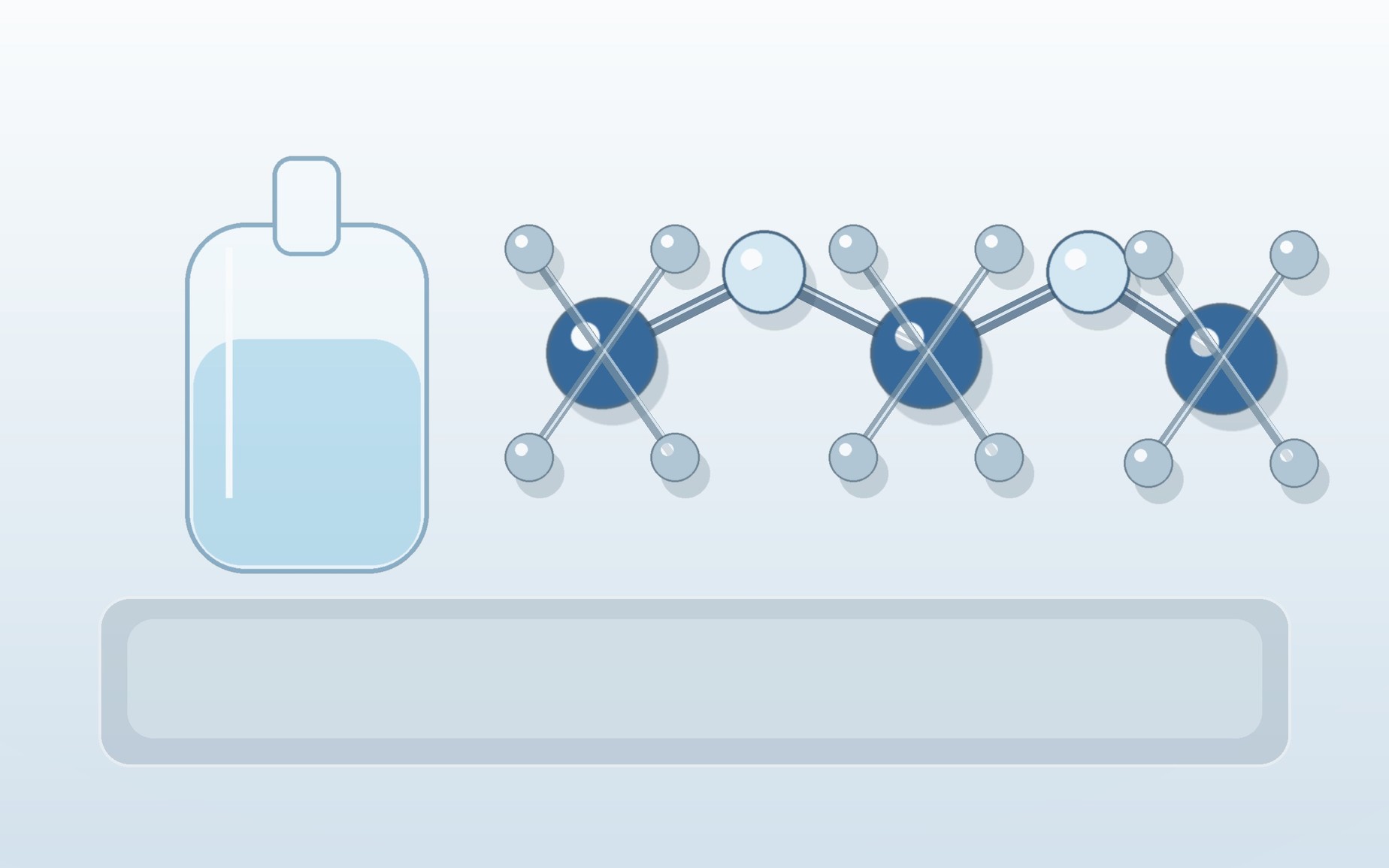 Fig. 2. Short-chain siloxane building block represented beside a sealed organosilicon liquid sample.
Silicone Fluid Intermediates: Choose the End Group Before the Viscosity
Functional silicone fluids are not interchangeable simply because they share a PDMS backbone. Silanol-terminated fluids are condensation-reactive and are widely used as intermediates for room-temperature-vulcanizing silicone systems. Vinyl-terminated PDMS is a standard base family for two-part addition-cure elastomers, while hydride-terminated PDMS can serve as a chain extender in vinyl-addition formulations and as an intermediate for functionally terminated silicones.
Viscosity then becomes a second design variable. Lower-viscosity grades simplify metering and can provide higher functional-group concentration at a given chemistry, while higher-molecular-weight fluids contribute more polymer backbone before cure. A useful RFQ therefore identifies both the reactive end group and a viscosity or molecular-weight window rather than asking for "silicone fluid" alone.
 Fig. 3. Precision capillary concept illustrating viscosity and flow behavior in functional silicone-fluid intermediates.
Silane Oligomers: More Silicon Sites, Lower Monomer Character
Silane oligomers and functional oligosiloxanes occupy the space between monomeric coupling agents and higher polymers. Commercial examples include diamino-functional oligosiloxanes, vinyl-alkyl siloxane oligomers and aqueous oligomeric aminoalkyl silane hydrolysates. Their multi-silicon architecture can change volatility, hydrolysis behavior, film formation and the number of reactive sites available at an inorganic or filler-rich interface.
These materials are especially relevant when a formulation needs organofunctional silane chemistry but the process benefits from an oligomeric form. The right choice depends on whether the target interaction is with glass, metal oxide, mineral filler or polymer, and whether the formulation is solvent-borne, water-borne or incorporated directly into a compound.
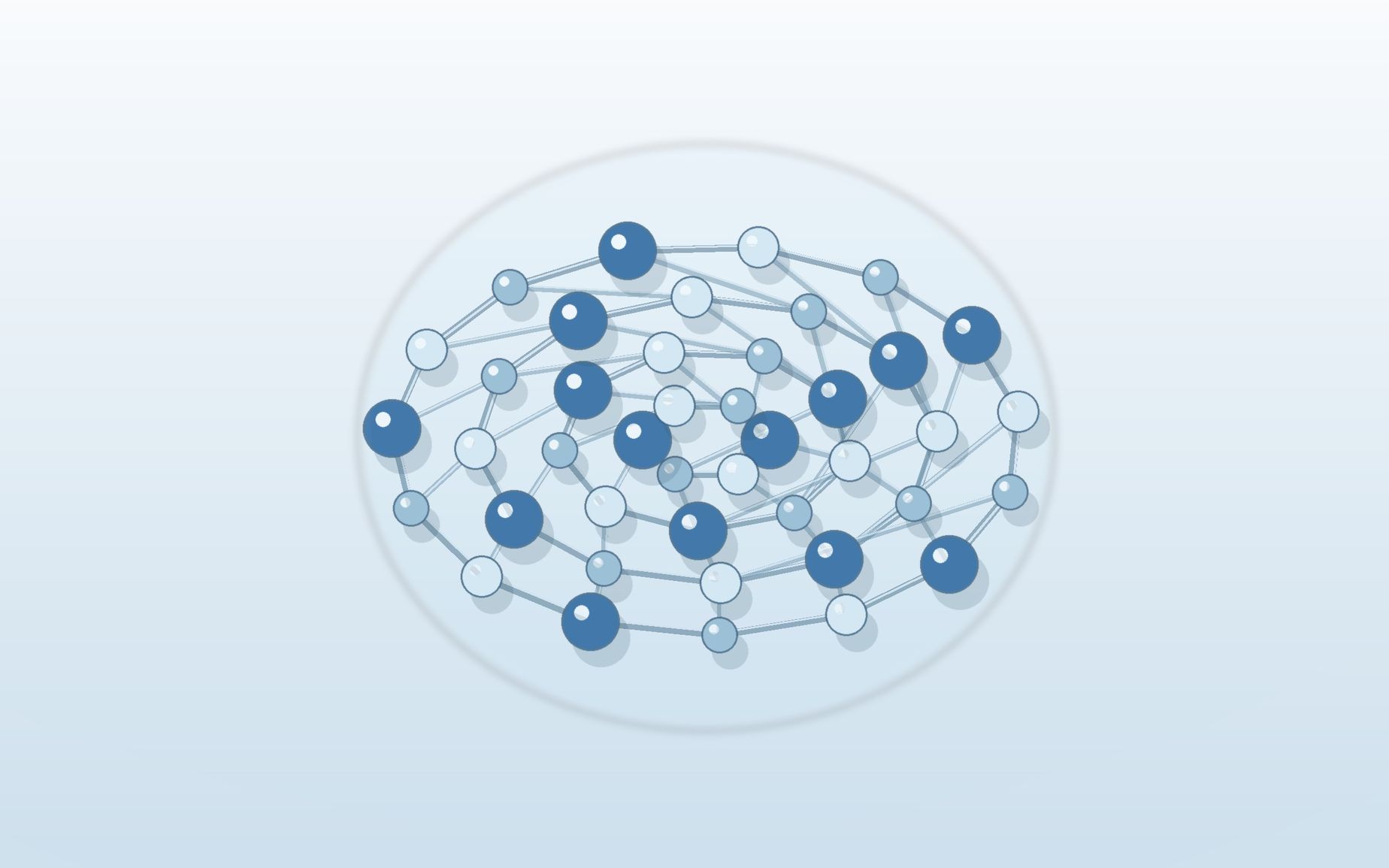 Fig. 4. Compact branched oligosiloxane architecture representing a functional silane oligomer.
Organosilicon Prepolymers: Reactive Binders Ready for Final Network Formation
Organosilicon prepolymers move the chemistry closer to the finished material. Silane-terminated polyethers and silane-terminated polyurethane prepolymers combine a flexible organic polymer backbone with moisture-reactive silyl end groups. On exposure to moisture under suitable formulation conditions, the terminal groups hydrolyze and condense to form siloxane links, converting a processable prepolymer into a crosslinked network.
The backbone chemistry, terminal silane structure, functionality, viscosity and cure package all affect the final balance of elasticity, adhesion, hardness and processability. This family is therefore best sourced from a performance brief rather than a single generic name. Tell us whether the target is an elastic sealant, structural adhesive, protective coating, potting material or another hybrid binder system and which properties are most critical.
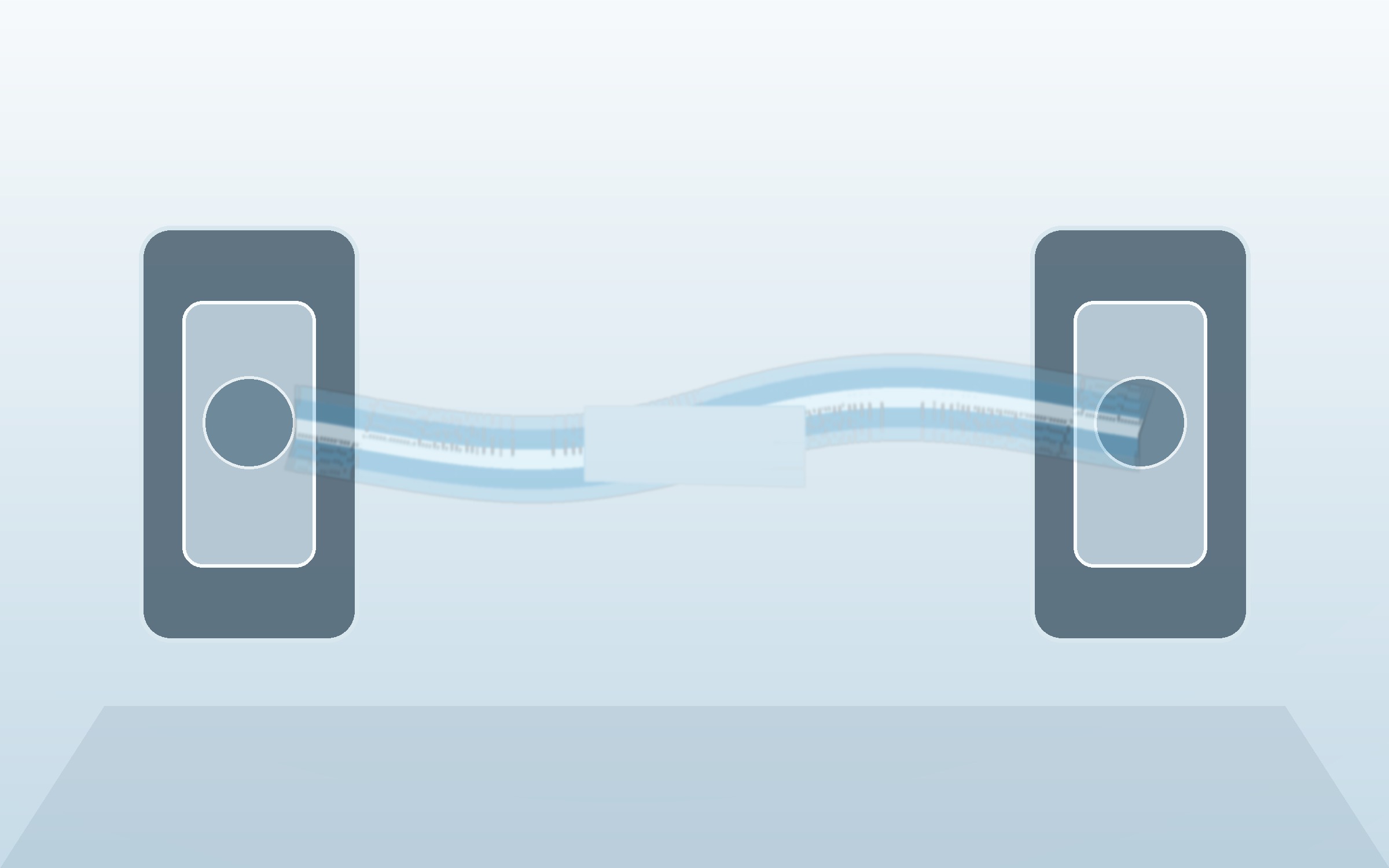 Fig. 5. Reactive organosilicon prepolymer represented as a high-viscosity strand under controlled extension.
How to Specify an Organosilicon Intermediate
| Decision Point |
What to Specify |
Why It Matters |
| Chemical family |
Siloxane, functional PDMS fluid, silane oligomer, silylated prepolymer |
Defines the molecular-size range and the type of chemistry being purchased. |
| Reactive functionality |
Si-H, vinyl, silanol, amino, epoxy, alkoxy, silyl-terminated or another group |
Determines the downstream reaction, cure route or interface interaction. |
| Molecular / rheology range |
Molecular weight, viscosity, degree of oligomerization or solids content |
Controls metering, mixing, functional-group concentration and final network architecture. |
| Purity and impurities |
Assay, water, residual catalyst, chloride, color, low-volatility or other critical limits |
Sensitive polymerization, electronic-material and coating processes may respond to trace components. |
| Process compatibility |
Solvent, resin, filler, substrate, catalyst system and processing temperature |
Helps screen out intermediates that look similar on paper but behave differently in the actual formulation. |
| Analytical requirements |
GC, NMR, viscosity, functional-group content, molecular-weight data or other requested tests |
Clarifies how acceptance will be evaluated for qualification and repeat purchasing. |
| Packaging considerations |
Moisture protection, headspace, container compatibility and pack-size preference |
Reactive silanes and functional silicones can require handling matched to their chemistry. |
Where Organosilicon Intermediates Fit in Advanced Materials
- Silicone elastomers and gels: vinyl-, hydride- and silanol-functional fluids provide the reactive backbone or chain-extension chemistry used to build silicone networks.
- Adhesives and sealants: silane oligomers and silylated prepolymers support moisture-curing binders, adhesion control and hybrid polymer design.
- Coatings and surface systems: functional siloxanes and oligomeric silanes can be incorporated into resin, primer, surface-treatment and protective-film programs.
- Composite and filler modification: organofunctional silicon chemistry is used to connect mineral, glass or oxide-rich phases with an organic polymer environment.
- Electrical and energy materials: silicone and hybrid systems are widely selected where dielectric behavior, environmental resistance, encapsulation or flexible bonding is part of the material design.
- Specialty synthesis: defined disiloxanes, functional silicone fluids and oligomeric silanes can serve as starting points for new organosilicon structures and project-specific intermediates.
Why Source Organosilicon Intermediates from Eata Silicon
- Chemistry-first matching: we organize the discussion around functional group, molecular range and downstream reaction instead of relying on a broad commercial label.
- Specification-led sourcing: purity, water, viscosity, functional-group content, critical impurities and requested analytical data can be reviewed against the actual process requirement.
- Coverage across molecular scales: small siloxanes, reactive silicone fluids, oligomeric silanes and prepolymer platforms can be evaluated within one technical sourcing conversation.
- Application-aware support: the same functionality can behave differently in a cable compound, coating, sealant, composite or encapsulant, so product selection is tied to the intended formulation route.
- Custom development option: when a standard structure or molecular range does not fit, related organosilicon structures and project-specific specifications can be evaluated.
When a standard product does not match the required reaction window, Eata Silicon can evaluate a customized organosilicon intermediate or project-specific specification. Requests may involve a different siloxane chain length, alternative reactive end group, defined functionality level, target viscosity or molecular range, lower water or impurity limits, an oligomeric form of a silane family, or a silylated prepolymer designed around a particular formulation objective.
For the most focused review, send the target structure or closest commercial analogue, the intended downstream reaction, resin or substrate, functional-group requirement, molecular-weight or viscosity range, purity and impurity limits, expected quantity and the analytical data needed for acceptance. We can then assess a suitable standard chemistry, a related analogue or a custom development route.
Discuss Your Organosilicon Intermediate Requirements with Eata Silicon
Share the chemistry, functionality, molecular range and downstream process you need, and we will evaluate a standard or customized material pathway for your project.
| Catalog Number |
Product Name |
Order |
Quantity |
|
ORM-0096 |
High-Purity 1,1,3,3-Tetramethyl-1,3-Divinyldisilazane, ≥99.0%
|
Inquiry
|
|
|
ORM-0097 |
2,2,4,4,6,6-Hexamethylcyclotrisilazane, CAS 1009-93-4
|
Inquiry
|
|
|
ORM-0098 |
Hexamethyldisilazane (HMDS), CAS 999-97-3
|
Inquiry
|
|
|
ORM-0099 |
Medium-Activity, Medium-High-Modulus Silane-Modified Polyether Polymer, Viscosity 45,000–55,000
|
Inquiry
|
|
|
ORM-0100 |
High-Activity Silane-Modified Polyether Polymer, Viscosity 40,000–50,000, Medium Modulus
|
Inquiry
|
|
|
ORM-0101 |
Medium-Modulus Silane-Modified Polyether Polymer, Viscosity 40,000–50,000, High Activity
|
Inquiry
|
|
|
ORM-0102 |
Medium-Activity, Medium-Modulus Silane-Modified Polyether Polymer, Viscosity 30,000–40,000
|
Inquiry
|
|
|
ORM-0103 |
High-Activity, Medium-Modulus Silane-Modified Polyether Polymer, Viscosity 35,000–45,000
|
Inquiry
|
|
|
ORM-0104 |
Medium-Activity Silane-Modified Polyether Polymer, Viscosity 10,000–15,000, Medium Modulus
|
Inquiry
|
|
|
ORM-0105 |
Silane-Modified Polyether Polymer, Viscosity 6,000–10,000, Medium Activity and Medium Modulus
|
Inquiry
|
|
For Research or Industrial Raw Materials, Not For Personal Medical Use!