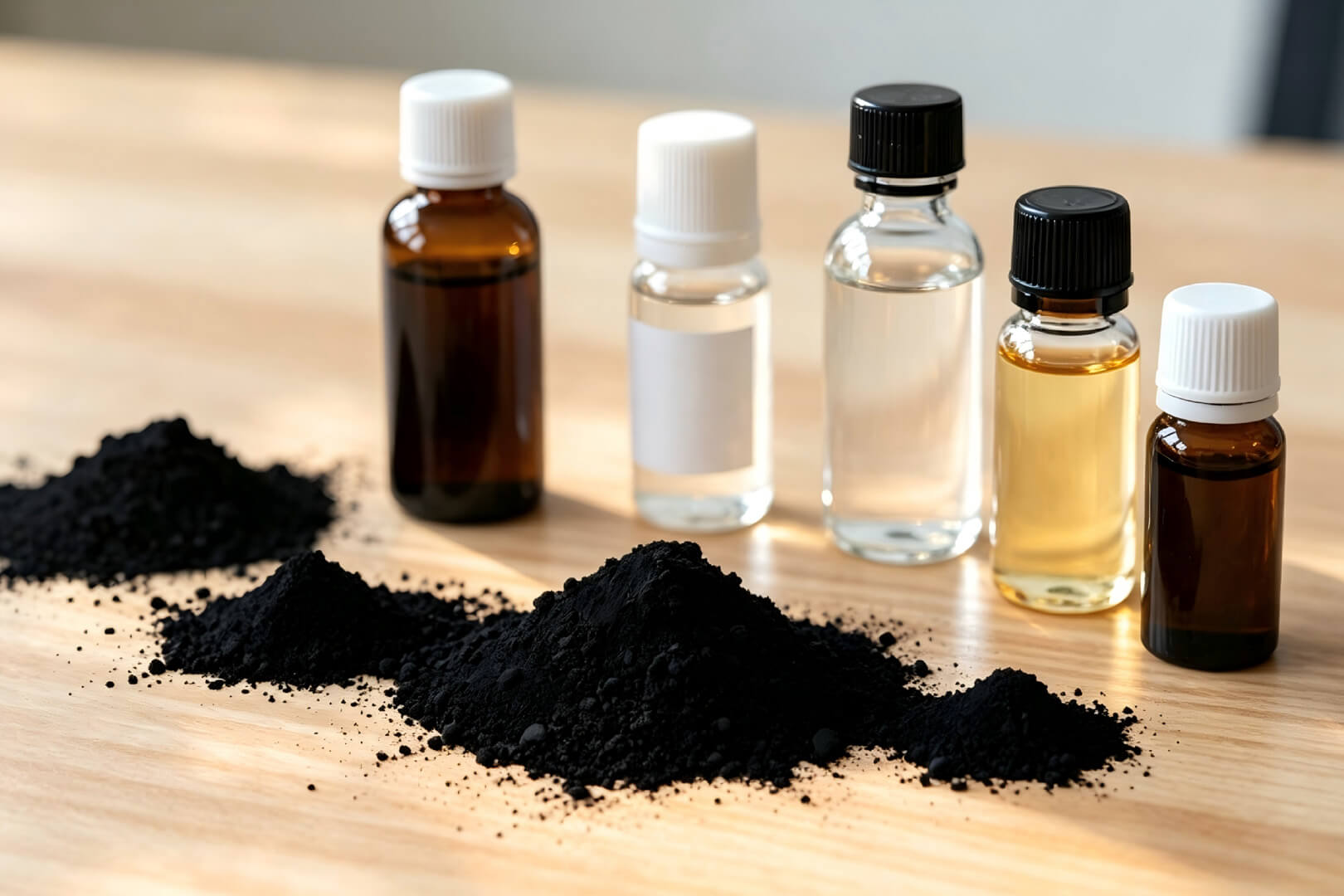
Organically bridged silicon materials are useful building blocks when the organic group needs to become part of a silicon-oxygen network, rather than remain only as a pendant surface group. A common precursor design contains two hydrolyzable silicon centers connected through an organic bridge, often represented in simplified form as (RO)3Si-R'-Si(OR)3. During hydrolysis and condensation, both silicon-bearing ends can participate in network formation while the bridge remains embedded in the resulting hybrid structure.
For material developers, that architecture opens a broad design space. Compact methylene and ethane bridges, unsaturated ethenylene or ethynylene bridges, aromatic phenylene units, and sulfur- or nitrogen-containing linkers have all been used to tune organosilica frameworks, sol-gel coatings, porous materials, membrane layers and interface chemistries. Eata Silicon supports product selection around the actual precursor identity, bridge chemistry, alkoxy group, purity targets and process requirements that matter to the formulation.
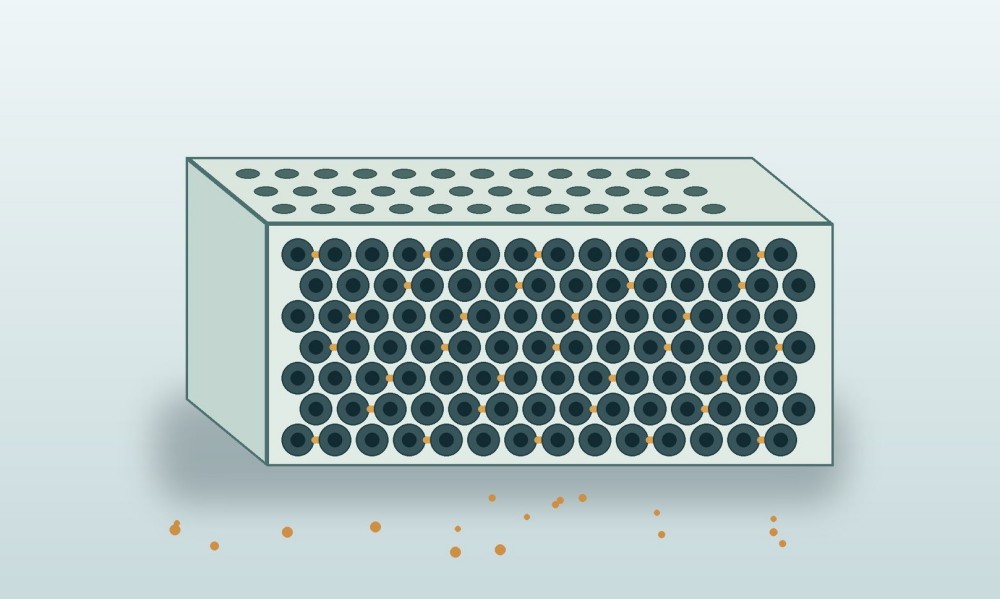 Fig. 1. Conceptual cross-section of a bridged organosilica framework in which organic linkers are built into the pore wall rather than added only as surface groups.
What Makes an Organically Bridged Silicon Precursor Different?
A conventional trialkoxysilane can attach one silicon center to an oxide-rich surface or enter a siloxane network through a single silicon-bearing end. A bridged or dipodal precursor provides two silicon-containing anchor points connected by an organic spacer. This does not guarantee a particular final property, but it gives formulators a different network geometry and more than one condensation site to work with.
The bridge itself is also a design variable. Its length, rigidity, polarity and chemical functionality influence how much organic character is built into the material and can affect hydrolysis/condensation behavior, network packing, pore-wall chemistry, solvent affinity, interfacial interactions and transport behavior. The final result still depends on precursor ratio, water content, catalyst, pH, solvent, template, cure history and substrate, so selection should be made in the context of the actual process.
Bridge Chemistry as a Material-Design Lever
| Bridge Family |
Structural Character |
Typical Development Direction |
| Methylene / ethane |
Compact aliphatic spacing between silicon centers |
Benchmark bridged sol-gel networks, PMO synthesis, coatings and hybrid silica development |
| Longer alkylene |
Higher organic fraction and a more extended hydrocarbon spacer |
Surface-interaction studies, flexible hybrid networks and hydrophobicity-oriented formulation work |
| Ethenylene / ethynylene |
Unsaturated and more geometrically constrained bridges |
Microporous organosilica membrane and molecular-transport research |
| Phenylene / aromatic |
Rigid aromatic bridge incorporated into the framework wall |
Aromatic PMOs, porous hybrid solids and electronically or optically oriented materials research |
| Disulfide / sulfur-bearing |
Sulfur-containing linker between silicon-bearing ends |
Functional organosilica, surface coupling and chemically responsive hybrid-network concepts |
| Amine / urea / nitrogen-bearing |
Polar or coordinating nitrogen-containing bridge chemistry |
Functional surfaces, adsorption or coordination studies, and tailored hybrid interfaces |
 Fig. 2. Unlabeled liquid precursor concept representing bis-alkoxysilane building blocks before hydrolysis and condensation.
Representative Materials
| Representative Materials |
CAS No. |
Bridge Type |
Material Development Relevance |
Keywords |
| Bis(triethoxysilyl)methane |
18418-72-9 |
Methylene |
Compact bridged sol-gel and PMO precursor |
BTESM; methylene-bridged organosilica |
| 1,2-Bis(trimethoxysilyl)ethane |
18406-41-2 |
Ethane / methoxy |
Alternative alkoxy format for ethane-bridged networks |
BTMSE; ethane-bridged silane |
| 1,2-Bis(triethoxysilyl)ethane |
16068-37-4 |
Ethane / ethoxy |
Widely documented PMO, sol-gel, coating and mesoporous precursor |
BTESE; BTEE; ethane PMO precursor |
| 1,2-Bis(triethoxysilyl)ethylene |
87061-56-1 |
Ethenylene |
Studied in microporous organosilica membrane systems |
BTESEthy; ethenylene-bridged organosilica |
| Bis(triethoxysilyl)acetylene |
17947-91-0 |
Ethynylene / acetylene |
Rigid unsaturated bridge for porous organosilica frameworks |
BTESA; acetylene-bridged organosilica |
| 1,4-Bis(triethoxysilyl)benzene |
2615-18-1 |
p-Phenylene |
Aromatic framework precursor used in PMO chemistry |
BTEB; phenylene-bridged PMO precursor |
| Bis[3-(triethoxysilyl)propyl] disulfide |
56706-10-6 |
Disulfide |
Sulfur-bearing dipodal silane for functional hybrid networks and interfaces |
TESPD; disulfide bridged silane |
| N,N'-Bis[(3-trimethoxysilyl)propyl]ethylenediamine |
68845-16-9 |
Amine-rich organic bridge |
Nitrogen-functional dipodal precursor for hybrid surface and network chemistry |
bis-silyl diamine; amine bridged silane |
Where Organically Bridged Silicon Materials Fit
1. Periodic Mesoporous Organosilicas and Ordered Porous Networks
Bridged bis-silyl precursors are central to periodic mesoporous organosilica (PMO) chemistry because the organic group can be incorporated directly into the pore wall. Ethane-, phenylene- and other bridge chemistries have been reported in ordered mesoporous structures. The precursor, surfactant or block-copolymer template, acidity, solvent composition and aging conditions all affect whether an ordered mesophase is obtained; simply using a bridged silane does not by itself create a PMO.
2. Sol-Gel Hybrids, Primers and Protective Interfaces
Ethane-bridged bis-silanes are documented in sol-gel processing and in corrosion-resistant coating or primer concepts for metal substrates. In this type of formulation, bridge geometry, hydrolysis rate, water-to-silane ratio, catalyst and compatibility with the organic binder or substrate can matter as much as nominal purity. Bridged precursors can also be blended with conventional coupling silanes when the design calls for both interfacial functionality and a more highly connected siloxane-rich layer.
 Fig. 3. Microporous organosilica membrane concept showing molecular transport through a bridge-tuned inorganic-organic network.
3. Organosilica Membranes and Molecular Transport
Ethane-, ethenylene- and acetylene-bridged organosilica membranes have been investigated because changing the bridge alters framework geometry and the chemical environment experienced by permeating molecules. Published work links bridge selection with differences in effective pore size, water affinity and gas or liquid separation behavior. For sourcing, the useful question is therefore not just whether a material is a bis-silane, but which bridge geometry best matches the intended membrane chemistry and sol-gel route.
4. Functional Porous Solids, Adsorption and Catalytic Supports
A bridge can carry chemical functionality into the body of an organosilica material instead of placing all functionality only on the external surface. Aromatic, sulfur-containing and nitrogen-containing linkers are relevant when researchers want to study pore-wall polarity, adsorption, coordination, host-guest interactions or post-synthetic modification. Performance depends on accessible pore structure and functional-group density, not simply the presence of the heteroatom in the precursor name.
5. Dielectric, Microelectronic and Advanced Hybrid-Film Development
Supplier technical literature places selected bridged silanes among precursor options for microelectronic and dielectric materials. In hybrid-film development, the organic bridge can be used to tune network composition while retaining silicon-oxygen connectivity. Film thickness, solvent choice, cure schedule, residual content and substrate interaction should be specified alongside the precursor identity when the goal is a reproducible thin layer.
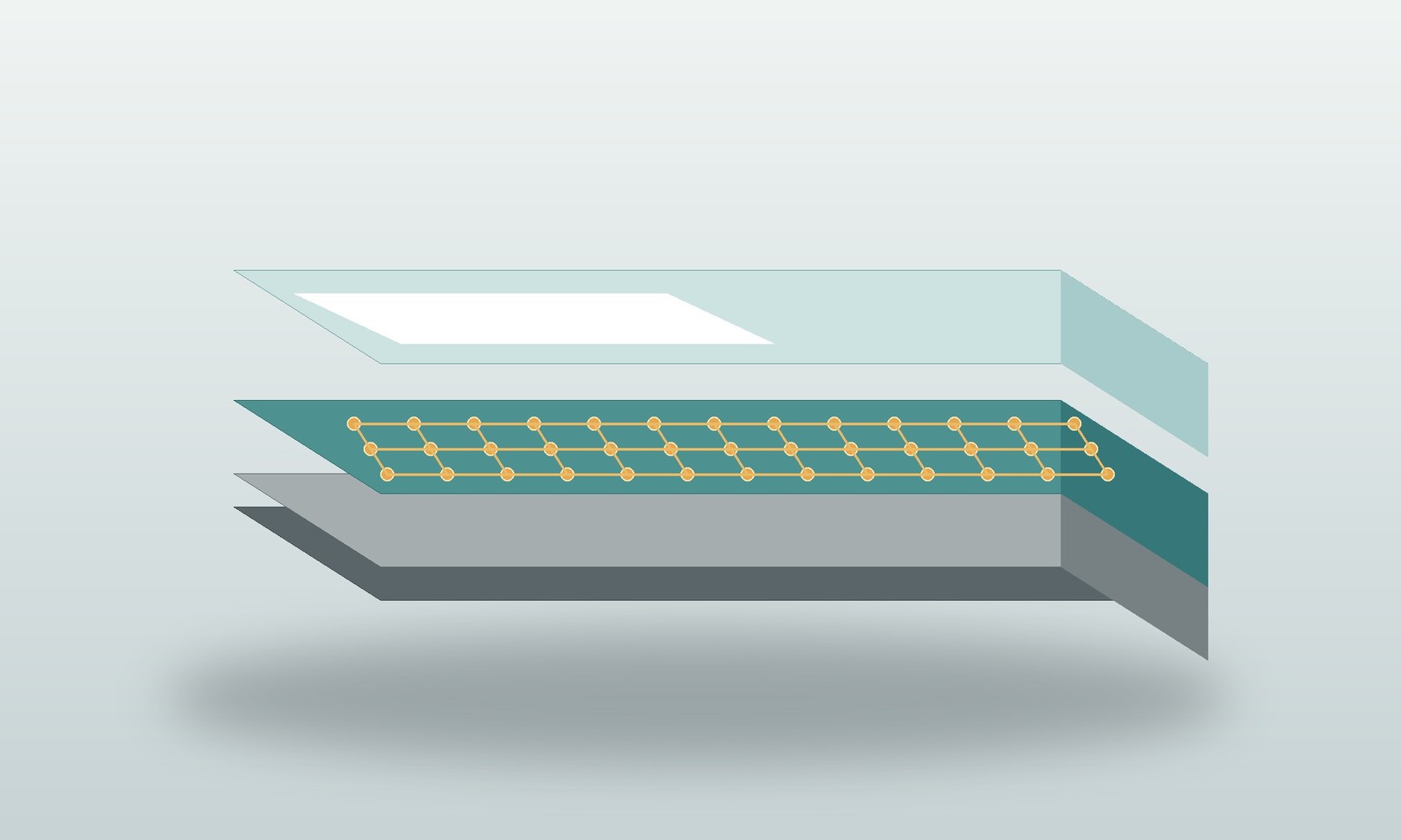 Fig. 4. Layered metal-coating concept with an organically bridged siloxane-rich interphase beneath a protective top layer.
How to Select the Right Bridged Silicon Raw Material
| Decision Point |
What to Define |
Why It Matters |
| Bridge identity |
Methylene, ethane, longer alkylene, ethenylene, ethynylene, phenylene, disulfide, amine/urea or another functional linker |
Sets geometry and chemical character of the organic segment built into the network. |
| Alkoxy group |
Methoxy, ethoxy or a mixed hydrolyzable pattern |
Changes precursor identity and can affect hydrolysis/condensation behavior and process compatibility. |
| Silicon functionality |
Number and type of hydrolyzable groups on each silicon center |
Determines how many condensation pathways are available in the network or at an oxide interface. |
| Analytical specification |
Assay, water, residual solvent, color and selected ionic or metal impurities where relevant |
Supports reproducibility in moisture-sensitive sol-gel and thin-film processes. |
| Physical form |
Neat liquid, solution, solid or custom concentration where technically feasible |
Influences dosing, solvent balance, storage approach and formulation sequence. |
| Process conditions |
Solvent, catalyst, pH, water ratio, template, cure or aging conditions |
The same precursor can lead to very different structures under different processing histories. |
| Application target |
PMO, membrane, coating, porous support, surface coupling, dielectric film or hybrid composite |
Keeps the selection tied to a measurable materials-development objective. |
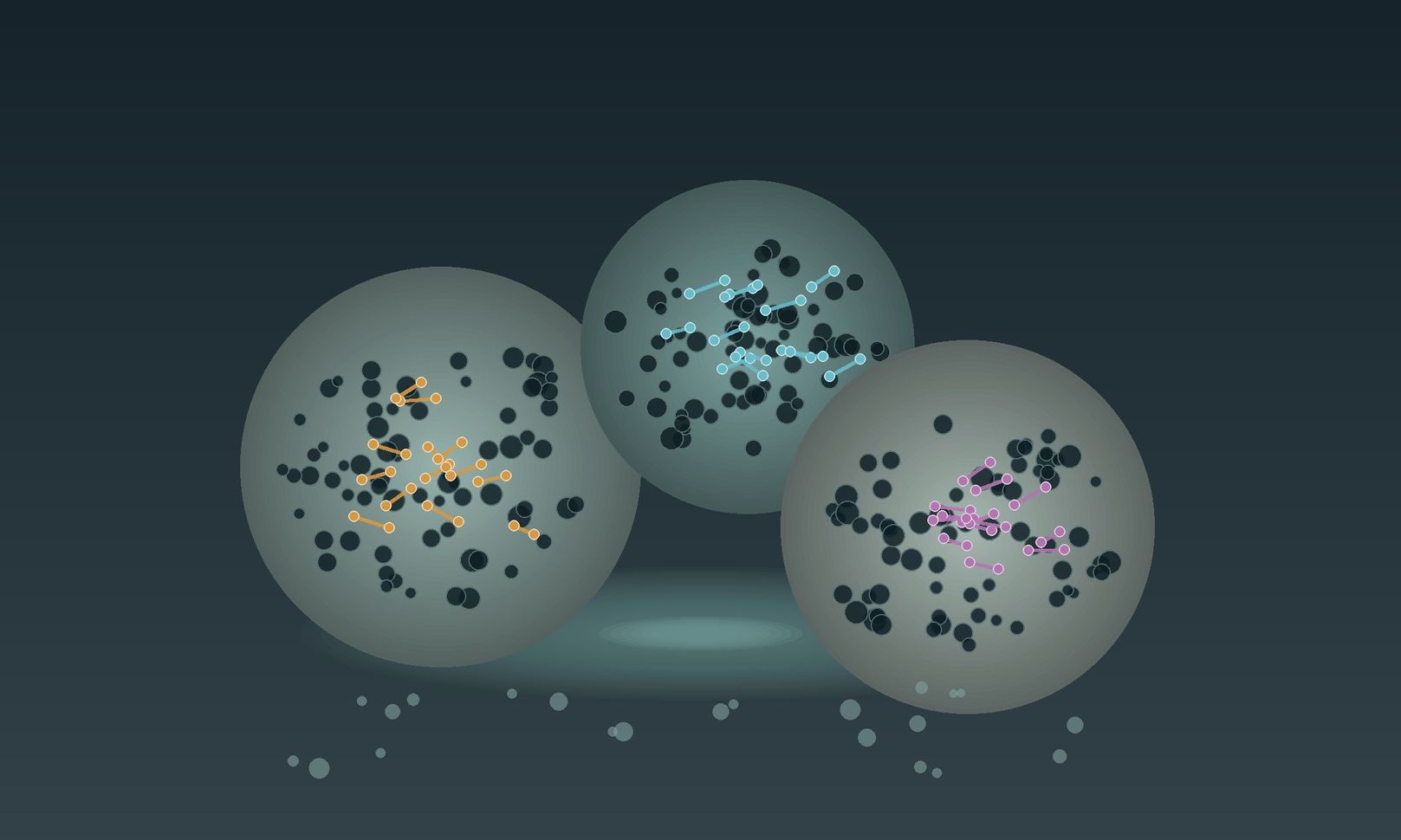 Fig. 5. Porous organically bridged silica domain concept highlighting how different bridge chemistries can be designed into the same framework family.
When a standard catalog material does not match the bridge chemistry, alkoxy pattern or analytical window required by a project, Eata Silicon can evaluate customized product requests. Depending on technical feasibility, customization may focus on precursor structure, functional bridge design, assay or composition target, moisture and residual controls, selected impurity limits, physical form, solvent system, concentration and packaging.
For the most productive discussion, share the target structure or closest published reference, the intended material platform, critical process conditions and the specifications that determine whether the material works in your formulation. We can then review a standard option, a close chemical analogue or a custom development path.
Discuss your Organically Bridged Silicon Materials requirement with Eata Silicon - send the target chemistry, application and critical specification points for review.
| Catalog Number |
Product Name |
Order |
Quantity |
|
OHS-SHM-0061 |
1,2-Bis(triethoxysilyl)ethane, 97%
|
Inquiry
|
|
|
OHS-SHM-0062 |
1,3-Bis(4-hydroxybutyl)tetramethyldisiloxane, 92%
|
Inquiry
|
|
|
OHS-SHM-0063 |
1,8-Bis(triethoxysilyl)octane
|
Inquiry
|
|
|
OHS-SHM-0064 |
Bis(trimethoxysilylethyl)benzene
|
Inquiry
|
|
|
OHS-SHM-0065 |
Bis(3-trimethoxysilylpropyl)amine, 96%
|
Inquiry
|
|
|
OHS-SHM-0066 |
N,N'-Bis[(3-trimethoxysilyl)propyl]ethylenediamine, 95%
|
Inquiry
|
|
|
OHS-SHM-0067 |
1,3-Bis(hydroxypropyl)tetramethyldisiloxane, 95% Technical Grade
|
Inquiry
|
|
|
OHS-SHM-0068 |
1-[3-(2-Aminoethyl)-3-aminoisobutyl]-1,1,3,3,3-pentaethoxy-1,3-disilapropane, 95%
|
Inquiry
|
|
|
OHS-SHM-0069 |
N,N'-Bis(3-trimethoxysilylpropyl)urea, 95%
|
Inquiry
|
|
|
OHS-SHM-0070 |
Bis[3-(triethoxysilyl)propyl] Tetrasulfide, 95% Technical Grade
|
Inquiry
|
|
For Research or Industrial Raw Materials, Not For Personal Medical Use!