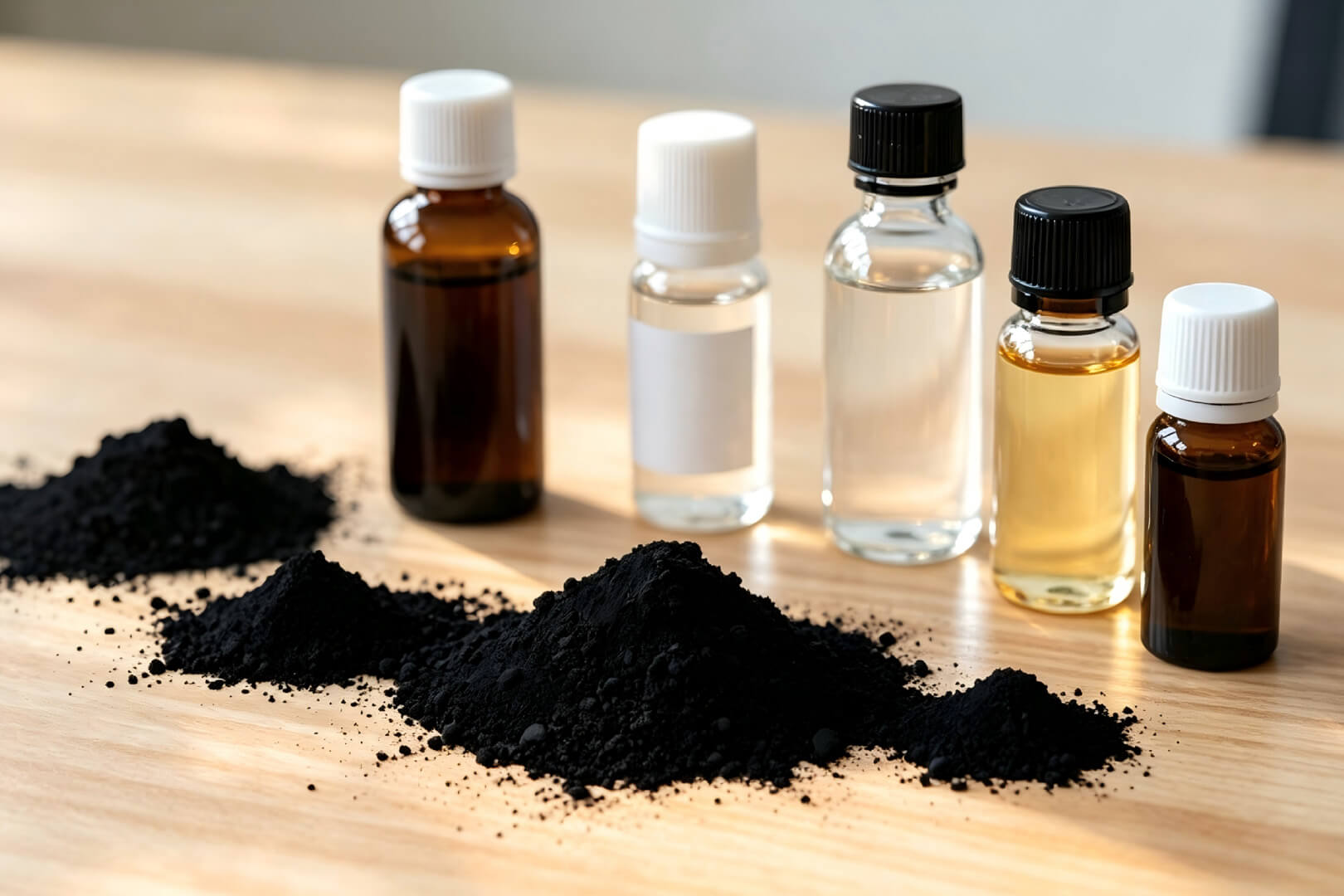
When a molded part hangs in the tool, two coated surfaces stick together, or a tacky web refuses to separate cleanly, the problem is usually concentrated at the interface. Eata Silicon supplies silicone-based raw materials designed to lower unwanted adhesion, improve slip and create more predictable separation in industrial formulations and processing systems.
Product Categories
Choose the chemistry around the interface you need to control. Each category can be refined by carrier system, viscosity, substrate, temperature and downstream finishing requirements.
Silicone chemistry is especially useful for release work because low surface tension helps the material spread over many substrates, while the siloxane backbone offers useful thermal and oxidative stability. The practical result is not simply "more slip." A well-chosen additive can lower release force, reduce sticking and mold build-up, support cleaner surfaces and, in selected modified-silicone systems, preserve downstream printing, painting or bonding performance.
Why Silicone Chemistry Works at the Release Interface
- Low surface energy supports non-stick behavior and easier separation between contacting surfaces.
- Good wetting and spreading help a thin release layer cover complex or finely detailed mold surfaces.
- Silicone fluids, emulsions, resins and organomodified silicones give formulators multiple ways to balance mobility, durability, compatibility and application method.
- Heat resistance and oxidation resistance make silicone release chemistry useful in demanding industrial processing windows.
- Modified silicone structures can be selected when surface appearance, printability, paintability, recoating or low residue are important after release.
 Silicone fluid architecture can be tuned to balance spreading, lubrication and release.
Three Routes to Control Sticking
1. Silicone Release Agents
Silicone release agents are useful wherever an interface needs a controlled non-stick character rather than permanent adhesion. Depending on the system, the active material may be supplied as a neat silicone fluid, a water-dilutable emulsion, a resin-containing release formulation or a curable silicone coating. Typical targets include release liners, process papers and films, rollers, extrusion or fabrication equipment, and general industrial surfaces where smoother separation or lower friction is required.
For release-liner and coated-substrate work, the formulation question extends beyond initial peel force. Anchorage to the backing, migration, cure behavior, coating uniformity and release consistency at different peel speeds can all influence the finished construction. For non-curing process aids, wetting, film continuity, transfer and ease of cleaning may matter more.
2. Silicone Mold-Release Agents
Mold release is a more demanding version of the same interfacial challenge: the additive must help the molded article leave the tool with minimal damage while avoiding excessive residue or build-up. Silicone fluids and emulsions are widely used for rubber and plastic molding, while modified silicones are valuable when the molded surface will later be printed, painted, plated, bonded or otherwise finished.
Eata Silicon product data includes long-chain alkyl-modified and alkyl-phenyl-modified silicone fluids covering multiple viscosity profiles from approximately 600 to 4,500 mm²/s. The source data describes these materials as having useful lubricity, release behavior, hydrophobicity, compatibility and printability, making them relevant for mold-release and lubrication duties where the downstream surface still matters.
 Clean separation matters where molded surfaces must remain consistent for later finishing.
3. Silicone-Based Anti-Blocking Agents
Blocking is the unwanted adhesion that develops when two film, sheet or coated surfaces remain in contact under pressure, temperature or storage conditions. Silicone-based anti-blocking additives address this from the surface side: by changing surface energy, slip and interfacial mobility, they can reduce the tendency of opposing faces to grip each other.
In coatings, silicone polyether surface modifiers are commonly evaluated when the formulation needs a combination of wetting, slip, leveling and anti-blocking performance. Silicone-resin emulsion additives can also contribute to anti-block characteristics in selected aqueous coating systems. The best chemistry depends on whether the priority is low blocking force, clarity, recoating, printability, scratch response, coefficient of friction or a balance among several of these properties.
 Anti-blocking performance is an interfacial design problem, not simply a particle-loading question.
Product and Raw-Material Options
| Material / Chemistry |
Typical Form |
Performance Focus |
Keywords |
| Polydimethylsiloxane (PDMS) release fluid |
Neat fluid or emulsion |
Low surface energy, spreading, lubricity and clean separation |
Silicone release agent; rubber/plastic release; process lubrication; mold-release emulsion |
| Water-dilutable silicone release emulsion |
Aqueous emulsion |
Easy incorporation and adjustable application concentration |
Water-based mold release; polyurethane release; rubber molding; general industrial release |
| Alkyl-modified / alkyl-aryl silicone fluid |
Modified silicone fluid or emulsion |
Release plus lubricity, compatibility and improved downstream finish options |
Paintable mold release; printable release fluid; die-casting release; difficult-to-machine metal lubrication |
| Silicone resin / resin-modified release system |
Coating or concentrate |
Durable parting film and repeated release potential |
Release coating additive; high-temperature mold release; repeated-release system |
| Silicone polyether surface modifier |
100% active or solution |
Slip, wetting, leveling and anti-blocking support |
Silicone anti-blocking additive; slip additive; coating surface modifier; film anti-stick additive |
| Silicone resin emulsion surface additive |
Aqueous emulsion |
Anti-block character with surface and water-repellency modification |
Aqueous coating anti-block additive; silicone resin emulsion; surface-control additive |
Eata Silicon Modified Silicone Release-Fluid Window
Current source data for the alkyl-modified mold-release family shows a broad viscosity window rather than a single universal grade. This lets formulators compare lower-viscosity options for spreading and application behavior with higher-viscosity profiles where film persistence and lubricity are more important.
| Chemistry Profile |
Viscosity at 25°C (mm²/s) |
Volatile Matter (150°C / 3 h) |
Refractive Index |
| Long-chain alkyl-modified silicone fluid |
800–1,200 |
≤1% |
1.453–1.455 |
| Alkyl-phenyl-modified silicone fluid |
1,200–1,400 |
<1% |
1.465–1.4675 |
| Alkyl-phenyl-modified silicone fluid |
1,500–1,900 |
<1% |
1.4655–1.4675 |
| Alkyl-phenyl-modified silicone fluid |
1,700–2,000 |
<3% |
1.476–1.480 |
| Alkyl-phenyl-modified silicone fluid |
600–900 |
<10% |
1.475–1.485 |
| Alkyl-phenyl-modified silicone fluid |
3,500–4,500 |
<3% |
1.502–1.510 |
| Alkyl-phenyl-modified silicone fluid |
1,100–1,800 |
<3% |
1.465–1.475 |
| Alkyl-phenyl-modified silicone fluid |
1,000–1,500 |
<5% |
1.465–1.480 |
| Alkyl-phenyl-modified silicone fluid |
1,000–1,800 |
≤3% |
1.460–1.465 |
Where These Additives Create Value
 Controlled slip and reduced face-to-face adhesion support smoother film and sheet handling.
| Application Area |
What the Additive Is Asked to Do |
Keywords |
| Plastic & rubber molding |
Reduce adhesion to tooling, improve wetting of complex mold geometry and support cleaner demolding. |
silicone mold release agent; rubber mold release; plastic release fluid |
| Polyurethane molding |
Create a stable release interface for molded PU components while controlling application concentration and surface transfer. |
polyurethane release agent; water-based silicone release emulsion |
| Die casting & metal forming |
Improve separation and lubricity at metal/tool interfaces while considering heat exposure and finish requirements. |
die casting release additive; paintable silicone release; metal mold release |
| Release liners, tapes & labels |
Create a controlled non-stick coating while balancing anchorage, cure and release force. |
silicone release coating; release liner silicone; easy-release additive |
| Films, sheets & coatings |
Reduce blocking, improve slip and help opposing surfaces separate during stacking, winding or conversion. |
silicone anti-blocking agent; film anti-stick additive; coating slip additive |
| Industrial process surfaces |
Provide controlled slipperiness or release on rollers, guides, fabricated surfaces and other contact points. |
silicone process aid; release lubricant; low surface energy additive |
How to Select a Release or Anti-Blocking Additive
A useful starting point is to define what "good release" means in the actual process. A formulation that gives the lowest possible release force is not automatically the best choice if it transfers to the molded part, interferes with recoating or creates excessive slip elsewhere in the line. The following questions help narrow the chemistry before laboratory screening:
- What are the two surfaces that must separate: mold and polymer, adhesive and liner, film and film, coating and tooling, or another interface?
- Is the system waterborne, solventborne, solvent-free, or intended for direct use as a silicone fluid?
- Does the process favor rapid spreading or a more persistent release film?
- What temperature and mechanical stress will the release layer experience?
- How sensitive is the finished surface to residue, migration, haze, gloss change or cratering?
- Will the released surface later be printed, painted, bonded, laminated or coated?
- For films and coatings, is anti-blocking required together with controlled coefficient of friction, scratch resistance or clarity?
- Does the process need a single-use release effect or repeated release over multiple cycles?
 Release-layer chemistry helps tune adhesion at interfaces used in labels, tapes and process liners.
Formulation Paths for Different Processing Needs
For fast application and straightforward dilution, a silicone emulsion can be a practical route. Where a solvent or water carrier is undesirable, neat silicone fluids or solventless systems may be evaluated. If repeated release or a more durable non-stick surface is required, resin-containing or curable silicone release coatings provide another design path. For anti-blocking in coatings, organomodified silicone surface additives can be screened alongside the base resin and other surface-active components so that slip, leveling and recoatability remain in balance.
This is why grade selection should be based on the finished formulation rather than on a single property in isolation. Small changes in silicone structure, molecular weight, organic modification, emulsion design or active content can materially change how the additive wets, migrates and interacts with the surrounding resin or substrate.
Not every release problem fits a standard additive. Eata Silicon can work with customers on customized silicone raw-material options and formulation targets, including viscosity windows, modified-silicone structure, carrier system, active-content level and application-specific performance priorities. Share your substrate, process conditions and the surface requirements that matter most; we can use those parameters to narrow the most relevant chemistry for laboratory evaluation and industrial development.
For sourcing discussions, useful keywords include silicone release agent, silicone mold-release fluid, alkyl-modified silicone release oil, silicone emulsion release agent, paintable mold release additive, release coating silicone, silicone anti-blocking agent, silicone slip additive, silicone polyether surface modifier and anti-block additive for films and coatings.
For Research or Industrial Raw Materials, Not For Personal Medical Use!