No single material wins on every axis – the metal that resists heat is heavy, the ceramic that is light shatters, the insulator that stops heat crumbles. Composites exist to break those trade-offs, and silicon's inorganic family – silicon carbide, silica, silicon nitride, the silicides – provides some of the most capable building blocks on the periodic table. Woven into ceramic matrices, silicon carbide fibers now fly inside the world's best-selling jet engines; blended with carbon, silicon powders are rewriting what a battery anode can store; felted with glass fiber, silica aerogel insulates pipelines at a fraction of the usual thickness.
Eata Silicon supplies those raw materials: continuous and chopped SiC fibers, single-crystal whiskers, silicon-carbon anode composites, fiber-reinforced aerogel blankets, quartz fiber reinforcements, and the powders that bind them together. Whether you are densifying a ceramic matrix or qualifying a new anode formulation, the sections below map each family to its numbers – and every line can be tailored through our custom service.
Browse Our Products
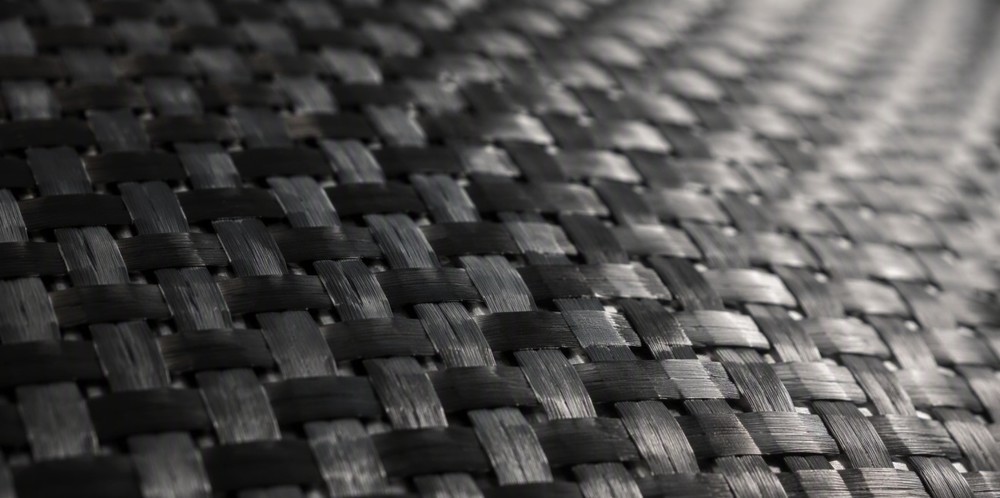 Woven silicon carbide fiber: the skeleton of a ceramic matrix composite.
SiC/SiC Ceramic Matrix Composites: Reinventing the Turbine Hot Section
The strongest endorsement any composite ever received came from the aero-engine industry. SiC fiber-reinforced SiC ceramic matrix composites (CMCs) weigh about one-third of the nickel superalloys they replace – a 50% weight saving on hot-section hardware – while offering temperature capability of roughly 2,700–3,000 °F. GE and Safran's LEAP engine and the GE9X, the largest aircraft engine yet built, already fly CMC shrouds, combustor liners, and nozzles; melt-infiltrated SiC/SiC grades deliver compressive strengths above 1,000 MPa with interlaminar strengths over 100 MPa, and land-based power turbines are adopting the same parts for the same reasons: more efficiency, less cooling air, lower emissions.
The architecture is what makes a ceramic behave like something tougher. Continuous SiC fiber tows are woven into 2D or 3D preforms, coated with a deliberately weak interphase – typically boron nitride or pyrolytic carbon – and then densified with a SiC matrix. When a crack runs, the interphase lets fibers debond, bridge, and pull out, absorbing energy that would shatter a monolithic ceramic. Three routes fill the matrix around the fibers:
| Route |
How It Works |
Character |
| CVI – chemical vapor infiltration |
Gaseous precursors deposit SiC inside the preform over weeks |
High purity, low processing stress; residual porosity around 10–15% |
| PIP – polymer infiltration & pyrolysis |
Preform soaked in preceramic polymer, pyrolyzed, repeated for density |
Near-net-shape, moderate cost; shrinkage porosity needs many cycles |
| MI – melt infiltration |
Molten silicon wicks into the preform and reacts to form dense SiC |
Densist and fastest route; high thermal conductivity – the aero-engine standard |
Every route begins with the fiber, and fiber quality – stoichiometry, oxygen content, sizing, tow architecture – sets the ceiling for everything downstream. That is where our supply starts.
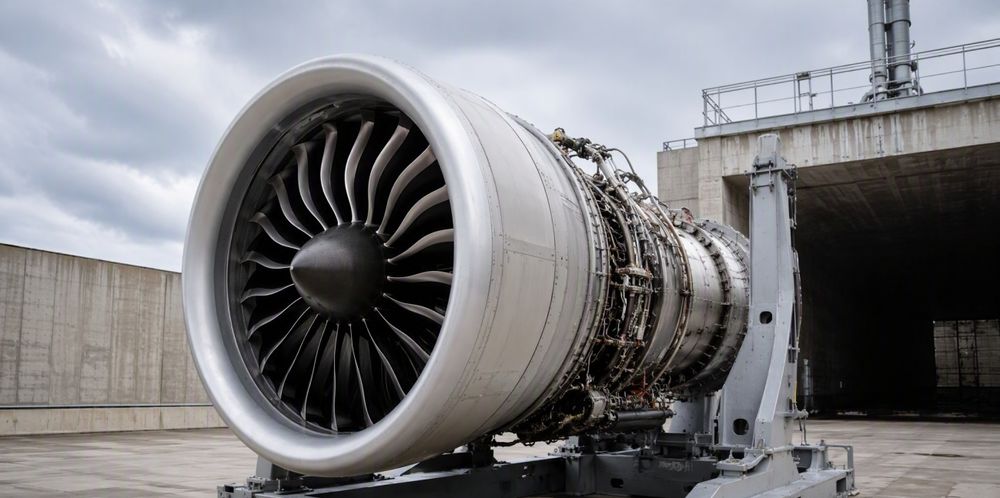 Modern turbine hot sections now run on SiC/SiC composites.
Silicon-Carbon Anode Composites: Packing Ten Times the Lithium
Graphite anodes have served lithium-ion batteries for three decades, but they are pressed against their theoretical ceiling of 372 mAh/g. Silicon stores roughly ten times more lithium – a theoretical 3,500–4,200 mAh/g – and pays for it with a notorious flaw: around 300% volume expansion on lithiation, enough to pulverize particles and tear apart the protective SEI layer cycle after cycle. The engineering answer is the silicon-carbon composite, now reaching commercial maturity: disperse silicon in a carbon scaffold, and the carbon cushions the swelling, conducts the electrons, and stabilizes the interface.
- SiOx/C composites – silicon suboxide particles in carbon: the oxide fraction buffers expansion and lifts first-cycle efficiency, trading some capacity for longevity.
- Nano-Si/C dispersions – nanoscale silicon embedded in hard or soft carbon, including pomegranate and yolk-shell designs with internal void space reserved for the 300% swell.
- Porous carbon scaffolds – silicon deposited inside engineered carbon pores, keeping the expansion invisible to the electrode.
The numbers have left the lab. Commercial composite grades ship at D50 around 8.6 µm with ~1.1 g/cm³ tap density, delivering roughly 1,800 mAh/g first-charge capacity at ~93% first-cycle efficiency and holding above 80% retention across 1,000 cycles. The market tells the same story: valued near US$360 million in 2025, silicon anode materials are projected to pass US$1.3 billion by 2034 – close to a 50% annual growth rate – pulled by EV range targets and fast-charging demands.
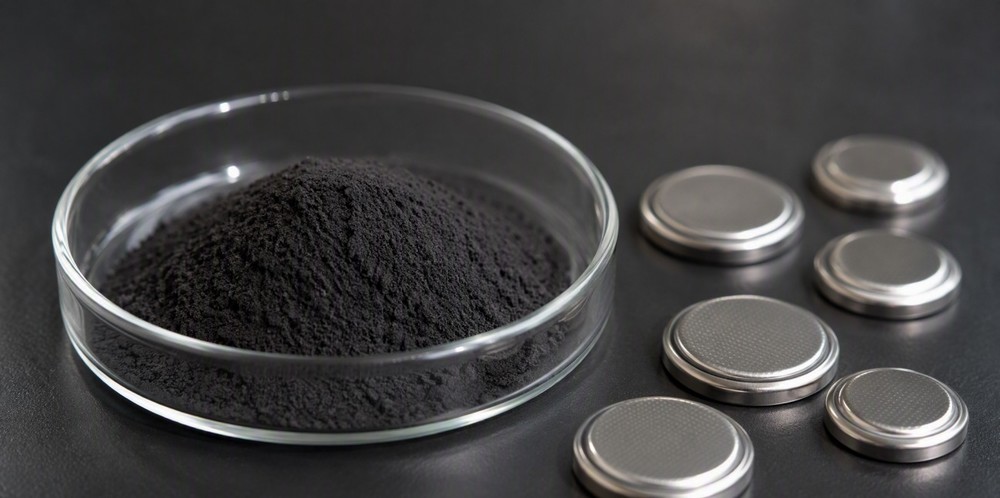 Silicon-carbon anode powder and test cells, ready for evaluation.
Silica Aerogel Composites: The Lightest Way to Stop Heat
Silica aerogel is more than 90% air, locked into pores so small that air molecules can barely move – the pores sit below the mean free path of the gas itself. Conduction, convection, and radiation are all throttled at once, giving thermal conductivities of 0.017–0.021 W/m·K, lower than still air (0.025) and roughly five times better than conventional insulation at equal thickness. Pure aerogel, however, is fragile. The composite solution – aerogel infused into glass or pre-oxidized fiber felt – turns the world's best insulator into a flexible, cuttable blanket.
- Operating range from cryogenic –200 °C up to +650 °C; some systems serve as backup layers behind hotter linings.
- Hydrophobic rates of 98–99% – performance survives humid plant environments; non-combustible A1/A2 fire ratings with no smoke or drips.
- Densities of 145–240 kg/m³ in thicknesses from 3 to 20 mm, installed where every millimeter of clearance matters.
The application list reads like an energy-sector map: steam and process pipelines, valves and flanges, battery-pack thermal-runaway barriers, LNG and cold-chain systems, offshore modules, and building retrofits where wall thickness cannot grow. In each case the blanket's job is identical – deliver maximum R-value per millimeter – and the fiber composite is what makes that job installable.
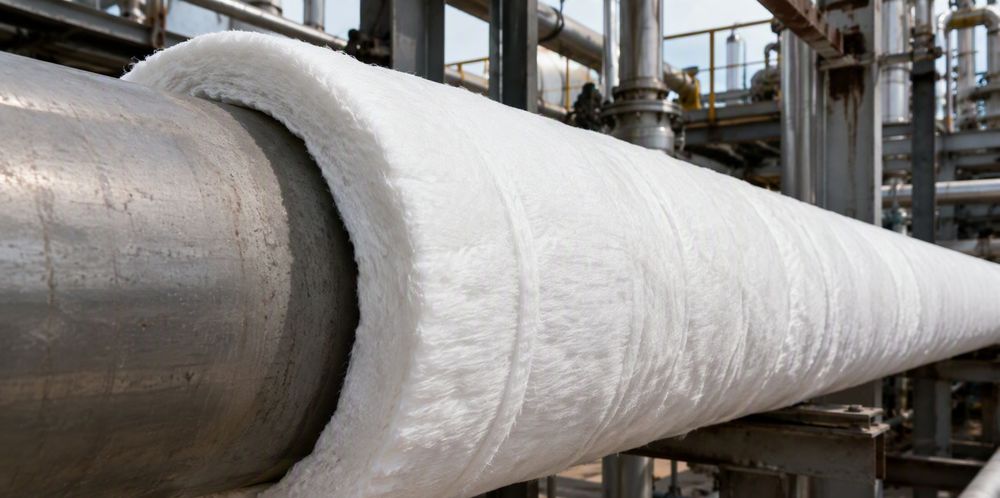 A fiber-reinforced aerogel blanket wrapping a process line.
Representative Products at a Glance
| Product Type |
Typical Specification |
Typical Use |
| Continuous SiC fiber (tow & fabric) |
Heat-resistant grades, sized, various tow counts |
CMC preforms, aerospace and energy |
| Chopped SiC fiber |
3–12 mm cuts, loose or milled |
Composite fillers, friction materials |
| SiC whiskers |
~0.5 µm × ~30 µm, single crystal |
Toughening ceramic and metal matrices |
| Silicon-carbon anode composite |
D50 ~8.6 µm, ~1,800 mAh/g first charge, ~93% ICE |
High-energy lithium-ion anodes |
| SiOx/C anode composite |
Balanced capacity and cycle life grades |
EV and consumer-cell anodes |
| Silica aerogel blanket |
3–20 mm, λ 0.017–0.021 W/m·K, hydrophobic |
Pipeline, equipment, battery insulation |
| Silica aerogel powder & granules |
Nano-porous, hydrophobic or hydrophilic |
Insulating coatings, panels, additives |
| Quartz fiber yarn & cloth |
≥99.95% SiO₂, filaments down to 5 µm |
Radomes, wave-transparent laminates |
| SiCw-reinforced Al₂O₃ blanks |
8–40 vol% whisker, hot-pressed |
Cutting inserts, wear components |
| Custom CMC preforms & prepregs |
2D/3D weaves, CVI/PIP/MI-ready |
Shrouds, liners, research components |
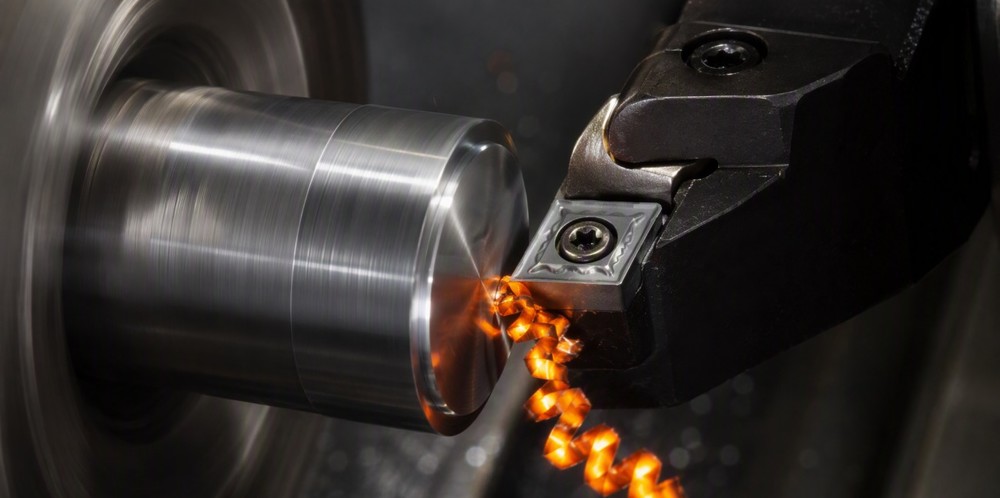 Whisker-reinforced ceramic at work: turning hardened alloys.
Whisker-Reinforced Ceramics: Toughness by Design
SiC whiskers are single crystals – rods about 0.5 µm in diameter and 30 µm long – grown nearly defect-free, so their strength approaches the theoretical maximum of the material itself (around 7,000 MPa). Dispersed at 8–40 volume percent into an alumina matrix and hot-pressed between 1,350 and 1,950 °C, they transform it: fracture toughness climbs from 4–5 to 8–8.7 MPa·m½, flexural strength toward 900 MPa, and thermal conductivity rises about 40% – which also buys thermal-shock resistance and coolant compatibility on the shop floor.
- Crack bridging – whiskers span the crack faces and hold them shut behind the tip.
- Whisker pull-out – extracting a whisker from the matrix burns fracture energy.
- Crack deflection – the crack is forced onto a tortuous path around each rod.
- Load transfer & grain refinement – the stiff whiskers carry stress and pin matrix grain growth during sintering.
Whisker-reinforced alumina inserts earn their keep machining nickel superalloys (Inconel, Rene grades), hardened steels, and chilled iron at speeds where carbide softens – interrupted cuts included, thanks to that doubled toughness. The same composite logic serves wear parts in advanced heat engines, and SiC whiskers reinforce aluminum and polymer matrices wherever stiffness must rise without weight.
Quartz Fiber Composites and Other Silicon-Based Systems
Where the job is to let microwaves through rather than keep them out, quartz fiber takes over. Spun from silica of 99.95% purity into filaments as fine as 5 µm, it brings a dielectric constant near 3.8 with a loss tangent as low as 0.0002, a coefficient of thermal expansion of about 7×10⁻⁷/K, and composure under thermal shock – quartz systems tolerate a 1,093 °C plunge into water without measurable damage. Quartz fiber-reinforced silica (SiO₂f/SiO₂), densified by repeated silica-sol infiltration, is the standard radome and antenna-window material for high-temperature, high-frequency service; quartz-reinforced resin laminates cover the lower-temperature end.
A different kind of silicon composite works at the opposite extreme: molybdenum disilicide is a cermet – ceramic hardness married to metallic conductivity – whose furnace elements run at 1,700–1,800 °C in air for 5,000+ hours, protected by a self-healing silica glaze that regrows over any scratch. Silicon nitride bonded silicon carbide kiln furniture, SiC-reinforced aluminum, and silicide-matrix structural composites extend the family further – and sit within our supply range alongside the fibers and powders above.
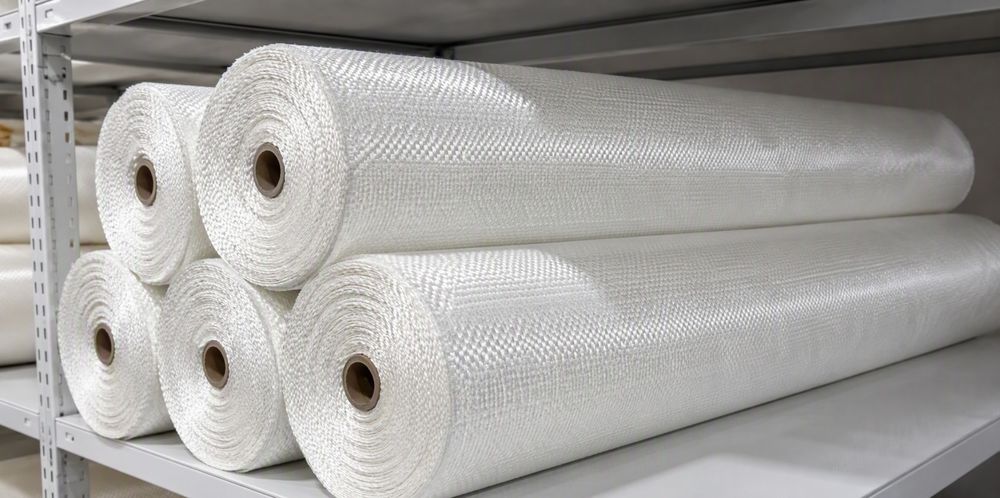 Rolls of quartz fiber cloth for wave-transparent laminates.
Quality Control Across the Composite Range
Reinforcements are certified on the properties that survive into the part: fiber tensile strength and modulus, filament diameter, sizing content and moisture for tows and cloths; aspect ratio, phase purity, and free-particle content for whiskers. Anode composites carry full electrochemical documentation – particle size distribution, tap density, first-charge capacity and first-cycle efficiency, plus cycle-retention data – because those numbers decide cell design directly. Aerogel products ship with thermal conductivity, density, hydrophobic rate, and fire rating; quartz reinforcements with purity and dielectric data where required.
Packaging respects each material's weakness: anode powders vacuum-sealed under dry atmosphere, fibers and cloths in moisture-barrier wrap with sizing protected, whiskers in sealed containers (handle as fine particulate until embedded), blankets compressed and film-sealed for freight. Every lot leaves with its measured COA – not a catalog value.
Composite development rarely fits catalog rows. Eata Silicon regularly supplies custom tow counts and weaves for CMC preforms, whisker grades screened to a specified aspect-ratio window, anode composites tuned for capacity, first-cycle efficiency, or particle size, aerogel blankets cut to thickness and density targets, and quartz cloth in customer-specified weaves and widths. Pilot quantities for process qualification are routine – development lots are how most of these relationships begin.
Tell us the composite system, the property that matters most, and the volumes you are planning, and our team will come back with a recommended grade, full documentation, and samples for your own evaluation.
For Research or Industrial Raw Materials, Not For Personal Medical Use!