A coating can have the right binder, pigment and cure package and still fail at the surface. Poor wetting, uneven flow, craters, orange peel or inconsistent slip can all reduce the value of an otherwise well-designed formulation. Eata Silicon supplies silicone-based leveling agent raw materials and related surface-control chemistries for formulators who need a more uniform film, reliable substrate coverage and a controlled balance between leveling, wetting, slip and recoatability.
The most useful silicone leveling agent is not simply the one that produces the lowest surface tension. The additive must also be compatible enough with the binder system to spread through the wet film without creating new defects. For that reason, molecular architecture, organic modification, active content, carrier, resin compatibility and the required surface effect should be evaluated together.
What Silicone-Based Leveling Agents Do
Silicone surface additives are used because siloxane segments have unusually low surface energy and can migrate efficiently toward interfaces. In a wet coating, a properly selected additive can help reduce surface-tension differences that drive uneven flow, improve wetting on difficult substrates and support a more continuous film. Depending on structure and compatibility, the same additive family can also influence slip, gloss, anti-cratering behavior, anti-blocking, foam tendency and the ability to apply a later coating layer.
Modern coating additives are rarely just unmodified silicone oil. Supplier technical literature shows that many coating-grade products are organically modified polysiloxanes, especially polyether-modified structures. These modifications are used to tune compatibility with waterborne, solvent-borne, high-solids or radiation-curable formulations while preserving useful silicone surface activity.
 Figure 1. A liquid coating flows across a metal surface as ridge patterns relax toward a continuous film.
How Silicone Structure Controls Coating Behavior
A silicone leveling agent can be viewed as a surface-active molecule whose silicone portion wants to enrich at the coating surface while the organic modification controls how comfortably the molecule remains inside the formulation. Polyether modification is particularly important because the ethylene oxide (EO) and propylene oxide (PO) balance changes polarity and therefore changes compatibility.
- EO-rich polyether segments generally increase hydrophilicity and can improve fit in more polar or water-compatible systems.
- PO-rich polyether segments are comparatively less polar and can improve compatibility with solvent-borne or high-solids formulations.
- A higher silicone contribution can increase surface activity and slip, but excessive incompatibility can also create craters, intercoat issues or other defects.
- Shorter-chain silicone surfactants can deliver strong wetting and surface-tension reduction with less influence on slip than some higher-molecular-weight surface modifiers.
- Non-polyether organic modifications may be considered when higher bake temperatures or a different compatibility window is required.
This structure-performance relationship is why one generic label such as "silicone additive" is not enough for technical sourcing. Buyers should define the coating chemistry, application method and required surface behavior before selecting a raw-material family.
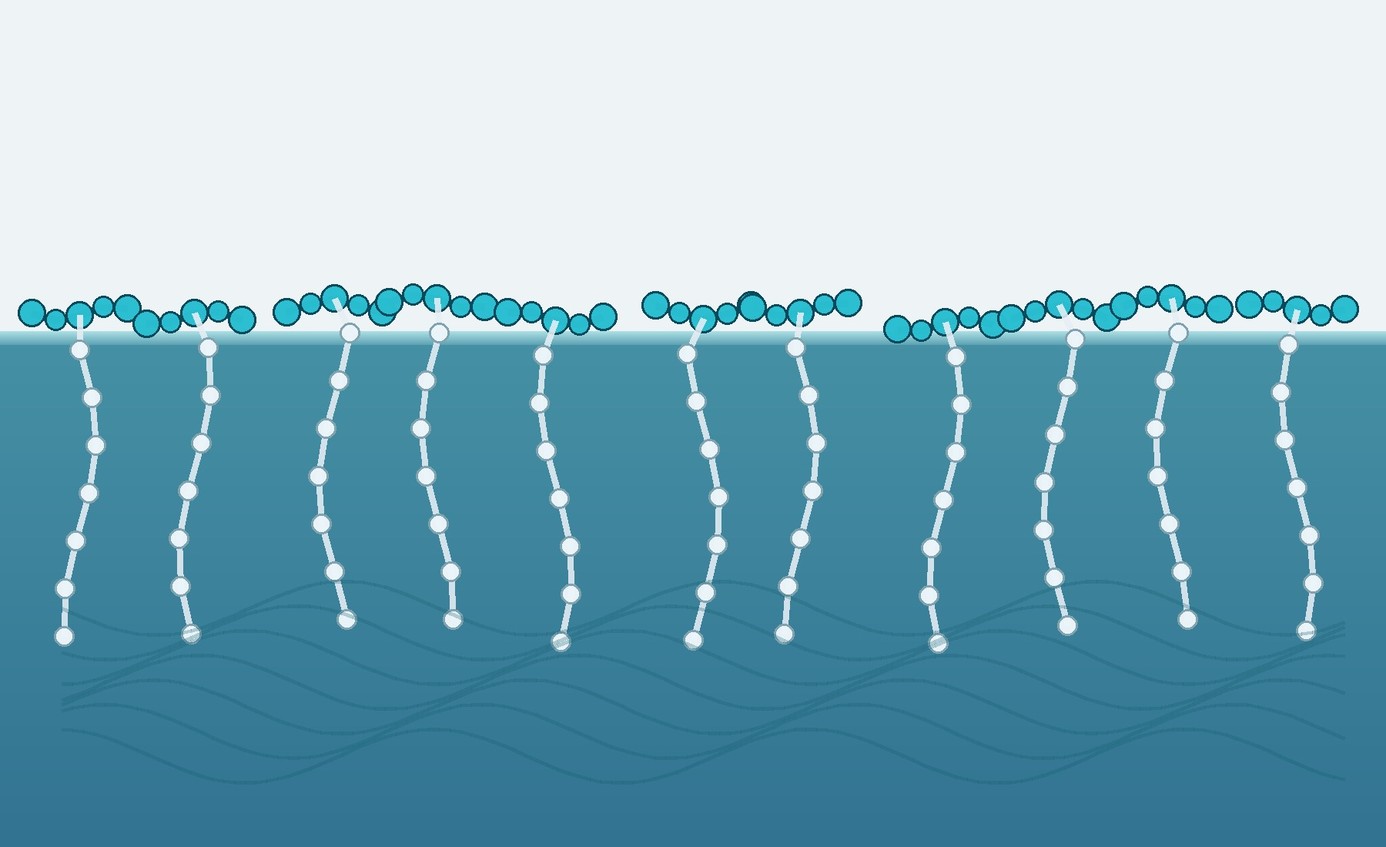 Figure 2. Conceptual silicone-polyether surface additive arranged at the coating-air interface.
Silicone-Based Leveling Agent Raw Material Families
| Raw Material Family |
Keywords |
Typical Formulation Direction |
Selection Focus |
| Polyether-modified PDMS |
polyether-modified polydimethylsiloxane; silicone polyether; organomodified silicone |
Waterborne, solvent-borne and selected UV systems |
Leveling, wetting, slip balance; EO/PO ratio; resin compatibility |
| Silicone-polyether block copolymer |
siloxane polyether copolymer; silicone surfactant; silicone glycol copolymer |
Coatings, inks and surface-treatment formulations |
Flow, substrate wetting, surface tension, foam profile |
| Low-molecular-weight silicone surfactant |
short-chain silicone surfactant; low-MW polyether siloxane; trisiloxane-type surfactant |
Waterborne and polar systems where wetting is critical |
Fast spreading, difficult-substrate wetting, minimal unwanted slip |
| Silicone/polyether-modified acrylate copolymer |
silicone acrylate surface additive; polyether-modified acrylate leveling agent |
Medium- and high-solids coating systems |
Excellent leveling with controlled surface tension and anti-cratering behavior |
| EO-rich silicone polyether |
hydrophilic silicone polyether; EO-modified siloxane |
Water-compatible and polar formulations |
Water compatibility, wetting and surface flow |
| PO-rich silicone polyether |
PO-modified silicone; hydrophobic silicone polyether |
Solvent-borne, high-solids and ink systems |
Solvent compatibility, flow and leveling, slip control |
| Thermally stable modified polysiloxane |
polyester-modified polysiloxane; aralkyl-modified silicone additive |
Baking coatings and higher-temperature processing |
Surface control where conventional polyether stability may be limiting |
| Reactive silicone surface additive |
OH-functional silicone additive; UV-reactive silicone additive |
Reactive binder or radiation-curable systems |
Surface modification with potential binder incorporation; recoat and compatibility strategy |
| Silicone-polyether powder-coating additive |
powder coating leveling agent; silicone-polyether wax; flow modifier |
Thermoset powder-coating formulations |
Melt flow, leveling and wetting during film formation |
Performance Directions Formulators Can Target
A well-matched silicone-based leveling agent can solve more than one surface problem, but every extra surface effect changes the selection criteria. Eata Silicon can help customers compare raw-material directions around the following formulation goals:
- Flow and leveling: promote a more uniform film after spray, roll, drawdown, dip, curtain or other application methods.
- Substrate wetting: improve coverage on metals, plastics, coated surfaces and other relatively low-energy or difficult-to-wet substrates.
- Anti-cratering and defect control: reduce sensitivity to localized surface-tension differences when the additive is sufficiently compatible with the system.
- Slip and mar resistance: modify surface friction when a smoother feel or lower coefficient of friction is desired.
- Gloss and appearance: support a more continuous surface that can improve visual smoothness and reflected image quality.
- Recoatability: select a surface-active structure that delivers the needed effect without making later coating or printing steps unnecessarily difficult.
- Foam behavior: choose structures that do not introduce excessive foam stabilization and, in some cases, can contribute useful deaeration or defoaming behavior.
- Compatibility with binder chemistry: align the additive with acrylic, epoxy, polyester, polyurethane, alkyd, vinyl or other coating matrices rather than treating all resins as interchangeable.
 Figure 3. Surface-defect control concept showing a textured, crater-prone area transitioning toward a smoother coating.
Where These Additives Fit in Energy and Industrial Coatings
For energy-material and industrial customers, silicone leveling agents are most relevant when the project includes a liquid or powder coating whose surface quality influences protection, manufacturability or final appearance. The additive itself does not create the electrical, corrosion or thermal performance of the coating, but it can help the coating form a more uniform surface and wet the intended substrate consistently.
- Battery housings, covers and structural metal components: protective and appearance coatings on aluminum or steel parts.
- Power-electronics hardware: coatings applied to enclosures, busbar assemblies, fixtures or non-active structural surfaces where continuous coverage matters.
- Inverter, converter and electrical cabinets: industrial metal coatings requiring clean flow, uniform gloss or controlled surface slip.
- Transformers, motors and energy equipment housings: protective liquid coatings and baked finishes on metal components.
- Coil, sheet and fabricated metal: high-throughput coating processes where flow and surface appearance are tightly controlled.
- Powder-coated energy infrastructure: enclosures, racks, frames, brackets and other metal hardware that relies on melt flow and leveling during cure.
- Industrial inks, overprint varnishes and functional surface layers: systems where wetting, slip or surface uniformity affects downstream use.
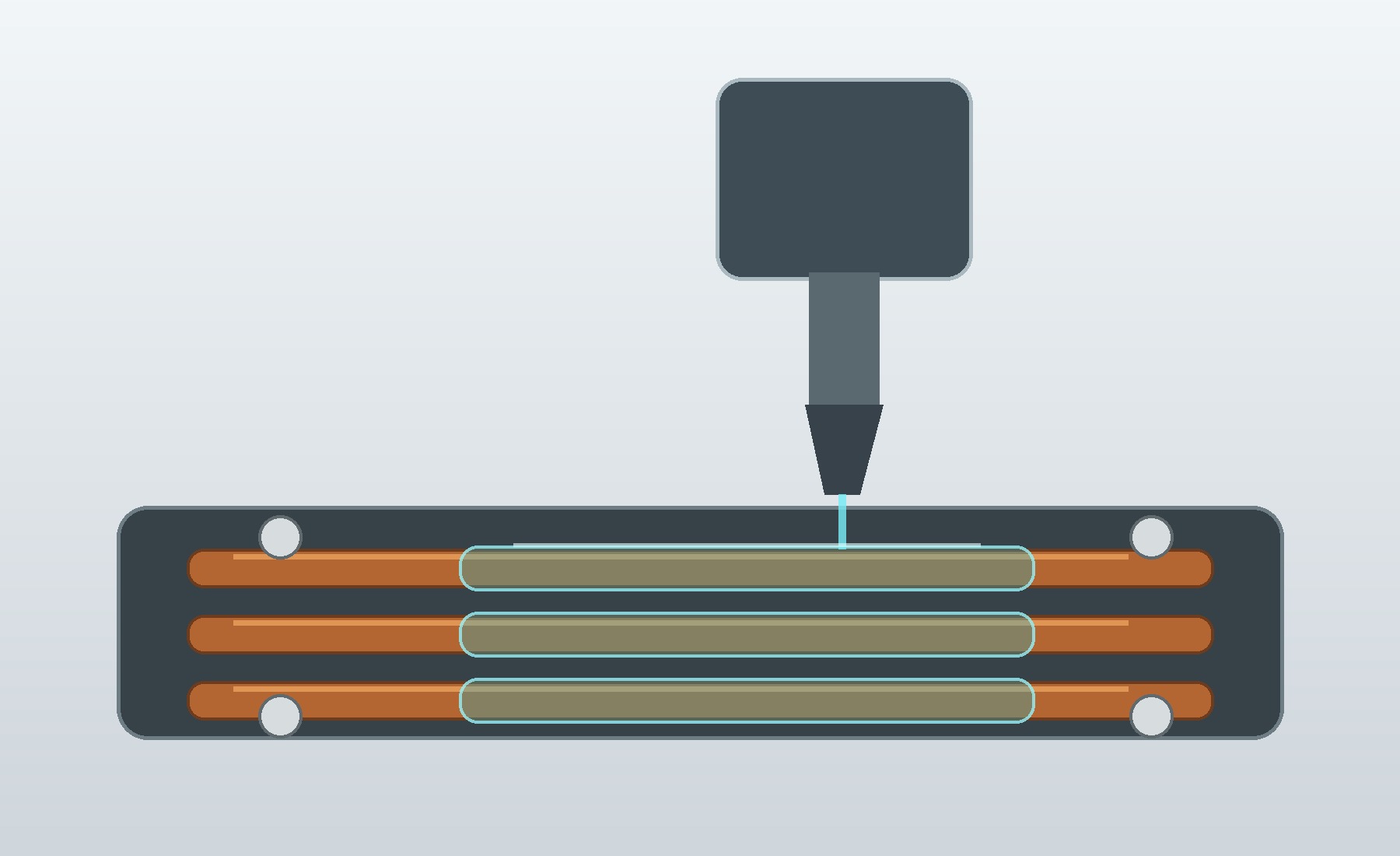 Figure 4. Precision application of a clear surface-control coating over copper busbars in an energy-hardware assembly.
Selection Guide by Formulation Type
| Formulation Type |
Useful Chemistry Directions |
Primary Selection Goal |
Important Watchpoints |
| Waterborne coatings |
EO-rich silicone polyethers, silicone surfactants, compatible organomodified polysiloxanes |
Substrate wetting, leveling, foam sensitivity, water compatibility |
Clouding, excessive foam, intercoat adhesion, binder sensitivity |
| Solvent-borne coatings |
PO-rich silicone polyethers, organomodified polysiloxanes, silicone/polyether acrylate copolymers |
Flow, anti-cratering, slip and gloss |
Solvent compatibility, migration, surface slip, later coating steps |
| High-solids / solvent-free |
Highly compatible silicone surface additives and modified acrylate copolymers |
Leveling at high viscosity and controlled surface-tension reduction |
Additive compatibility, cure interference, cratering from over-incompatibility |
| Radiation-curable / UV |
UV-compatible silicone polyethers or reactive silicone additives |
Leveling, wetting, slip and recoat balance |
Cure chemistry, migration, surface inhibition or intercoat requirements |
| Powder coatings |
Low-melting silicone-polyether or dedicated powder-flow additives |
Melt flow, leveling and defect reduction during bake |
Compatibility with resin, bake profile, gloss and surface slip |
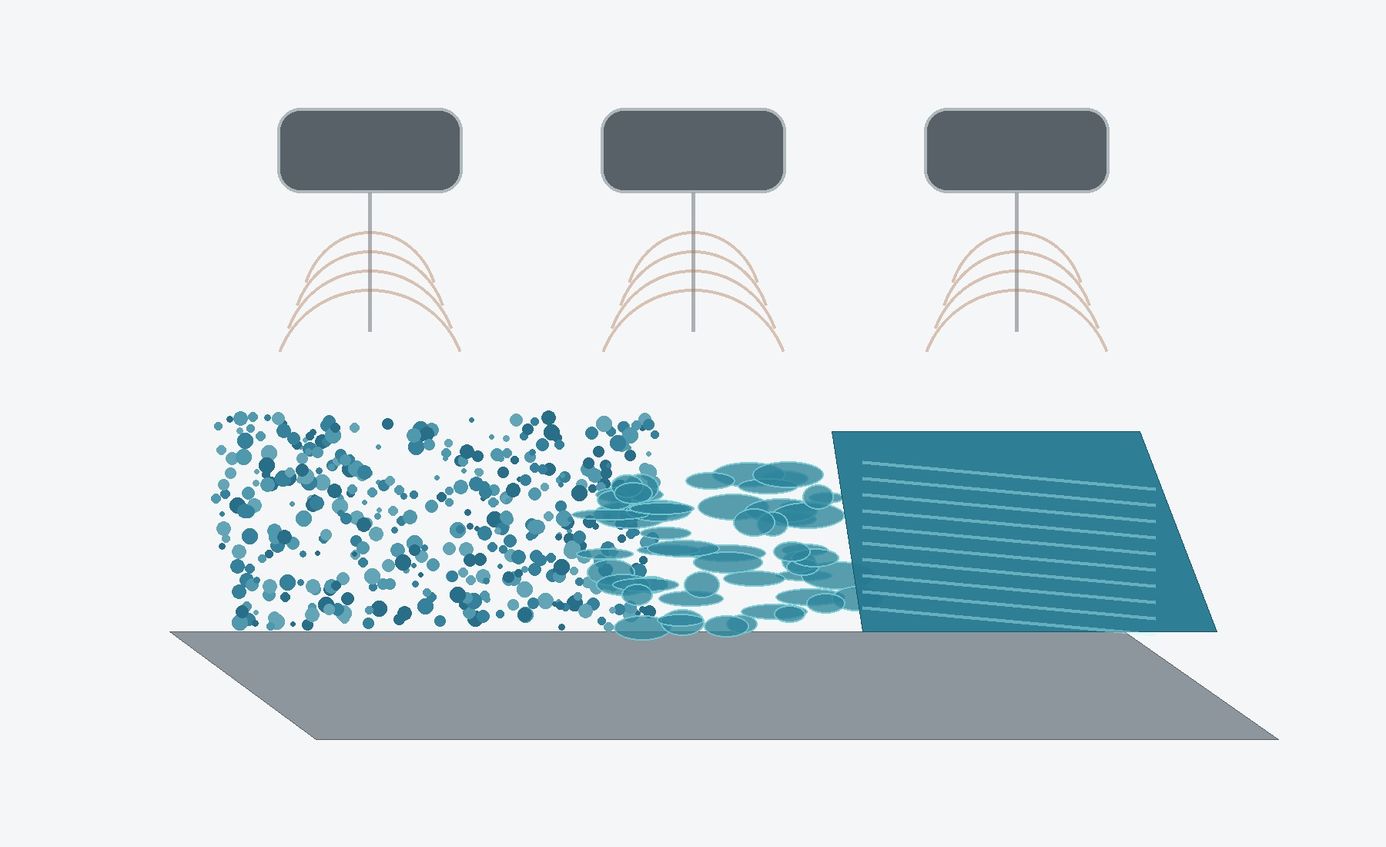 Figure 5. Powder particles coalescing into a continuous film during heat-assisted flow and leveling.
What to Specify When Requesting a Silicone Leveling Agent
A precise inquiry helps narrow the chemistry quickly and avoids trialing additives that solve the wrong surface problem. When possible, include the following information:
- Binder and cure system: acrylic, epoxy, polyester, polyurethane, alkyd, vinyl, radiation-curable or another resin family.
- Formulation format: waterborne, solvent-borne, high-solids, solvent-free, UV/EB or powder coating.
- Primary defect or performance target: leveling, craters, orange peel, substrate wetting, slip, gloss, mar resistance, anti-blocking or recoatability.
- Substrate: aluminum, steel, copper, glass, plastic, pre-coated metal, composite or another surface.
- Application method: spray, roll, drawdown, dip, curtain, coil, ink transfer, powder spray or another process.
- Process conditions: viscosity window, bake or cure temperature, line speed, film thickness and any high-shear or high-speed application conditions.
- Raw-material preference: active content, carrier/solvent restrictions, viscosity or physical-form requirements, and whether a 100% active additive is preferred.
- Downstream requirements: overcoating, printing, adhesive bonding, lamination or other operations that make surface energy and migration important.
Why Formulation Compatibility Matters
Silicone chemistry is powerful precisely because it prefers interfaces, but that same behavior means dosage and compatibility cannot be ignored. A surface additive that is too compatible may deliver only a weak effect; one that is too incompatible can separate locally and create craters or intercoat problems. Commercial additive portfolios therefore use different silicone chain lengths, polyether ratios, organic modifications and molecular architectures to place each grade in a specific compatibility window.
For formulation work, the practical target is controlled incompatibility: enough surface migration to change wetting and flow, but enough compatibility to maintain a continuous film. This is also why laboratory drawdowns should evaluate more than visual leveling. Recoat adhesion, slip, gloss, foam, crater sensitivity and cure response should be checked together on the actual binder and substrate.
Standard surface additives are useful benchmarks, but new coating platforms often require a narrower compatibility window or a different balance of wetting, slip and recoatability. Eata Silicon can discuss customized silicone-based leveling agent directions around polyether composition, silicone content, molecular architecture, active concentration, viscosity, carrier system, compatibility with a target resin, wetting strength, leveling response, slip, foam profile and thermal-processing requirements.
If you are replacing an existing additive, developing a new waterborne or high-solids system, moving to radiation cure, or building a powder-coating platform for energy hardware, send the reference chemistry or current benchmark together with the binder, substrate, process and critical surface targets. We can review a standard option, a close functional analogue or a custom raw-material specification for further formulation work.
Discuss your formulation with Eata Silicon
Share the coating chemistry, substrate, application method and the surface problem you need to solve. We can help narrow the silicone leveling agent raw-material direction for your development project.
For Research or Industrial Raw Materials, Not For Personal Medical Use!