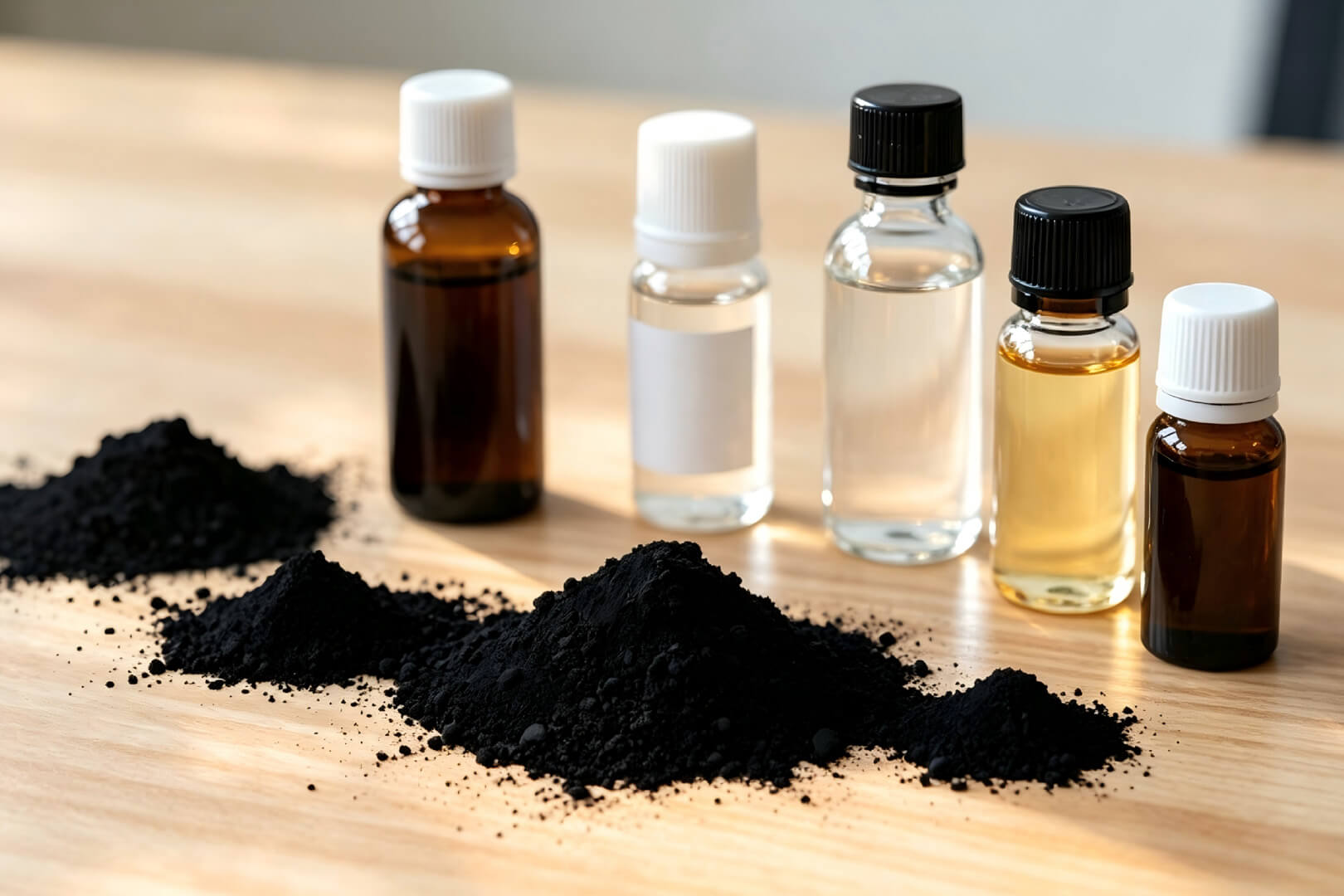
When a formulation or process needs a fluid that moves easily, wets rapidly and can be removed or retained in a controlled way, the lowest-viscosity silicone families offer a useful design space. Short linear siloxanes can behave as volatile carriers, while low-viscosity polydimethylsiloxane (PDMS) grades provide smooth flow with progressively lower volatility as molecular size and viscosity increase.
Eata Silicon supports specification-led sourcing across very-low-viscosity linear siloxanes and low-viscosity PDMS fluids. Selection can be built around the target viscosity, evaporation profile, surface tension, purity, molecular range, refractive index, dielectric behavior, residue target and downstream material compatibility rather than relying on a single generic label such as "silicone oil."
Low Viscosity and Volatility Are Related — but They Are Not the Same
A 0.65–2 cSt linear siloxane is both extremely fluid and relatively easy to evaporate compared with higher-molecular-weight PDMS. A 5, 10 or 20 cSt PDMS can still be described as low viscosity, yet its volatility is substantially lower. This distinction matters in coatings, precision wetting, mechanical systems and electronics work: the desired flow behavior may be similar, but the amount of residual silicone after processing can be very different.
Commercial data illustrate the progression clearly. Straight dimethyl silicone fluids are available from approximately 0.65 cSt upward; the lowest-viscosity grades have boiling points near 100–229 °C, while 5–50 cSt grades are typically evaluated by volatile-matter limits rather than a single boiling point. The practical takeaway is simple: specify viscosity and volatility separately.
 Fig. 1. Very-low-viscosity silicone media can spread into thin, uniform films across smooth engineered surfaces.
Representative Material Families
| Representative Material / Family |
CAS No. |
Typical Reference Class |
Keywords |
| Hexamethyldisiloxane (HMDSO / MM) |
107-46-0 |
~0.65 cSt class; boiling point about 100 °C |
very low viscosity silicone fluid; HMDSO; linear disiloxane; volatile silicone carrier |
| Octamethyltrisiloxane (trisiloxane / L3) |
107-51-7 |
~1.0 cSt; reference density about 0.818 |
1 cSt silicone fluid; trisiloxane fluid; low surface tension silicone; volatile linear siloxane |
| Decamethyltetrasiloxane (L4) |
141-62-8 |
~1.5 cSt class; boiling point around 194 °C |
1.5 cSt silicone fluid; tetrasiloxane; volatile dimethyl silicone fluid |
| Dodecamethylpentasiloxane (L5) |
141-63-9 |
~2.0 cSt class; very low-viscosity linear siloxane |
2 cSt silicone fluid; pentasiloxane; low molecular weight silicone oil |
| Linear PDMS, trimethylsiloxy-terminated |
63148-62-9 (common family CAS) |
5 cSt |
5 cSt silicone oil; low viscosity PDMS; dimethyl silicone fluid; dielectric silicone fluid |
| Linear PDMS, trimethylsiloxy-terminated |
63148-62-9 (common family CAS) |
10 cSt |
10 cSt PDMS; low viscosity silicone oil; silicone mechanical fluid; coating fluid |
| Linear PDMS, trimethylsiloxy-terminated |
63148-62-9 (common family CAS) |
20 cSt |
20 cSt silicone fluid; silicone lubricant; low viscosity dimethyl silicone oil |
| Linear PDMS, trimethylsiloxy-terminated |
63148-62-9 (common family CAS) |
50 cSt |
50 cSt silicone oil; low-volatility PDMS; electrical insulating fluid; mechanical silicone fluid |
How the Main Fluid Ranges Behave
0.65–2 cSt Linear Siloxanes: Rapid Wetting and a Removable Silicone Phase
Short, trimethylsiloxy-terminated siloxanes have low viscosity, low surface tension and a comparatively high evaporation tendency. They are useful when the silicone phase needs to distribute quickly through a formulation or across a surface and then diminish during a later process step. In screening work, boiling range or evaporation rate should be considered together with viscosity, because two fluids with similar flow can leave very different residual levels.
5–20 cSt PDMS: Low-Resistance Flow with More Persistent Film Formation
At 5–20 cSt, linear PDMS remains easy to meter and spread, but the fluid behaves more like a persistent silicone oil than a volatile carrier. Supplier literature describes these fluids for industrial coatings, mechanical fluids, surface-active functions, glass or lens coatings and electrical insulating applications. Low surface tension and strong spreading behavior can also help distribute a small addition through silicone-compatible formulations.
50 cSt PDMS: A Useful Boundary Between Easy Flow and Low Volatility
A 50 cSt PDMS still flows readily compared with medium- and high-viscosity silicone oils, yet its vapor pressure is low enough for many applications where a more durable silicone film is required. It is often a practical reference point for mechanical, release, dielectric or lubricant evaluations when very-low-viscosity grades disappear too quickly from the process.
Intermediate Viscosity by Blending
Standard PDMS viscosity grades of the same chemistry can be blended to reach intermediate targets. This can be useful when 10 cSt is too mobile but 20 cSt is unnecessarily heavy, or when a process needs a narrowly defined dosing window. The final blend should be confirmed analytically rather than calculated from nominal viscosity alone.
 Fig. 2. Short linear siloxane chains provide the molecular basis for a very fluid liquid and a higher tendency to enter the vapor phase.
 Fig. 3. Low-viscosity silicone media can reach narrow clearances and contact zones in precision mechanical assemblies.
Why These Fluids Matter in Energy and Advanced-Materials Work
Low-viscosity silicone fluids are not limited to one end market. Their combination of flow, low surface energy, water repellency, dielectric behavior and heat stability makes them relevant wherever a process needs controlled wetting, mechanical fluidity or a clean silicone phase. In energy and electronics development, the same properties can support several types of materials work.
| Development Area |
How a Low-Viscosity Silicone Can Contribute |
Parameters to Define |
| Electrical and electronic processing |
Low-viscosity PDMS can be evaluated as an electrical insulating or dielectric fluid, as well as a formulation component for protective coatings and component treatments. |
Dielectric properties, ionic cleanliness, water, viscosity, volatility, substrate compatibility |
| Precision coatings and surface engineering |
Rapid spreading can help a silicone phase form a thin continuous layer on glass, metals, ceramics or polymeric surfaces. |
Surface tension, viscosity, evaporation profile, residue, adhesion of the next layer |
| Mechanical and motion systems |
Silicone fluids are used as mechanical fluids and lubricating media; lower viscosity supports fast movement through small clearances. |
Viscosity-temperature behavior, volatility, load, materials compatibility, contamination limits |
| Optical and sensor-related materials |
Supplier literature lists lens and glass coating uses; low viscosity can be attractive where thin, uniform coverage is important. |
Refractive index, optical clarity, residue, purity, coating thickness |
| Formulation carrier or process aid |
A volatile linear siloxane can temporarily reduce viscosity or improve spreading in silicone-compatible non-aqueous systems. |
Evaporation rate, solvency/compatibility, residual level, process temperature |
| Fine-gap wetting and impregnation |
Low viscosity can help a fluid penetrate narrow geometries or porous structures during evaluation and process development. |
Capillary behavior, viscosity, wetting angle, volatility, contamination sensitivity |
 Fig. 4. Uniform wetting can be valuable when a very thin silicone layer must be distributed across engineered metallic substrates.
Choose the Fluid by Process Objective
| Process Target |
First Fluid Range to Evaluate |
Specifications to Discuss |
| Fastest spreading with intentional evaporation |
0.65–1.0 cSt linear siloxane |
Boiling/evaporation profile, flash point, purity, residue, substrate compatibility |
| Fast spreading with a slower evaporation window |
1.5–2.0 cSt linear siloxane |
Viscosity, boiling profile, molecular identity, residue, refractive index |
| Low-viscosity persistent coating or formulation fluid |
5–10 cSt PDMS |
Volatile matter, surface tension, dielectric properties, water and impurities |
| More body without losing easy pumpability |
20 cSt PDMS |
Viscosity tolerance, viscosity-temperature behavior, film persistence, compatibility |
| Low-viscosity mechanical or dielectric reference fluid |
50 cSt PDMS |
Vapor pressure/volatility, dielectric performance, thermal window, cleanliness |
| Non-standard process window |
Blend or custom molecular-range target |
Target viscosity, volatile profile, analytical method, key impurities and application test |
 Fig. 5. Dielectric performance and fluid-management requirements can overlap in compact power-electronics development.
 Fig. 6. Capillary penetration visualizes how a low-viscosity fluid can move through narrow process geometries.
What to Put on a Volatile or Low-Viscosity Silicone Fluid RFQ
A clear inquiry saves time and helps avoid comparing materials that share the same viscosity but behave differently in the process. The following information is especially useful:
- Viscosity at a defined temperature: state the target value or acceptable range, normally at 25 °C.
- Volatility or evaporation target: specify a boiling range, evaporation rate, volatile-matter limit or maximum residue if one of these controls process behavior.
- Chemical identity or molecular family: identify HMDSO, trisiloxane, tetrasiloxane, pentasiloxane or PDMS when a specific linear species is required.
- Purity and critical impurities: include water, color, acidity/alkalinity, trace metals, ionic contaminants, residual catalyst or other limits that matter to the formulation.
- Surface and optical requirements: refractive index, surface tension or wetting behavior may be important for coatings, optics and thin-film work.
- Electrical requirements: for dielectric or insulating use, define the electrical data and cleanliness criteria required for qualification.
- Process conditions: share the substrate, other formulation components, mixing sequence, temperature, pressure or vacuum conditions and whether the silicone should remain or evaporate.
- Analytical documentation: identify the methods or certificates required for viscosity, GC, refractive index, water, volatile content or other project-specific acceptance tests.
Why Source This Category from Eata Silicon?
- Specification-first matching: compare materials by the process variables that matter — viscosity, evaporation behavior, molecular family and purity — rather than by trade name alone.
- A practical viscosity ladder: evaluate very-low-viscosity linear siloxanes alongside 5–50 cSt PDMS so the fluid can be selected for both flow and persistence.
- Application-aware discussion: coating, electrical, optical, mechanical and formulation requirements can be reviewed together to reduce trial-and-error during qualification.
- Analytical targets built into the inquiry: water, volatile matter, refractive index, trace impurities and other acceptance criteria can be defined before a quotation is finalized.
- Custom specification pathway: when a standard viscosity or molecular range does not fit, a tailored target can be evaluated for technical feasibility.
Custom Volatile and Low-Viscosity Silicone Fluid Specifications
Eata Silicon can evaluate project-specific targets for viscosity, linear oligomer distribution, molecular range, evaporation profile, volatile residue, cyclic-content limits, refractive index, density, water, critical ionic or metal impurities and application-specific analytical requirements. Share the closest reference chemistry and the process window you need; we can review a standard option, a tailored blend or a custom specification route.
For Research or Industrial Raw Materials, Not For Personal Medical Use!