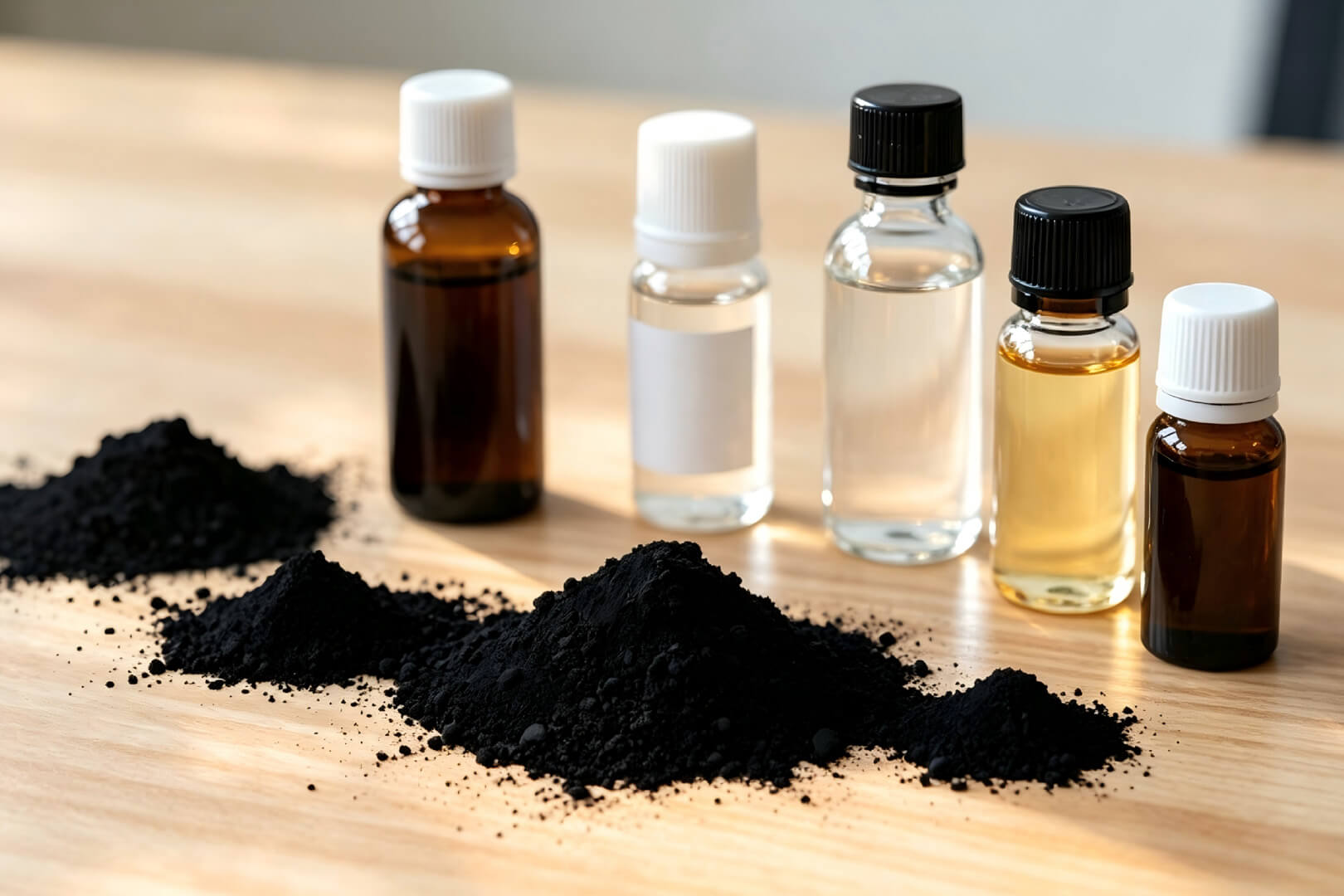
Silicone-based emulsifiers bring the low-surface-energy character of polysiloxanes together with hydrophilic polyether functionality. That combination gives formulators a practical way to manage interfaces between water, silicone fluids, organic oils and dispersed solids. Eata Silicon supplies silicone-polyether and alkyl/polyether-modified grades selected around emulsion type, viscosity, carrier system, wetting behavior and the rest of the formulation rather than treating every silicone surfactant as interchangeable.
The selection below spans water-soluble PEG-12 dimethicone, lipophilic PEG-10 dimethicone, low-HLB cetyl PEG/PPG-modified silicone, lauryl-modified silicone polyether and silicone-polyether dispersions. Those structural differences shift oil compatibility, continuous-phase preference, wetting and dispersing behavior, so the most suitable grade depends on how the complete system is built.
How Silicone Polyether Emulsifiers Work
A silicone polyether is an amphiphilic organosilicon material: the siloxane portion has strong affinity for silicone-rich and low-polarity environments, while the polyether segment introduces hydrophilicity. At an oil/water or silicone/water interface, that dual affinity can reduce interfacial tension and help keep one phase distributed through another as smaller, more persistent droplets.
Architecture matters. A more hydrophilic PEG-modified silicone can behave very differently from a lipophilic PEG-10 dimethicone or an alkyl/polyether co-modified siloxane. Carrier fluids and active-solids level also change processing behavior; a pre-dispersed silicone polyether in a volatile or low-viscosity silicone carrier is handled differently from a neat emulsifier.
| Core chemistry |
Polyether-modified polysiloxanes and alkyl/polyether-modified silicone surfactants. |
| Common formulation roles |
W/Si and W/O emulsification, co-emulsification, wetting, pigment or powder dispersion and surface-tension control; exact function is grade-dependent. |
| Useful selection variables |
INCI/chemical identity, viscosity, specific gravity, HLB or relative hydrophilicity, carrier and solids content, oil compatibility, pigment handling and process temperature. |
| Typical development context |
Formulation screening for skin-care, color-cosmetic, sun-care, hair-care, home-care and other industrial or research systems. |
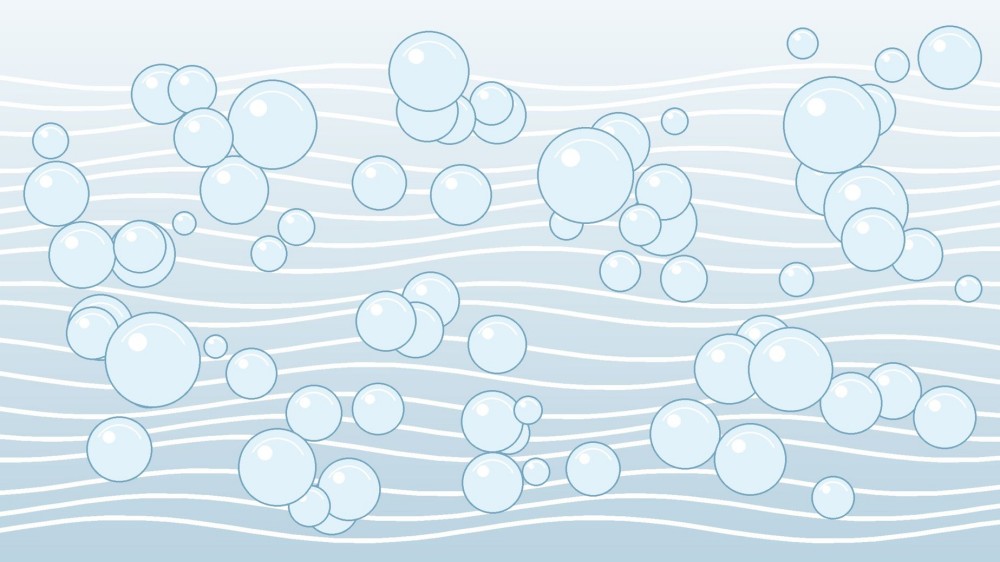 Figure 1. Conceptual W/Si microstructure showing a silicone-rich continuous phase surrounding dispersed aqueous droplets.
Choosing the Right Emulsifier Architecture
Water-Soluble PEG-12 Dimethicone
PEG-12 dimethicone is the most hydrophilic family represented in the current product set. A water-soluble grade can serve as a nonionic silicone surfactant for wetting and emulsification while also contributing antistatic and foam-stabilizing behavior. It is a logical starting point when water compatibility is more important than building a strongly lipophilic continuous phase.
Lipophilic PEG-10 Dimethicone
PEG-10 dimethicone grades in the portfolio are designed for water-in-silicone and water-in-oil systems. Their value is not limited to emulsion formation: silicone-rich external phases can also deliver characteristic slip and a non-sticky sensory profile. Viscosity varies substantially by grade, so compare the physical data instead of selecting on INCI name alone.
Alkyl/Polyether Co-Modified Silicones
Cetyl PEG/PPG-10/1 Dimethicone and Lauryl PEG-9 Polydimethylsiloxyethyl Dimethicone add an alkyl contribution to the silicone-polyether architecture. The cetyl-modified grade in the current range is low-HLB, while the lauryl-modified grade combines W/Si and W/O emulsification with useful compatibility toward both silicone and non-silicone oils plus powder-dispersion performance.
Silicone-Polyether Dispersions
A silicone polyether supplied pre-dispersed in a cyclomethicone carrier offers a different processing profile from a neat liquid surfactant. The current 10–14% solids dispersion is positioned for W/Si and W/O work where the emulsifier is already distributed through a low-viscosity silicone phase.
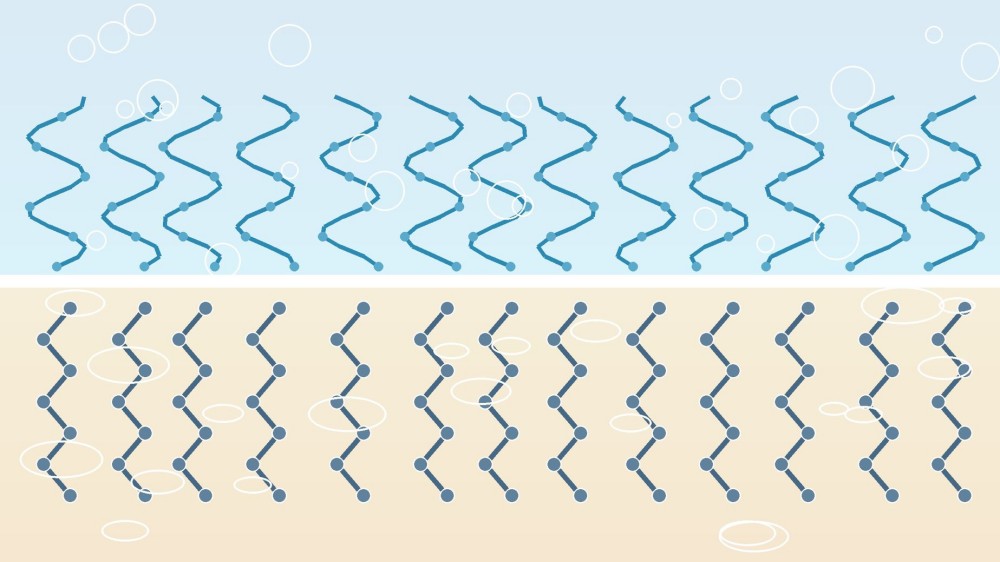 Figure 2. Silicone-polyether architecture at an interface, with hydrophilic polyether segments extending toward the aqueous phase.
Eata Silicon Product Information
The table below follows the product records currently assigned to the Silicone-Based Emulsifiers category. Values are presented as listed for the individual grades; because formulation performance depends on the complete recipe and process, application testing remains the appropriate basis for final selection.
| Product |
INCI / Chemistry |
Key Physical Data |
Formulation Role |
| Water-Soluble PEG-12 Dimethicone Surfactant, 250–500 cSt |
PEG-12 Dimethicone |
Colorless to yellowish transparent fluid; 250–500 cSt at 25°C; specific gravity 1.070–1.080. |
Nonionic silicone surfactant for wetting, emulsification, moisture retention, antistatic performance and foam stability; used in lotion, hair-styling, makeup and sun-care formulation work. |
| Cyclomethicone Silicone-Polyether Dispersion, 10–14% Solids |
Cyclomethicone (and) PEG-18/PPG-18 Dimethicone |
Light milky-white translucent fluid; 40–125 cSt at 25°C; specific gravity 0.930–0.970; 10–14% solids. |
W/Si and W/O formulation aid; disperses polar and nonpolar ingredients and supports emulsion stability in volatile-silicone systems. |
| Cetyl PEG/PPG-10/1 Dimethicone W/O Emulsifier, 500–1,400 cSt |
Cetyl PEG/PPG-10/1 Dimethicone |
Colorless to pale yellow transparent liquid; 500–1,400 cSt at 25°C; specific gravity 0.915–0.945; HLB ≤5. |
Low-HLB emulsifier and surface-tension modifier with wetting and foam-support functions; applicable to hair, lotion, shaving and home-care formulation studies. |
| PEG-10 Dimethicone W/Si and W/O Emulsifier, 400–1,600 cSt |
PEG-10 Dimethicone |
Colorless to yellowish, transparent to translucent liquid; 400–1,600 cSt at 25°C; specific gravity 1.00–1.05. |
Lipophilic polyether-modified PDMS for W/Si and W/O systems; supports low-temperature processing and silicone/organic-oil compatibility. |
| Lauryl PEG-9 Silicone Emulsifier and Powder Dispersant, 400–800 cSt |
Lauryl PEG-9 Polydimethylsiloxyethyl Dimethicone |
Colorless to light yellow, transparent to slightly translucent liquid; 400–800 cSt at 25°C; specific gravity 0.900–0.950. |
W/Si and W/O emulsifier with silicone/non-silicone oil compatibility plus powder and pigment dispersion capability. |
| Personal-Care Silicone Emulsifier Family with PEG-10 and PEG-12 Dimethicone |
PEG-12 Dimethicone; PEG-10 Dimethicone |
Portfolio family; individual grade properties vary. |
Silicone-based emulsifier options for formulation development where PEG-modified dimethicone chemistry is preferred. |
| PEG-10 Dimethicone Silicone Emulsifier, 600 mm²/s |
PEG-10 Dimethicone |
Liquid; 600 mm²/s; specific gravity 1.01 g/cm³ at 25°C; refractive index 1.4215 at 25°C. |
Cold-process co-emulsifier and W/Si emulsifier that supports pigment and water spreading. |
| PEG-12 Dimethicone Silicone Co-Emulsifier, 150 mm²/s |
PEG-12 Dimethicone |
Liquid; 150 mm²/s; specific gravity 1.01 g/cm³ at 25°C; refractive index 1.4530 at 25°C. |
Cold-process co-emulsifier for pigment and water spreading in formulation systems. |
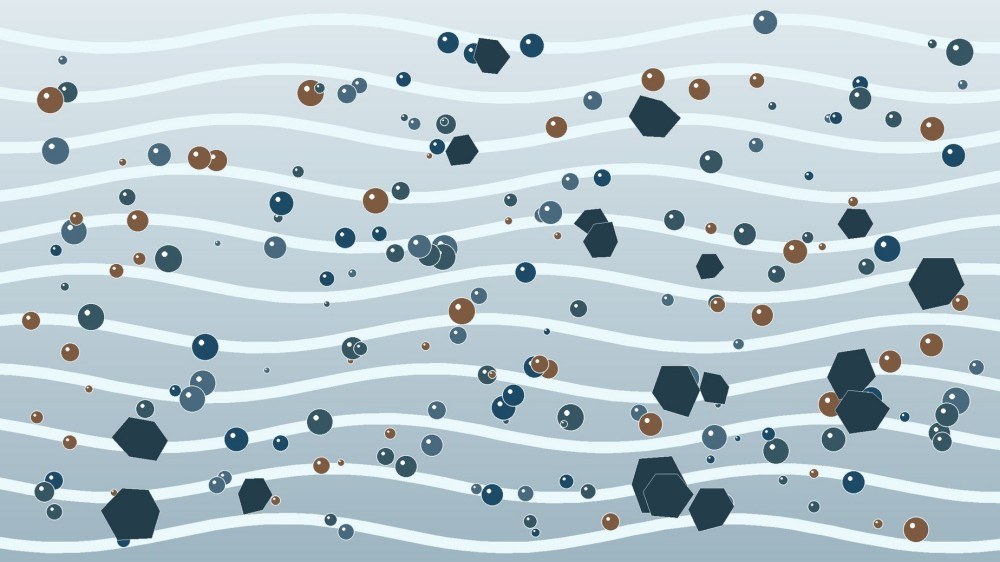 Figure 3. Even particle distribution illustrates why emulsifier and dispersant selection can affect pigment handling in complex formulations.
Performance Variables Buyers Should Compare
- Emulsion format: confirm whether the target is water-in-silicone (W/Si), water-in-oil (W/O), silicone-in-water, oil-in-water or a mixed silicone/organic-oil external phase.
- Hydrophilic–lipophilic balance: HLB can be useful where reported, but it should be interpreted together with the actual silicone/polyether architecture and the oils in the formula.
- Viscosity and handling: the current range includes low-viscosity PEG-12 and PEG-10 options as well as higher-viscosity lipophilic grades and pre-dispersed silicone-polyether systems.
- Carrier and solids content: a silicone-polyether dispersion at 10–14% solids behaves differently from a neat emulsifier and should be dosed on the product-as-supplied basis.
- Oil, powder and pigment compatibility: lauryl-modified silicone polyether is particularly relevant where inorganic or organic powders must remain well distributed in a silicone/oil phase.
- Electrolytes and polyols: some W/Si/W/O grades are formulated with small amounts of sodium chloride in the water phase, while glycerin or propanediol may be used in development work to improve low-temperature robustness; suitability is formulation-specific.
- Process route: several grades support ambient or cold processing when the formulation contains no solids that require heating, but mixing order and shear remain important.
 Figure 4. High-shear mixing concept for controlled incorporation of the internal phase during emulsion build.
Practical Formulation Approach
For water-in-silicone and water-in-oil systems, a common development route is to prepare the oil/silicone phase with the emulsifier first, then introduce the water phase gradually under controlled agitation. Increasing mixing intensity can reduce droplet size and improve uniformity, although excessive shear is not automatically beneficial for every formulation. The objective is a repeatable droplet distribution and a stable rheology, not simply the highest mixer speed.
Electrolyte level, water-phase ratio, polyols, pigments, waxes and other solids can all shift viscosity and stability. In the product data reviewed for this range, sodium chloride is used in selected formulations to support storage stability, while glycerin or propanediol can help low-temperature performance. These are development variables rather than universal rules, so screening should be conducted with the actual oil package and target solids load.
If the system contains pigments or mineral powders, dispersion quality deserves separate attention before emulsion build. Wetting the powder efficiently can reduce agglomerates and improve color uniformity, surface feel and batch-to-batch consistency. A grade such as Lauryl PEG-9 Polydimethylsiloxyethyl Dimethicone is relevant when the same ingredient is expected to contribute to both emulsification and powder dispersion.
 Figure 5. Conceptual representation of clear, translucent and pale-amber liquid appearance ranges encountered across silicone-polyether grades.
Applications and Search-Relevant Product Terms
Silicone-based emulsifiers are selected wherever a formulation must bring water, silicone fluids, organic oils or finely divided solids into a controlled interfacial structure. Within the current Eata Silicon product set, the strongest application overlap is in formulation research for skin-care lotions, color cosmetics, sun-care systems, hair styling, shampoos, shaving formulations, antiperspirant/deodorant concepts and home-care products. Related silicone-polyether surfactants are also used in industrial cleaning and surface-wetting work, depending on grade chemistry.
| Emulsifier chemistry |
PEG-10 Dimethicone; PEG-12 Dimethicone; Cetyl PEG/PPG-10/1 Dimethicone; Lauryl PEG-9 Polydimethylsiloxyethyl Dimethicone; PEG-18/PPG-18 Dimethicone. |
| Emulsion searches |
silicone polyether emulsifier; silicone copolyol; water-in-silicone emulsifier; W/Si emulsifier; water-in-oil silicone emulsifier; W/O emulsifier; cold-process silicone emulsifier. |
| Dispersion & interface searches |
silicone surfactant; nonionic silicone surfactant; pigment dispersion aid; powder dispersant; wetting agent; surface-tension modifier; silicone oil emulsifier. |
| Formulation searches |
PEG-10 dimethicone supplier; PEG-12 dimethicone supplier; silicone emulsifier raw material; polyether-modified dimethicone; silicone formulation aid; custom silicone emulsifier. |
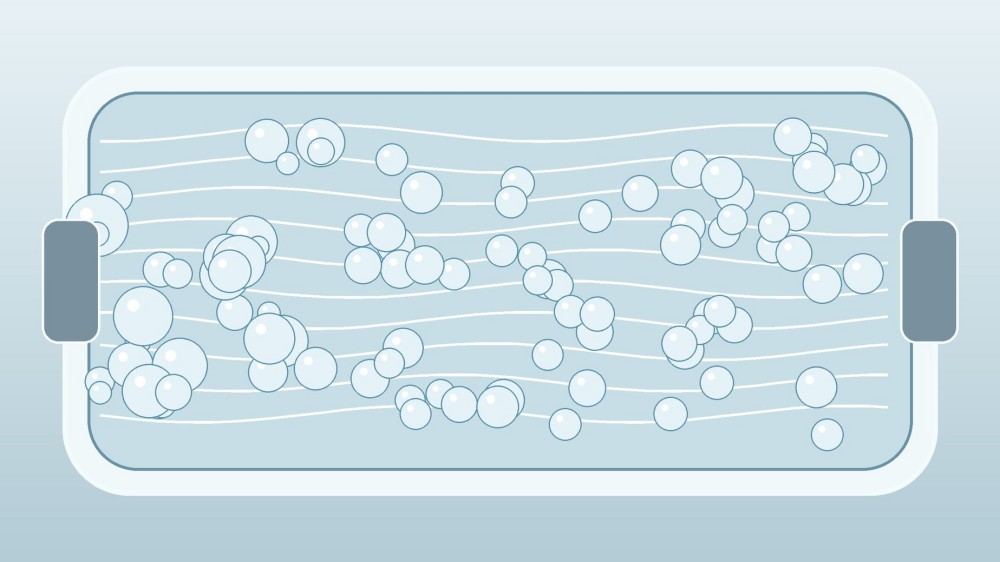 Figure 6. Flow-cell concept showing how controlled droplet size distribution supports a more uniform emulsion structure.
When a standard silicone polyether does not fit the formulation window, Eata Silicon can review project-specific requests around viscosity range, silicone/polyether balance, carrier system, solids content, low-temperature handling, oil or pigment compatibility and packaging, subject to technical feasibility.
Send your target chemistry, application, key formulation ingredients and the performance criteria that define success. We can compare the current range first, then discuss a tailored specification or related organosilicon option where appropriate.
For Research or Industrial Raw Materials, Not For Personal Medical Use!