Marry a metal to silicon and the offspring often inherits the best of both lineages: the melting points and chemical stubbornness of ceramics together with the electrical conductivity of metals. Molybdenum disilicide has played that double game since 1907, and when Kanthal patented the first commercial MoSi₂ heating elements in 1953, furnaces gained a heater that runs at 1,800 °C – in plain air – because the material grows its own glass shield. That trick, silicon oxidizing into a protective SiO₂ skin while the metal beneath keeps conducting, is the signature of the whole silicide family.
The family is far larger than one compound, though. Dozens of metals form useful silicides, and their applications span an unusual range: MoSi₂ and WSi₂ heat furnaces and armor hot aerospace hardware; TiSi₂, CoSi₂, and NiSi sit silently inside nearly every advanced microchip as the low-resistance contacts that make modern transistors possible; and Mg₂Si, β-FeSi₂, and CrSi₂ are rising candidates for turning industrial waste heat directly into electricity. Eata Silicon supplies metal silicide raw materials across all of these domains – powders, spray feedstocks, and PVD sputtering targets – with custom compositions and particle sizes available on request.
Browse Our Products
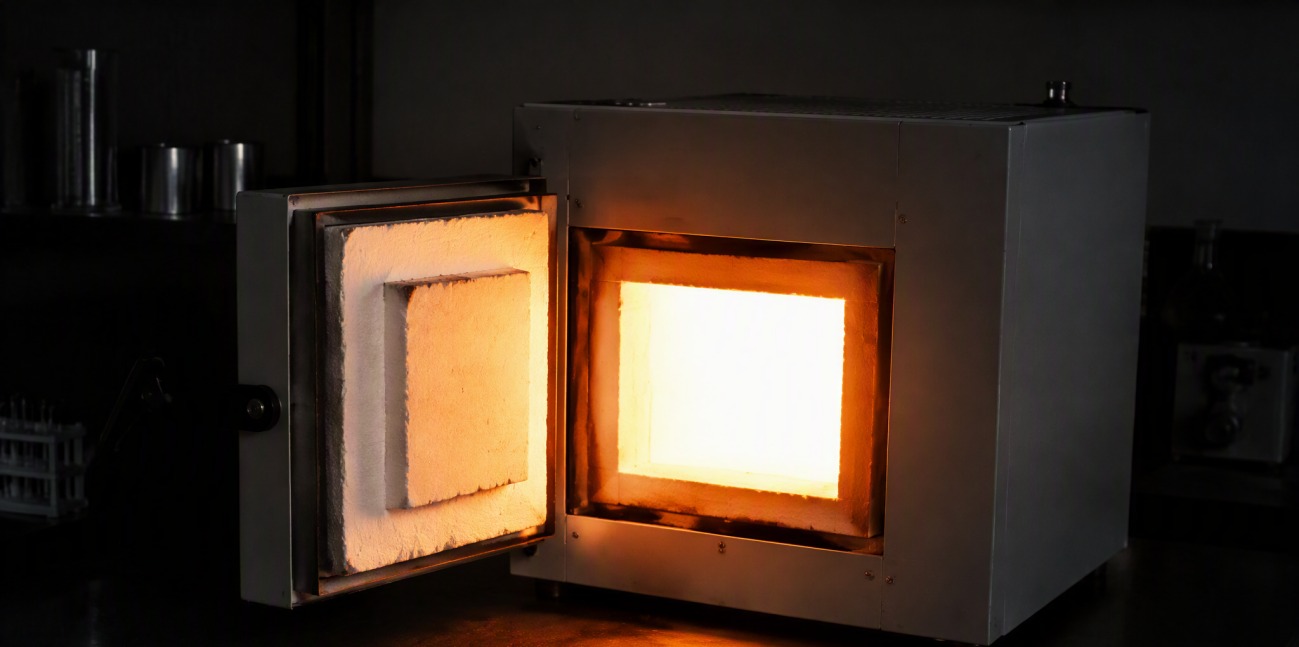 MoSi₂-heated furnaces reach 1,800 °C – in air.
MoSi₂: The Furnace Workhorse
Molybdenum disilicide melts at 2,030 °C, weighs in at a moderate 6.24 g/cm³, and conducts electricity like a metal while oxidizing like a ceramic. Above about 800 °C its surface silicon converts to a thin, coherent, vitreous SiO₂ layer that seals the material from further attack – and if that glass film cracks in service, fresh silica simply regrows over the wound. Heating elements built from HIP-consolidated MoSi₂ exploit this self-healing shield to run at furnace temperatures to 1,800 °C, with a further convenience built into their physics: resistivity climbs steeply with temperature, so cold elements draw high current for rapid ramp-up and hot elements self-stabilize. The familiar U-shaped element, with a slender hot zone and fat, cool-running terminal shanks, concentrates heat where the furnace needs it.
Two caveats belong in every purchasing decision. First, “pest”: between roughly 400 and 700 °C, MoSi₂ can oxidize destructively into powdery MoO₃ – controllers should ramp through this window quickly on the way up and down. Second, the protective skin needs oxygen: in vacuum, dry hydrogen, or reducing atmospheres the silica layer volatilizes or is stripped, and element life collapses. Specify MoSi₂ for air and oxidizing service, and it will outlast almost anything else that glows.
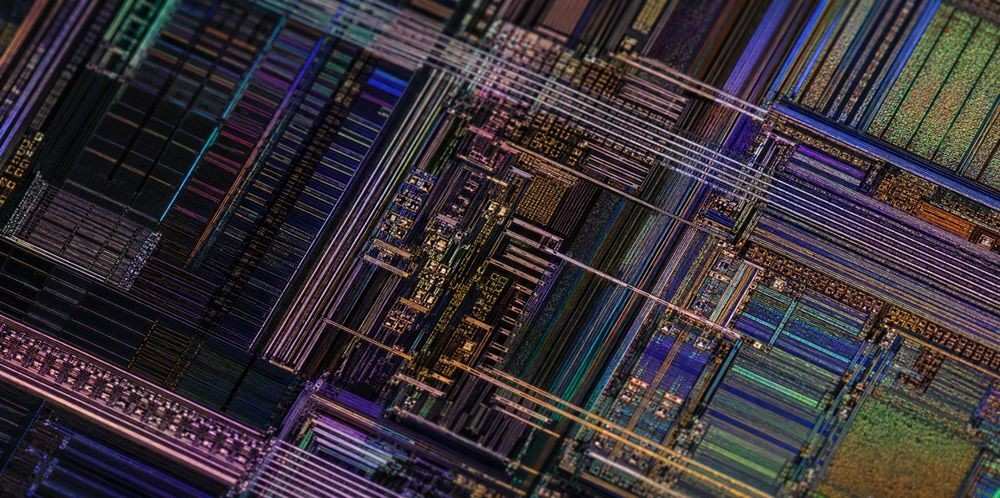 Silicides live inside every advanced chip.
Silicides Inside the Chip
Every scaled CMOS transistor leans on a silicide. As polysilicon gates and aluminum contacts ran out of conductivity, the industry turned to self-aligned silicides – salicides – formed by reacting a deposited metal directly with the silicon beneath: low sheet resistance, perfect silicon compatibility, immunity to electromigration, and clean dry etching. The evolution tracks the technology nodes, and each generation was chosen by resistivity and by how sparingly it consumes silicon:
| Silicide |
Resistivity (µΩ·cm) |
Role in Device History |
| TiSi₂ (C54) |
13–16 |
The first mass-use salicide, 0.5–0.25 µm nodes; lowest resistivity of the family, but line-width-sensitive |
| CoSi₂ |
14–20 |
Carried the 0.18 µm–65 nm generations; metal-diffusion reaction avoids bridging, but consumes more silicon |
| NiSi |
14–20 |
The shallow-junction champion, 65–14 nm (as NiPtSi); lowest silicon consumption per nanometer of metal |
| WSi₂ |
30–70 |
The classic polycide on gates; CVD-depositable, stable to ~1,000 °C |
| TaSi₂ / MoSi₂ |
35–55 / 40–100 |
High-temperature polycides and diffusion barriers |
| PtSi |
28–35 |
Infrared detector Schottky contacts and legacy processes |
For the fabs and target makers behind these processes, the raw material is everything: high-purity MoSi₂, WSi₂, and TaSi₂ powders pressed and sintered into PVD sputtering targets, with metallic impurities held to ppm levels. That is a supply line we serve directly.
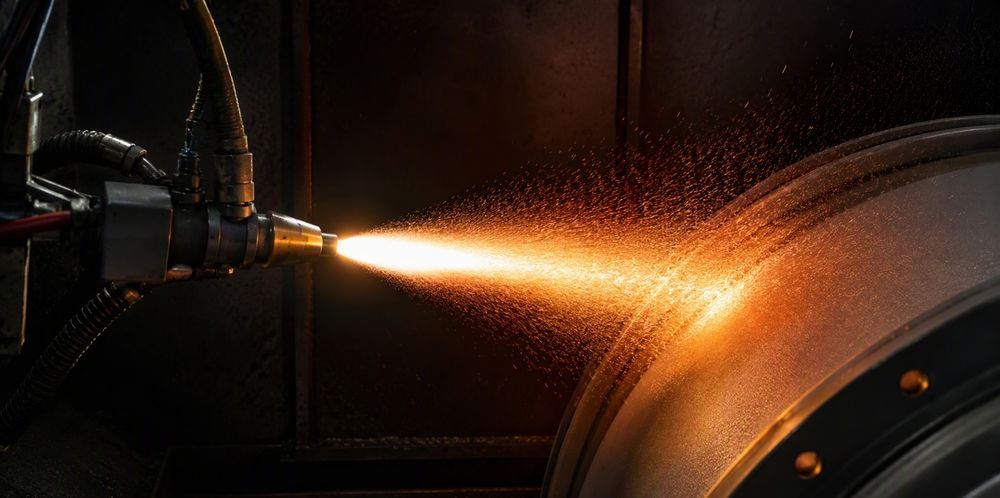 Plasma-sprayed silicide coatings shield parts that must not burn.
Coatings That Outlive the Metal Beneath
Niobium, tantalum, and other refractory alloys offer spectacular high-temperature strength – and catastrophic oxidation. Silicide coatings are the standard fix, and the published endurance numbers explain why: a MoSi₂ coating with 10 wt% mullite on silicided niobium lost only 4.06 mg/cm² after 140 hours at 1,500 °C; a WSi₂–mullite–MoSi₂ composite survived 500 hours at the same temperature with a 4.41 mg/cm² mass loss; and a TaSi₂/MoSi₂ bilayer on graphite came through 30 minutes at 1,650 °C in static air without a single macro-crack, its surface sealed by dense glassy SiO₂. The same self-healing logic as the furnace element applies – semi-molten silica flows into cracks and re-seals them.
Feedstock choice follows the duty. TiSi₂ and CrSi₂, with their relatively low melting points, spray into smooth oxidation-resistant surfaces by low-pressure plasma; TaSi₂ and NbSi₂ serve as matrix materials for the hottest composite systems; and ZrSi₂ and HfSi₂ appear in multi-layer thermal-protection architectures rated for ablation environments approaching 1,800 °C.
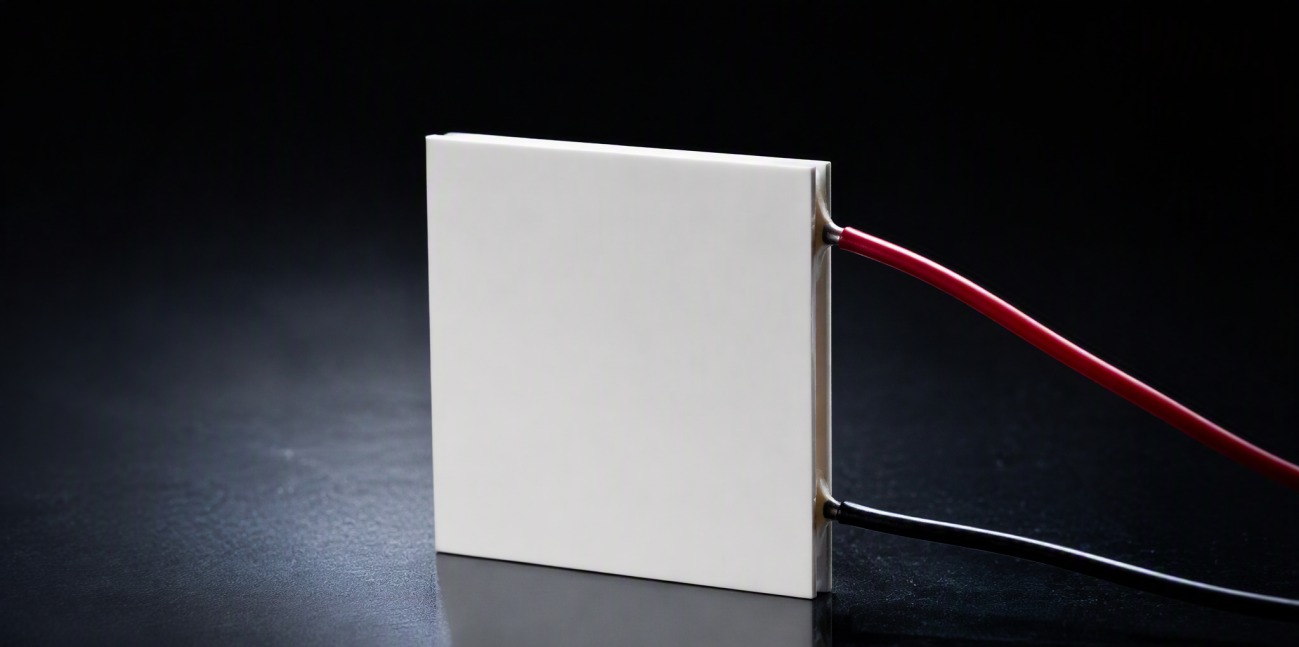 Thermoelectric modules turn waste heat into watts.
Silicides for Thermoelectrics: Waste Heat to Power
The thermoelectric industry has a tellurium problem – expensive, scarce, and toxic – and silicides are its most credible answer: abundant, benign, and stable exactly in the 600–1,000 K window where industrial waste heat lives. Magnesium silicide leads the pack. Mg₂Si is an anti-fluorite semiconductor, just 1.98 g/cm³, operating usefully between 600 and 900 K; alloying with tin and doping with bismuth has pushed its figure of merit to about 1.4 at 773 K, with co-doped Mg₂(Si,Sn) records near 1.7 – performance that rivals tellurides at a fraction of the material cost and none of the toxicity. The supporting cast is deep: higher manganese silicides (MnSi₁·₇, ZT ~0.9 p-type), β-FeSi₂ (iron and silicon – the cheapest thermoelectric conceivable, ZT ~0.4), CrSi₂ for the 600–800 K band, and Ru₂Si₃ or ReSi₁·₇₅ for extreme-temperature aerospace generators. Every one of these begins as a powder whose stoichiometry and phase purity decide the final ZT.
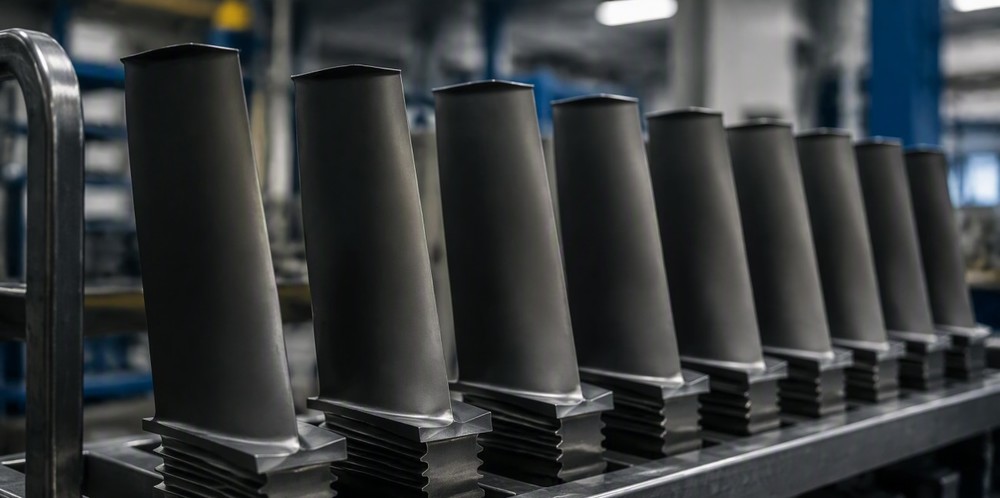 Silicide-coated hardware for extreme environments.
Representative Products at a Glance
| Product Type |
Typical Specification |
Typical Use |
| Molybdenum disilicide (MoSi₂) powder |
2–5 / 5–10 µm, Si 35.6–37.8% |
Heating elements, high-temperature ceramics |
| High-purity MoSi₂ / WSi₂ / TaSi₂ |
Low metals, target-grade |
PVD sputtering targets for semiconductors |
| Tungsten disilicide (WSi₂) powder |
Si 22.3–24.5%, sized fractions |
Polycide processes, oxidation-resistant coatings |
| Titanium disilicide (TiSi₂) powder |
Si 52.2–55.0%, 2–10 µm |
Plasma-spray coatings, salicide research |
| Chromium disilicide (CrSi₂) powder |
Si 50.0–52.8% |
Spray coatings, p-type thermoelectrics |
| Tantalum / niobium disilicide |
TaSi₂, NbSi₂, controlled PSD |
Ultra-high-temperature coating matrices |
| Zirconium / hafnium disilicide |
ZrSi₂, HfSi₂ |
Thermal-protection composites, pack cementation |
| Magnesium silicide (Mg₂Si) |
Thermoelectric grade, low oxide |
Waste-heat recovery, TE generators |
| Iron disilicide (β-FeSi₂) |
Beta phase, doped variants on request |
Low-cost thermoelectrics, sensors |
| Cobalt / nickel silicide |
CoSi₂, NiSi, electronic grade |
Contact research, thin-film processes |
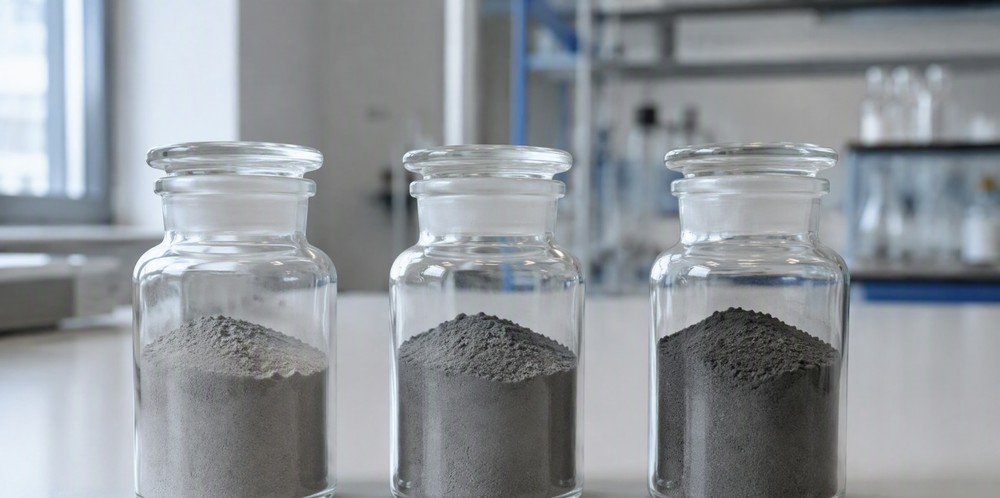 Silicide powders, graded and ready to ship.
Quality Control for Intermetallic Powders
Silicides are stoichiometric compounds, so quality control starts at phase: XRD confirms the target intermetallic and flags free silicon, free metal, or secondary silicide phases (Mo₅Si₃ in MoSi₂ is the classic example). Chemistry certificates report the silicon window – commercial MoSi₂ grades, for instance, hold Si at 35.6–37.8% – along with carbon, iron, and oxygen limits, and particle size is certified by sub-sieve analysis in the standard 2–5 µm and 5–10 µm fractions or to customer specification. Sputtering-target lots additionally carry density, grain size, and resistivity data.
Most silicide powders tolerate air, but two handling notes matter: Mg₂Si oxidizes and hydrolyzes readily and ships argon-sealed, and ultrafine fractions of any silicide are packed with desiccant in double bags. Standard packs run from 100 g research bottles to 25 kg drums; every lot travels with its measured COA.
Off-the-shelf silicides cover the mainstream compounds, but intermetallic work is frequently proprietary. Eata Silicon regularly produces custom stoichiometries and doped variants (Sb- or Bi-doped Mg₂Si, Al-bearing FeSi₂, and similar), customer-specified particle size distributions and spray-ready agglomerates, composite coating feedstocks such as MoSi₂–mullite blends, high-purity target lots with certified impurity profiles, and development-scale quantities for process qualification before production commitment.
Tell us the compound, the duty, and the specification you need to hit, and our team will respond with a recommended grade, a data sheet, and samples for evaluation.
For Research or Industrial Raw Materials, Not For Personal Medical Use!