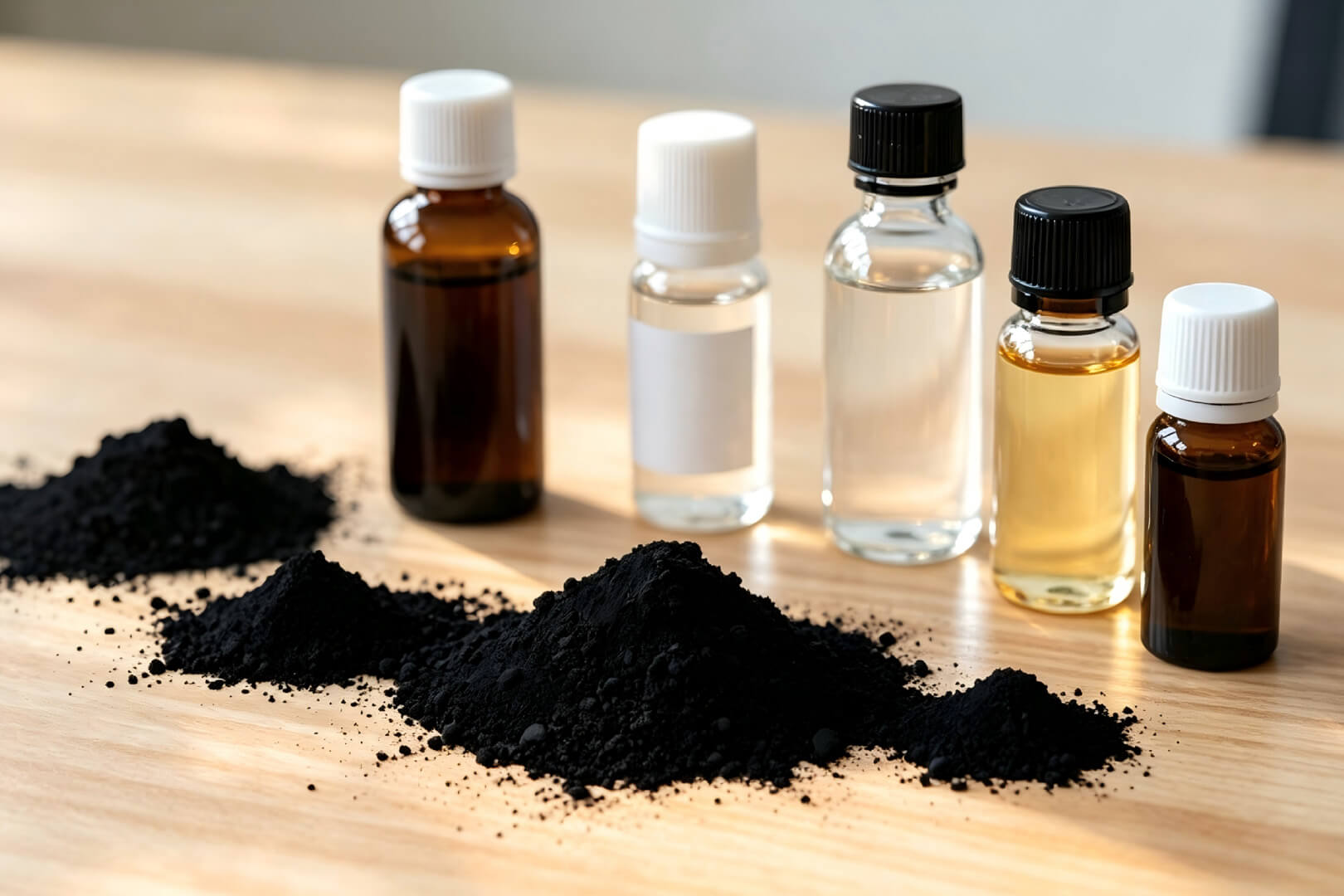
Interfacial control is often the difference between a formulation that works in the mixer and one that keeps its performance through coating, drying, storage and service. Eata Silicon supplies silicone-based interfacial and dispersion additives for formulations where particles, liquid phases or substrates do not naturally interact well. By tuning wetting, spreading, dispersion and emulsion stability, these materials can help formulators build more uniform slurries, smoother coatings and more reliable multi-phase systems.
Our portfolio centers on silicone-polyether and related organosilicone chemistries selected for high surface activity and formulation flexibility. Depending on grade, these additives can lower surface tension, improve powder or pigment wetting, support particle dispersion, stabilize water/oil or water/silicone systems, and improve flow or leveling. Those functions are especially valuable when fine inorganic solids, conductive components, ceramic powders, coated substrates or mixed-polarity fluids must be processed consistently.
Explore Our Product Range
Choose a functional route first, then compare the available grades by chemistry, viscosity, carrier phase and performance target.
Why Interface Control Matters
Wetting, dispersion and emulsification solve different parts of the same interface problem. A wetting additive helps a liquid contact a solid or substrate more completely; dispersing functionality helps keep separated particles from uncontrolled re-agglomeration; an emulsifier stabilizes the boundary between immiscible liquid phases. In high-solids or highly filled systems, improving particle wetting and stabilization can also reduce processing viscosity and create room for higher solids loading.
- Faster and more complete wetting of powders, fillers and difficult substrates.
- More uniform particle distribution with less agglomeration, settling or viscosity drift.
- Improved flow and leveling in coatings, inks and thin-film formulations.
- More stable liquid-liquid interfaces in water/oil and water/silicone systems.
- Better consistency from mixing and coating through storage and downstream processing.
Three Functional Families
Silicone-Based Dispersing Agents
When solids are difficult to incorporate, the first task is to replace air at the particle surface with the liquid phase and then keep newly separated particles apart. Silicone-based and silicone-modified dispersing solutions can be screened where surface activity, low dosage efficiency or compatibility with silicone-rich media is desired. The goal is not merely to make a slurry look uniform: good dispersion should support stable rheology, consistent particle distribution and repeatable coating or casting behavior.
- Useful screening targets include metal oxides, ceramic powders, pigments, fillers and other functional solids.
- Key formulation questions are particle chemistry, continuous-phase polarity, solids loading, shear history and the required final viscosity window.
- In energy processing, the same dispersion principles are used in lithium-ion electrode slurries and ceramic slurries for solar-panel glass treatment, where additive selection can improve milling efficiency, reduce viscosity and stabilize inorganic particles.
Silicone-Based Emulsifiers
Silicone polyethers combine a siloxane segment with polyether functionality, giving formulators a practical way to bridge phases with very different polarity. Depending on molecular architecture and carrier, these materials can support water-in-silicone, water-in-oil or related emulsion structures while also contributing wetting and spreading behavior. For industrial formulation work, they are especially useful when the interface itself must be engineered rather than simply mixed harder.
- Screen the emulsifier against the actual oil, silicone, solvent and water phase rather than relying on chemistry name alone.
- Evaluate emulsion type, viscosity development, phase ratio, shear requirement and temperature sensitivity together.
- For low-HLB or mixed-polarity systems, alkyl/polyether-modified siloxanes can provide a useful balance of oil affinity and interfacial activity.
Silicone-Based Wetting Agents
Poor wetting often appears as beading, craters, incomplete coverage, uneven film build or slow penetration into a porous or low-energy surface. Siloxane- and silicone-containing wetting additives are widely used because they can strongly reduce surface tension and improve spreading. Suitable grades are used in waterborne, solvent-borne and radiation-curing coatings and inks, with some chemistries also supporting anti-crater behavior, leveling and recoatability.
Formulation Interfaces in Practice
Five visual examples illustrate the physical challenges that interfacial and dispersion additives are designed to manage.
 Controlled droplet spreading represents faster wetting and surface-energy matching.
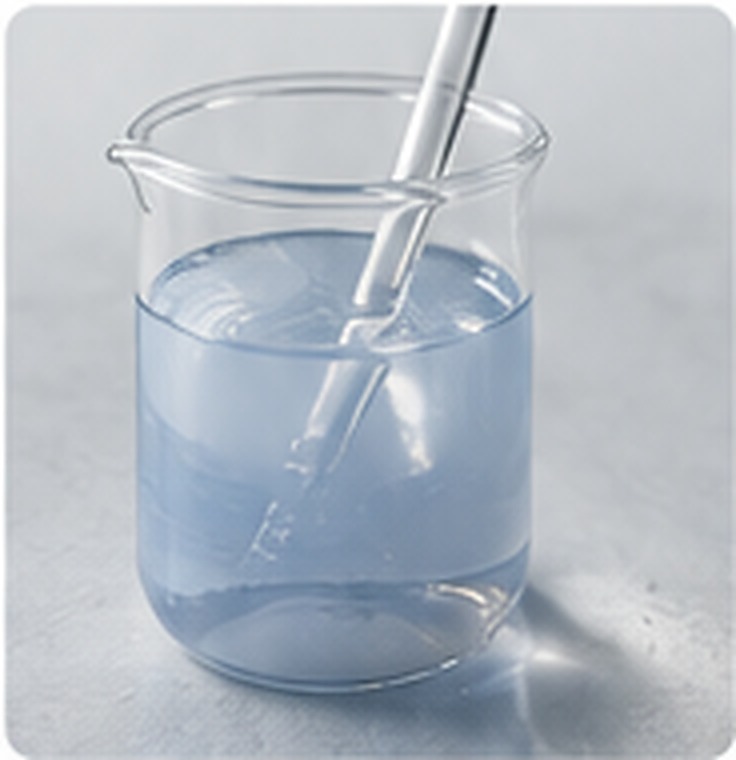 A uniform liquid blend illustrates the role of stable emulsification between dissimilar phases.
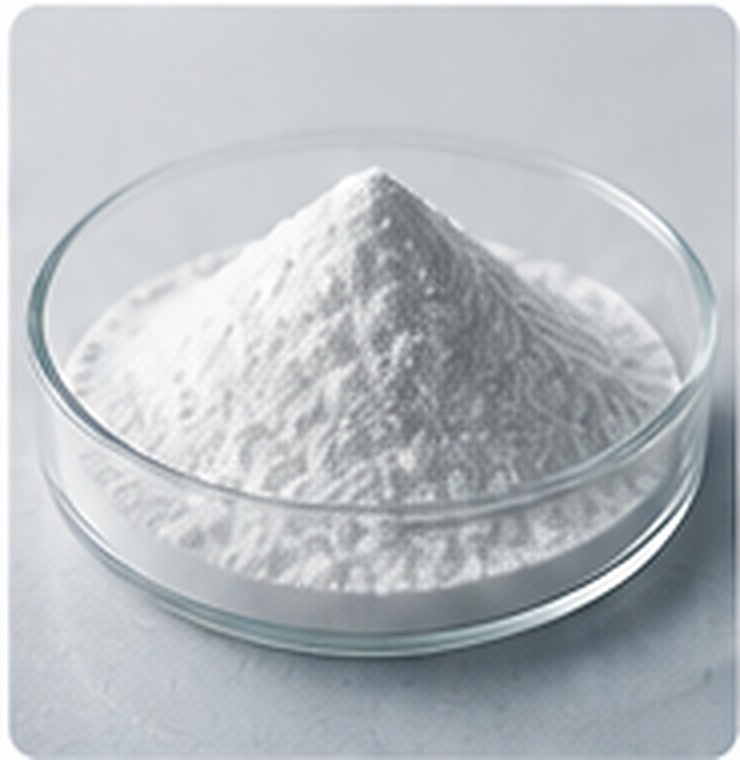 Fine powder highlights the need for efficient particle wetting and deagglomeration.
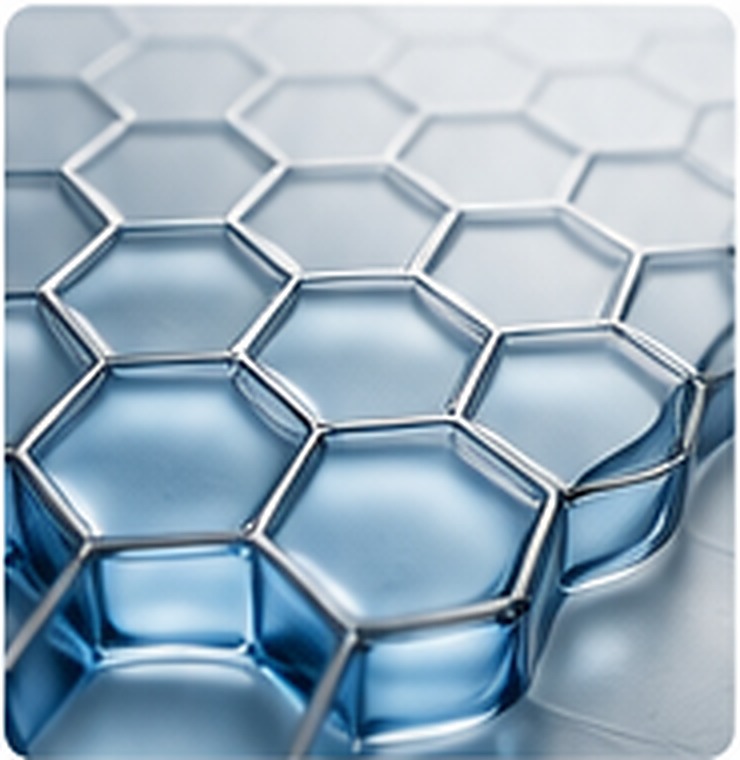 A continuous film pattern represents even coverage, flow and leveling across a surface.
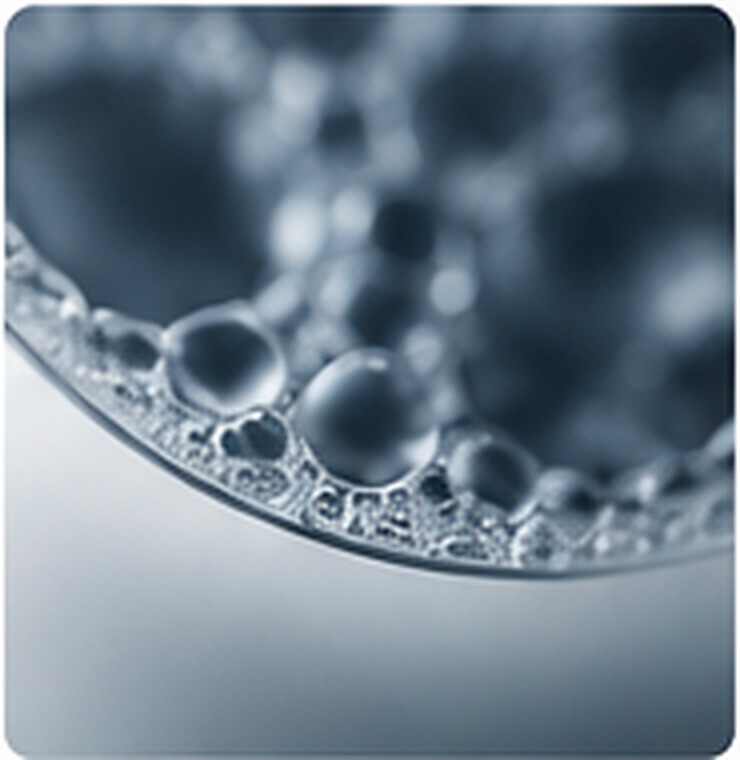 Small droplets at a phase boundary illustrate dispersion stability and controlled interfaces.
Representative Silicone-Polyether Product Profiles
| Representative chemistry |
Documented supplied profile |
Functional focus |
Keywords |
| PEG-12 Dimethicone surfactant |
250–500 cSt; colorless to yellowish transparent fluid; specific gravity 1.070–1.080 at 25°C |
Water-soluble wetting and emulsification; surface-tension reduction |
PEG-12 dimethicone, water-soluble silicone surfactant, silicone wetting agent |
| Cyclomethicone + PEG-18/PPG-18 Dimethicone dispersion |
10–14% solids; 40–125 cSt at 25°C; light milky-white translucent fluid |
W/Si and W/O emulsification; polar/nonpolar ingredient dispersion |
silicone-polyether dispersion, water-in-silicone emulsifier, dispersion aid |
| Cetyl PEG/PPG-10/1 Dimethicone |
500–1,400 cSt at 25°C; colorless to pale yellow transparent liquid |
Low-HLB emulsification, wetting and surface-tension modification |
cetyl PEG/PPG dimethicone, low-HLB silicone emulsifier, wetting aid |
| PEG-10 Dimethicone |
400–1,600 cSt at 25°C; specific gravity 1.00–1.05 at 25°C |
Water-in-silicone and water-in-oil emulsification |
PEG-10 dimethicone, W/Si emulsifier, W/O silicone emulsifier |
| Lauryl PEG-9 Polydimethylsiloxyethyl Dimethicone |
400–800 cSt at 25°C; specific gravity 0.900–0.950 at 25°C |
Emulsion stabilization plus powder and pigment dispersion |
silicone powder dispersant, pigment dispersion aid, alkyl-polyether silicone |
| PEG-10 Dimethicone silicone emulsifier |
600 mm²/s; liquid; specific gravity 1.01 g/cm³ at 25°C |
Cold-process co-emulsification; pigment and water spreading |
PEG-10 dimethicone 600 mm2/s, pigment spreading silicone surfactant |
| PEG-12 Dimethicone silicone co-emulsifier |
150 mm²/s; liquid; specific gravity 1.01 g/cm³ at 25°C |
Co-emulsification and spreading support |
PEG-12 dimethicone 150 mm2/s, silicone co-emulsifier, spreading aid |
Where These Additives Can Add Value
| Application area |
What the additive is asked to do |
Primary family to screen |
| Lithium-ion battery electrode slurries |
Improve particle wetting, lower viscosity at target solids and help stabilize inorganic components. |
Dispersing agents |
| Ceramic slurries and solar-panel glass treatment |
Support wetting and dispersion of inorganic particles such as Al₂O₃, SiO₂ and TiO₂. |
Dispersing agents |
| Protective, functional and energy-related coatings |
Improve substrate wetting, reduce cratering risk and support flow or leveling. |
Wetting agents |
| Conductive or functional inks |
Improve particle wetting, flow and coverage while helping manage surface defects. |
Dispersing + wetting agents |
| Multi-phase industrial fluids |
Control liquid-liquid interfaces when water, oil, silicone or mixed-polarity phases must remain organized. |
Emulsifiers |
| Adhesives, sealants and coated components |
Promote spreading on difficult surfaces and improve coverage consistency. |
Wetting agents |
Build the Formulation Around the Interface
Eata Silicon can discuss the application by function first: what has to wet, what has to stay dispersed, which phases must remain stable and what the final process has to achieve. That approach makes it easier to narrow the chemistry before spending time on unnecessary formulation trials. Share the continuous phase, solid or substrate, approximate solids loading, process temperature, coating or mixing method, and the performance issue you want to solve; we can use those details to identify a sensible starting profile.
Customized product options are also available. Depending on technical feasibility, customization can be evaluated around active content or concentration, carrier medium, viscosity window, functional-group architecture, blend or dispersion form, and specification targets. This gives formulators a route to move beyond an off-the-shelf grade when a project needs a more specific balance of wetting, dispersion, emulsification and process behavior.
Discuss Your Target Formulation with Eata Silicon
Send us the formulation medium, particle or substrate type, processing conditions and performance target. We can help you compare suitable interfacial and dispersion additive chemistries and evaluate a custom option when needed.
For Research or Industrial Raw Materials, Not For Personal Medical Use!