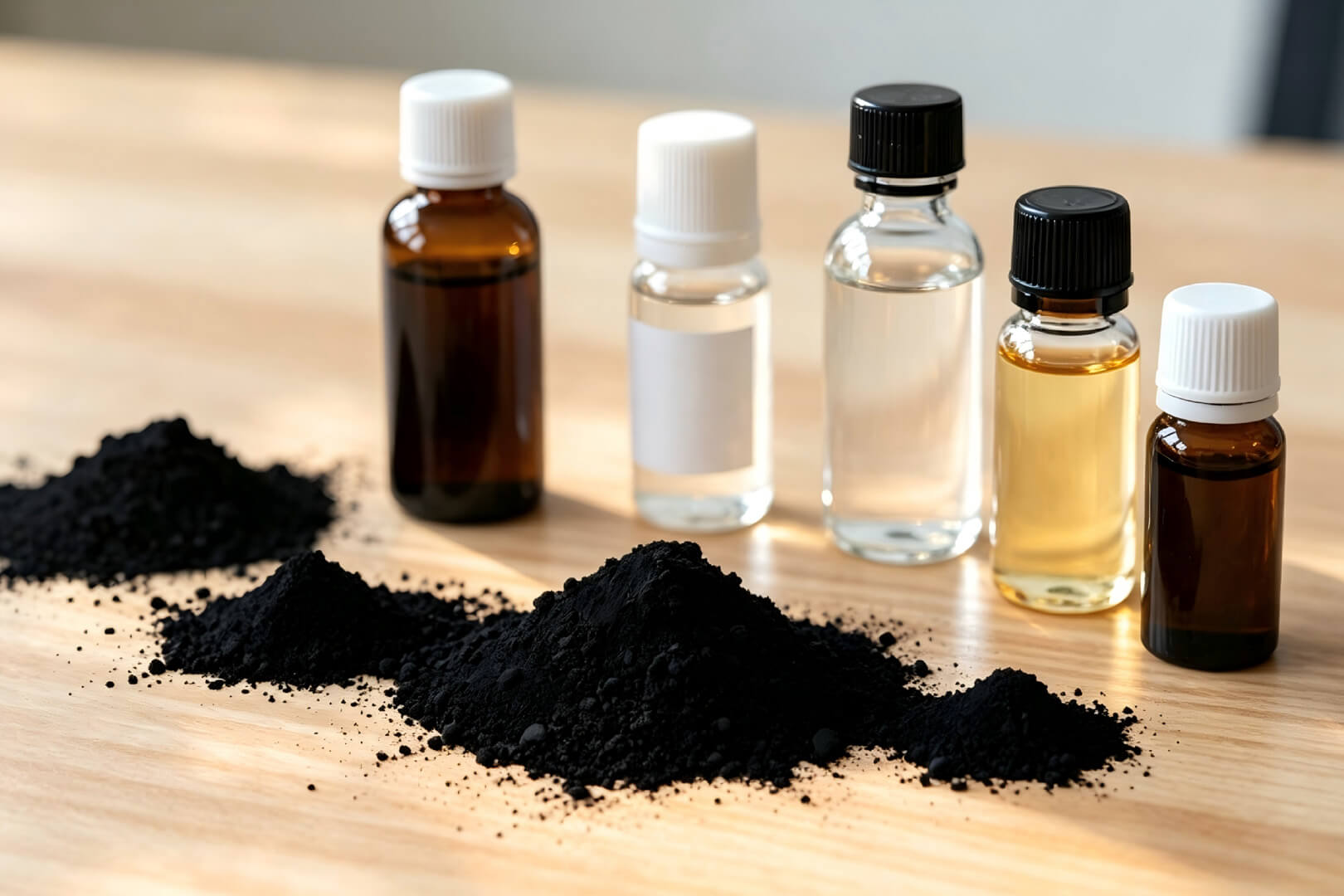
Silicon-based functional additives are often selected when a formulation challenge is concentrated at an interface: a liquid has to wet a difficult substrate, pigments or fillers need to stay uniformly distributed, a coating must level without surface defects, a molded part needs cleaner release, or foam must be controlled without destabilizing the surrounding system. Organosilicone chemistry is especially useful in these roles because molecular architecture can be adjusted to influence surface tension, compatibility, mobility and interaction with the continuous phase.
Eata Silicon offers a focused portfolio spanning interfacial and dispersion additives, coating and surface-control additives, release and anti-blocking materials, silicone foam-control agents, agricultural organosilicone adjuvants and silicone-based textile auxiliaries. Selection should be based on the target formulation, carrier phase, substrate, process conditions and the performance that matters most in the finished system.
Six Functional Additive Families
| Category |
Primary Formulation Role |
Representative Chemistry |
| Interfacial and Dispersion Additives |
Wetting, substrate coverage, filler/pigment incorporation and dispersion support |
Silicone polyether / polyether-siloxane wetting and dispersing chemistries |
| Coating and Surface-Control Additives |
Flow, leveling, slip, anti-cratering, surface feel and anti-blocking |
Polyether-modified siloxanes, aralkyl-modified siloxanes and related surface modifiers |
| Release, Mold-Release and Anti-Blocking Additives |
Lower adhesion to tooling or opposing surfaces; cleaner separation and surface control |
Alkyl-modified silicone release fluids, silicone emulsions and release-control chemistries |
| Foam-Control Additives |
Foam knockdown, antifoaming and microbubble control |
Modified polysiloxanes, silicone/silica systems, silicone emulsions and silicone polyether concentrates |
| Agricultural Organosilicone Adjuvants |
Spray wetting, spreading, deposition and penetration support |
Water-soluble organosilicone surfactant and synergist families |
| Silicone-Based Textile Auxiliaries |
Softness, smoothness, hydrophilicity and low-friction hand |
Polyether-modified and amino-functional silicone textile fluids |
Interfacial and Dispersion Additives
A successful dispersion starts before full stabilization: the liquid phase must first reach the solid surface. Silicone polyether and related polyether-siloxane additives are widely used as wetting agents because they can lower surface tension and improve contact with difficult substrates or filler surfaces. In filled polymers and composite formulations, the same interfacial logic can support faster incorporation and more uniform distribution of mineral particles, pigments or functional fillers.
For sourcing and formulation work, useful search terms include silicone wetting agent, silicone dispersing additive, polyether-modified siloxane, organosilicone surfactant, filler wetting additive, substrate wetting additive and silicone polyether dispersant. The preferred structure depends on whether the system is aqueous, solventborne, polymer-rich or highly filled, and whether low foam, strong wetting or compatibility is the dominant requirement.
Coating and Surface-Control Additives
Surface-control additives operate in a narrow but critical part of coating behavior. A small change in surface tension or mobility can influence leveling, crater formation, slip, scratch response, anti-blocking and the visual uniformity of a cured film. Eata Silicon product data includes a silicone leveling additive family for waterborne, solventborne and UV-curable coatings, built mainly around polyether-modified siloxanes with additional modified structures for different compatibility and surface-performance windows.
When evaluating a silicone leveling agent, it is useful to separate four questions: does it improve substrate wetting, does it promote flow without over-slipping, does it remain compatible enough to avoid haze or defects, and does it preserve downstream requirements such as recoating, printing or bonding? The best choice is therefore system-specific rather than simply the grade with the strongest surface activity.
 Interfacial control begins with effective contact between the liquid phase and dispersed material.
 Controlled flow and leveling help convert surface chemistry into a uniform coating finish.
Release, Mold-Release and Anti-Blocking Additives
Release and anti-blocking additives are selected to manage unwanted adhesion between surfaces. Depending on the process, the objective may be easier demolding, lower friction, reduced build-up on tooling, improved separation of coated layers or less blocking during stacking and storage. Silicone fluids and emulsions are common starting points because their low surface energy can produce useful release effects at the interface.
Eata Silicon product data includes long-chain alkyl- and alkyl-phenyl-modified silicone release-fluid profiles with viscosities spanning approximately 600 to 4,500 mm²/s. These materials are positioned for lubrication and mold-release duties where hydrophobicity, compatibility and subsequent surface operations can matter. In a qualification program, release force should be evaluated together with transfer, printability, coating adhesion and residue rather than as an isolated metric.
Foam-Control Additives
Foam is not one problem. Large process foam, fine microfoam and entrained air can each respond differently to an additive. Silicone-based defoamers are widely used because appropriately formulated siloxane systems can provide rapid foam knockdown at low addition levels, while emulsified or self-emulsifying formats can improve incorporation into aqueous systems.
Eata Silicon catalog data includes modified-polysiloxane, silicone/silica, emulsified silicone and concentrated silicone-polyether foam-control profiles for waterborne, solventborne, solvent-free and industrial process systems. Selection should consider the phase being defoamed, shear history, viscosity, application temperature, persistence requirements and the risk of surface defects. A coating defoamer, for example, must control air without creating craters or interfering with appearance.
 A smooth, low-adhesion interface is central to reliable release and anti-blocking performance.
 Foam-control chemistry must address both visible bubbles and fine entrained air within the process.
Agricultural Organosilicone Adjuvants
Organosilicone adjuvants are used to change how an aqueous spray behaves on a plant surface. Trisiloxane alkoxylates and related organosilicone surfactants are known for strong surface-tension reduction and can improve spreading, deposition and penetration compared with many conventional surfactant systems. The desired balance depends on spray volume, target surface, active formulation and whether broad spreading, controlled spreading, rainfastness or low foam is the priority.
Eata Silicon product data includes a water-soluble agricultural organosilicone synergist family in approximately 10 to 100 cP viscosity profiles, with different surface-tension, cloud-point, pH and low-foam characteristics. Buyer search terms include agricultural silicone adjuvant, organosilicone super spreader, trisiloxane surfactant, silicone spray wetting agent, low-foam organosilicone adjuvant and silicone penetration synergist.
Silicone-Based Textile Auxiliaries
Textile finishing uses organosilicone chemistry to tune the interaction between fibers and the finished surface. Polyether-modified silicones can combine hydrophilic behavior with a soft hand, while amino-functional silicones are widely used where smoothness, softness and low-friction feel are important. The exact effect depends on the silicone structure, emulsification system, fiber chemistry and finishing route.
Eata Silicon catalog data includes a nonionic polyether-modified silicone textile fluid at 93–95% solids and 2,500–4,500 mPa·s, as well as a modified amino-functional silicone textile fluid at 88–90% solids and 20,000–40,000 mPa·s. These families provide useful search language for hydrophilic silicone softener, nonionic textile silicone oil, amino silicone softener, self-emulsifying silicone textile fluid and smooth-hand silicone auxiliary.
 Organosilicone adjuvants modify spray wetting and spreading at the leaf surface.
 Silicone textile auxiliaries help tune softness, smoothness and moisture-related surface behavior.
Representative Products
| Functional Area |
Representative Product Family |
Keywords |
Typical Use Direction |
| Interfacial / dispersion |
Silicone polyether wetting and dispersing additives |
silicone wetting agent; polyether siloxane dispersant; filler wetting additive; organosilicone surfactant |
Filler incorporation, substrate wetting, pigment/mineral dispersion support |
| Coating / surface control |
Silicone Leveling Additive Family for Waterborne, Solventborne and UV Coatings |
silicone leveling agent; anti-cratering additive; coating wetting additive; slip additive; anti-blocking silicone |
Paints, inks, industrial coatings, synthetic-leather finishes, release-paper systems |
| Release / anti-blocking |
Alkyl-Modified Silicone Mold-Release Fluid Family, 600–4,500 mm²/s |
silicone mold release oil; alkyl-modified silicone release fluid; printable release agent; silicone lubricant |
Molding, tooling, metal processing, surfaces requiring later printing or coating |
| Foam control |
Silicone Defoamer Family for Waterborne, Solvent-Free and Industrial Systems |
silicone defoamer; polysiloxane antifoam; silicone emulsion antifoam; solvent-free defoamer |
Coatings, inks, adhesives and industrial processes with foam or entrained air |
| Agricultural adjuvants |
Water-Soluble Agricultural Organosilicone Synergist Family, 10–100 cP |
agricultural silicone adjuvant; trisiloxane surfactant; super spreader; spray wetting agent; low-foam adjuvant |
Spray formulations requiring improved wetting, spreading, deposition or penetration |
| Textile auxiliaries |
Polyether-Modified and Amino-Functional Silicone Textile Fluids |
hydrophilic silicone softener; textile silicone oil; amino silicone softener; smooth-hand silicone auxiliary |
Polyester, cotton and cellulose-fiber finishing systems |
How to Select the Right Silicon-Based Functional Additive
| Decision Point |
What to Define |
Why It Matters |
| Formulation phase |
Waterborne, solventborne, solvent-free, UV-curable, polymer melt, emulsion or process fluid |
Determines solubility, emulsification and compatibility requirements. |
| Target interface |
Pigment/filler, metal, polymer, coating surface, mold/tool, leaf surface or textile fiber |
The surface chemistry controls wetting, adsorption and final effect. |
| Primary performance goal |
Wetting, dispersion, leveling, slip, release, anti-blocking, defoaming, spreading or softness |
Avoids choosing a multifunctional additive that optimizes the wrong property. |
| Foam sensitivity |
Low-foam, neutral, defoaming or potentially foam-promoting behavior |
Especially important in high-shear mixing, spray processes and waterborne systems. |
| Downstream operations |
Recoating, printing, bonding, lamination, heat treatment, curing or textile finishing |
Surface-active additives can influence later processing even when initial performance is good. |
| Specification controls |
Viscosity, active/solids content, pH, surface tension, cloud point, ionic character, appearance and critical impurities |
Turns a functional description into a reproducible purchasing specification. |
A standard additive is not always the best answer when a formulation sits outside the normal compatibility or process window. Eata Silicon can assess custom requests for modified silicone polyethers, surface-control chemistries, release fluids, defoamer formats, agricultural organosilicone profiles and textile silicone auxiliaries. Customization can focus on molecular functionality, carrier or physical form, active content, viscosity, pH or ionic character, wetting or spreading behavior, foam profile and application-specific quality limits.
For a focused evaluation, share the target application, current formulation type, substrate or filler, binder or polymer, process conditions, reference product if available, required specifications and the test criteria used to judge performance. This makes it possible to compare a standard material, a close analogue or a project-defined customized option.
Discuss your formulation requirement with Eata Silicon
Share the target function, formulation system and specification window so we can help identify a suitable standard or customized silicon-based functional additive.
For Research or Industrial Raw Materials, Not For Personal Medical Use!