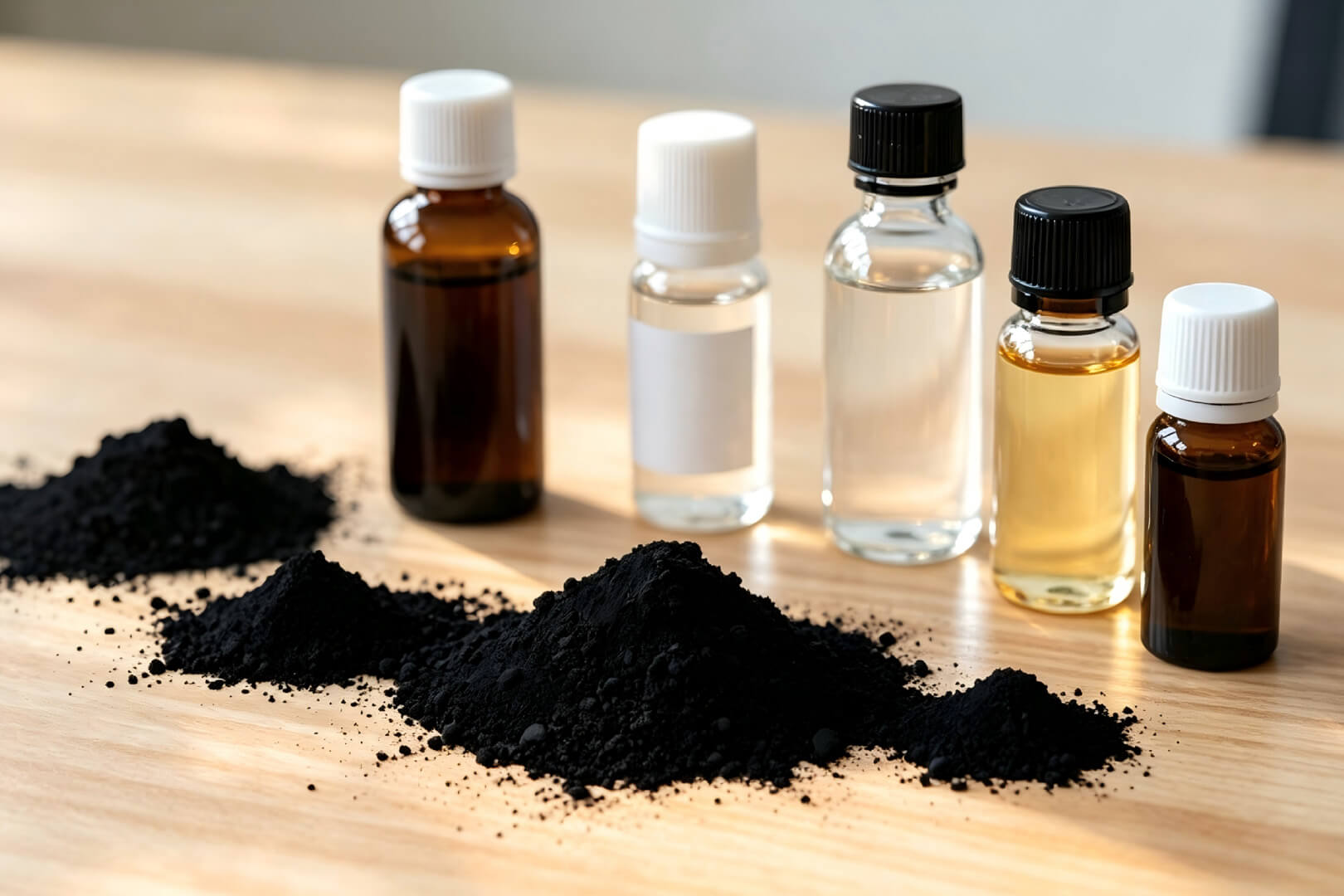
Modified silicone fluids combine a siloxane backbone with selected organic functionality so formulators can tune how the material behaves at surfaces, inside resins and during processing. Depending on the modification, the target may be better wetting and leveling, compatibility with an organic matrix, controlled reactivity, lubricity, release behavior, water dispersibility or another specific formulation function.
Eata Silicon supports specification-led selection of modified silicone fluid raw materials for coatings, polymer and resin modification, release systems, process aids and other industrial material programs. The most useful starting point is the functional group and molecular architecture, followed by viscosity, functional-group level, compatibility and the analytical limits that matter in your process.
What Makes a Silicone Fluid "Modified"?
A conventional dimethyl silicone fluid is valued for core siloxane characteristics such as low surface energy, water repellency and chemical stability. Modified silicone fluids add organic groups to the polysiloxane so the material can interact differently with water, solvents, resins, pigments, substrates or reactive ingredients. Industry literature commonly divides these products by both the type of organic group and where that group is attached to the chain.
| Architecture |
Where the functionality sits |
Why it matters in selection |
| Side-chain modified |
Organic groups are introduced along the polysiloxane side chain. |
Useful when multiple pendant sites are needed for surface interaction, compatibility or reactivity. |
| Dual-end modified |
Functional groups are placed at both ends of the siloxane chain. |
Often selected when the silicone is intended to react into or bridge a polymer network. |
| Single-end modified |
One end of the chain carries the functional group. |
Useful for macromer, compatibilizer and one-ended reactive designs. |
| Side-chain + dual-end modified |
Functionality is present on side chains and at both chain ends. |
Chosen for more complex architectures where backbone and end-group effects are both required. |
 Fig. 1. Precision film formation illustrates why wetting and leveling behavior are important selection targets for surface-active modified silicone fluids.
Reactive and Non-Reactive Modified Silicone Fluids
Modified silicone fluids are also commonly described as reactive or non-reactive. Reactive grades carry groups that can participate in downstream chemistry, while non-reactive grades are selected mainly to change compatibility, surface properties, wetting, lubrication, release or other physical behavior. This distinction is important because two fluids with similar viscosity can behave very differently if one is designed to become part of a cured network and the other is designed to remain a functional additive.
Common Modified Silicone Fluid Families
| Product family |
Functional design |
Typical formulation role |
Key RFQ variables |
| Amino-modified silicone fluid |
Reactive amino functionality; available in pendant or terminal architectures. |
Resin modification, surface interaction, coating additives, lubricity and release-related formulations. |
amine value/equivalent; amino content; terminal vs pendant placement; viscosity; compatibility |
| Epoxy-modified silicone fluid |
Reactive epoxy functionality on side chains or chain ends. |
Epoxy and hybrid resin modification, reactive coatings and network incorporation. |
epoxy equivalent; functionality distribution; viscosity; resin/cure compatibility |
| Polyether-modified silicone fluid |
Silicone-polyether architecture; reactive and non-reactive variants exist. |
Wetting, surface-tension reduction, leveling, dispersibility/emulsification and compatibility control, depending on grade. |
polyether type; HLB when applicable; viscosity; water/solvent compatibility; active content |
| Carbinol-modified silicone fluid |
Organic hydroxyl (C-OH) functionality, distinct from silanol Si-OH. |
Reactive modification of polyurethane, polyester, epoxy and related systems; compatibilization and particle dispersion. |
OH value/equivalent; terminal vs pendant structure; spacer chemistry; viscosity |
| Long-chain alkyl / aralkyl-modified silicone |
Non-reactive hydrocarbon modification of the siloxane. |
Paintability, release, lubricity, compatibility and surface-property adjustment. |
alkyl/aralkyl structure; viscosity; compatibility; intended substrate/resin |
| Phenyl-modified silicone fluid |
Phenyl-containing siloxane or surface modifier. |
Leveling and compatibility in selected organic-resin and solvent systems, including epoxy-related formulations. |
phenyl level/architecture; viscosity; resin/solvent compatibility |
| Methacrylate / acrylate-modified silicone |
Polymerizable unsaturated functionality. |
Radical or UV-curable silicone modification and copolymerization routes. |
functional equivalent; inhibitor; viscosity; cure package |
| Mercapto / carboxyl / hydride-modified silicone |
Specialty reactive functionality used for defined chemistry. |
Thiol-ene cure, esterification/surfactant chemistry, hydrosilylation or further functionalization, depending on the group. |
functional-group content; architecture; viscosity; reaction partner; catalyst/cure conditions |
Polyether-Modified Silicone Fluids: Wetting, Leveling and Compatibility Control
Silicone polyethers are one of the most widely used modified-fluid families for surface control. Supplier literature describes grades ranging from water-soluble or water-dispersible structures to lower-HLB materials, so "polyether modified silicone" is not a single performance profile. In coatings, suitable grades are used to reduce surface tension, improve substrate wetting and support flow and leveling. The correct choice depends on the resin, solvent or water phase, desired surface activity and the level of compatibility needed after cure.
 Fig. 2. Smooth flow and uniform particle wetting are practical formulation objectives for silicone-polyether and related surface-control additives.
Amino- and Epoxy-Modified Fluids: Build Reactivity into the Silicone Segment
Amino-functional silicones introduce amine chemistry into the siloxane chain and are used in polymer modification, coatings, lubricants and release-related applications. Epoxy-modified silicones carry reactive epoxy groups that can be selected for resin modification and hybrid-network development. For both families, the functionality level and its location matter: a terminally functional fluid can behave differently from a pendant-functional copolymer even at a similar viscosity.
Carbinol-Modified Silicone Fluids: Organic Hydroxyl Functionality
Carbinol-functional silicones contain hydroxyl groups attached through carbon-based linkers rather than silanol groups directly bonded to silicon. Technical literature describes carbinol-functional PDMS as reactive building blocks for polyurethane, polyester, epoxy and phenolic systems, and some grades are also used as compatibilizers or particle-dispersion aids. Buyers should therefore specify OH value or equivalent, chain architecture, spacer chemistry and the target resin system.
 Fig. 3. Reactive modified silicone fluids can be incorporated into organic resin systems to create silicone-containing hybrid polymer architectures.
Alkyl-, Aralkyl- and Phenyl-Modified Fluids: Tune Compatibility and Surface Behavior
Non-reactive organic modification is often used when the main objective is not cure chemistry but interaction with an organic phase or substrate. Long-chain alkyl and aralkyl modified silicone fluids are described by suppliers as offering combinations of compatibility, lubricity, release, paintability and water repellency. Phenyl-modified surface modifiers are used in selected coating and resin systems where leveling and compatibility with epoxy or aromatic-solvent formulations are useful.
 Fig. 4. A controlled interfacial film is a useful way to visualize release and compatibility functions in industrial surface-processing systems.
Where Modified Silicone Fluids Fit in Industrial Formulation
| Application area |
How modified silicone fluids are used |
| Coatings, inks and surface finishes |
Wetting, leveling, slip, mar resistance, anti-blocking, foam control or surface-energy adjustment can be targeted through the appropriate modified-silicone architecture. |
| Resin and polymer modification |
Reactive amino, epoxy, carbinol, acrylate/methacrylate and other functional silicones can introduce siloxane segments into organic polymer systems. |
| Release and mold-processing systems |
Alkyl-, aralkyl-, amino- and other silicone structures can be selected for release, paintability and surface lubrication requirements. |
| Lubrication and process aids |
Modified silicones can be used where low friction, lubricity or controlled surface interaction is required, with compatibility checked against the process materials. |
| Electrical and advanced polymer materials |
Functional silicones are used in specialty polymer and coating development, including microelectronic and electrical materials where flexible silicone-containing structures are advantageous. |
| Particle and filler dispersion |
Certain silicone polyether and carbinol-functional materials are used as dispersants or compatibility aids for pigments and other particles in resin or silicone systems. |
 Fig. 5. Lubricity is one of the surface properties that can be tuned through organomodified silicone design and formulation compatibility.
A Practical Chemistry-to-Application Selection Guide
| Development target |
Family to evaluate first |
Specifications to discuss |
| Improve wetting or leveling in a coating |
Polyether-modified silicone / silicone polyether |
Resin and solvent/water system; surface tension target; HLB if relevant; recoatability; dosage window |
| Introduce silicone into an epoxy or hybrid resin |
Epoxy- or amino-functional silicone |
Functional equivalent; terminal vs pendant structure; viscosity; cure compatibility |
| Add silicone functionality to polyurethane or polyester |
Carbinol-functional silicone |
OH value/equivalent; spacer chemistry; molecular range; resin stoichiometry |
| Improve release while maintaining paintability or compatibility |
Long-chain alkyl / aralkyl modified silicone |
Substrate; molded material; post-treatment; viscosity; compatibility |
| Tune leveling in compatible organic resin systems |
Phenyl-modified silicone surface modifier |
Resin family; solvent system; cure method; desired surface effect |
| Use a reactive silicone in UV/radical chemistry |
Methacrylate- or acrylate-functional silicone |
Functional equivalent; inhibitor; cure package; viscosity; target conversion |
Match the chemistry to your formulation, not the other way around.
Eata Silicon can evaluate custom targets for functional group, end/side-chain architecture, viscosity or molecular range, functional-group content, compatibility profile, low-volatility requirements and project-specific analytical limits. Share your formulation or target specification and we can review a standard option, a close analogue or a customized development path.
| Catalog Number |
Product Name |
Order |
Quantity |
|
SFP-0035 |
Vinyl Fluorosilicone Fluid, 100–1,000 cSt
|
Inquiry
|
|
|
SFP-0036 |
Perfluorooctyl-Functional Silicone Fluid, Custom Fluorine Content
|
Inquiry
|
|
|
SFP-0037 |
Methyl Fluorosilicone Fluid, 300–50,000 mPa·s
|
Inquiry
|
|
|
SFP-0038 |
Perfluorohexyl-Functional Silicone Fluid, Fluorine-Content-Dependent Grades
|
Inquiry
|
|
|
SFP-0039 |
Perfluoropolyether-Modified Acrylate Compound, 30% Active Content
|
Inquiry
|
|
|
SFP-0040 |
Terminal-Amino Silicone Fluid with Anti-Blocking Hand Feel
|
Inquiry
|
|
|
SFP-0041 |
Dodecyl/Polyether-Modified Dimethylsiloxane Terpolymer, 250-350 cSt
|
Inquiry
|
|
|
SFP-0042 |
Diphenylsiloxane-Dimethylsiloxane Copolymer Fluid, 100-125 cSt
|
Inquiry
|
|
|
SFP-0043 |
Diphenylsiloxane-Dimethylsiloxane Copolymer Fluid, 100 cSt and RI 1.422
|
Inquiry
|
|
|
SFP-0044 |
Trifluoropropylmethylsiloxane Fluid, 1,000 cSt
|
Inquiry
|
|
For Research or Industrial Raw Materials, Not For Personal Medical Use!